Costasiella kuroshimae Sea Slug

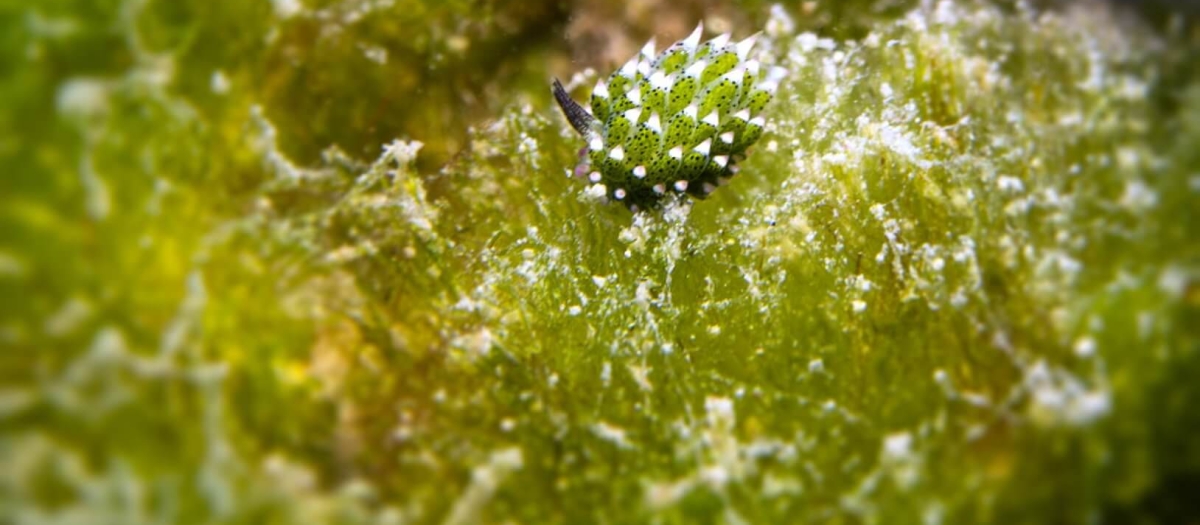
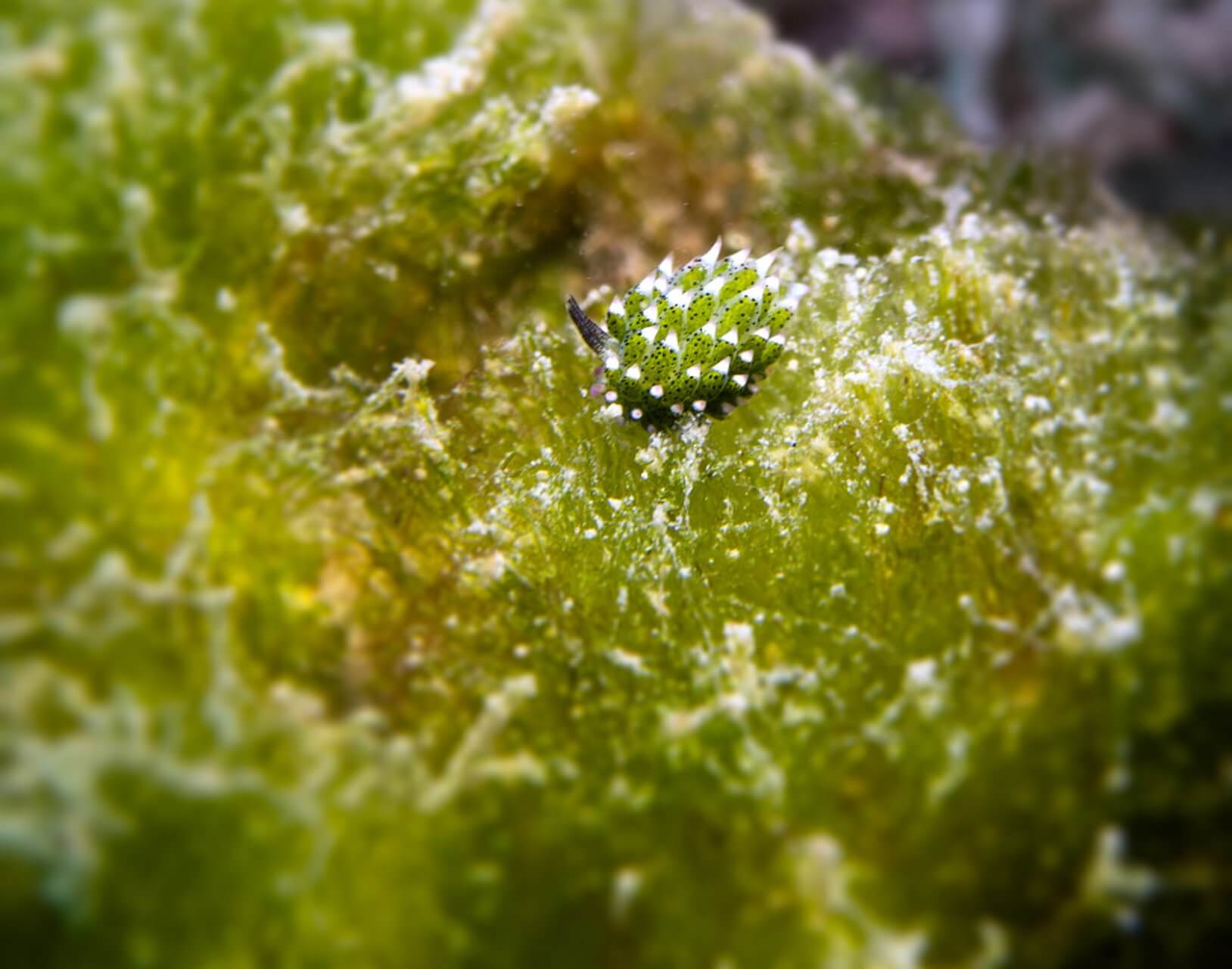
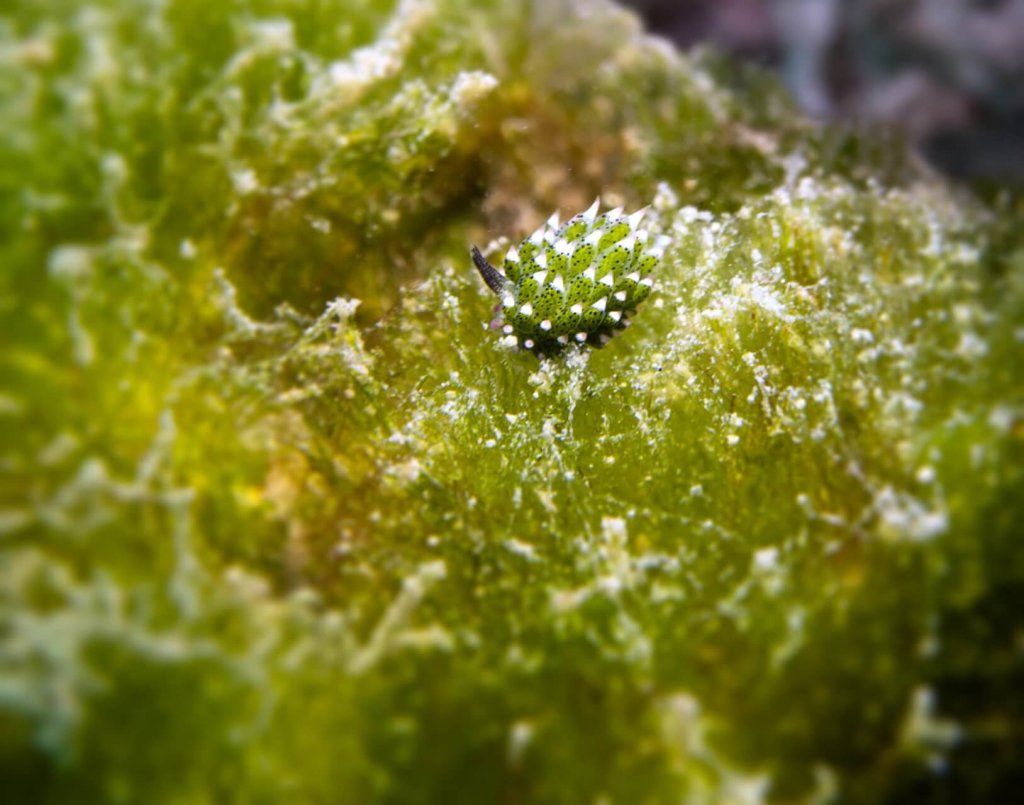
Costasiella kuroshimae, also known as “Shaun the Sheep” sea slug, found during the Sea Slug Ecology course in Koh Tao, Thailand.
Sea slug and nudibranch research surveys in Koh Tao, documenting marine biodiversity through underwater species monitoring dives.
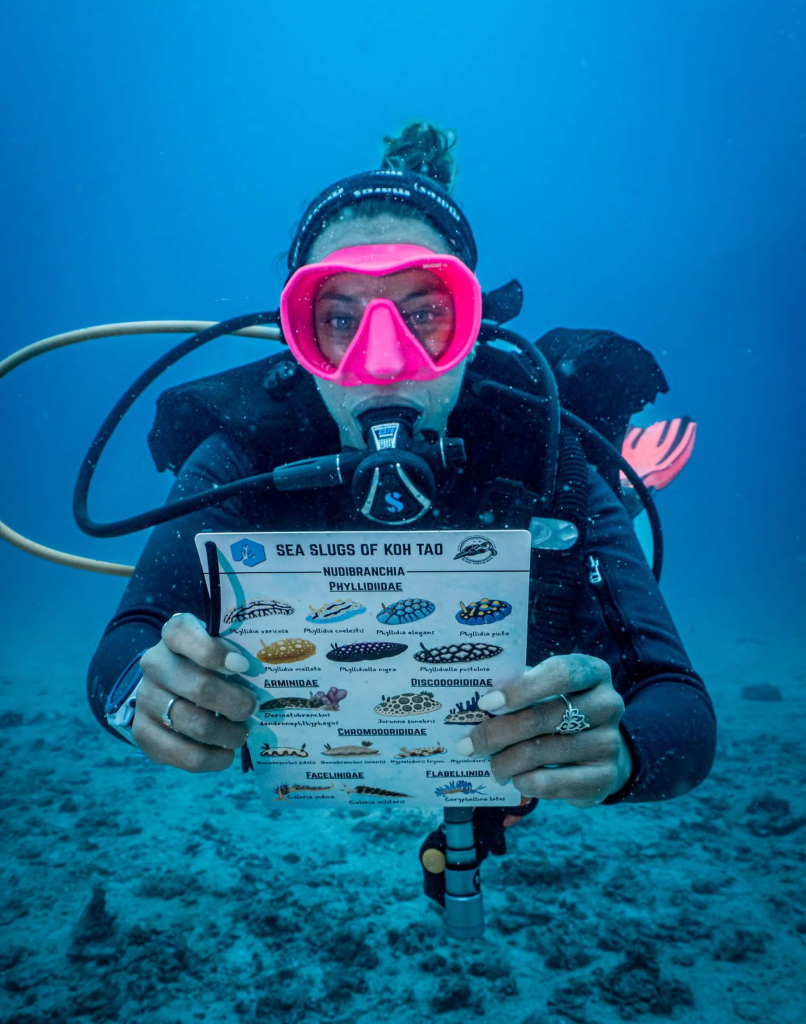
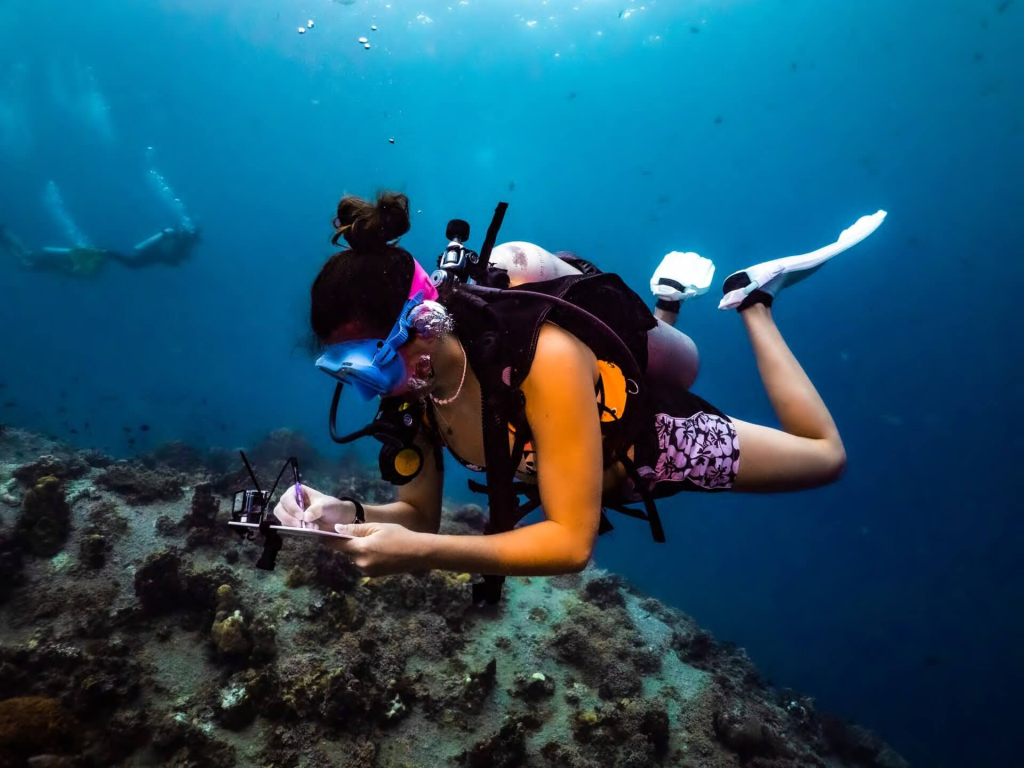
Marine conservation diver photographing nudibranch species on Koh Tao coral reef as part of biodiversity documentation.

Costasiella kuroshimae is one of the most photographed and recognisable sea slugs in the world, thanks to its whimsical resemblance to a tiny grazing sheep. The species belongs to the family Costasiellidae within the order Sacoglossa, a distinct order of gastropod sea slugs that is closely related to — but fundamentally different from — the nudibranchs. It was originally described by the Japanese malacologist Masashi Ichikawa in 1993 from specimens collected in the shallow waters off Kuroshima, Taketomi, in the Ryukyu Islands of Okinawa, Japan.

The species is documented from Koh Tao by Black Turtle Conservation divers, who have built an ongoing photographic and video record of it grazing on its host algae in shallow bays around the island. Common names include “Leaf Sheep”, “Sea Sheep”, and “Shaun the Sheep”, all in reference to the animal’s sheep-like head, dark eye spots, and dense clusters of leaf-shaped green cerata that mimic tiny woolly fleece. Adult specimens are exceptionally small, typically measuring only 5–10 mm in length, occasionally reaching a maximum of about 10 mm.

Unlike nudibranchs, which are predatory carnivores that feed on sponges, hydroids, or other invertebrates, sacoglossans are strictly herbivorous. Costasiella kuroshimae feeds exclusively on the calcified green alga Avrainvillea, piercing individual algal cells with its needle-like radula and sucking out the cytoplasm. The species is famous for its ability to sequester functional chloroplasts from its algal food and retain them inside cells lining its cerata — a phenomenon called kleptoplasty, in which the animal effectively steals the algal photosynthetic machinery and uses it to generate additional energy from sunlight.

This guide explores the biology, morphology, feeding, ecological role, and identification of Costasiella kuroshimae, alongside the conservation and training context provided by Black Turtle Conservation on Koh Tao.

Common Names: Leaf Sheep, Leaf Slug, Shaun the Sheep, Kuro Sap-sucking Slug

Family: Costasiellidae     Order: Sacoglossa     Phylum: Mollusca

Learn About Costasiella kuroshimae

Costasiella kuroshimae, also known as “Shaun the Sheep” sea slug, found during the Sea Slug Ecology course in Koh Tao, Thailand.
Night dive for nudibranch research during the Sea Slug Ecology course at Black Turtle Conservation, Koh Tao.
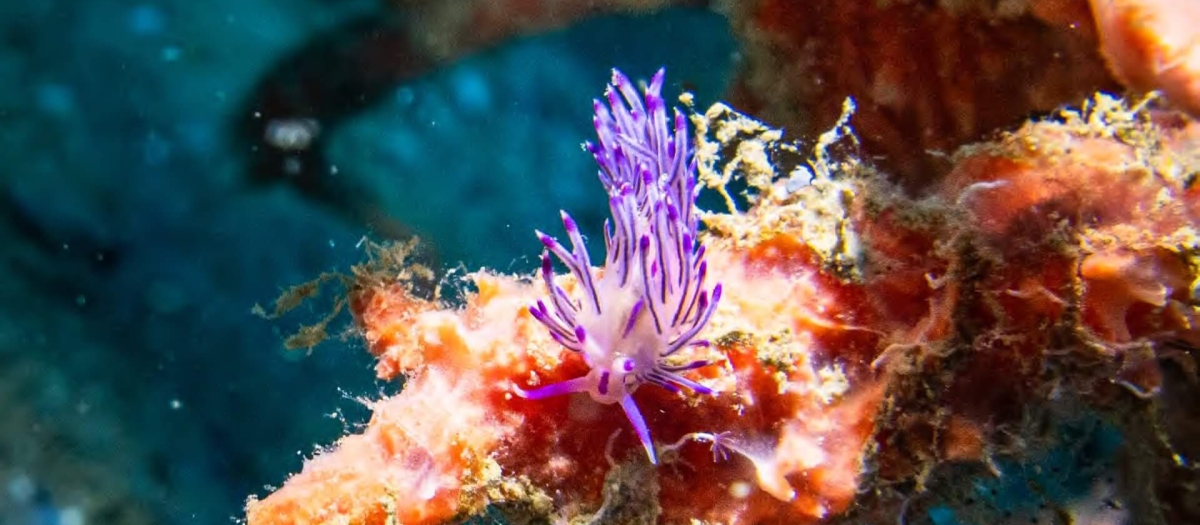
Colorful Coryphellina nudibranch feeding on a coral reef in Koh Tao, Thailand, during a marine biodiversity survey.
Close-up photo of a nudibranch taken during the Nudibranch & Sea Slug Ecology course at Black Turtle Conservation, Koh Tao.
Divers conducting sea slug monitoring surveys to study species diversity and distribution around Koh Tao.
Sea slug and nudibranch research surveys in Koh Tao, documenting marine biodiversity through underwater species monitoring dives.
Marine conservation diver photographing nudibranch species on Koh Tao coral reef as part of biodiversity documentation.

Overview of the Species

Costasiella kuroshimae is a member of the family Costasiellidae within the order Sacoglossa. The Sacoglossa are a distinct order of gastropod sea slugs characterised by a specialised radula bearing only a single row of teeth used to pierce individual algal cells, and by the striking ability of many species to sequester functional chloroplasts from their prey. Sacoglossans are herbivores, in complete contrast to the predatory nudibranchs with which they are often confused by non-specialists.

The species was formally described by Masashi Ichikawa in 1993 in his paper “Saccoglossa (Opisthobranchia) from the Ryukyu Islands”, published in the Publications of the Seto Marine Biological Laboratory. The type locality is Kuroshima Island (Taketomi, Okinawa, Ryukyu Islands), and the species epithet kuroshimae derives directly from this locality — Kuroshima meaning “black island” in Japanese.

Size and Appearance Highlights

Costasiella kuroshimae is a very small sea slug, typically measuring 5–10 mm in length. Some references give a slightly narrower range of 2–7 mm or 3–8 mm, and individuals under 5 mm are common. The overall body shape is short and stout, with a rounded head, dense clusters of leaf-shaped cerata covering most of the dorsum, and a small tapered tail.

The colour pattern is highly distinctive. The head is white or cream with dark markings, including a characteristic dark streak running across the head just in front of the rhinophores. The two rhinophores are rolled, white with black tips, and stand upright from the head like tiny sheep’s ears. Two large dark eyes are positioned close together on the head. The cerata are typically green with white tips and often display iridescent bright blue spots when caught in sunlight, giving the animal an almost luminescent appearance under macro lighting.

Daily Behaviours and Activity Patterns

Costasiella kuroshimae is a strictly sedentary sea slug that spends its entire adult life on individual Avrainvillea algae. Movement is slow and deliberate along the algal blade, and the species does not swim, burrow, or actively hunt as many other sea slugs do. When resting on the alga, the cerata are held upright, giving the classic “flock of leaf sheep” appearance in photographs.

Like all sacoglossans, Costasiella kuroshimae is a simultaneous hermaphrodite. Mating produces small egg masses that are laid directly on the Avrainvillea host, so that newly settled juveniles have immediate access to their obligate food source. Individual sea slugs live between six months and one year.

Role in Koh Tao Marine Life

Around Koh Tao, Costasiella kuroshimae is documented through ongoing photographic and video records compiled by Black Turtle Conservation divers, particularly on shallow sandy sites where Avrainvillea algae grow. The species is one of the smallest and most challenging sea slugs to find, and its confirmed presence around the island reflects both the healthy state of local algal communities and the sharp macro-observation skills of local divers.

As a specialist grazer of a single algal genus, Costasiella kuroshimae fits into a very different ecological role from the sponge-feeding chromodorids or hydroid-feeding aeolids that dominate harder reef substrates. The species contributes to top-down regulation of Avrainvillea populations and provides one link in the chain that connects primary producers to higher-level consumers in soft-sediment ecosystems.

Key Behavioural Adaptations

The most remarkable adaptation of Costasiella kuroshimae is the ability to sequester functional chloroplasts from its Avrainvillea food. When the sea slug pierces individual algal cells with its needle-like radula, the algal contents including the chloroplasts are drawn into the digestive gland. Rather than being fully digested, the chloroplasts are retained inside specialised cells lining the branches of the digestive system that extend into the cerata. There they continue to photosynthesise, converting sunlight into chemical energy that supplements the sea slug’s diet.

This kleptoplasty is one of the most extraordinary examples of animal-plant integration in nature. In some sacoglossan species chloroplasts can remain functional for weeks or even months after being taken up. The exact duration of chloroplast retention in Costasiella kuroshimae has not been fully characterised, but the species is generally regarded as a functional kleptoplast.

Costasiella kuroshimae Morphology

Colorful Coryphellina nudibranch feeding on a coral reef in Koh Tao, Thailand, during a marine biodiversity survey.

Body Shape and Texture

Costasiella kuroshimae has a short, stout body typical of sacoglossans in the genus Costasiella. The head is broad and rounded, and the dorsum is densely covered with clusters of leaf-shaped cerata that give the species its famous fleecy appearance. The body proportions are quite different from those of aeolid nudibranchs, which have longer, more slender bodies with more sparsely arranged cerata.

The cerata themselves are the most striking morphological feature. Each ceras is a finger-like projection containing extensions of the digestive gland, and in Costasiella these extensions house the sequestered chloroplasts that give the cerata their characteristic green colour. The leaf-like shape of the cerata is the origin of the common name “Leaf Sheep”.

Sensory and Respiratory Structures

The rhinophores of Costasiella kuroshimae are rolled and upright, positioned at the top of the head like tiny ears. They function primarily in chemoreception, detecting chemical cues from the host algae. The two large dark eyes are positioned close together on the head, forming a distinctive “face” in front of the rhinophores. The rhinophores are covered with fine chemosensory cilia that help the sea slug detect chemical gradients in the surrounding water.

Sacoglossans do not have discrete gills. Gas exchange occurs across the general body surface, with the extensive surface area provided by the dense cerata contributing significantly to respiratory function. The cerata therefore serve a triple role: digestive extension, respiratory surface, and photosynthetic factory.

Size Variations and Defensive Features

Juvenile Costasiella kuroshimae are smaller than the adult size range of 5–10 mm and have less densely packed cerata. As individuals mature the cerata become denser and more clearly leaf-shaped, and the characteristic green colour intensifies as chloroplast content builds up.

The principal defence of the species is crypsis. The green cerata blend closely with the Avrainvillea host, and the slow, sedentary lifestyle further reduces the sea slug’s visibility to visual predators. Some sacoglossans additionally sequester algal secondary metabolites as chemical deterrents, though the specific chemistry of Costasiella kuroshimae has not been fully characterised.

Costasiella kuroshimae Diet and Feeding Strategy

Conservation divers performing underwater research and sea slug identification training in Koh Tao, Thailand.
Close-up photo of a nudibranch taken during the Nudibranch & Sea Slug Ecology course at Black Turtle Conservation, Koh Tao.
Divers conducting sea slug monitoring surveys to study species diversity and distribution around Koh Tao.
Costasiella kuroshimae, also known as “Shaun the Sheep” sea slug, found during the Sea Slug Ecology course in Koh Tao, Thailand.

Primary Food Sources

Costasiella kuroshimae is an obligate specialist on green algae in the genus Avrainvillea (family Udoteaceae), commonly known as fan algae or paddle-blade algae. Avrainvillea species are calcified green macroalgae that grow on fine sandy or muddy sediments in shallow, wave-protected areas from the intertidal zone down to about 30 metres depth. The sea slug is essentially never found off its algal host, and any Costasiella observation is therefore also a record of Avrainvillea presence in the immediate area.

Feeding Behaviour in Detail

Sacoglossans have a highly specialised feeding mechanism unlike any other sea slug group. The radula has been reduced to a single row of needle-like teeth used to pierce individual algal cells. Once a cell wall is punctured, the sea slug uses a muscular pharynx to suck out the cytoplasm and cell contents, including any chloroplasts. This “sap-sucking” feeding mode is the origin of the informal name “sap-sucking slug” used for many sacoglossans.

Because the sea slug consumes only cytoplasm, and because algal cells are refilled from surrounding cells, a single Avrainvillea plant can support a Costasiella individual for extended periods. The sea slug moves slowly along the alga, piercing cell after cell, and its cerata gradually accumulate stored chloroplasts that continue to photosynthesise within the digestive gland extensions.

Chemical Defence Mechanisms

The specific chemical defences of Costasiella kuroshimae have not been fully characterised in the peer-reviewed literature. Some sacoglossans sequester algal secondary metabolites and use them as chemical deterrents against fish predators, and it is likely that Costasiella kuroshimae employs a similar strategy on a smaller scale.

The species’ principal defence is nevertheless cryptic colouration and sedentary behaviour on its algal host, both of which combine to make the animal extremely difficult for visual predators to spot in the field.

Activity Patterns and Photosynthetic Contribution

Costasiella kuroshimae is active throughout the day and night on its Avrainvillea host, with feeding continuous during active periods. The sequestered chloroplasts continue to photosynthesise during daylight hours, and there is evidence from related sacoglossans that the chloroplasts contribute meaningful additional energy to the sea slug’s metabolism, particularly during periods of low algal food availability.

This dual energy source — direct cell-cytoplasm consumption plus photosynthesis from stored chloroplasts — is unique to the sacoglossans among all metazoans and is one of the most striking examples of “solar-powered” animals in the natural world.

Costasiella kuroshimae Substrate Preference

Close-up photo of a nudibranch taken during the Nudibranch & Sea Slug Ecology course at Black Turtle Conservation, Koh Tao.

Costasiella kuroshimae is exclusively associated with its Avrainvillea host, which itself grows on fine sandy or muddy sediments in shallow, sheltered coastal waters. The species is therefore effectively restricted to habitats where these algae are abundant.

Why Substrate Matters

Avrainvillea algae require fine-grained soft sediment for their holdfast attachment, and they typically grow in wave-protected areas where sediment is not continuously disturbed. Costasiella kuroshimae is found wherever these algae grow, most commonly at depths of 5–15 metres although the alga itself can occur from the intertidal down to about 30 metres.

Around Koh Tao, BTC diver records of Costasiella kuroshimae come from shallow sheltered bays with fine sandy substrate where Avrainvillea populations are well developed. The sea slug is essentially absent from open reef substrates or coarse sand habitats that do not support its algal host.

Response to Environmental Conditions

Costasiella kuroshimae tolerates the warm, sheltered conditions typical of shallow Indo-Pacific bays and lagoons. The species is sensitive to any disturbance that reduces Avrainvillea populations, including physical damage to soft substrate, sedimentation from coastal runoff, and reduced light penetration that limits algal growth.

The species also depends on adequate sunlight to sustain photosynthesis by its sequestered chloroplasts, so shallow well-lit sites are preferred over deeper or shaded habitats. Around Koh Tao, sites with clear water and stable sandy substrate provide the best conditions for encountering the species.

Costasiella kuroshimae Ecological Role(s)

Broader Reef Contributions

Costasiella kuroshimae contributes to shallow soft-substrate community dynamics as a specialist grazer of Avrainvillea. By feeding on individual algal cells the sea slug exerts a small but persistent pressure on its host, and populations of the sea slug track the local abundance of the algae.

The species also illustrates one of the most extraordinary examples of endosymbiosis-like integration in the animal kingdom: the sequestration of functional algal chloroplasts and their continued photosynthesis inside animal cells. This kleptoplasty has been the subject of active research into how the sea slug maintains chloroplast function, and Costasiella kuroshimae is one of a small handful of iconic species that have made this phenomenon widely known in popular science.

Value as a Bioindicator

The presence of Costasiella kuroshimae in shallow bays is a reliable indicator of healthy Avrainvillea populations and stable soft-substrate conditions. Because the species is small, cryptic, and exclusively tied to a single algal genus, it can serve as a fine-scale indicator of the state of shallow soft-substrate ecosystems that are often overlooked in broader reef monitoring programmes.

Declines in local Costasiella sightings can indicate reductions in Avrainvillea cover, which may in turn reflect broader problems such as sedimentation, nutrient enrichment, or physical disturbance of shallow sandy habitats.

Opportunities for Citizen Science

Costasiella kuroshimae is one of the most photographed sea slugs in the world, and recreational divers contribute substantially to global documentation of its distribution and biology. Photographs from Koh Tao dive sites add directly to BTC’s in-house species archive and to wider regional biodiversity datasets. Black Turtle Conservation supports this work through training in sacoglossan identification, ethical macro-photography of small subjects, and structured species recording during conservation dives.

Divers conducting sea slug monitoring surveys to study species diversity and distribution around Koh Tao.
Costasiella kuroshimae, also known as “Shaun the Sheep” sea slug, found during the Sea Slug Ecology course in Koh Tao, Thailand.
Marine conservation diver photographing nudibranch species on Koh Tao coral reef as part of biodiversity documentation.

Costasiella kuroshimae Fun and Interesting Facts

Costasiella kuroshimae, also known as “Shaun the Sheep” sea slug, found during the Sea Slug Ecology course in Koh Tao, Thailand.

Discovery and Naming

The species was described in 1993 by Masashi Ichikawa in a systematic study of sacoglossan opisthobranchs from the Ryukyu Islands. The type locality is Kuroshima Island in the Ryukyu Archipelago of Okinawa, and the species epithet kuroshimae derives directly from this locality. Kuroshima itself means “black island” in Japanese, though the species is anything but sombre in appearance.

The Leaf Sheep

The common names “Leaf Sheep”, “Sea Sheep”, and “Shaun the Sheep” all reference the species’ whimsical resemblance to a tiny grazing sheep. The rolled rhinophores stand upright like sheep’s ears, the large dark eyes give the head a distinctly “face-like” appearance, and the dense clusters of green leaf-shaped cerata mimic tiny woolly fleece. The species is one of the most recognisable and photographed sea slugs in the world, and images of Costasiella kuroshimae regularly go viral on social media.

Solar-Powered Sea Slug

Costasiella kuroshimae is one of the best-known examples of a “solar-powered” animal. Chloroplasts sequestered from its Avrainvillea food are retained functional inside cells lining the digestive gland extensions in the cerata, where they continue to photosynthesise and produce chemical energy from sunlight. This kleptoplasty makes the species an active subject of scientific research into the mechanisms by which chloroplasts can be maintained functional inside animal cells.

Reproductive Strategy

Costasiella kuroshimae is a simultaneous hermaphrodite. Mating involves reciprocal sperm exchange, after which each individual lays a small egg mass directly on the Avrainvillea host. Newly hatched larvae metamorphose to juvenile sea slugs on the same algal patch, ensuring immediate access to their obligate food source. Individual sea slugs live between six months and one year.

Not a Nudibranch

Despite being widely called a “nudibranch” in popular media and even in some semi-technical references, Costasiella kuroshimae is not a nudibranch at all. It belongs to the order Sacoglossa, which is a separate order from Nudibranchia within the wider Heterobranchia. Sacoglossans differ from nudibranchs in radula structure (single row of piercing teeth versus rasping ribbon), diet (herbivorous versus predatory), and the presence of kleptoplasty. The confusion is understandable given the shared common name “sea slug” and superficial similarity, but the two groups are separated by tens of millions of years of evolutionary divergence.

Costasiella kuroshimae Vulnerability Profile

Sea slug and nudibranch research surveys in Koh Tao, documenting marine biodiversity through underwater species monitoring dives.

Costasiella kuroshimae is currently classified as Not Evaluated on the IUCN Red List. As a small marine invertebrate with no commercial harvest, the species has not been the subject of dedicated conservation assessment, and reliable population trend data are not available.

Local populations depend absolutely on the availability of Avrainvillea host algae, which themselves depend on stable fine-grained soft sediments in sheltered coastal waters. Threats to Avrainvillea populations include coastal development, dredging, physical disturbance of shallow sandy habitats, and pollution that reduces water clarity and suppresses algal growth.

Around Koh Tao, the species is best monitored as part of broader sacoglossan and shallow soft-substrate community surveys, with particular attention to sheltered bays where Avrainvillea populations remain healthy. Ongoing BTC diver records provide baseline data against which future changes in local abundance can be tracked.

Costasiella kuroshimae, also known as “Shaun the Sheep” sea slug, found during the Sea Slug Ecology course in Koh Tao, Thailand.

How to Identify Costasiella kuroshimae

Identification of Costasiella kuroshimae in the field is largely based on the animal’s highly distinctive body plan and colouration, combined with the certainty of finding it on Avrainvillea algae. Look for a very small sea slug, typically 5–10 mm long, with a white head bearing a dark forward-facing streak, two large dark eyes positioned close together, two upright white rhinophores with black tips, and a dorsum densely packed with green leaf-shaped cerata often with white tips and iridescent blue spots.

The species is essentially always found on the calcified green alga Avrainvillea, which itself grows on fine sandy or muddy sediments in shallow sheltered bays. Any Costasiella sighting is therefore simultaneously a record of Avrainvillea, and searching for the sea slug requires first locating suitable algal patches.

Costasiella kuroshimae can be distinguished from the sympatric Costasiella usagi (documented separately in the BTC species archive) by the distribution of colours on the cerata: C. kuroshimae has cerata that are predominantly green with white tips and blue iridescent spots, while C. usagi typically has cerata with longitudinal light striations against a darker background. Photographs of the head, rhinophores, and ceras colour pattern all assist in confirmation.

Mastering Identification with Black Turtle Conservation

Black Turtle Conservation on Koh Tao offers structured sacoglossan, nudibranch, and flatworm identification training as part of our marine conservation pathway. Costasiella kuroshimae is included as a flagship reference species because it exemplifies the distinct sacoglossan lifestyle — herbivorous grazing, obligate algal association, and kleptoplasty — while also being one of the most visually iconic sea slugs a diver can hope to encounter.

Our programmes help divers move beyond casual sea slug spotting toward accurate species-level identification across the multiple orders of gastropod sea slugs, and to understand the important taxonomic distinctions between sacoglossans, nudibranchs, headshield slugs, and sea hares that shape their fundamentally different ecological roles.

Our Training Approach: From Theory to Survey

Training begins with classroom sessions covering the biology and ecology of Indo-Pacific sacoglossans, the structure of the family Costasiellidae, the contrast between the herbivorous Sacoglossa and the predatory Nudibranchia, the phenomenon of kleptoplasty, and the conservation context for Koh Tao’s shallow soft-substrate habitats. Participants review reference photographs and video from BTC’s archive.

In-water training takes participants to shallow sandy bays around Koh Tao where Avrainvillea algae grow. Practical skills include close macro searching of algal beds for tiny cryptic residents, macro-photography of small subjects, non-invasive observation techniques, and structured species logging using BTC’s standardised templates. The relationship between sea slug and algal host is a particular focus of the training.

Graduates contribute to BTC’s ongoing invertebrate biodiversity monitoring, helping to refine site-level inventories of shallow soft-substrate species, track changes in sacoglossan abundance over time, and support the long-term documentation of Koh Tao’s remarkable invertebrate biodiversity.

External Link Citations and References

Ichikawa, M. (1993). Saccoglossa (Opisthobranchia) from the Ryukyu Islands. Publications of the Seto Marine Biological Laboratory 36(3): 119–139.

Christa, G. et al. (2014). Functional kleptoplasty in a limapontioidean genus: phylogeny, food preferences and photosynthesis in Costasiella, with a focus on C. ocellifera (Gastropoda: Sacoglossa). Journal of Molluscan Studies 80(4): 499–507.

Wägele, H. & Johnsen, G. (2001). Observations on the histology and photosynthetic performance of ‘solar-powered’ opisthobranchs (Mollusca, Gastropoda, Opisthobranchia) containing symbiotic chloroplasts or zooxanthellae. Organisms Diversity and Evolution 1(3): 193–210.

Mehrotra, R. et al. (2021). An updated inventory of sea slugs from Koh Tao, Thailand. ZooKeys 1042: 73–188.

World Register of Marine Species: Costasiella kuroshimae Ichikawa, 1993.

Wikipedia: Costasiella kuroshimae.

Black Turtle Conservation: Advanced Sea Slug, Nudibranch and Reef Ecology Training, Koh Tao.