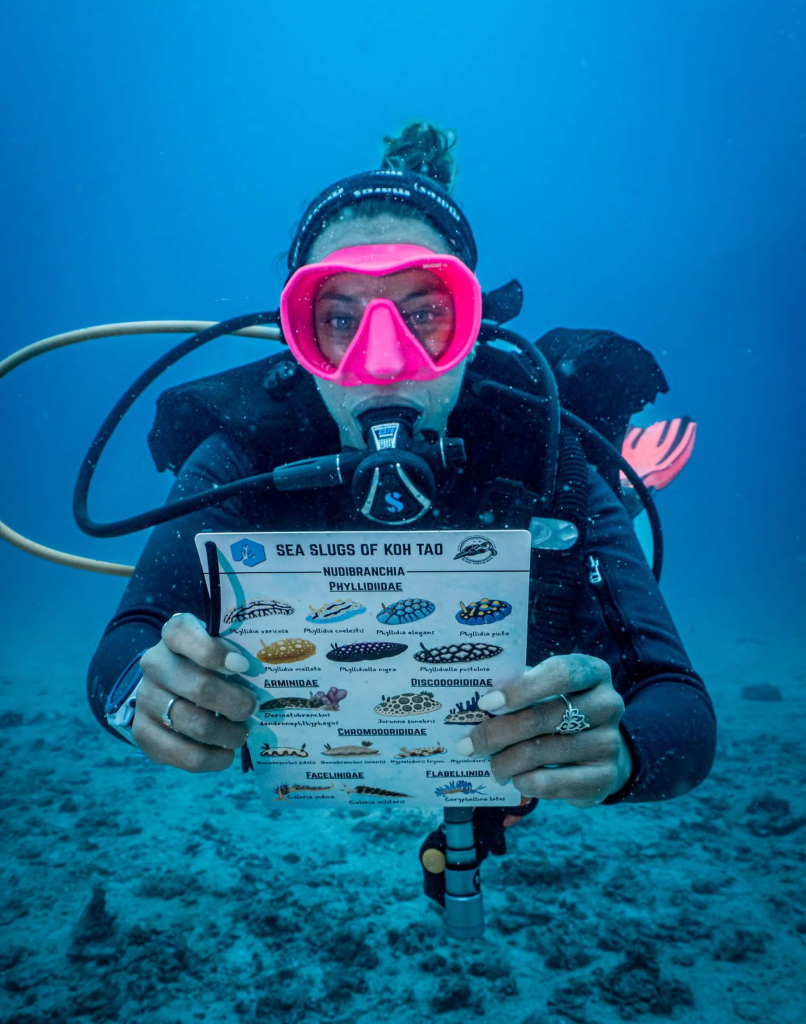
Sea slug and nudibranch research surveys in Koh Tao, documenting marine biodiversity through underwater species monitoring dives.
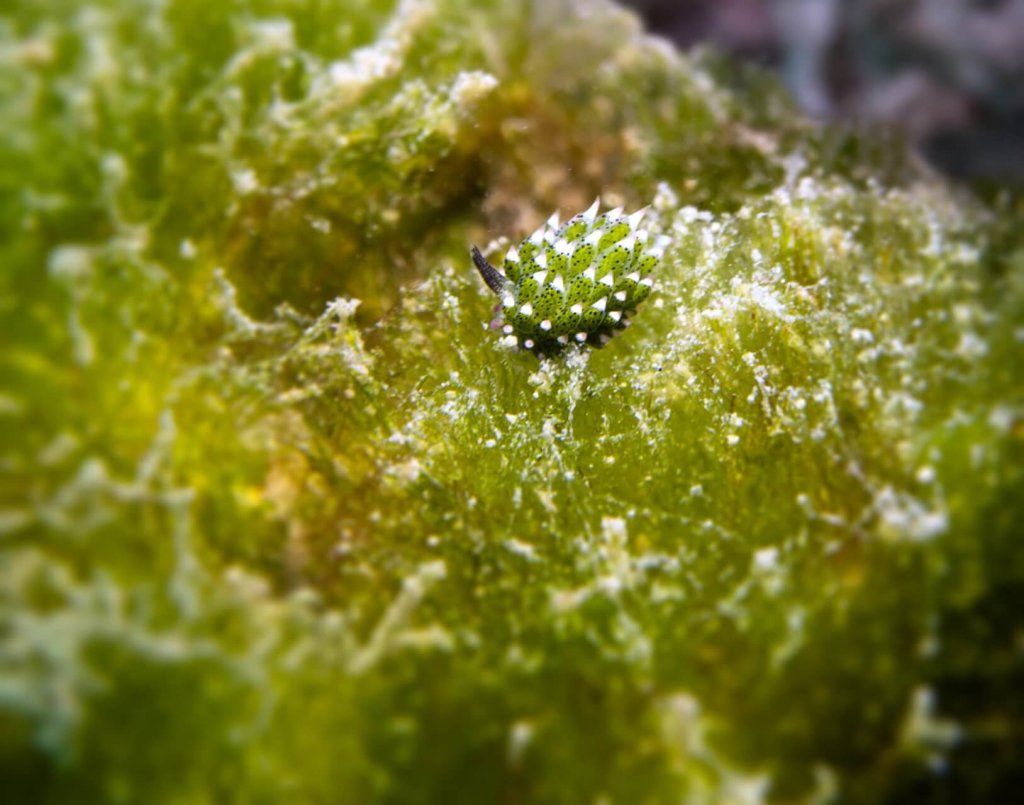
Sea slug (Costasiella sp.) photographed during the Sea Slug Ecology course at Black Turtle Conservation, exploring nudibranch identification and behavior in Koh Tao, Thailand.
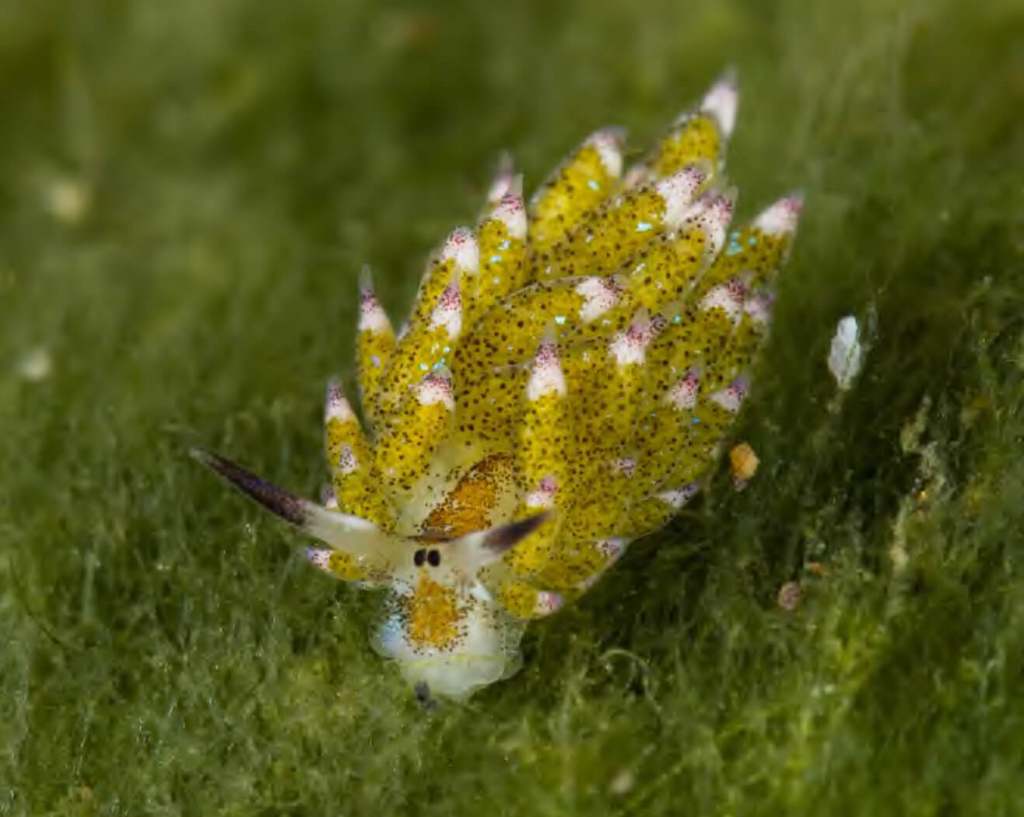
Costasiella kuroshimae, also known as “Shaun the Sheep” sea slug, found during the Sea Slug Ecology course in Koh Tao, Thailand.

As a specialized predator of scleractinian corals, it feeds on polyp tissue and sequesters defensive compounds while using ceratal autotomy as a primary escape mechanism rather than kleptocnidy. Diurnal to crepuscular and often observed on or near its host colonies in shallow to moderate depths, it plays a specialized ecological role in regulating sun coral populations and serves as a fascinating bioindicator of healthy dendrophylliid communities in the Gulf of Thailand.

This comprehensive guide covers its morphology, diet and feeding behaviors, substrate preferences, identification tips, specific Koh Tao dive sites, environmental conditions, vulnerability profile, and hands-on training opportunities with Black Turtle Conservation—ideal for divers, underwater photographers, and marine enthusiasts seeking accurate, in-depth information on this polymorphic coral-eating nudibranch.

Common Names: Black-Armed Nudibranch, Melanobrachia Nudibranch, Sun Coral Nudibranch

Family: Trinchesiidae (formerly Tergipedidae) Order: Nudibranchia (Suborder: Aeolidina)

Learn About Phestilla melanobrachia

Sea slug and nudibranch research surveys in Koh Tao, documenting marine biodiversity through underwater species monitoring dives.
Sea slug (Costasiella sp.) photographed during the Sea Slug Ecology course at Black Turtle Conservation, exploring nudibranch identification and behavior in Koh Tao, Thailand.
Costasiella kuroshimae, also known as “Shaun the Sheep” sea slug, found during the Sea Slug Ecology course in Koh Tao, Thailand.
Community sea slug and nudibranch survey dive in Koh Tao, documenting marine biodiversity through citizen science participation.
Marine conservation students improving underwater species identification and reef awareness during the Conservation Specialist program in Koh Tao.

Overview of the Species

Phestilla melanobrachia is a specialized corallivorous aeolid nudibranch renowned for its close association with sun corals (Tubastraea spp.) and its remarkable color polymorphism. These shell-less marine gastropods belong to the diverse group of aeolid nudibranchs, many of which have evolved sophisticated relationships with cnidarian prey.

With over 191 nudibranch species documented around Koh Tao, P. melanobrachia stands out as one of the most host-specific and visually striking species on shallow to mid-depth reefs, making it a favorite subject for macro photographers and an important indicator of dendrophylliid coral health in the Gulf of Thailand.

The name melanobrachia refers to its dark cerata (black arms), though the species displays orange, black, and intermediate morphs that perfectly match the color of its coral host.

Size and Appearance Highlights

Adults typically reach 20–40 mm in length, with a relatively large, robust body for an aeolid. The species exhibits distinct color morphs: bright orange-yellow (matching orange Tubastraea), dark brown to black (matching darker colonies), or intermediate forms. Cerata are numerous, short to moderately long, and plump, often tipped with white or orange and containing digestive gland contents that reflect the host coral’s pigmentation. Rhinophores and oral tentacles are smooth and translucent with darker tips. The foot is broad with rounded anterior corners, allowing secure attachment to coral surfaces.

Daily Behaviors and Activity Patterns

Phestilla melanobrachia is often more active at night or during low light, though individuals can be found during daytime dives on or near their host corals. It glides slowly across coral colonies, using its muscular foot to move between polyps while feeding.

When disturbed, it readily autotomizes (drops) cerata, which continue to wriggle and distract predators — a primary defensive strategy since it lacks cnidosacs for storing nematocysts. As simultaneous hermaphrodites, mature individuals may aggregate near dense coral patches during mating, aligning right sides together for reciprocal sperm exchange before laying egg ribbons on or near the coral.

Role in Koh Tao Marine Life

In Koh Tao’s reefs, P. melanobrachia functions as a specialist consumer of sun corals, helping regulate localized polyp density and contributing to natural turnover in dendrophylliid communities.

Divers frequently encounter it on sun coral colonies in rubble zones or under overhangs, where its presence highlights healthy host populations. It serves as an excellent ambassador for corallivorous nudibranch ecology and is regularly included in biodiversity surveys and citizen-science monitoring around the island.

Key Behavioral Adaptations

The species shows remarkable host mimicry, with body and ceratal coloration adjusting to match the coral it feeds upon for camouflage. It relies heavily on ceratal autotomy rather than nematocyst sequestration for defense. Movement is deliberate and slow, with frequent pauses to feed or rest on the coral surface. These adaptations allow P. melanobrachia to exploit a potentially exposed niche while minimizing predation risk through crypsis and sacrificial cerata.

Phestilla melanobrachia Morphology

Sea slug and nudibranch research surveys in Koh Tao, documenting marine biodiversity through underwater species monitoring dives.

Body Shape and Texture

Phestilla melanobrachia has a broad, somewhat flattened body with a large foot and rounded anterior corners. The texture is smooth but firm, and the overall shape is robust compared to many slender aeolids. Cerata are numerous, short to moderately long, and plump, arranged in multiple rows along the dorsum.

Sensory and Respiratory Structures

Rhinophores are smooth, retractable, and relatively short with darker tips. Oral tentacles are also smooth and prominent. Respiration occurs mainly through the cerata, which contain extensions of the digestive gland. Unlike many aeolids, this species lacks cnidosacs at the cerata tips, relying instead on autotomy for defense.

Size Variations and Defensive Features

Juveniles are smaller with fewer cerata and less defined coloration. Adults reach up to 40 mm. The species is highly polymorphic: orange morphs match orange sun corals, while black or dark brown morphs blend with darker colonies. Cerata often show white or orange tips.

When threatened, the nudibranch readily sheds cerata, which wriggle independently to distract predators. Coloration provides excellent crypsis on the host coral, while the plump cerata may store defensive compounds sequestered from coral tissue.

This morphology is perfectly adapted for life on dendrophylliid corals. The broad foot provides stable attachment to irregular coral surfaces, and the variable coloration enables effective camouflage. The absence of cnidosacs is compensated by the effective autotomy defense.

Phestilla melanobrachia Diet and Feeding Strategy

Sea slug and nudibranch research surveys in Koh Tao, documenting marine biodiversity through underwater species monitoring dives.
Sea slug (Costasiella sp.) photographed during the Sea Slug Ecology course at Black Turtle Conservation, exploring nudibranch identification and behavior in Koh Tao, Thailand.

Primary Food Sources

Phestilla melanobrachia is an obligate corallivore, feeding exclusively on polyps of scleractinian corals in the family Dendrophylliidae, particularly Tubastraea species (sun corals) and occasionally Dendrophyllia.

Feeding Behavior in Detail

The nudibranch positions itself on or adjacent to a coral colony and consumes individual polyps by rasping tissue with its radula. Feeding is slow and methodical, often leaving characteristic scars or bare skeleton on the coral. Individuals may remain on a single colony for extended periods, moving between polyps. Color morphs typically match the host coral being consumed.

Chemical Defense Mechanisms

While it does not store nematocysts in cnidosacs, P. melanobrachia sequesters secondary metabolites and other defensive compounds from its coral prey. When disturbed, it primarily relies on ceratal autotomy: dropped cerata continue to move, drawing attention away from the main body. This sacrificial strategy is highly effective against predators.

Diurnal Activity and Ecological Impact

Feeding can occur day or night, though many observations note increased activity during low light or at night. In Koh Tao, the nudibranch is often found on sun coral colonies in shaded or deeper areas.

By consuming coral tissue, it contributes to natural polyp turnover and may influence local coral community structure. Juveniles feed on smaller colonies or fragments, transitioning to larger hosts as they grow. Its strict host specificity makes it a precise bioindicator of dendrophylliid coral health and reef condition.

Phestilla melanobrachia Substrate Preference

Sea slug and nudibranch research surveys in Koh Tao, documenting marine biodiversity through underwater species monitoring dives.

Phestilla melanobrachia is strongly associated with its host corals, preferring hard substrates where Tubastraea and related dendrophylliids grow, including rocky outcrops, reef walls, coral rubble, and artificial structures. It is most common at depths of 5–20 m, often in shaded or overhang areas.

Why Substrate Matters

The species is almost never found away from its host coral for long. It glides directly on or immediately adjacent to sun coral colonies, using the coral structure for both food and camouflage.

Response to Environmental Conditions

In areas with moderate surge, it remains firmly attached to the coral. During stronger currents or disturbance, it may drop cerata or move to more sheltered parts of the colony. This tight substrate preference ties its distribution closely to the abundance and health of sun corals, making populations vulnerable to coral stress or removal.

Phestilla melanobrachia Ecological Role(s)

As a specialized corallivore, Phestilla melanobrachia helps regulate sun coral polyp density, contributing to natural turnover and preventing localized over-dominance of dendrophylliids. This supports overall reef biodiversity by maintaining space for other organisms.

Broader Reef Contributions

Its color polymorphism and host mimicry add to the complexity of reef crypsis and defense networks. As a mid-level consumer, it links coral production to higher trophic levels, though its autotomy defense limits successful predation. Planktonic larvae promote connectivity between distant coral patches across the Gulf of Thailand.

Value as a Bioindicator

The presence and color morphs of P. melanobrachia serve as excellent indicators of healthy sun coral populations and suitable environmental conditions for dendrophylliids. Declines may signal coral stress from sedimentation, warming, or physical damage.

Opportunities for Citizen Science

Its association with conspicuous sun corals makes it relatively easy to survey once divers know what to look for. Recording host coral species, color morph, and feeding scars provides valuable data for monitoring reef health and nudibranch distribution around Koh Tao.

Sea slug and nudibranch research surveys in Koh Tao, documenting marine biodiversity through underwater species monitoring dives.
Sea slug (Costasiella sp.) photographed during the Sea Slug Ecology course at Black Turtle Conservation, exploring nudibranch identification and behavior in Koh Tao, Thailand.
Colorful Coryphellina nudibranch feeding on a coral reef in Koh Tao, Thailand, during a marine biodiversity survey.

Phestilla melanobrachia Fun and Interesting Facts

Sea slug and nudibranch research surveys in Koh Tao, documenting marine biodiversity through underwater species monitoring dives.

Remarkable Color Polymorphism

Phestilla melanobrachia displays striking color morphs (bright orange, black, or intermediate) that closely match the sun coral it is feeding upon. This host-induced camouflage is one of the most impressive examples of crypsis among nudibranchs.

Ceratal Autotomy – Sacrificial Defense

Unlike many aeolids that use kleptocnidy, P. melanobrachia lacks cnidosacs and instead drops cerata when threatened. The detached cerata continue to wriggle, distracting predators and allowing the main body to escape. New cerata can regenerate quickly.

Reproductive Strategy

Phestilla melanobrachia is a simultaneous hermaphrodite. Every individual possesses both male and female reproductive organs, enabling flexible mating. Pairs align right side to right side, exchanging sperm packets reciprocally in a coordinated positioning.

After mating, each individual lays its own egg ribbon — typically a neat spiral or coil attached to the coral or nearby substrate. These ribbons contain thousands of embryos that develop into planktonic veliger larvae. The larvae swim freely in the water column, feeding on phytoplankton before settling onto suitable sun coral substrates and metamorphosing into juveniles.

This reproductive mode is virtually identical to that of other aeolid nudibranchs such as Caloria indica, Caloria militaris, and Coryphellina lotos, maximizing success in patchy coral habitats through wide larval dispersal.

Host Specificity and Camouflage

The nudibranch is an obligate feeder on specific dendrophylliid corals and rarely strays far from its host. Its coloration adjusts to match the coral, making it extremely difficult to spot until it moves.

Koh Tao Observations

Around Koh Tao, P. melanobrachia is regularly encountered on sun coral colonies, particularly in shaded or rubble areas. Its polymorphic forms and close coral association make it a highlight for macro dives and an important species for local biodiversity documentation.

Where to Find Phestilla melanobrachia Around Koh Tao

Sea slug and nudibranch research surveys in Koh Tao, documenting marine biodiversity through underwater species monitoring dives.
Sea slug (Costasiella sp.) photographed during the Sea Slug Ecology course at Black Turtle Conservation, exploring nudibranch identification and behavior in Koh Tao, Thailand.

Phestilla melanobrachia is found on or immediately adjacent to sun coral (Tubastraea) colonies from shallow depths (as little as 3–5 m) to around 20m. It favors shaded overhangs, walls, and rubble zones where its host corals thrive.

Top Dive Sites for Sightings

Reliable locations include:

Chumphon Pinnacle and Southwest Pinnacle: Frequent on sun coral-covered walls and rubble.

Green Rock and Twins: Excellent along rocky ledges with dendrophylliids.

Mango Bay, Junkyard, and Japanese Gardens: Common on shallower structures and artificial habitats supporting sun corals.

Tanote Bay and Hin Wong Bay: Good for encounters in coral gardens and rocky areas with shaded colonies.

Look carefully on or beneath sun coral heads, especially where feeding scars or egg ribbons are visible. Night or late-afternoon dives often reveal more active individuals. Local guides familiar with coral-eating nudibranchs greatly improve sighting success.

Environmental Conditions Preferred by Phestilla melanobrachia

Sea slug and nudibranch research surveys in Koh Tao, documenting marine biodiversity through underwater species monitoring dives.

Phestilla melanobrachia inhabits tropical coral reef waters of the Gulf of Thailand with temperatures of 24–30°C and salinity around 33–35 ppt. It prefers clear to moderately turbid water with visibility of 8–25 m and moderate currents that support sun coral growth without excessive sedimentation.

Seasonal Patterns

It is present year-round but may be easier to locate during the dry season (November–April) when calmer conditions prevail. The species tolerates slight environmental variability but is sensitive to coral stress from bleaching, sedimentation, or physical damage that affects its host colonies.

White nudibranch observed during marine biodiversity survey conducted as part of the conservation diving programs on Koh Tao, Thailand.

Phestilla melanobrachia Vulnerability Profile

Sea slug and nudibranch research surveys in Koh Tao, documenting marine biodiversity through underwater species monitoring dives.

Phestilla melanobrachia is currently Not Evaluated on the IUCN Red List. As an obligate corallivore with strong host specificity, it is vulnerable to any decline in sun coral populations caused by bleaching, sedimentation, pollution, or anchoring damage. Heavy tourism and physical disturbance at popular dive sites can indirectly harm host colonies.

Its dependence on specific corals makes population stability sensitive to reef degradation. While not targeted for collection, occasional handling can cause stress or ceratal loss. Ethical diving practices and long-term monitoring are recommended to track abundance as an indicator of dendrophylliid coral health around Koh Tao.

How to Identify Phestilla melanobrachia

Identification is best achieved by noting the host coral (Tubastraea sun coral) and the nudibranch’s color morph matching the coral. Look for a robust aeolid up to 40 mm with numerous plump cerata, smooth rhinophores and oral tentacles, and broad foot.

Orange, black, or intermediate forms are diagnostic when found on matching sun corals. It differs from other Phestilla species by its host preference and ceratal shape.

In the field, search for feeding scars or egg ribbons on sun corals, then scan for the matching nudibranch. Macro photography of the cerata and overall body on the host provides reliable confirmation.

Mastering Identification with Black Turtle Conservation

Black Turtle Conservation on Koh Tao offers specialized training to help divers recognize Phestilla melanobrachia and understand its unique coral-nudibranch relationship. Our programs focus on host-specific identification and ecological context, turning exciting sightings into accurate scientific records that support reef monitoring.

Our Training Approach: From Theory to Survey

Training begins with classroom sessions on corallivorous nudibranch ecology, host specificity, and identification keys for Koh Tao Phestilla species.

Participants then join guided reef surveys, practicing non-invasive observation, photography, and data recording (host coral species, color morph, feeding evidence, behavior).

Graduates contribute to ongoing conservation databases, transforming recreational dives into valuable scientific efforts that help protect Koh Tao’s coral ecosystems and associated nudibranch diversity.

External Link Citations & References

Bergh, R. (1874). Original description of Phestilla melanobrachia.

Mehrotra, R. et al. (2021). An updated inventory of sea slugs from Koh Tao, Thailand. ZooKeys.

Sea Slug Forum: Observations and photographs of Phestilla melanobrachia. http://www.seaslugforum.net/showall/phesmela

Wikipedia: Phestilla melanobrachia. https://en.wikipedia.org/wiki/Phestilla_melanobrachia

Black Turtle Conservation: Nudibranch & Sea Slug Ecology Course. https://www.blackturtleconservation.com/