Sea slugs on Koh Tao

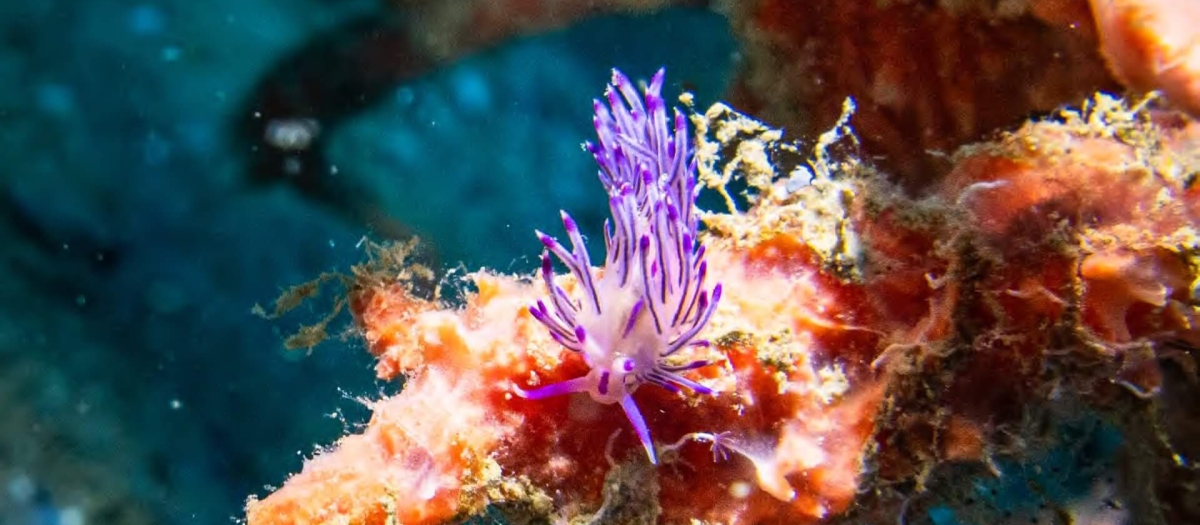
Costasiella kuroshimae, also known as “Shaun the Sheep” sea slug, found during the Sea Slug Ecology course in Koh Tao, Thailand.

Koh Tao is one of the most thoroughly studied sea slug locations in mainland Southeast Asia. The 2021 inventory by Rahul Mehrotra and colleagues, published in ZooKeys, documented over a hundred sea slug species from the island alone — an unusually high count for a single Gulf of Thailand location, and one that continues to grow as new records are added by local divers and researchers.

This field guide is Black Turtle Conservation’s ongoing catalogue of the sea slugs we regularly encounter on Koh Tao dive sites. Every species page is built from our own underwater photography and video, cross-referenced against the current scientific literature, and grounded in current WoRMS taxonomy. Whether you are trying to identify something you photographed on this morning’s dive or planning where to look for a particular species tomorrow, this guide is designed to help.

What counts as a sea slug?

The word “sea slug” is often used as a synonym for “nudibranch”, but the two are not quite the same. Nudibranchs are the most familiar sea slugs — the colourful, shell-less molluscs that dominate reef macro photography — but they are only one of several distinct groups of shell-reduced marine gastropods that divers encounter around Koh Tao. All are technically “sea slugs” in the informal sense, but each group has its own body plan, diet, and lifestyle, and telling them apart is one of the more satisfying skills a macro diver can develop.

Colorful Coryphellina nudibranch feeding on a coral reef in Koh Tao, Thailand, during a marine biodiversity survey.

Nudibranchs (order Nudibranchia) are shell-less marine gastropods characterised by paired sensory tentacles called rhinophores at the front of the head, and by feathery gills or finger-like cerata that provide respiratory surface across the dorsum. They are exclusively predatory, feeding on sponges, hydroids, other cnidarians, or in some cases on other sea slugs. Colour patterns are often bright and function as warnings of sequestered chemical defences.

Sacoglossans (order Sacoglossa) are herbivorous sea slugs that pierce individual algal cells with a highly specialised needle-like radula and suck out the cytoplasm. Many species retain functional chloroplasts from their algal food and photosynthesise inside their own tissues — a phenomenon called kleptoplasty. The tiny “leaf sheep”, Costasiella kuroshimae, is the most famous example and is documented from Koh Tao’s shallow sandy sites.

Sea hares (order Aplysiida) are large herbivorous sea slugs that graze cyanobacterial mats and algae in shallow water. They have a highly distinctive body plan, with paired rhinophores that resemble rabbit ears (the origin of the common name), a mantle cavity containing a single gill, and lateral parapods that in some species can be used to swim. When threatened, sea hares release a purple ink cloud as a defensive smoke screen. The ragged sea hare, Bursatella leachii, is the species divers most often encounter on Koh Tao.

Headshield slugs (order Cephalaspidea) are predatory sea slugs specialised for a fast, burrowing lifestyle on soft substrates. Their most distinctive feature is a large muscular cephalic shield at the front of the head, which they use to plow through fine sand or mud in pursuit of prey. Many species retain a small internal shell as a vestige of their more heavily shelled ancestors. On Koh Tao, several species of the recently established genus Tubulophilinopsis are documented on shallow sandy sites.

All four groups belong to the same class of animals — gastropod molluscs — and all four have either lost their shells entirely or reduced them to a small internal remnant. Where they differ is in what they eat, how they move, and how they defend themselves, and those differences are what make each one worth learning to recognise.

Why Koh Tao is a sea slug hotspot

Reef-focused conservation action carried out during Ocean Aware Week as part of community-led marine protection in Koh Tao.
Colorful Coryphellina nudibranch feeding on a coral reef in Koh Tao, Thailand, during a marine biodiversity survey.
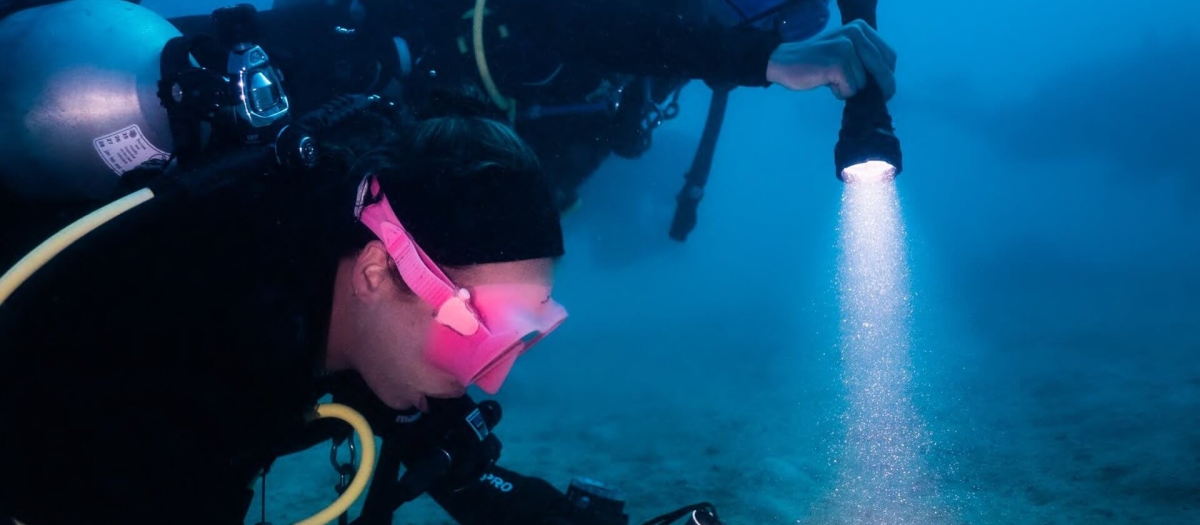
Night dive for nudibranch research during the Sea Slug Ecology course at Black Turtle Conservation, Koh Tao.

Koh Tao sits near the northern edge of the Coral Triangle, the region of Southeast Asia widely considered the richest area of marine biodiversity on Earth. Even a small island like Koh Tao benefits from the enormous species pool that surrounds it, and the mix of habitats packed into a very small area means that a single day of diving can turn up specialists from several very different reef communities.

Shallow sandy bays and sheltered muck sites support sacoglossans grazing on green algae, sea hares grazing cyanobacterial films, and headshield slugs plowing through the top layer of sediment in pursuit of prey. Deeper offshore pinnacles and reef walls host the more familiar chromodorid nudibranchs feeding on encrusting sponges, along with aeolid nudibranchs that live on hydroid colonies and sequester nematocysts from their prey. Between these two extremes, sheltered rocky bays and coral rubble zones support a wide range of intermediate species. Almost every dive site on the island has its own distinct sea slug community, and part of the enjoyment of building this field guide has been documenting how those communities vary from site to site.

Sea slug abundance also varies through the year. Some species peak during the calmer, clearer months and become harder to find during periods of higher wind and reduced visibility, while others follow the boom-and-bust cycles of their preferred prey — hydroid growth pulses, cyanobacterial blooms, or seasonal changes in sponge cover. Knowing what conditions favour which species is one of the more subtle skills a resident macro diver develops over time, and one this guide will help you build.

The ongoing scientific work on Koh Tao’s sea slugs — including new species descriptions such as Armina scotti, named for the island in 2017 — means that this is one of the few dive locations in the region where recreational divers can realistically contribute new records to formal biodiversity science. Every well-photographed sighting has the potential to add something to the local knowledge base.

How to spot and identify a sea slug on a dive

Close-up photo of a nudibranch taken during the Nudibranch & Sea Slug Ecology course at Black Turtle Conservation, Koh Tao.

Finding sea slugs takes a different kind of attention from the wider scanning that works for big-animal diving. The key is slow, careful searching of specific substrates and prey species: sponge-encrusted walls for chromodorids, hydroid colonies for aeolids, Avrainvillea algae patches for sacoglossans, cyanobacterial films for sea hares, and open sand for headshield slugs. Once you know what a species eats and where it lives, you know where to look for it.

Good buoyancy is essential. Most of the interesting species are small and cryptic, and finding them requires holding position within a few centimetres of the substrate without touching or disturbing anything. Sensitive lung control, careful fin positioning, and a slow methodical pace will consistently outperform the fast, wide scanning that suits shark or turtle diving. Bringing a torch — even on a bright daytime dive — also helps reveal colour and structure in shaded overhangs, crevices, and the undersides of coral plates where many species prefer to live.

When you find a sea slug, the features that matter for species-level identification are usually small. Look at the shape and position of the rhinophores. Note the arrangement of the gills or cerata across the back. Look for a specific colour pattern along the mantle margin, the tips of the cerata, or the dorsum. Photograph the animal from directly above and from the side, and ideally photograph the substrate or prey species it is on — host information is often the single most useful identification clue.

Back on the boat or at your accommodation, use the species pages in this guide to check your photographs. Most identifications are settled by looking at a few key features that are easy to see in a macro image but easy to miss underwater. If you are stuck, the individual species pages include comparison notes for the species most commonly confused with each subject.

Conservation divers performing underwater research and sea slug identification training in Koh Tao, Thailand.

Contributing to citizen science

Marine conservation divers recording sea slug data during the Nudibranch & Sea Slug Ecology course in Koh Tao, Thailand.
Divers conducting sea slug monitoring surveys to study species diversity and distribution around Koh Tao.

Sea slug identification is one of the most direct ways recreational divers can contribute to marine biodiversity science. Every well-documented sighting adds a data point to the record of what lives on Koh Tao, and cumulative records over many divers and many years build the kind of baseline that lets us track how sea slug communities are changing.

Black Turtle Conservation welcomes contributions from divers who want their sightings added to the local archive. If you have photographs of a sea slug from a Koh Tao dive site and can provide the date, depth, dive site, and where possible the host or substrate, we can include it in our ongoing documentation and, where the identification is confirmed, add it to the species record.

For divers who want to develop identification skills in a more structured way, we run Sea slug and reef ecology programmes throughout the year. These take divers from casual spotting to accurate species-level identification and structured contribution to local biodiversity monitoring, and are open to anyone with reasonable buoyancy and macro-diving interest.

Explore the guide

Conservation divers performing underwater research and sea slug identification training in Koh Tao, Thailand.

Individual species pages appear below this introduction and are added as new species are documented from Koh Tao dive sites. To return to the main field guides index, visit Field Guides.