Reaching up to 28 mm, it feeds exclusively on the polyps of this resilient coral species, leaving characteristic feeding scars and white egg ribbons on the colony surface. Diurnal to crepuscular and highly cryptic, it relies on host mimicry and ceratal autotomy for defense rather than kleptocnidy. It plays a specialized ecological role in regulating localized Pavona polyp density and serves as a fascinating bioindicator of healthy agariciid coral communities amid changing reef conditions in the Gulf of Thailand.

This comprehensive guide details its morphology, diet and feeding behaviors, substrate preferences, identification tips, specific Koh Tao dive sites, environmental conditions, vulnerability profile, and hands-on training opportunities with Black Turtle Conservation—ideal for advanced macro divers, underwater photographers, and marine enthusiasts seeking accurate, in-depth information on this rare and host-specific nudibranch.

Common Names: Vie’s Phestilla, Pavona-eating Nudibranch

Family: Trinchesiidae Order: Nudibranchia (Suborder: Aeolidina)

Learn About Phestilla viei

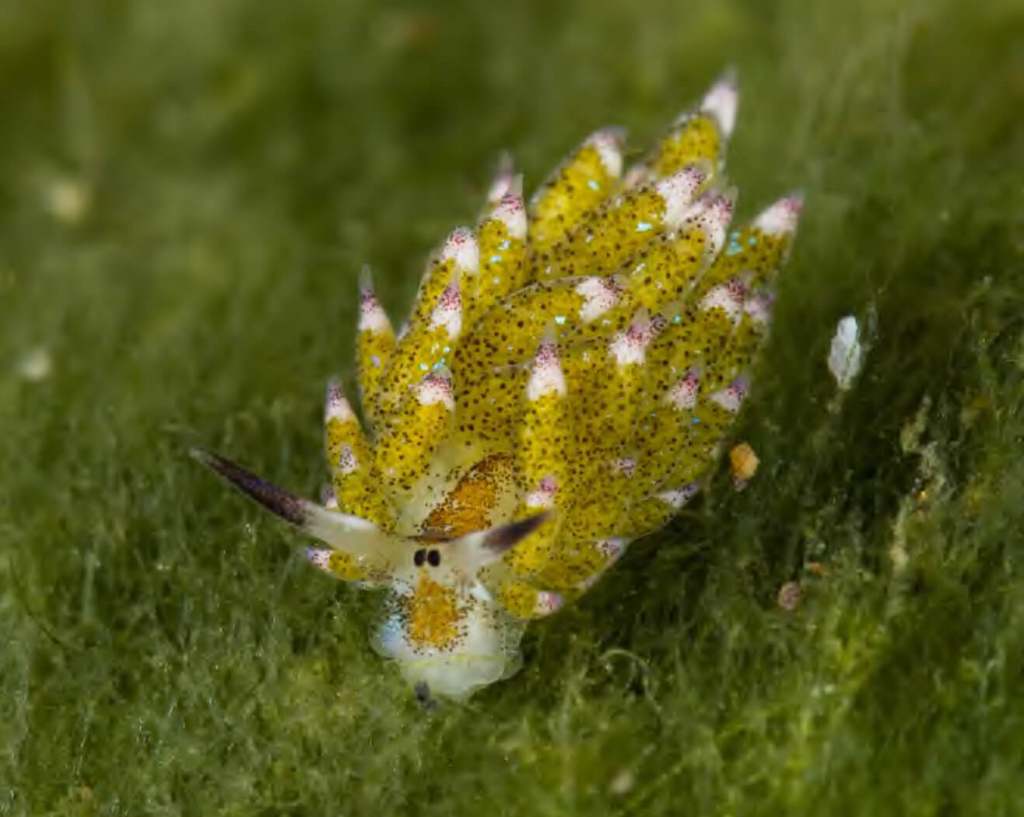
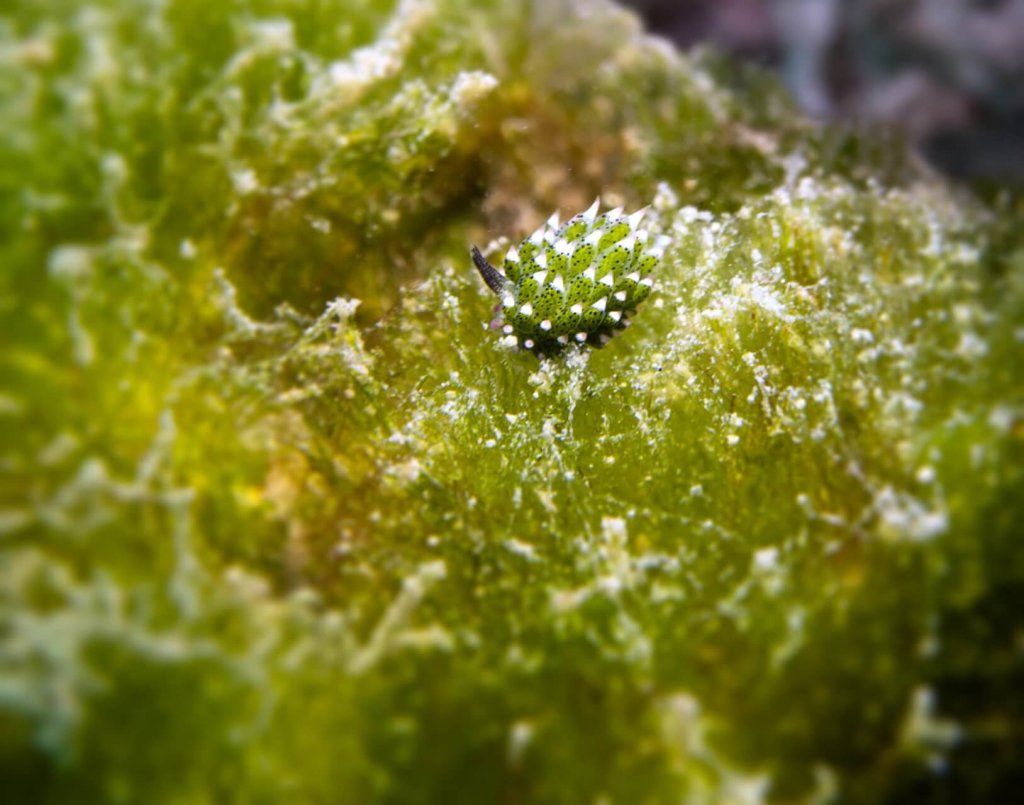
Sea slug (Costasiella sp.) photographed during the Sea Slug Ecology course at Black Turtle Conservation, exploring nudibranch identification and behavior in Koh Tao, Thailand.
Costasiella kuroshimae, also known as “Shaun the Sheep” sea slug, found during the Sea Slug Ecology course in Koh Tao, Thailand.
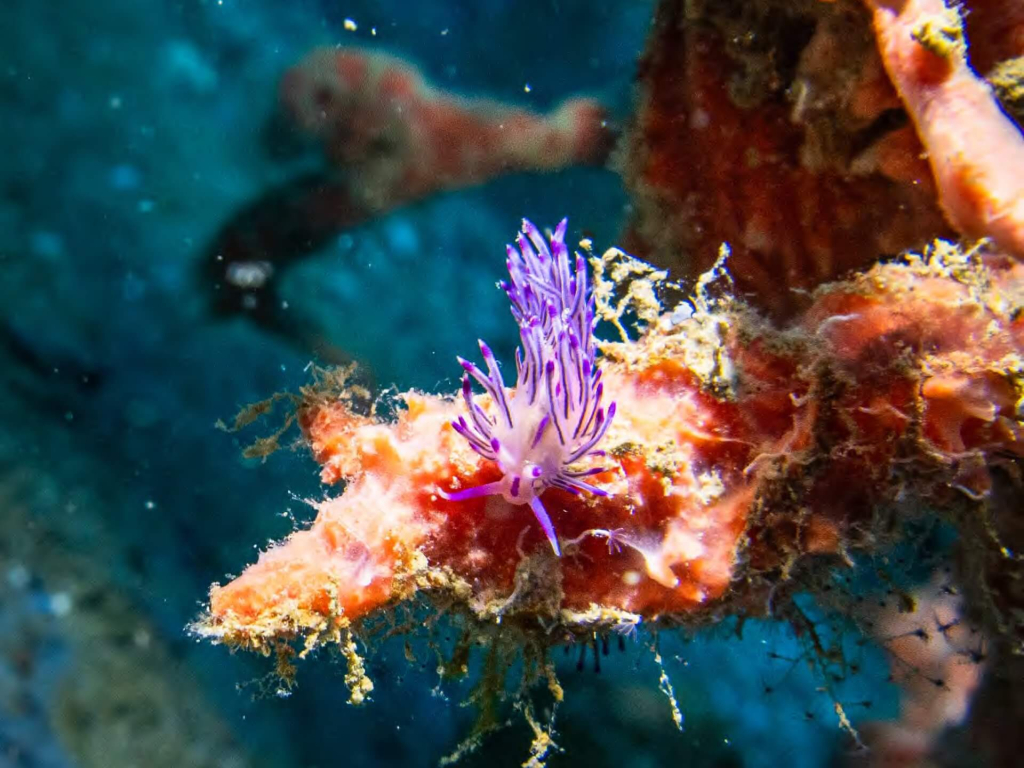
Colorful Coryphellina nudibranch feeding on a coral reef in Koh Tao, Thailand, during a marine biodiversity survey.
Scientific research reef monitoring dive in Koh Tao, collecting coral reef health data and ecological survey observations underwater.
Night dive for nudibranch research during the Sea Slug Ecology course at Black Turtle Conservation, Koh Tao.

Overview of the Species

Phestilla viei is a remarkable corallivorous aeolid nudibranch in the family Trinchesiidae, formally described in 2020 from specimens collected on Koh Tao, Thailand. This species exemplifies the ongoing discovery of cryptic biodiversity in well-dived areas of the Gulf of Thailand.

Like other members of the genus Phestilla, it is an obligate specialist on scleractinian corals, showing extreme host specificity and morphological adaptation for camouflage on its host.

With Koh Tao now documenting over 191 nudibranch species, P. viei highlights the island’s importance for nudibranch research and conservation, particularly as Pavona explanulata becomes more prevalent amid reef changes due to climate stress and local anthropogenic impacts.

Size and Appearance Highlights

Adults measure 17–28 mm in length, with a relatively slender, elongated body. The coloration is highly cryptic, typically translucent with intricate brown, reddish-brown, or mottled patterns that blend seamlessly with the brownish-green encrusting plates of Pavona explanulata. Cerata are numerous, cylindrical to slightly swollen, and arranged in multiple rows; they often contain digestive gland contents reflecting the coral’s pigmentation. Rhinophores and oral tentacles are smooth and relatively short, contributing to the overall camouflaged profile on the coral surface.

Daily Behaviors and Activity Patterns

Phestilla viei is generally diurnal to crepuscular, though its excellent camouflage makes it difficult to spot during the day. It glides slowly across the surface of its host coral, feeding on individual polyps.

When disturbed, it relies on ceratal autotomy, dropping cerata that continue to move and distract predators. As simultaneous hermaphrodites, individuals may aggregate near dense coral patches during reproductive periods, aligning right sides together for sperm exchange before laying white egg ribbons directly on the coral colony. Its behavior is tightly linked to the host, with individuals rarely straying far from Pavona explanulata.

Role in Koh Tao Marine Life

In Koh Tao’s changing reef ecosystems, P. viei acts as a specialist consumer of Pavona explanulata, a resilient plate coral that is increasingly common as more sensitive species decline. By feeding on polyps, it contributes to natural turnover and may influence local coral community dynamics.

Divers and researchers find it on encrusting Pavona colonies in shallow to moderate depths, where its presence signals healthy host populations. The species is an excellent subject for citizen-science surveys focused on corallivorous nudibranchs and reef health monitoring.

Key Behavioral Adaptations

The nudibranch exhibits remarkable host mimicry, with body patterning and coloration evolving to match Pavona explanulata for near-perfect crypsis. It moves deliberately across the coral surface, pausing to feed on polyps. Defense relies primarily on ceratal autotomy rather than nematocyst sequestration (kleptocnidy is minimal or absent in this genus).

These adaptations allow P. viei to exploit a specific coral niche while remaining inconspicuous to both predators and observers until it moves or leaves feeding scars/egg trails.

Phestilla viei Morphology

Sea slug (Costasiella sp.) photographed during the Sea Slug Ecology course at Black Turtle Conservation, exploring nudibranch identification and behavior in Koh Tao, Thailand.

Body Shape and Texture

Phestilla viei has a slender, elongated body with a translucent base that allows partial visibility of internal structures. The dorsum is covered with numerous cerata arranged in multiple irregular rows. The foot is broad with rounded anterior corners, providing stable attachment to the flat or slightly undulating surface of plate corals.

Sensory and Respiratory Structures

Rhinophores are smooth, retractable, and relatively short. Oral tentacles are also smooth and prominent. Respiration occurs mainly through the cerata, which contain diverticula of the digestive gland. Unlike many aeolids, this species lacks prominent cnidosacs at the cerata tips, consistent with its reliance on autotomy rather than stored nematocysts.

Size Variations and Defensive Features

Juveniles are smaller with fewer cerata and less developed patterning. Adults reach up to 28 mm. Coloration is highly variable but always cryptic, featuring brown to reddish-brown mottling or lines that mimic the host coral’s texture and pigmentation.

Cerata are cylindrical to slightly swollen and may show white or pale tips. When threatened, the nudibranch readily autotomizes cerata, which wriggle to distract predators while the main body remains camouflaged or escapes. The overall morphology — translucent body, cryptic patterning, and broad foot — is optimized for life on encrusting Pavona colonies.

This morphology enables exceptional crypsis: the nudibranch is often invisible until it moves, feeds, or deposits eggs, making it one of the most challenging species to spot on Koh Tao reefs.

Phestilla viei Diet and Feeding Strategy

Sea slug (Costasiella sp.) photographed during the Sea Slug Ecology course at Black Turtle Conservation, exploring nudibranch identification and behavior in Koh Tao, Thailand.
Costasiella kuroshimae, also known as “Shaun the Sheep” sea slug, found during the Sea Slug Ecology course in Koh Tao, Thailand.
Colorful Coryphellina nudibranch feeding on a coral reef in Koh Tao, Thailand, during a marine biodiversity survey.

Primary Food Sources

Phestilla viei is an obligate corallivore, feeding exclusively on the polyps of the scleractinian coral Pavona explanulata (family Agariciidae). All known specimens have been found on this single host species.

Feeding Behavior in Detail

The nudibranch positions itself on the coral surface and consumes individual polyps by rasping tissue with its radula. Feeding leaves characteristic small scars or bare skeleton patches on the colony. It feeds slowly and methodically, often remaining on the same colony for extended periods and moving between polyps. Egg ribbons are frequently deposited directly on the host coral near feeding sites.

Chemical Defense Mechanisms

While it may sequester some secondary metabolites from the coral, P. viei does not rely on kleptocnidy (storing nematocysts). Primary defense is ceratal autotomy: dropped cerata continue to move and draw predator attention away from the main body. The cryptic coloration provides excellent camouflage, reducing the need for active chemical defense.

Diurnal Activity and Ecological Impact

Feeding occurs during daylight or low-light periods when polyps are extended. In Koh Tao, the easiest way to locate the species is to search for feeding scars or white egg trails on Pavona explanulata colonies, then scan carefully for the camouflaged nudibranch.

By selectively consuming polyps, P. viei contributes to natural coral turnover and may help prevent localized over-dominance of this resilient species. Its strict host specificity makes it a precise bioindicator of Pavona explanulata health and distribution.

Phestilla viei Substrate Preference

Sea slug (Costasiella sp.) photographed during the Sea Slug Ecology course at Black Turtle Conservation, exploring nudibranch identification and behavior in Koh Tao, Thailand.

Phestilla viei is found exclusively on or immediately adjacent to colonies of its host coral, Pavona explanulata, which forms encrusting or plate-like structures on hard substrates. It occurs in shallow to moderate depths (typically 5–15 m, with records as shallow as 5–6 m).

Why Substrate Matters

The species is never found far from Pavona explanulata. It glides directly on the coral surface, using the flat or slightly undulating plates for both food and camouflage. Hard reef frameworks, rubble, or rocky outcrops supporting this coral are the only suitable substrates.

Response to Environmental Conditions

In moderate surge, it remains firmly attached to the coral. During stronger currents or disturbance, it may drop cerata or move to more sheltered parts of the colony. This tight substrate and host preference ties its survival directly to the abundance and condition of Pavona explanulata, a coral noted for its resilience but still vulnerable to sedimentation and physical damage.

Phestilla viei Ecological Role(s)

As an obligate corallivore on Pavona explanulata, Phestilla viei helps regulate localized polyp density, contributing to natural coral turnover and preventing potential over-dominance of this species on changing reefs. This supports overall reef biodiversity by maintaining space for other organisms.

Broader Reef Contributions

Its extreme host mimicry adds complexity to reef crypsis networks. Planktonic larvae promote connectivity between distant Pavona patches across the Gulf of Thailand. As a mid-level consumer, it links coral production to higher trophic levels, with ceratal autotomy limiting successful predation.

Value as a Bioindicator

The presence of P. viei indicates healthy Pavona explanulata populations and suitable conditions for this resilient coral. Because the nudibranch is so host-specific, its abundance or absence can reflect subtle changes in coral health or environmental stress.

Opportunities for Citizen Science

Its cryptic nature makes sightings valuable. The best survey method is to locate Pavona explanulata colonies showing feeding scars or egg ribbons, then search carefully for the nudibranch. Documenting host condition, color morph, and location provides important data for monitoring reef dynamics and nudibranch distribution on Koh Tao.

Sea slug (Costasiella sp.) photographed during the Sea Slug Ecology course at Black Turtle Conservation, exploring nudibranch identification and behavior in Koh Tao, Thailand.
Costasiella kuroshimae, also known as “Shaun the Sheep” sea slug, found during the Sea Slug Ecology course in Koh Tao, Thailand.
White nudibranch observed during marine biodiversity survey conducted as part of the conservation diving programs on Koh Tao, Thailand.

Phestilla viei Fun and Interesting Facts

Sea slug (Costasiella sp.) photographed during the Sea Slug Ecology course at Black Turtle Conservation, exploring nudibranch identification and behavior in Koh Tao, Thailand.

Exceptional Host Mimicry

Phestilla viei is a master of crypsis, with body patterning and coloration so closely matching Pavona explanulata that it is extremely difficult to spot. The easiest detection method is often to look for feeding scars or white egg trails on the coral and then scan for the nudibranch at the end of the trail.

Ceratal Autotomy Defense

Like many Phestilla species, P. viei relies on dropping cerata when threatened. The detached cerata continue to wriggle, distracting predators while the main body remains camouflaged or escapes. This sacrificial strategy compensates for the lack of prominent cnidosacs.

Reproductive Strategy

Phestilla viei is a simultaneous hermaphrodite. Every individual possesses both male and female reproductive organs, enabling flexible mating. Pairs align right side to right side, exchanging sperm packets reciprocally in a coordinated positioning.

After mating, each individual lays its own white egg ribbon — typically a neat spiral or coil attached directly to the host coral colony. These ribbons contain thousands of embryos that develop into planktonic veliger larvae. The larvae swim freely in the water column, feeding on phytoplankton before settling onto suitable Pavona explanulata substrates and metamorphosing into juveniles.

This reproductive mode is virtually identical to that of other Phestilla species such as P. melanobrachia and most aeolid nudibranchs, maximizing success in patchy coral habitats through wide larval dispersal.

Discovery on Koh Tao

P. viei was first discovered on Koh Tao by local divers and formally described in 2020, with the type locality in Lighthouse Bay. Its discovery underscores how dedicated local observation and research continue to reveal new species even in popular dive destinations.

Koh Tao Observations

Around Koh Tao, P. viei is considered rare but regularly sighted once divers know to search Pavona explanulata colonies for scars and eggs. It is a highlight for advanced macro enthusiasts and an important species for documenting the island’s unique nudibranch fauna.

Where to Find Phestilla viei Around Koh Tao

Sea slug (Costasiella sp.) photographed during the Sea Slug Ecology course at Black Turtle Conservation, exploring nudibranch identification and behavior in Koh Tao, Thailand.
Costasiella kuroshimae, also known as “Shaun the Sheep” sea slug, found during the Sea Slug Ecology course in Koh Tao, Thailand.

Phestilla viei is found exclusively on Pavona explanulata colonies, typically in shallow to moderate depths (5–15 m). Look for encrusting brownish-green plate corals, especially those showing small feeding scars or white egg ribbons.

Top Dive Sites for Sightings

Known or potential locations include:

Lighthouse Bay (type locality): Shallow Pavona colonies at 5–9 m.

Twins and White Rock: Records on suitable plate corals.

Tanote Bay and other east-coast sites: Occasional sightings on rocky areas supporting Pavona.

Mango Bay and rubble zones: Possible on scattered encrusting corals.

The best strategy is to scan Pavona explanulata colonies carefully for movement, scars, or eggs. Night or low-light dives may reveal more active individuals. Local guides familiar with corallivorous nudibranchs and Pavona habitats greatly increase success rates.

Environmental Conditions Preferred by Phestilla viei

Sea slug (Costasiella sp.) photographed during the Sea Slug Ecology course at Black Turtle Conservation, exploring nudibranch identification and behavior in Koh Tao, Thailand.

Phestilla viei inhabits tropical coral reef waters of the Gulf of Thailand with temperatures of 24–30°C and salinity around 33–35 ppt. It prefers clear to moderately turbid water with visibility of 8–25 m and moderate currents that support Pavona explanulata growth without heavy sedimentation.

Seasonal Patterns

It is present year-round but may be easier to locate during the dry season (November–April) when calmer conditions improve visibility on shallow reefs. The species is tied to the health of its host coral, which is relatively resilient but still affected by bleaching, sedimentation, or physical damage.

Marine conservation diver photographing nudibranch species on Koh Tao coral reef as part of biodiversity documentation.

Phestilla viei Vulnerability Profile

Sea slug (Costasiella sp.) photographed during the Sea Slug Ecology course at Black Turtle Conservation, exploring nudibranch identification and behavior in Koh Tao, Thailand.

Phestilla viei is currently Not Evaluated on the IUCN Red List. As an obligate specialist on Pavona explanulata, it is highly vulnerable to any decline in its host coral due to bleaching, sedimentation, pollution, anchoring, or diver damage. Because it is so host-specific, population stability is directly linked to the abundance and condition of this particular coral species.

While not targeted for collection, occasional handling can cause ceratal loss and stress. Ethical diving practices (excellent buoyancy, no touching corals) are essential. Long-term monitoring through citizen-science programs is recommended to track abundance as an indicator of Pavona health and overall reef resilience around Koh Tao.

How to Identify Phestilla viei

Identification is best achieved by locating the host coral Pavona explanulata and searching for feeding scars or white egg ribbons, then carefully scanning for the cryptic nudibranch.

Look for a small (up to 28 mm) translucent aeolid with brown/reddish-brown mottling or lines that match the coral’s coloration, numerous cerata, and smooth rhinophores/oral tentacles. The combination of host specificity and camouflage is diagnostic.

In the field, note the exact match to Pavona explanulata and the presence of egg masses. Macro photography on the host coral provides reliable confirmation and helps distinguish it from other Phestilla species.

Mastering Identification with Black Turtle Conservation

Black Turtle Conservation on Koh Tao offers specialized training to help divers recognize Phestilla viei and understand its unique obligate relationship with Pavona explanulata. Our programs focus on host-specific search techniques and cryptic camouflage, turning rare sightings into accurate scientific records that support reef monitoring.

Our Training Approach: From Theory to Survey

Training begins with classroom sessions on corallivorous nudibranch ecology, host specificity, and identification strategies for Koh Tao Phestilla species.

Participants then join guided reef surveys, practicing non-invasive observation, photography, and data recording (host coral condition, feeding evidence, behavior).

Graduates contribute to conservation databases, transforming recreational dives into valuable scientific efforts that help protect Koh Tao’s coral ecosystems and associated nudibranch diversity.

External Link Citations & References

Mehrotra, R., Caballer, M. & Chavanich, S. (2020). A new species of coral-feeding nudibranch from the Gulf of Thailand. Marine Biodiversity.

Conservation Diver: A New Species of Coral-Eating Nudibranch (2020). https://conservationdiver.com/2020/05/12/new-species-nudibranch/

Mehrotra, R. et al. (2021). An updated inventory of sea slugs from Koh Tao, Thailand. ZooKeys.

Reeflex: Phestilla viei. https://www.reeflex.net/tiere/16235_Phestilla_viei.htm

Wikipedia: Phestilla viei. https://en.wikipedia.org/wiki/Phestilla_viei

Black Turtle Conservation: Nudibranch & Sea Slug Ecology Course. https://www.blackturtleconservation.com/