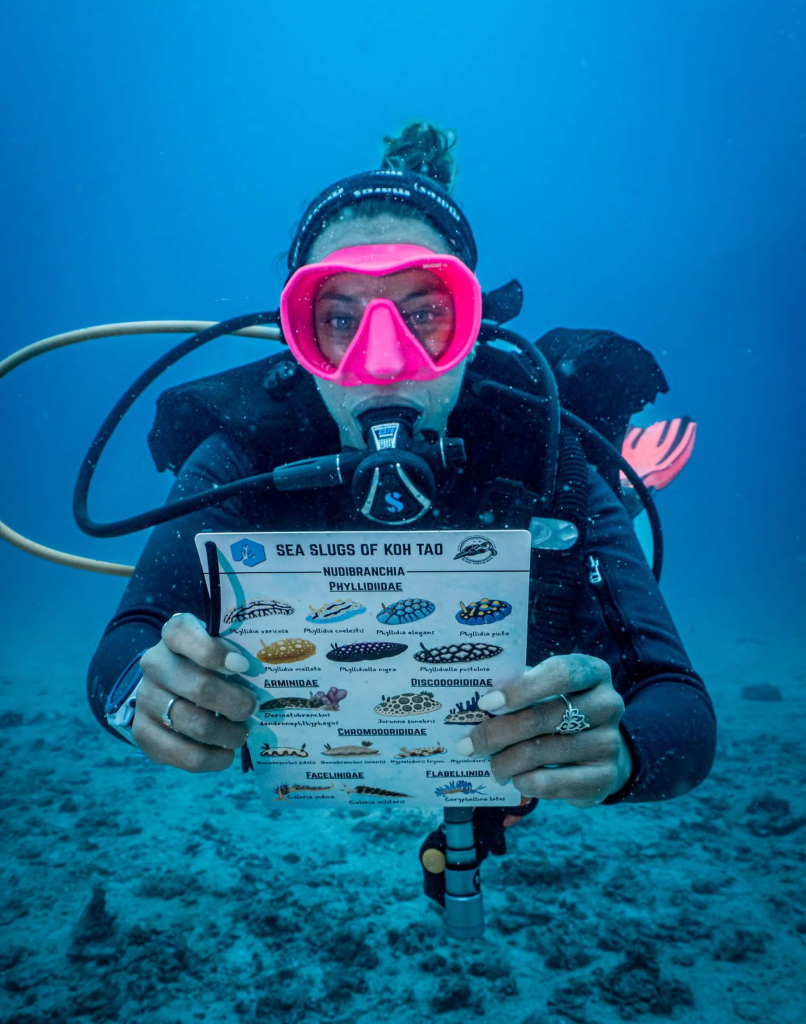
Overview of the Species
Jorunna funebris, affectionately known as the Polka-Dot Nudibranch, ranks among the most charming and frequently photographed sea slugs around Koh Tao, Thailand.
This dorid nudibranch belongs to the diverse group of shell-less marine gastropods renowned for their vivid colors, intricate patterns, and fascinating behaviors.
With its striking white body adorned by bold black spots, it captures the imagination of divers and macro photographers alike, serving as a gateway species for understanding the rich nudibranch biodiversity of the Gulf of Thailand.
Size and Appearance Highlights
Size varies with age and nutrition; juveniles start small (under 10 mm) with fewer, less defined spots, while mature adults typically reach up to 70 mm however exceptional specimens have been recorded much larger.
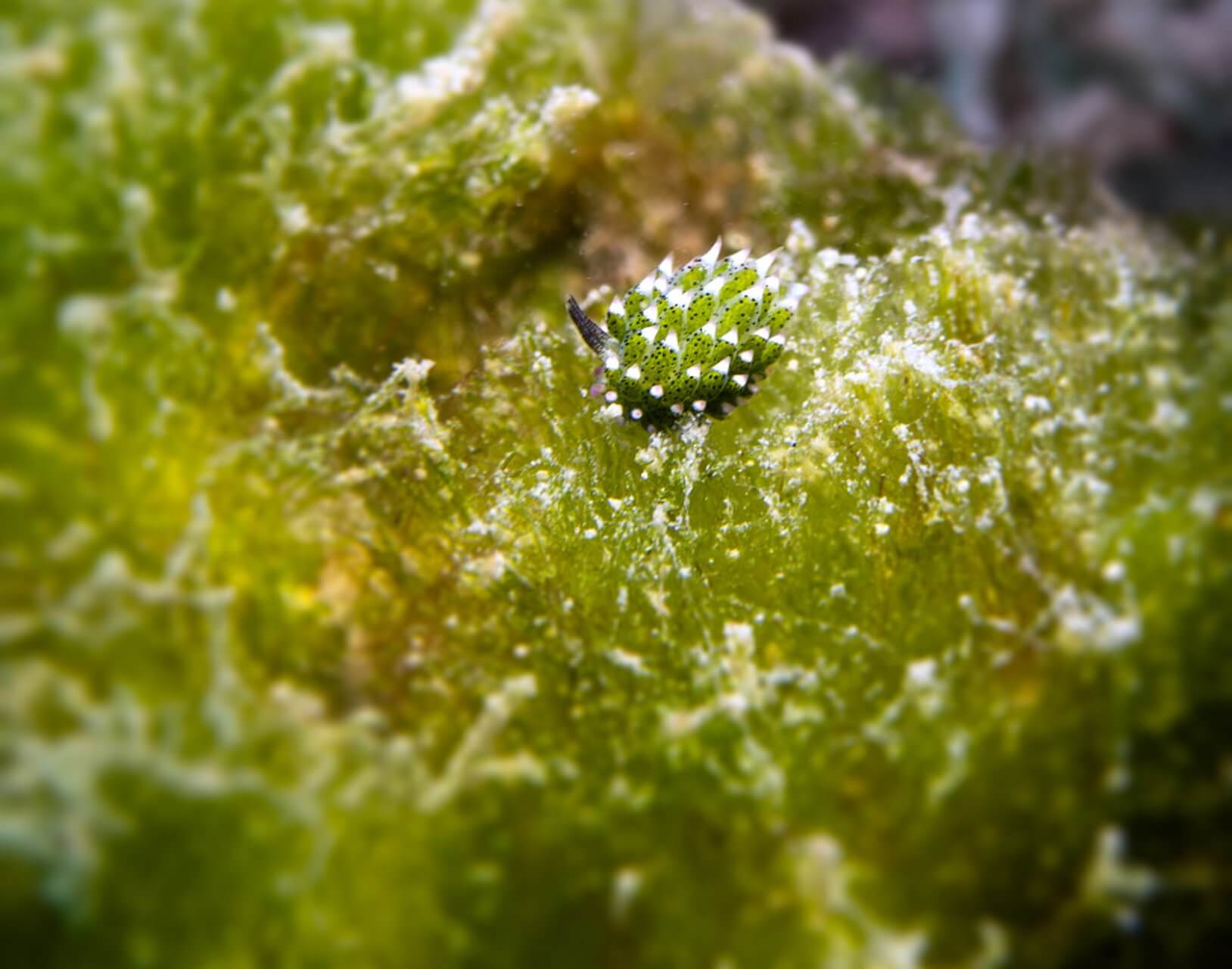
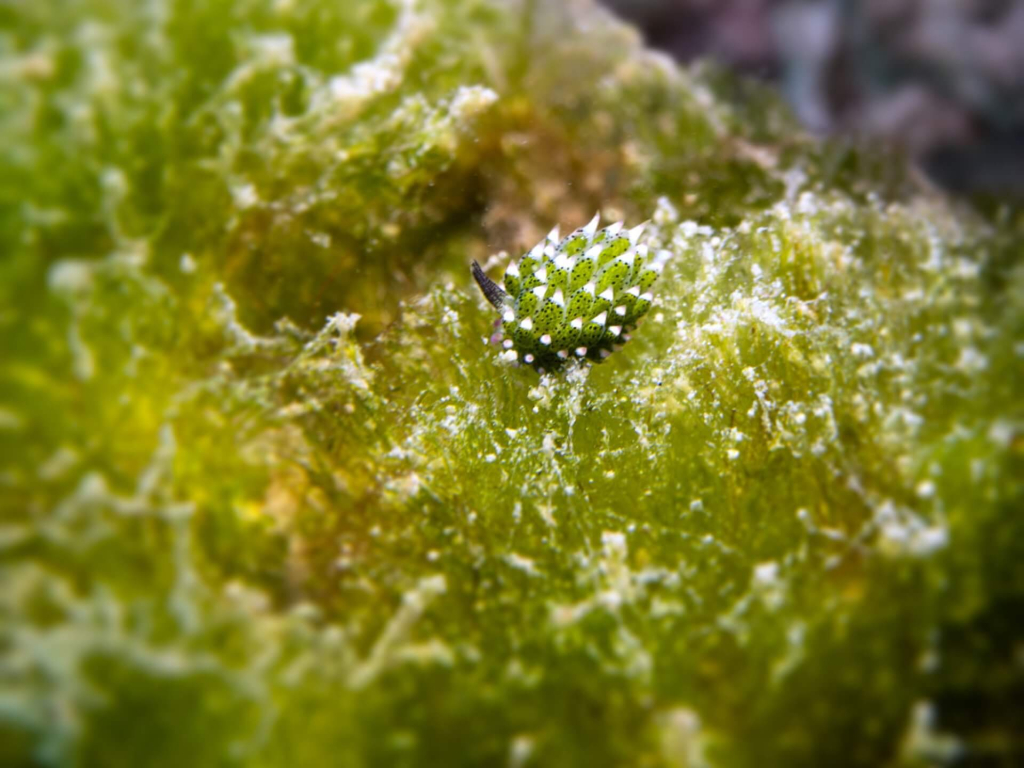
We have observed several specimens over 100mm including the largest specimen we have observed at Mango Bay in 2025 that measured 170mm. The caryophyllidia density gives the animal a plush look, sometimes compared to a stuffed toy.
Its body is covered in tiny structures called caryophyllidia—raised, spicule-bearing papillae—that give the animal a fuzzy or bristly texture.
Daily Behaviors and Activity Patterns
This species is diurnal and relatively bold, often crawling openly across substrates in full view of observers. As simultaneous hermaphrodites, individuals engage in elaborate mating rituals where they align side-by-side to exchange sperm before depositing spiral egg ribbons on suitable surfaces. The planktonic larvae then drift in ocean currents, eventually settling onto sponges where they metamorphose into juveniles.
Role in Koh Tao Marine Life
In Koh Tao’s vibrant reefs, J. funebris behaves as a deliberate grazer, moving slowly yet purposefully while sampling its environment with prominent rhinophores. It frequently pauses to feed on encrusting sponges, retracting slightly when disturbed but rarely fleeing rapidly.
This slow, exposed lifestyle highlights its chemical defenses, which deter most predators. Divers often encounter solitary individuals or small groups near sponge patches, where the nudibranch’s gentle movements and photogenic appearance make it a favorite subject for underwater documentation and citizen-science recording.
Its presence contributes to the island’s reputation as a macro-diving paradise, with over 191 nudibranch species documented in local waters.
Key Behavioral Adaptations
The behaviors of J. funebris reflect remarkable adaptations to reef life. It uses its muscular foot for smooth gliding, extending sensory rhinophores to detect chemical cues from potential food sources or mates.
When threatened, it may curl slightly or rely on distasteful secretions derived from its diet. Mating pairs display coordinated circling before copulation, showcasing the species’ reproductive flexibility.
These traits, combined with its conspicuous patterning, make J. funebris an excellent ambassador for nudibranch ecology and an ideal entry point for marine conservation education around Koh Tao.