Discover Koh Tao’s marine life

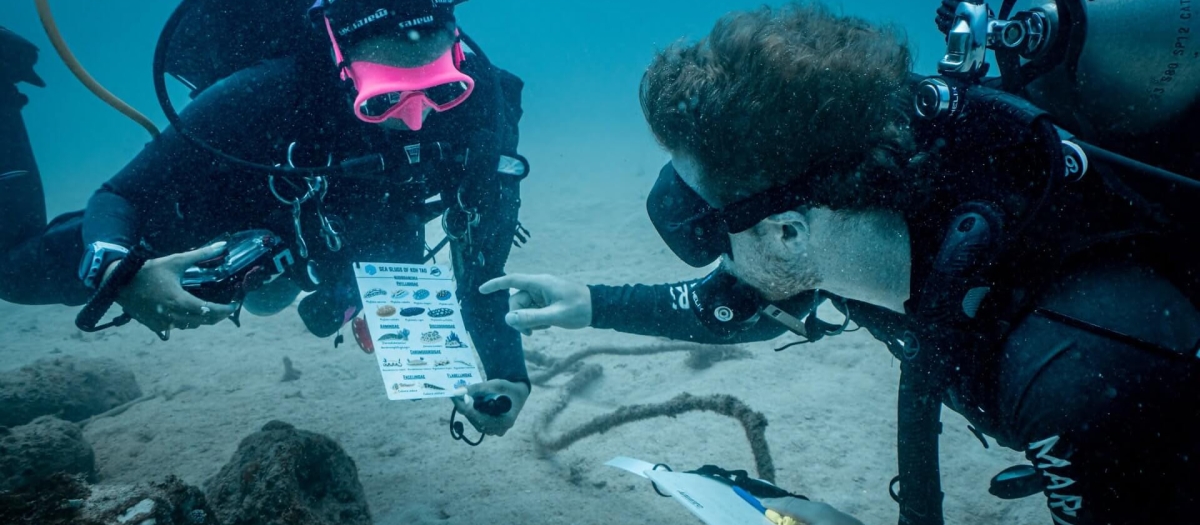
Marine conservation students improving underwater species identification and reef awareness during the Conservation Specialist program in Koh Tao.

Within an area you can walk across in a couple of hours, Koh Tao supports hard coral gardens, soft-sediment muck bays, shallow sandy sites, sheltered walls, and deeper offshore pinnacles. Each of these habitats holds its own community of animals, and no two dive sites feel quite the same. A shallow bay might reveal tiny grazing sacoglossans in the algae; a deeper pinnacle can turn up rare aeolids on hydroid colonies; a sheltered wall might host the more familiar chromodorid nudibranchs on encrusting sponges.

The field guides on this site are Black Turtle Conservation’s ongoing effort to make sense of that biodiversity for divers who come to see it. They are built from our own underwater photography and video, from years of local observation on our own conservation dives, and from the peer-reviewed scientific literature that documents what has been formally described from these waters. Whether you have come to Koh Tao for a week of holiday diving or you are here on a longer conservation programme, we hope these guides help you connect what you see underwater with the species behind it.
Why we built these field guides

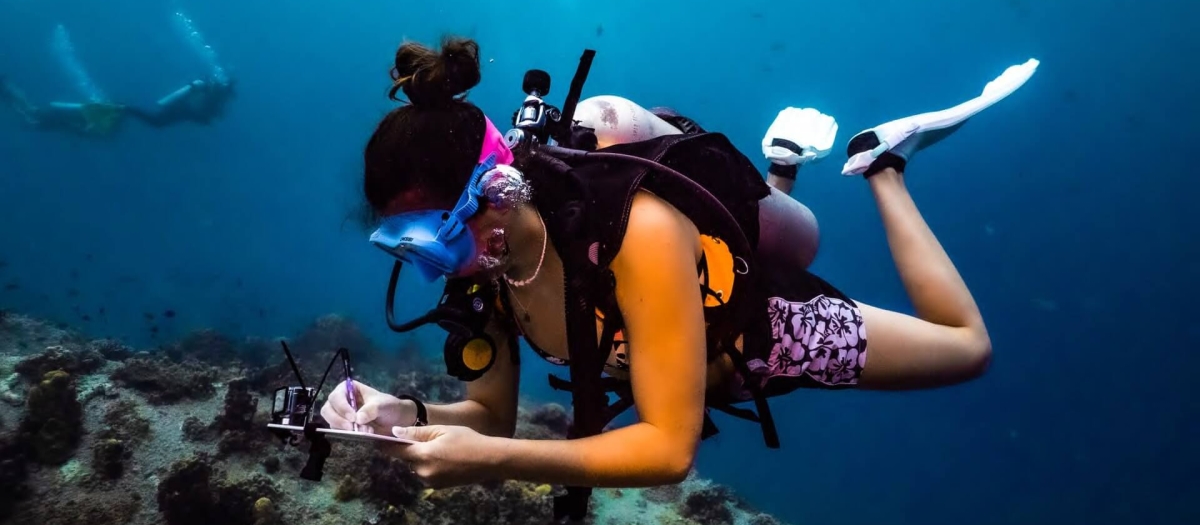
Marine conservation diver photographing nudibranch species on Koh Tao coral reef as part of biodiversity documentation.

We started building this reference because we could not find one. There are excellent global sea-slug catalogues, world-class coral references, and general Indo-Pacific dive guides, but very little that focuses on what actually turns up on a specific reef system in the Gulf of Thailand. Koh Tao is one of the more thoroughly surveyed islands in mainland Southeast Asia — the Mehrotra and colleagues 2021 inventory of local sea slugs documented over a hundred species alone — but that scientific detail rarely makes it into the hands of the diver looking up an animal after a dive.

Our approach is straightforward. Every species page begins with the natural history — how the animal lives, what it eats, where it fits in the reef ecosystem — and works down to the practical detail of identification: what to look for, what to photograph, and how to tell it apart from the species most commonly confused with it. All identifications are grounded in current WoRMS taxonomy and the primary scientific literature, and every photograph or video we use is from Black Turtle Conservation divers on Koh Tao dive sites.

What is in the guides

Our field guides are organised by the major groups of marine animals divers actually encounter around Koh Tao. Two are currently live.

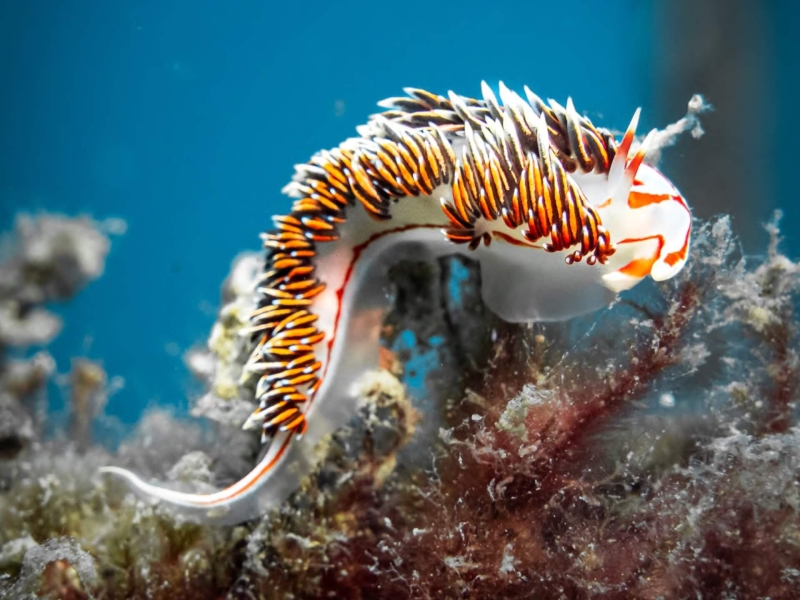
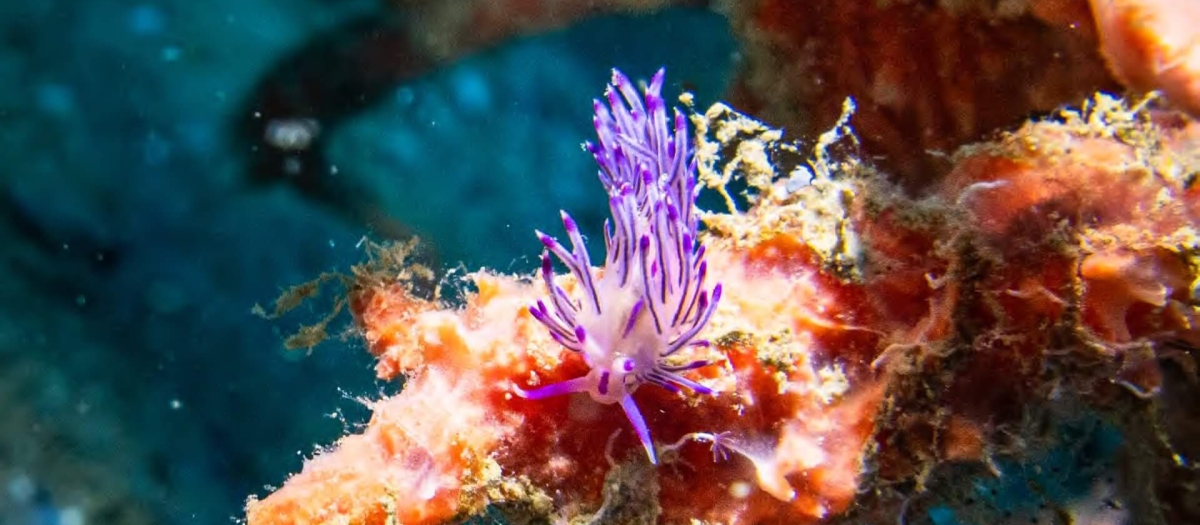
Colorful Coryphellina nudibranch feeding on a coral reef in Koh Tao, Thailand, during a marine biodiversity survey.

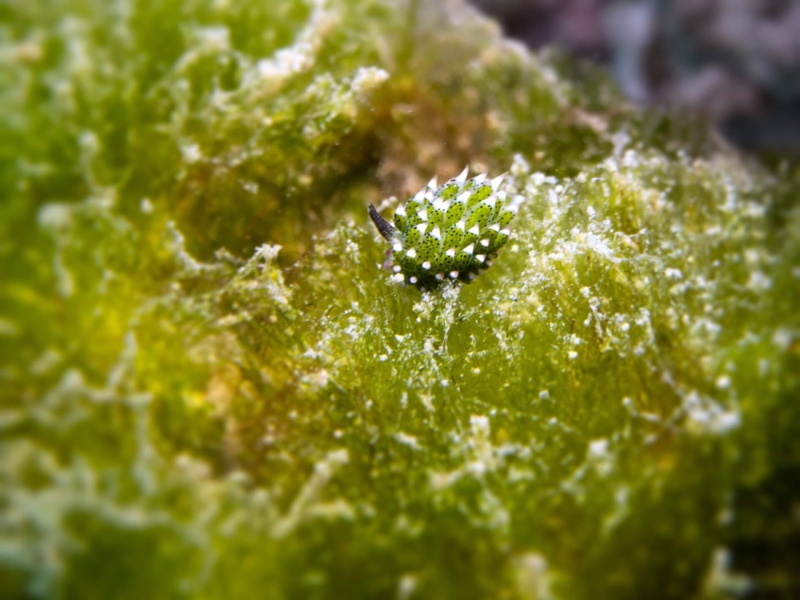
Sea Slugs covers the shell-reduced marine molluscs that most divers know as “nudibranchs” — although the group is broader than that name suggests. You will find our full documentation of Koh Tao’s nudibranch species alongside their close relatives: the sap-sucking sacoglossans (including the famous leaf sheep, Costasiella kuroshimae), the herbivorous sea hares, and the burrowing headshield slugs that most divers walk right past on sandy sites. Each group has its own biology, and each species page explains what makes it distinctive.

Marine Flatworms covers the polyclad flatworms that share Koh Tao’s reefs with the sea slugs but belong to an entirely different animal phylum. Flatworms are often mistaken for nudibranchs, and telling them apart is one of the most useful skills a new macro diver can develop. This guide explains why they are not sea slugs, how to spot the differences in the water, and which species we regularly document from local dive sites.

How to use these guides

The guides are designed to be useful at three moments: before the dive, on the boat, and back at your accommodation.

Marine conservation students identifying nudibranch species underwater during the Sea Slug Ecology course at Black Turtle Conservation.

Before the dive, browse the sub-parent pages to get a sense of what you are likely to see at a particular dive site or habitat type. Shallow muck and sandy sites reward slow, careful searching for headshield slugs, sacoglossans grazing on algae, and rare cryptic aeolids. Deeper offshore pinnacles and reef walls are where the chromodorid nudibranchs live on encrusting sponges, and where hydroid-feeding aeolids are most likely to appear.

On the boat, use the guides to check any photographs you have taken between dives. Most identifications are settled by a good look at rhinophores, gill plumes, or ceras patterns — features that are easy to see in a macro photograph but easy to miss underwater.

Back at your accommodation, use the species pages to work through your dive log properly. Recording accurate species-level identifications from your dives contributes real data to Koh Tao’s biodiversity record, and we welcome sightings sent to us for inclusion in our archive.

Community sea slug and nudibranch survey dive in Koh Tao, documenting marine biodiversity through citizen science participation.

Diving and learning with Black Turtle Conservation

Community sea slug and nudibranch survey dive in Koh Tao, documenting marine biodiversity through citizen science participation.

If these guides catch your interest and you want to go further, we run conservation dives and structured training courses throughout the year on Koh Tao. Our nudibranch and reef ecology programmes take divers from casual spotting to accurate species-level identification and structured contribution to local biodiversity monitoring. If you are only on the island for a few days and want an introduction, our conservation dives include species identification as a core focus.

Every diver who joins us contributes directly to the work that produces these field guides, and we would be glad to have you.