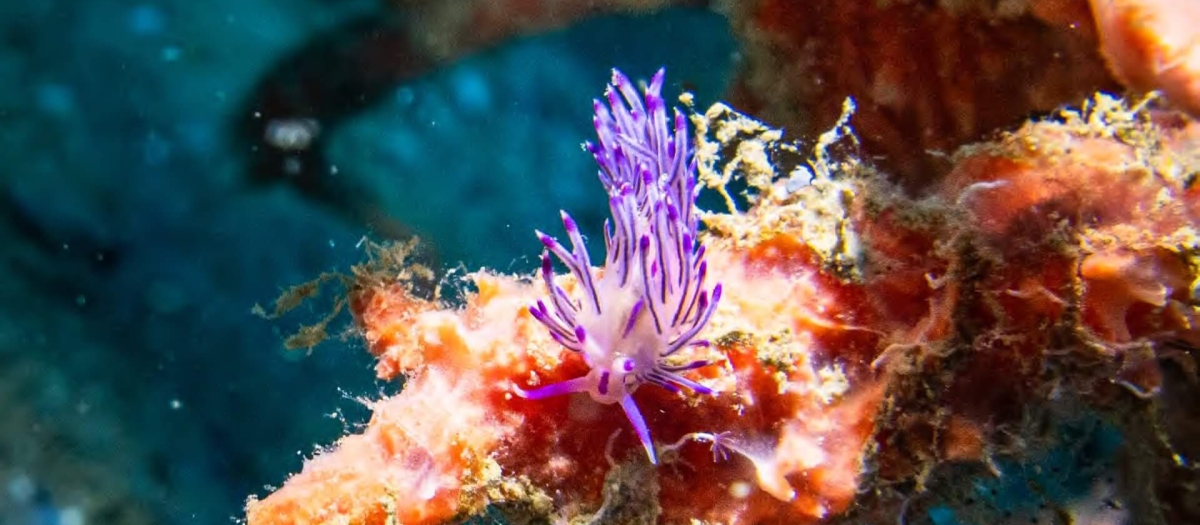
Finding sea slugs takes a different kind of attention from the wider scanning that works for big-animal diving. The key is slow, careful searching of specific substrates and prey species: sponge-encrusted walls for chromodorids, hydroid colonies for aeolids, Avrainvillea algae patches for sacoglossans, cyanobacterial films for sea hares, and open sand for headshield slugs. Once you know what a species eats and where it lives, you know where to look for it.
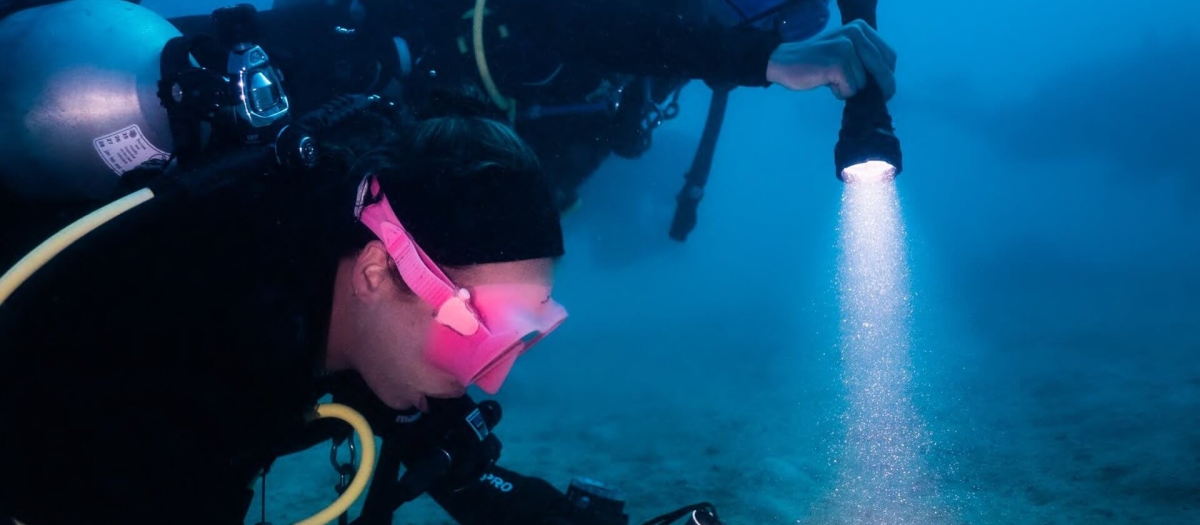
Good buoyancy is essential. Most of the interesting species are small and cryptic, and finding them requires holding position within a few centimetres of the substrate without touching or disturbing anything. Sensitive lung control, careful fin positioning, and a slow methodical pace will consistently outperform the fast, wide scanning that suits shark or turtle diving. Bringing a torch — even on a bright daytime dive — also helps reveal colour and structure in shaded overhangs, crevices, and the undersides of coral plates where many species prefer to live.
When you find a sea slug, the features that matter for species-level identification are usually small. Look at the shape and position of the rhinophores. Note the arrangement of the gills or cerata across the back. Look for a specific colour pattern along the mantle margin, the tips of the cerata, or the dorsum. Photograph the animal from directly above and from the side, and ideally photograph the substrate or prey species it is on — host information is often the single most useful identification clue.
Back on the boat or at your accommodation, use the species pages in this guide to check your photographs. Most identifications are settled by looking at a few key features that are easy to see in a macro image but easy to miss underwater. If you are stuck, the individual species pages include comparison notes for the species most commonly confused with each subject.