Overview of the Species
Phidiana militaris is a member of the family Facelinidae, one of the largest families of aeolid nudibranchs. Aeolids are characterised by their elongate, slender body shape and the conspicuous clusters of cerata that line the dorsum. Where chromodorid dorids feed on sponges, aeolids feed predominantly on cnidarians: hydroids, anemones, corals, and related stinging-celled animals.
The species was formally described by Alder and Hancock in 1864 under the original name Eolis militaris, based on specimens collected in India by Walter Elliot. The name has since been transferred through several genera, reflecting ongoing reorganisation of aeolid nudibranch taxonomy. WoRMS currently lists Caloria militaris as the accepted name, with Phidiana militaris treated as an unaccepted synonym, although the older name remains in active use in the dive and field-guide community.
Size and Appearance Highlights
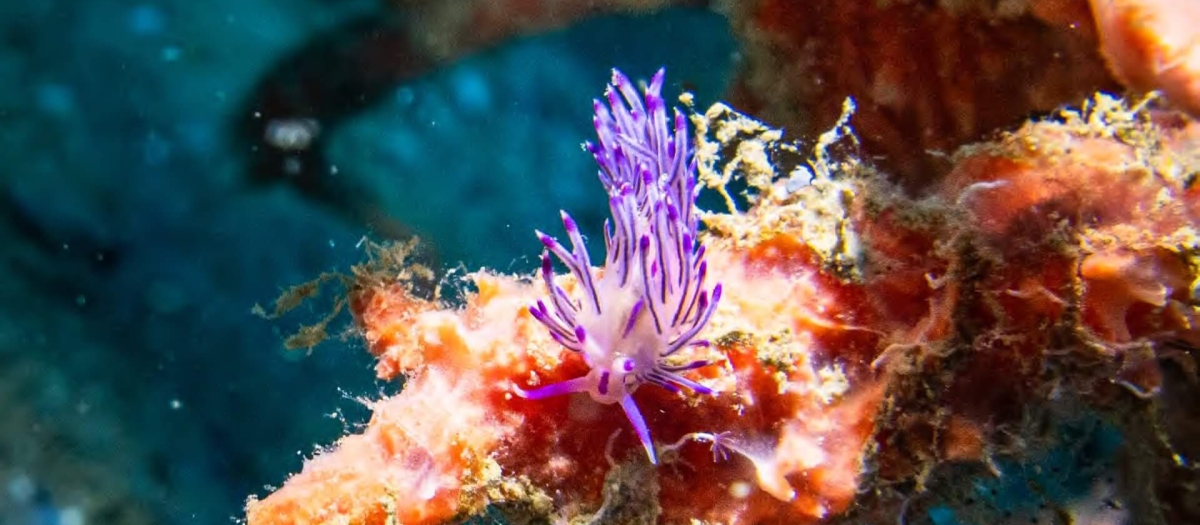
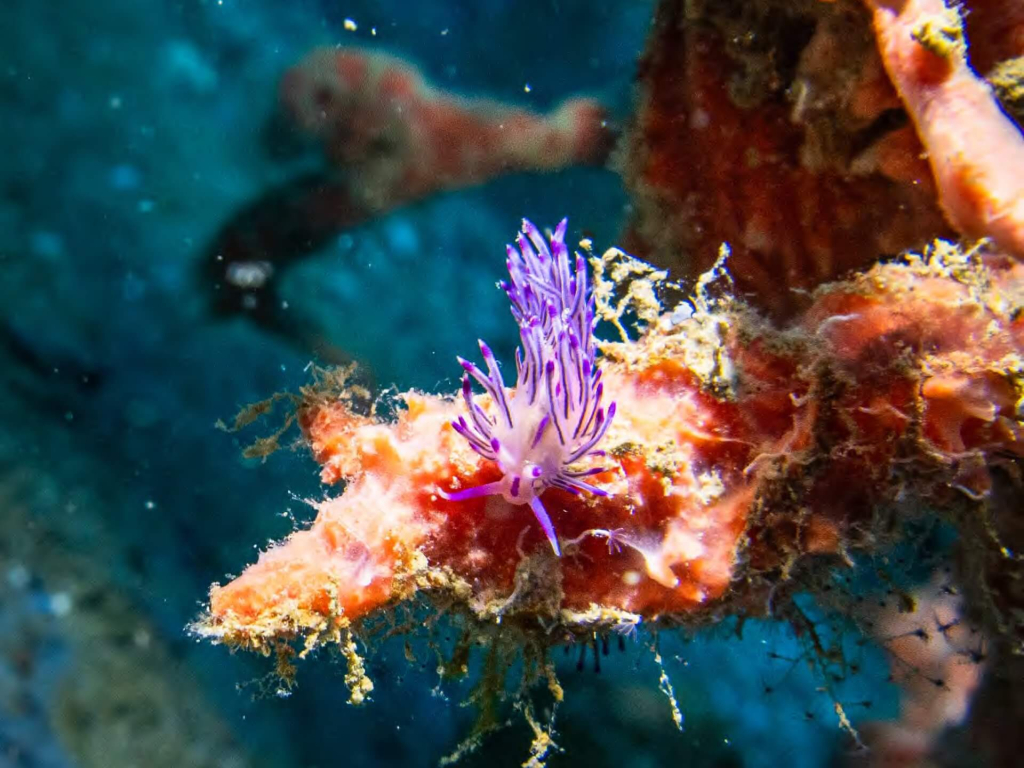
Adult Phidiana militaris typically reach approximately 40 mm in length, with some individuals slightly larger. The body is elongate, slender, and somewhat translucent, very different in proportions from the broad flattened dorids that are more familiar to most reef divers.
The dorsum carries multiple clusters of finger-like cerata arranged along the body, with each ceras tipped by a brightly coloured terminal section that gives the species its distinctive appearance. The cerata are usually orange to red-orange at the tip, contrasting with a more translucent or pale body. The rhinophores at the head are notably long, slender, and sometimes papillated, again contrasting with the shorter club-shaped rhinophores of dorids. The species’ name, militaris, likely refers to the military-style “medal” effect of the rows of bright cerata along the body.
Daily Behaviours and Activity Patterns
Phidiana militaris is most often encountered during the day on hard reef substrates, particularly where its hydroid prey is abundant. The species moves at a moderate pace — faster than the slow gliding of chromodorids but slower than active predators such as Gymnodoris — and is typically found in close association with hydroid colonies or scyphozoan polyps.
Like all nudibranchs, Phidiana militaris is a simultaneous hermaphrodite. Reciprocal mating between adults is followed by deposition of a coiled or ribbon-like egg mass on or near the prey colony, which provides food for newly hatched larvae after metamorphosis.
Role in Koh Tao Marine Life
On Koh Tao, Phidiana militaris is documented by the Mehrotra and colleagues 2021 ZooKeys inventory, which photographed a 35 mm specimen and added the species to the island’s formal nudibranch records. The inventory documented more than 100 sea slug species across Koh Tao, making the island one of the best-studied sea slug locations in mainland Southeast Asia.
As an aeolid hydroid feeder, Phidiana militaris occupies a different ecological niche from the dominant sponge-feeding chromodorids on Koh Tao reefs. The species contributes to the local regulation of hydroid populations and to the chemical-ecology dynamics of cnidarian-feeding sea slugs.
Key Behavioural Adaptations
The most remarkable adaptation of Phidiana militaris, shared with other aeolid nudibranchs, is the ability to sequester nematocysts (stinging cells) from cnidarian prey and incorporate them into specialised cnidosacs at the tips of the cerata. This process, called kleptocnidy, allows the nudibranch to repurpose the prey’s defensive weaponry for its own protection.
When the nudibranch is attacked, the cerata can be twitched, dropped, or actively pointed at the threat, with nematocysts deployed from the cnidosacs in a stinging counter-attack. Recent research on closely related Caloria militaris in the Mediterranean has shown that this nematocyst storage process is highly selective, with the nudibranch incorporating only certain nematocyst types from its prey while excluding others.