Overview of the Species
Elysia asbecki is a member of the family Plakobranchidae within the order Sacoglossa. The Plakobranchidae are one of the two main families of sap-sucking sea slugs, distinguished from the smaller-bodied Costasiellidae and Limapontiidae by their elongate, flattened bodies and the presence of large lateral parapods that can be folded over the dorsum.
The species was formally described in 2010 by Heike Wägele and colleagues in a paper titled “Two new sacoglossan sea slug species (Opisthobranchia, Gastropoda): Ercolania annelyleorum sp. nov. (Limapontioidea) and Elysia asbecki sp. nov. (Plakobranchoidea), with notes on anatomy, histology and biology”, published in Zootaxa. The type locality is Lizard Island, Great Barrier Reef, Australia. The species epithet asbecki honours a supporter of the taxonomic work.
Size and Appearance Highlights
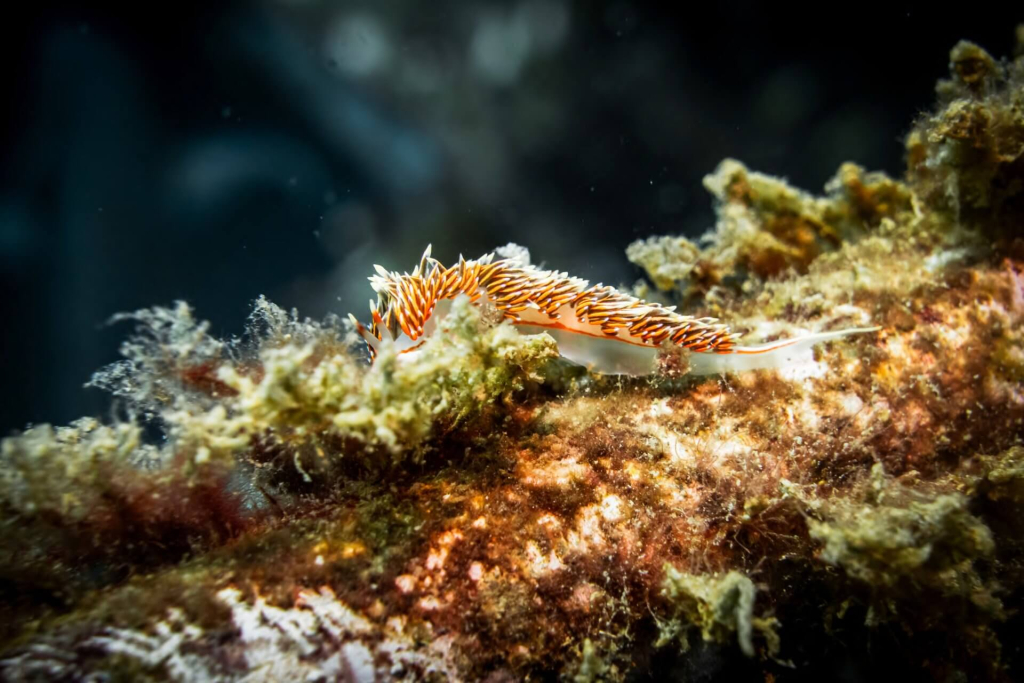
Elysia asbecki is a small to moderately sized Elysia, with adults typically reaching around 10–20 mm in length. The body is elongate and dorso-ventrally flattened, with two large lateral parapods that can be folded over the dorsum during rest and unfolded when the animal is active or basking in sunlight to maximise chloroplast exposure.
The colour pattern is characteristically green, reflecting the presence of sequestered chloroplasts in the digestive gland extensions running through the parapods. Fine surface markings and pigmentation vary between individuals, and the species is best identified by a combination of body form, parapod shape, and histological features described in the original 2010 description.
Daily Behaviours and Activity Patterns
Elysia asbecki is a benthic sap-sucker active on suitable algal hosts. Unlike the smaller Costasiella species that spend their entire adult life on individual algae, larger Elysia species can move between algal patches and traverse open substrate when necessary, giving them somewhat more flexible habitat use.
During active feeding and daylight hours, the parapods are typically held open to expose the digestive gland extensions to sunlight, maximising the photosynthetic contribution from sequestered chloroplasts. During rest, digestion, or perceived threat, the parapods can be closed over the dorsum for protection and camouflage.
Like all sacoglossans, Elysia asbecki is a simultaneous hermaphrodite. Mating produces egg masses laid on or near the algal host, and larvae develop through a planktonic phase before settling onto suitable algae.
Role in Koh Tao Marine Life
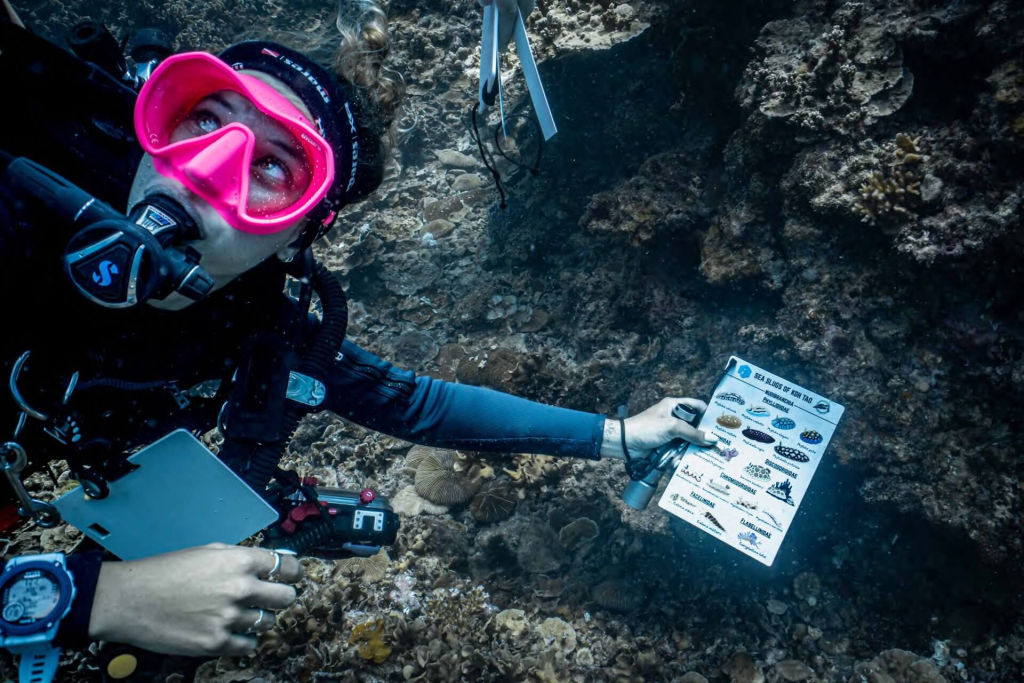
Around Koh Tao, Elysia asbecki is documented through ongoing photographic and video records compiled by Black Turtle Conservation divers, contributing to regional documentation of a relatively recently described species. The species joins Costasiella kuroshimae, Costasiella usagi, and other sacoglossans that make up the shallow soft-substrate and macroalgal sea slug community around the island.
As an Elysia species with a wider habitat use than the small stout Costasiellas, E. asbecki contributes to the top-down regulation of its algal food and provides another link between primary producers and higher-level consumers in the shallow-water ecosystem.
Key Behavioural Adaptations
The most remarkable adaptation of Elysia asbecki, shared with other members of the genus, is functional kleptoplasty combined with the specialised parapodial architecture that allows the sea slug to control chloroplast exposure to sunlight. By folding and unfolding the parapods, the animal can regulate the amount of light reaching the sequestered chloroplasts and thereby manage its combined photosynthetic and heterotrophic energy budget.
The 2010 Wägele paper also documented specialised pharyngeal glands in the anterior to lateral parts of the pharynx, a feature that appears to be shared with other plakobranchid species but is absent in the smaller-bodied sacoglossan families investigated to date. The functional role of these glands is not fully understood but they may contribute to the specialised feeding mechanism used by plakobranchids.