The species is best known for its high-contrast colour pattern: a white mantle dotted with bright yellow spots, bordered by a margin of purple spots that gives the species its scientific epithet (aureopurpureus literally meaning gold-and-purple). Mature individuals typically reach around 4 cm in length.

Goniobranchus aureopurpureus has had a complex taxonomic history. The species was originally described under the genus Chromodoris, and several morphologically similar forms across the Indo-Pacific have at various times been considered synonyms. A 2024 molecular study by Ishiyama and colleagues tested these proposed synonymies using DNA sequencing, contributing to ongoing refinement of the species concept within the genus.

This guide explores the biology, morphology, feeding strategy, ecological role, and identification of Goniobranchus aureopurpureus, alongside the conservation and training context provided by Black Turtle Conservation on Koh Tao.

Common Names: Gold and Purple Chromodoris, Gold-and-Purple Sea Slug

Family: Chromodorididae Order: Nudibranchia

Learn About Goniobranchus aureopurpureus

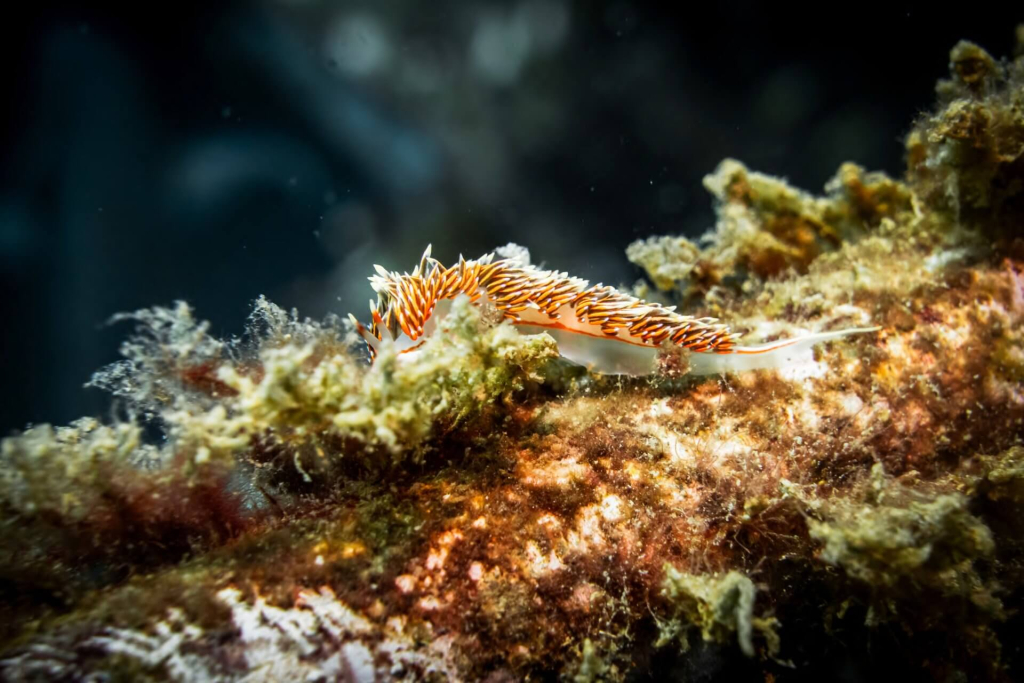
Close-up photo of a nudibranch taken during the Nudibranch & Sea Slug Ecology course at Black Turtle Conservation, Koh Tao.
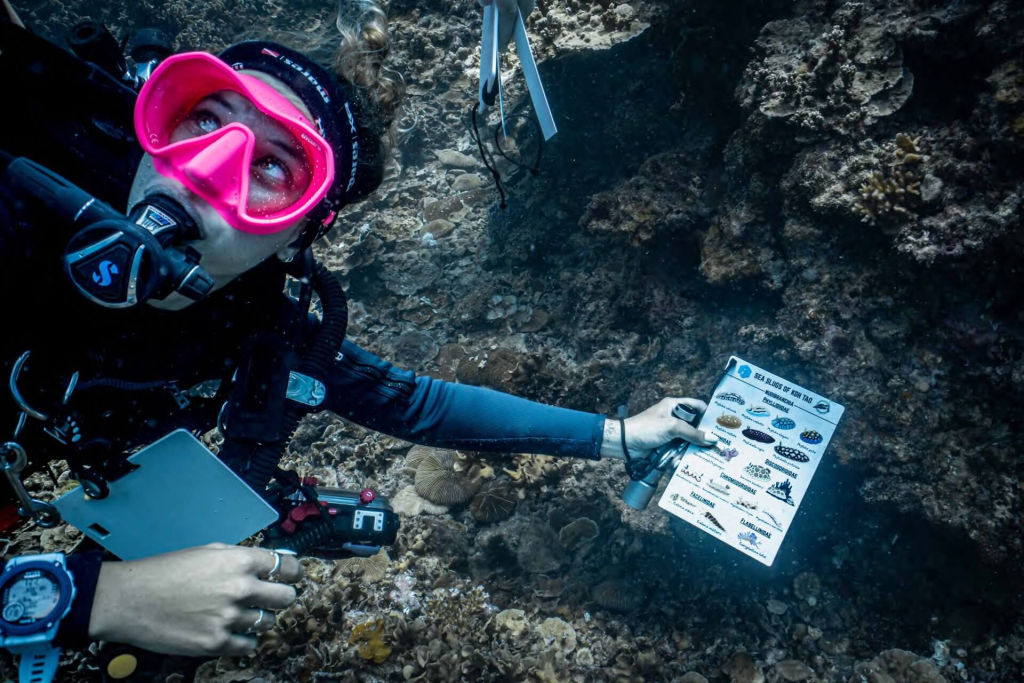
Divers conducting sea slug monitoring surveys to study species diversity and distribution around Koh Tao.
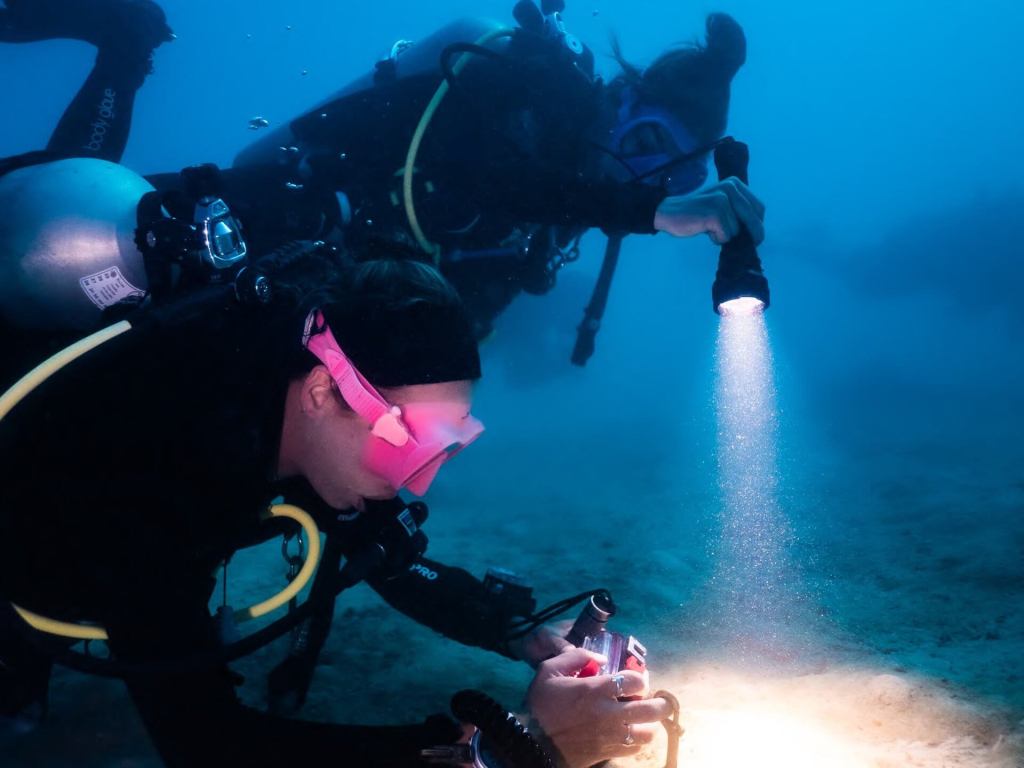
Conservation divers performing underwater research and sea slug identification training in Koh Tao, Thailand.
Sea slug (Costasiella sp.) photographed during the Sea Slug Ecology course at Black Turtle Conservation, exploring nudibranch identification and behavior in Koh Tao, Thailand.
Marine conservation students improving underwater species identification and reef awareness during the Conservation Specialist program in Koh Tao.
Scientific research reef monitoring dive in Koh Tao, collecting coral reef health data and ecological survey observations underwater.

Overview of the Species

Goniobranchus aureopurpureus is a member of the family Chromodorididae, one of the most species-rich families of dorid nudibranchs and the most familiar to recreational divers worldwide. Chromodorids are characterised by their bright colour patterns, by their habit of moving openly across the reef surface during daylight hours, and by their specialised diet of sponges.

The species was formally described by Cuthbert Collingwood in 1881, who placed it in the now largely deprecated genus Chromodoris. The type locality was given as “Slut Island”, one of many small islands in the strait between Haitan (Pingtan) Island and mainland China. The species has since been transferred to the genus Goniobranchus, reflecting the 2012 molecular revision of the Chromodorididae by Johnson and Gosliner, which split the historically broad genus Chromodoris into more clearly defined groups.

Size and Appearance Highlights

Mature Goniobranchus aureopurpureus typically reach around 4 cm (40 mm) in length. The body is elongate and dorsoventrally flattened, as is typical for chromodorids, and is bordered by a flared mantle skirt that extends slightly beyond the foot on either side.

The most striking feature is its colour pattern. The dorsal surface is white or cream-coloured, scattered with numerous round yellow spots of varying size. The mantle edge is marked by a distinct border of purple spots, which gives the species its common name Gold and Purple Chromodoris. The rhinophores and gills, both retractable, are typically white with darker tips or pigmented bands.

Daily Behaviours and Activity Patterns

Goniobranchus aureopurpureus is a daytime-active nudibranch, openly visible on reef substrates during normal recreational diving hours. Unlike many sea slugs that hide during daylight, chromodorids rely on chemical defence rather than crypsis and so move openly across coral rubble, hard reef, and sponge-encrusted surfaces in search of food and mates.

Movement is slow and methodical, with the animal gliding on its muscular foot at a rate of only a few centimetres per minute. When approached by a diver or photographer, the species may pause briefly but does not typically retract or attempt to flee. The rhinophores remain extended in good conditions and are used to detect chemical cues from sponges, mates, and potential threats.

As with all nudibranchs, Goniobranchus aureopurpureus is a simultaneous hermaphrodite. When two adults meet they exchange sperm reciprocally before each lays a coiled, ribbon-like egg mass on the substrate near their preferred food source.

Role in Koh Tao Marine Life

On Koh Tao, Goniobranchus aureopurpureus is part of the broader chromodorid community that contributes to the island’s reputation as a regional hotspot for sea slug biodiversity. The Mehrotra and colleagues (2021) ZooKeys inventory documented more than 100 sea slug species across Koh Tao, making it one of the best-studied sea slug sites in mainland Southeast Asia.

Like other chromodorids, Goniobranchus aureopurpureus plays a specialised role as a top-down regulator of certain sponge species, indirectly influencing space competition between sponges, corals, and other sessile organisms on the reef.

Key Behavioural Adaptations

The most important adaptation of Goniobranchus aureopurpureus is the integration of chemical defence with open, daytime activity. By feeding selectively on sponges that produce defensive secondary metabolites, the species sequesters these compounds in specialised mantle dermal formations and releases them when threatened.

This combination of bright warning colouration (aposematism), chemical defence, and slow exposed movement is a textbook example of how chromodorid nudibranchs have decoupled themselves from the need for crypsis. Many chromodorid species share variations on the same yellow/orange/purple/white colour palette, creating a Müllerian mimicry complex that benefits all participating species.

Goniobranchus aureopurpureus Morphology

Close-up photo of a nudibranch taken during the Nudibranch & Sea Slug Ecology course at Black Turtle Conservation, Koh Tao.

Body Shape and Texture

Goniobranchus aureopurpureus has the classic dorid body plan: an elongate, dorsoventrally flattened body with a broad mantle that extends slightly beyond the foot on either side. The dorsum is smooth, with a fine almost velvety appearance under macro magnification, and lacks the prominent tubercles or papillae seen in some other dorid families such as the Phyllidiidae.

The mantle is the most visually distinctive part of the animal, carrying the diagnostic colour pattern of yellow spots on white with a purple-spotted border. The mantle margin is slightly undulating in some individuals, especially when the animal is actively crawling.

Sensory and Respiratory Structures

The rhinophores are the primary sensory organs and are positioned toward the front of the head. They are club-shaped, retractable into shallow pockets, and bear numerous transverse lamellae that increase surface area for detecting dissolved chemical cues. These cues guide the animal to its preferred sponge prey and to potential mates.

Respiration occurs through a circlet of feathery gills positioned around the anus on the posterior dorsum. The gills are retractable into a shared pocket and can be withdrawn rapidly if the animal is disturbed. The gill plumes are typically white with darker apical pigmentation.

Size Variations and Defensive Features

Juvenile Goniobranchus aureopurpureus are noticeably smaller (often under 1 cm) and tend to have a sparser arrangement of yellow spots, with the purple mantle border less pronounced. As individuals mature toward the adult size of around 4 cm, the colour pattern intensifies.

The principal defence of the species is chemical. Sponge-derived metabolites are stored in specialised mantle dermal formations distributed around the mantle margin and are released as a milky secretion when the animal is pinched or attacked. The bright colour pattern advertises this defence to visually hunting predators.

Goniobranchus aureopurpureus Diet and Feeding Strategy

Close-up photo of a nudibranch taken during the Nudibranch & Sea Slug Ecology course at Black Turtle Conservation, Koh Tao.
Divers conducting sea slug monitoring surveys to study species diversity and distribution around Koh Tao.
Conservation divers performing underwater research and sea slug identification training in Koh Tao, Thailand.
Scientific research reef monitoring dive in Koh Tao, collecting coral reef health data and ecological survey observations underwater.

Primary Food Sources

Goniobranchus aureopurpureus, like nearly all members of Chromodorididae, is a specialised predator of sponges. Chromodorids typically feed on a restricted range of sponge species, with each nudibranch species associated with one or a few preferred sponge genera. The specific sponge prey of Goniobranchus aureopurpureus has not been fully characterised in the literature, but the species is consistently reported feeding on encrusting sponges typical of shallow reef environments. Closely related species are known to feed on sponges in genera such as Dysidea, Aplysilla, and Cacospongia.

Feeding Behaviour in Detail

Feeding in chromodorids is slow and methodical. The animal locates a suitable sponge using chemoreception via the rhinophores, then positions itself directly on the sponge surface and uses its radula — a ribbon-like band of microscopic teeth — to scrape away surface tissue. The radula rasps off small fragments of sponge tissue, which are drawn into the mouth and digested. A single nudibranch may revisit the same sponge over several days if the sponge is large enough to support repeated grazing.

Chemical Defence Mechanisms

One of the most important biological features of chromodorids is their ability to sequester sponge-derived chemicals as defensive compounds. The metabolites are not destroyed during digestion but are instead transported through the haemolymph and stored in mantle dermal formations — specialised glandular structures distributed around the mantle margin.

When the nudibranch is attacked or harassed, these mantle dermal formations release a milky secretion containing a concentrated mix of the compounds. Laboratory studies have shown that these chemicals are unpalatable or actively toxic to many reef fish, providing effective protection against the most likely predators of an exposed, slow-moving sea slug.

Activity Patterns and Ecological Impact

Goniobranchus aureopurpureus is primarily diurnal, with most observed feeding and movement occurring during normal daylight hours. The animal’s reliance on chemical rather than physical defence means there is no strong selective pressure to feed under cover of darkness.

Although individual nudibranchs consume only small quantities of sponge tissue, the cumulative effect across the population can influence the relative abundance and distribution of preferred sponges on the reef, with downstream effects on space competition and benthic community composition.

Goniobranchus aureopurpureus Substrate Preference

Close-up photo of a nudibranch taken during the Nudibranch & Sea Slug Ecology course at Black Turtle Conservation, Koh Tao.

Goniobranchus aureopurpureus is most often found on shallow to mid-depth reef substrates where its preferred sponge prey occurs. The species is associated with hard reef environments rather than the soft-sediment muck habitats favoured by some other Koh Tao sea slugs such as Armina scotti.

Why Substrate Matters

Sponges are sessile filter feeders that require stable hard substrate for attachment, and they often grow in shaded or partially shaded conditions such as overhangs, crevice walls, and the undersides of coral plates. Because Goniobranchus aureopurpureus depends entirely on sponges for food, it tends to be found wherever its prey is abundant: on reef walls, in crevices, on dead coral skeletons, and around encrusting sponge patches at depths of approximately 5–20 metres.

The species does not bury or hide in sediment, and is rarely seen on open sandy bottoms. When it is found on sand, it is typically transiting between sponge patches rather than feeding in place.

Response to Environmental Conditions

Chromodorids generally prefer reasonably clear water with stable temperature and salinity, and Goniobranchus aureopurpureus appears to follow this pattern. Sites with heavy sedimentation, low oxygen, or freshwater intrusion are unlikely to support healthy sponge communities and are therefore unsuitable for the species.

Where conditions favour sponge growth — sheltered reef walls, healthy overhangs, and stable mid-depth slopes — the species can be locally abundant, with multiple individuals sometimes encountered on a single dive. Where sponge communities have been damaged by sedimentation or physical disturbance, the species is correspondingly less common.

Goniobranchus aureopurpureus Ecological Role(s)

Broader Reef Contributions

Goniobranchus aureopurpureus contributes to reef community dynamics primarily through its role as a specialist sponge predator. By selectively grazing on particular sponge species, chromodorids influence the relative abundance of those sponges on the reef and indirectly affect space competition between sponges and other sessile organisms.

The species also represents one link in a chemical-ecology chain that runs from sponges (which produce defensive metabolites) through chromodorids (which sequester these compounds) and into the wider reef ecosystem. Many of the bioactive compounds first discovered in chromodorid nudibranchs have subsequently been investigated for pharmaceutical applications.

Value as a Bioindicator

The presence of healthy chromodorid populations is widely regarded as a positive sign for reef health, because chromodorids depend on stable sponge communities, which in turn depend on clear water, intact substrate, and relatively low levels of physical disturbance. Goniobranchus aureopurpureus, as one of several easily recognised chromodorids on Koh Tao reefs, can be used as one component of a broader bioindicator suite for monitoring local reef condition over time.

Opportunities for Citizen Science

Recreational divers and underwater photographers contribute substantially to the documentation of nudibranch biodiversity worldwide, and Koh Tao is no exception. Platforms such as iNaturalist and dedicated regional databases collect georeferenced photographs from divers across the Indo-Pacific, building distribution records that would be impossible to assemble through formal academic surveys alone.

Black Turtle Conservation supports this work through training in nudibranch identification, ethical macro-photography techniques, and structured species recording during conservation dives.

Close-up photo of a nudibranch taken during the Nudibranch & Sea Slug Ecology course at Black Turtle Conservation, Koh Tao.
Divers conducting sea slug monitoring surveys to study species diversity and distribution around Koh Tao.
Conservation divers performing underwater research and sea slug identification training in Koh Tao, Thailand.
Community sea slug and nudibranch survey dive in Koh Tao, documenting marine biodiversity through citizen science participation.

Goniobranchus aureopurpureus Fun and Interesting Facts

Close-up photo of a nudibranch taken during the Nudibranch & Sea Slug Ecology course at Black Turtle Conservation, Koh Tao.

Discovery and Naming

The species was described in 1881 by Cuthbert Collingwood in a paper titled “On some new species of nudibranchiate Mollusca from the eastern seas”, published in the Transactions of the Linnean Society of London. The original epithet aureopurpurea is Latin for “golden-purple”, reflecting the species’ distinctive colour pattern.

Chemical Defence and Sponge Toxins

Chromodorid nudibranchs are among the most chemically defended of all marine gastropods. The compounds they sequester from sponges include terpenes, alkaloids, and polyketides, many of which have been shown to deter predation, inhibit microbial growth, and produce strong taste-aversion responses in fish. These same compounds are of interest to pharmaceutical chemists exploring novel antibiotic and anticancer drug leads.

Reproductive Strategy

Like all nudibranchs, Goniobranchus aureopurpureus is a simultaneous hermaphrodite. Mating involves reciprocal sperm exchange between two individuals, after which each lays a coiled, ribbon-like egg mass attached to the substrate. Eggs hatch into planktotrophic veliger larvae that drift in the water column before settling onto suitable reef substrate.

Mimicry and Colour Variation

The bright colour patterns of chromodorid nudibranchs form one of the most striking examples of Müllerian mimicry in the marine environment. Multiple species across the family share variations on similar yellow/orange/purple/white themes, and predators that learn to associate these colours with unpalatability extend that learned aversion to all participating species.

Recent Molecular Investigation

A 2024 study by Ishiyama, Oya, Wilson, and Kajihara, published in Species Diversity, used DNA sequencing to test whether several morphologically similar chromodorids previously suggested as synonyms of Goniobranchus aureopurpureus truly represent the same species. The paper used cytochrome c oxidase subunit I (COI) and 16S rRNA gene sequences to clarify species boundaries within this group.

Goniobranchus aureopurpureus Vulnerability Profile

Close-up photo of a nudibranch taken during the Nudibranch & Sea Slug Ecology course at Black Turtle Conservation, Koh Tao.

Goniobranchus aureopurpureus is currently classified as Not Evaluated on the IUCN Red List. As a small, specialised marine invertebrate with no commercial value, the species has not been the subject of dedicated conservation assessment, and reliable population trend data are not available.

Indirect threats are likely to be similar to those facing chromodorids and other reef invertebrates across the Indo-Pacific: climate-driven coral reef degradation, sedimentation and pollution from coastal development, and physical damage to sponge communities from anchoring and careless diver contact. Because the species depends on sponges, declines in sponge cover or diversity would directly affect Goniobranchus aureopurpureus populations.

On Koh Tao, conservation pressure on reef invertebrates is shaped by the same factors that affect the wider reef community: recurring marine heatwaves, nutrient runoff from coastal development, anchoring damage on shallow sites, and the cumulative physical disturbance from dive tourism. Continued local monitoring through citizen-science programmes and structured marine conservation training is an important part of tracking the species’ long-term status.

How to Identify Goniobranchus aureopurpureus

Identification of Goniobranchus aureopurpureus in the field relies primarily on its distinctive colour pattern. The species has a white or cream mantle covered with numerous round yellow spots of variable size, and a mantle margin bordered by a series of separate purple spots. The combination of these three colours — white background, yellow centre dots, and purple-spotted border — is reasonably diagnostic among chromodorids in the central Indo-Pacific.

Mature individuals reach approximately 4 cm in length. The rhinophores and gills are retractable and typically white or pale. The body is elongate, dorsoventrally flattened, and moves slowly across the reef substrate during daylight hours.

Care must be taken to distinguish Goniobranchus aureopurpureus from a few morphologically similar congeners. Several other Goniobranchus species share the white-and-yellow base pattern but differ in the colour, size, or arrangement of the marginal spots. Goniobranchus geminus, for example, has a continuous purple mantle line rather than separate purple spots. Where uncertainty exists, photographs of the dorsum, mantle margin, rhinophores, and gills assist in confirmation.

Sea slug and nudibranch research surveys in Koh Tao, documenting marine biodiversity through underwater species monitoring dives.

Mastering Identification with Black Turtle Conservation

Black Turtle Conservation on Koh Tao offers structured nudibranch identification training as part of our marine conservation pathway. Goniobranchus aureopurpureus is one of several chromodorid species used as a reference taxon during the training, because its distinctive colour pattern, daytime activity, and relatively predictable habitat make it well suited to teaching the diagnostic features used across the family.

Our programmes help divers move beyond casual nudibranch spotting toward accurate, repeatable species-level identification that contributes to ongoing biodiversity monitoring, building familiarity with the taxonomic literature, recognising key diagnostic features in the field, and contributing observations to regional and global biodiversity databases.

Our Training Approach: From Theory to Survey

Training begins with classroom sessions covering the biology and ecology of Indo-Pacific nudibranchs, the structure of the family Chromodorididae, the diagnostic features that distinguish closely related Goniobranchus species, and the conservation context for Koh Tao reefs. Participants review high-quality reference photographs, taxonomic keys, and recent literature including the 2012 Johnson and Gosliner revision and the 2024 Ishiyama et al. molecular study.

In-water training then takes participants to a range of dive sites where chromodorid nudibranchs are commonly encountered. Practical skills include macro-photography for identification, non-invasive observation techniques, accurate substrate and depth recording, and structured species logging using BTC’s standardised templates.

Graduates contribute to BTC’s ongoing nudibranch biodiversity monitoring, helping to refine site-level inventories, track changes in species abundance over time, and support the long-term conservation of one of Koh Tao’s most diverse and visually spectacular invertebrate communities.

External Link Citations and References

Collingwood, C. (1881). On some new species of nudibranchiate Mollusca from the eastern seas. Transactions of the Linnean Society of London, Zoology, series 2, 2(2): 123–140.

Johnson, R.F. & Gosliner, T.M. (2012). Traditional taxonomic groupings mask evolutionary history: A molecular phylogeny and new classification of the chromodorid nudibranchs. PLoS ONE 7(4): e33479.

Ishiyama, H., Oya, Y., Wilson, N.G. & Kajihara, H. (2024). Testing the species status of the chromodorid nudibranch Goniobranchus aureopurpureus (Mollusca: Gastropoda). Species Diversity 29(1): 141–150.

Mehrotra, R. et al. (2021). An updated inventory of sea slugs from Koh Tao, Thailand. ZooKeys 1042: 73–188.

World Register of Marine Species: Goniobranchus aureopurpureus (Collingwood, 1881).

Black Turtle Conservation: Advanced Nudibranch and Reef Ecology Training, Koh Tao.