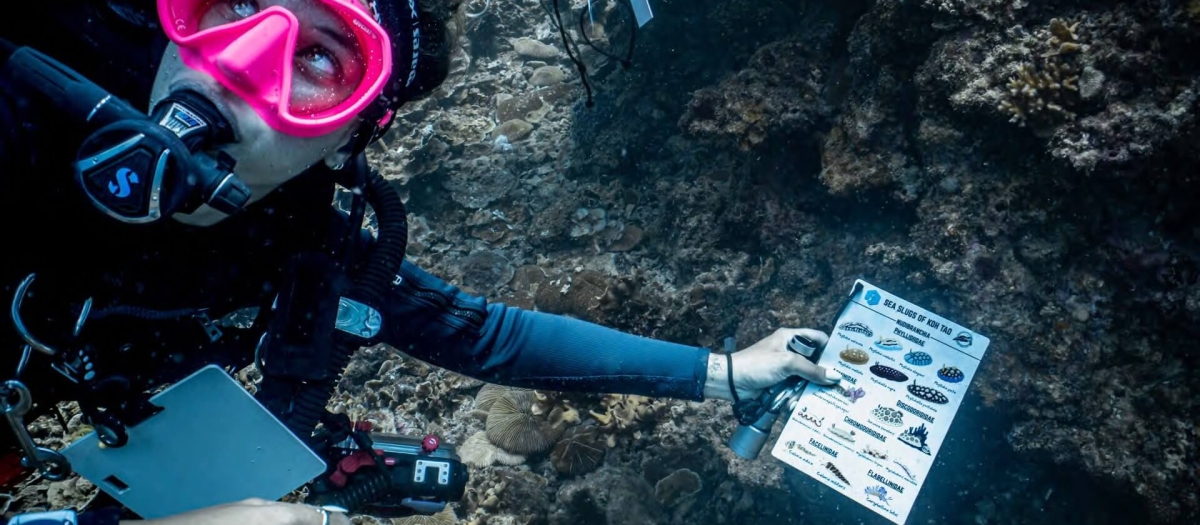
Divers conducting sea slug monitoring surveys to study species diversity and distribution around Koh Tao.
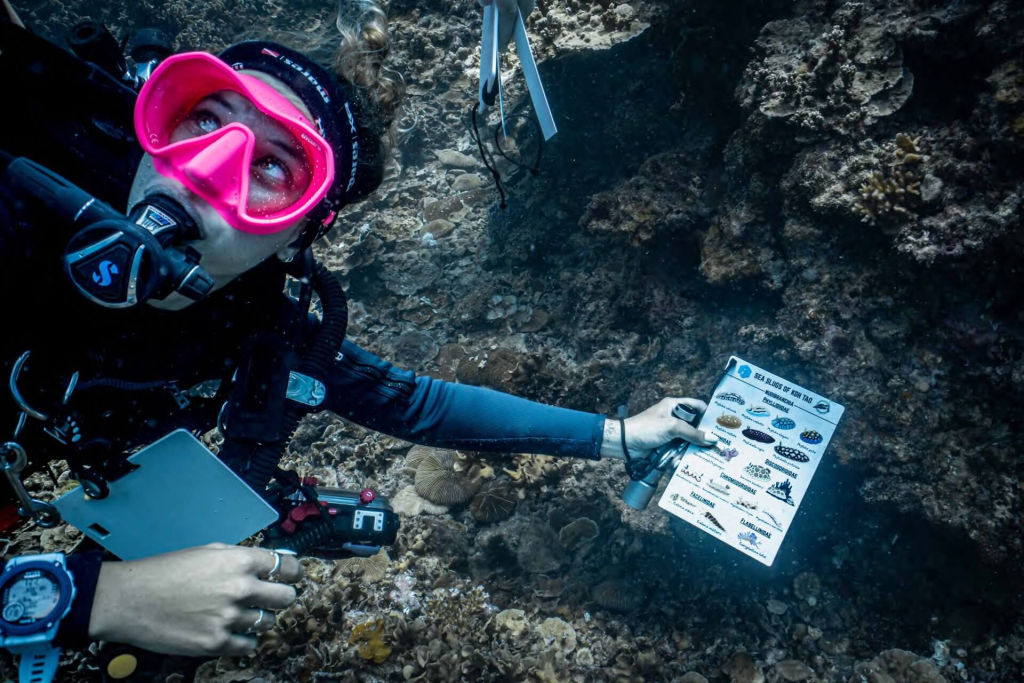
Conservation divers performing underwater research and sea slug identification training in Koh Tao, Thailand.
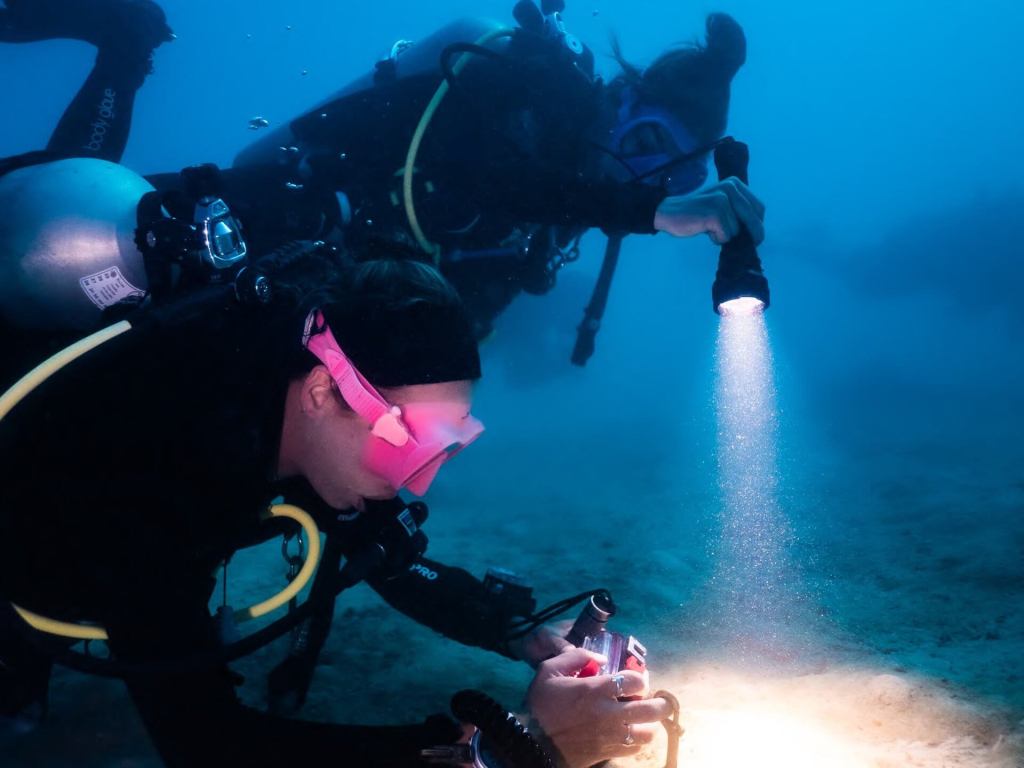
Community sea slug and nudibranch survey dive in Koh Tao, documenting marine biodiversity through citizen science participation.

The species is recognised by its white or pale cream body covered with many distinctive orange spots, an orange mantle margin, and orange-lined rhinophores. Adults can reach up to 60 mm in length, and the elongate body becomes notably swollen and distended after a successful feeding event — a sign of the species’ ability to consume prey approaching its own body size.

Gymnodoris impudica has a complex taxonomic history. The name Gymnodoris rubropapulosa, described by Bergh in 1905, has at various times been treated as a synonym, and several older references use that name for what is now generally accepted as Gymnodoris impudica. The taxonomy remains under active investigation, and care should be taken when comparing field records across older and newer literature.

This guide explores the biology, hunting behaviour, anatomy, ecological role, and identification of Gymnodoris impudica, alongside the conservation and training context provided by Black Turtle Conservation on Koh Tao.

Common Names: Shameless Nudibranch, Voracious Sea Slug

Family: Polyceridae Order: Nudibranchia

Learn About Gymnodoris impudica

Divers conducting sea slug monitoring surveys to study species diversity and distribution around Koh Tao.
Conservation divers performing underwater research and sea slug identification training in Koh Tao, Thailand.
Community sea slug and nudibranch survey dive in Koh Tao, documenting marine biodiversity through citizen science participation.
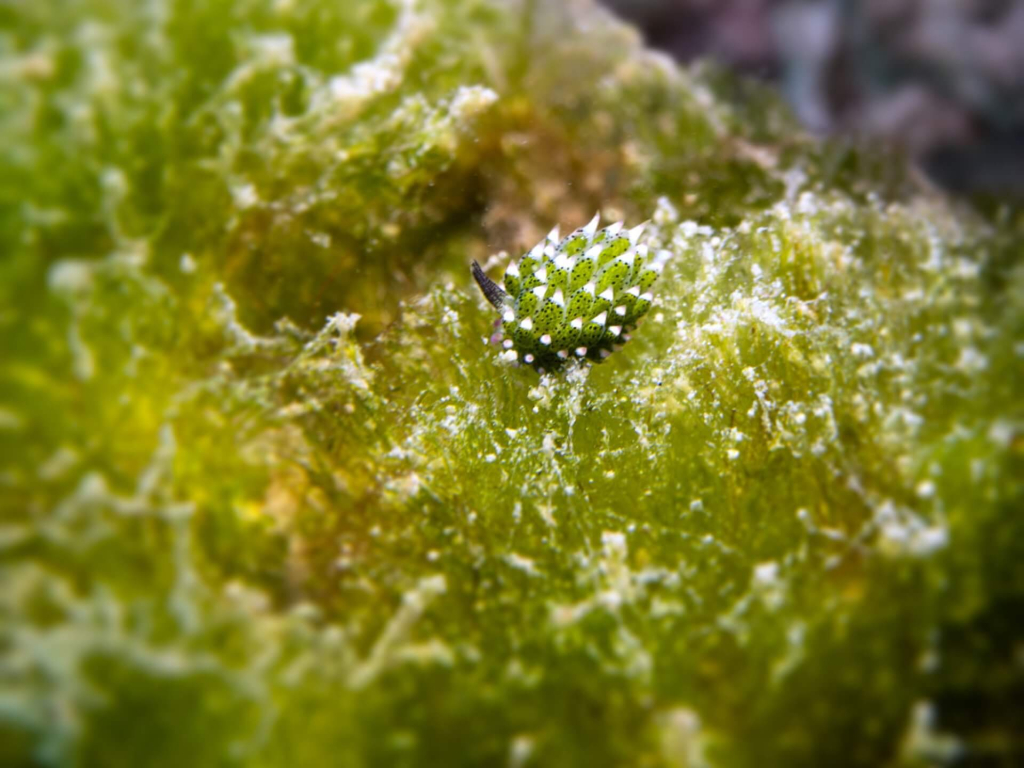
Costasiella kuroshimae, also known as “Shaun the Sheep” sea slug, found during the Sea Slug Ecology course in Koh Tao, Thailand.
Night dive for nudibranch research during the Sea Slug Ecology course at Black Turtle Conservation, Koh Tao.
Colorful Coryphellina nudibranch feeding on a coral reef in Koh Tao, Thailand, during a marine biodiversity survey.

Overview of the Species

Gymnodoris impudica is a member of the family Polyceridae, a diverse group of dorid nudibranchs that differs ecologically from the more familiar Chromodorididae. Where chromodorids are sponge specialists, members of the genus Gymnodoris are obligate carnivores that hunt and consume other sea slugs, and in some cases small fish.

The species was formally described by Rüppell and Leuckart in 1828, originally under the name Doris impudica, from specimens collected during a Red Sea expedition. The Latin epithet impudica means “shameless”, and likely refers to the conspicuous, openly active behaviour of the species despite being unprotected by the sponge-derived chemical defences common to other dorid nudibranchs.

Size and Appearance Highlights

Adult Gymnodoris impudica typically reach 40–60 mm in length, with the largest individuals occasionally exceeding 80 mm. The body is elongate and high-profile, particularly tall in the gill region, becoming visibly distended when the animal has recently fed on prey approaching its own body size.

The colour pattern is distinctive: a white or pale cream base covered with numerous orange or yellow-orange spots of varying size, an orange mantle margin, and rhinophores marked by orange transverse lines. The gills, positioned on the posterior dorsum, are conspicuous and feathery, often appearing slightly orange-tinted. The body has very little of the velvety smoothness seen in chromodorids and instead has a more muscular, almost athletic appearance reflecting the species’ active predatory lifestyle.

Daily Behaviours and Activity Patterns

Gymnodoris impudica is unusual among nudibranchs in that it is a fast-moving active predator. The species is most often seen during daytime moving rapidly across the reef substrate — considerably faster than the slow gliding pace of chromodorids and other sea slugs — actively pursuing prey trails.

The species locates its prey by following the chemical slime trails left by other sea slugs as they crawl across the reef. Once a trail is located, Gymnodoris impudica accelerates along it until the prey is found, then attacks and consumes it whole or in pieces depending on prey size.

Like all nudibranchs, Gymnodoris impudica is a simultaneous hermaphrodite. Reciprocal mating is followed by deposition of coiled, ribbon-like egg masses on the reef substrate. Recently fed individuals are often visibly swollen and somewhat slow-moving for several hours after a meal.

Role in Koh Tao Marine Life

On Koh Tao, Gymnodoris impudica fits into the wider sea slug community documented by Mehrotra and colleagues in their 2021 ZooKeys inventory of more than 100 sea slug species across the island. As an active predator of other nudibranchs, Gymnodoris impudica occupies a higher trophic level than the more numerous sponge-feeding chromodorids and aeolids.

The species’ ecological role on Koh Tao is to act as a top-down regulator within the sea slug community itself, contributing to the natural dynamics of nudibranch population size and composition.

Key Behavioural Adaptations

The most striking adaptation of Gymnodoris impudica is the combination of high mobility, chemosensory trail-following, and the capacity to consume prey of substantial size relative to the body. These traits set the species apart from the vast majority of nudibranchs, which are slow, cryptic, or chemically defended browsers.

Unlike chromodorids, Gymnodoris does not appear to sequester chemical defences from its prey to any significant extent. The species’ conspicuous coloration may serve some aposematic function, but the principal defensive strategy appears to be rapid movement and the avoidance of static exposure to potential predators.

Gymnodoris impudica Morphology

Divers conducting sea slug monitoring surveys to study species diversity and distribution around Koh Tao.

Body Shape and Texture

Gymnodoris impudica has an elongate, high-profile body that is distinctly muscular compared with the flatter dorsoventrally compressed shape of chromodorids. The body is at its highest in the region of the gills and tapers slightly toward the head and tail. The texture is firm and smooth, without prominent tubercles.

The mantle is reduced compared with chromodorids and does not extend significantly beyond the foot, giving the animal a more streamlined appearance suited to its active predatory lifestyle. After feeding, the body can become noticeably distended as the consumed prey is digested internally.

Sensory and Respiratory Structures

The rhinophores are positioned at the front of the head and are notably long and slender, with multiple transverse lamellae for detecting chemical cues. They are marked by orange or red-orange transverse lines that contrast with the white-and-orange body pattern. The rhinophores are essential for the species’ trail-following hunting behaviour and are kept extended in good conditions.

Respiration occurs through a feathery circlet of gills around the anus on the posterior dorsum. The gills are conspicuous and tend to be more prominent in this species than in many other dorids, possibly reflecting the higher metabolic demands of active predation.

Size Variations and Defensive Features

Juvenile Gymnodoris impudica are noticeably smaller and have fewer, less pronounced orange spots. As individuals mature toward the adult size of 40–60 mm, the spot pattern becomes denser and the orange mantle margin more conspicuous.

The species lacks the strong chemical defences found in sponge-feeding chromodorids. Instead, Gymnodoris impudica relies primarily on speed, behavioural avoidance, and possibly limited aposematic signalling for protection. The body is also relatively firm and muscular, which may deter predation by some fish species.

Gymnodoris impudica Diet and Feeding Strategy

Divers conducting sea slug monitoring surveys to study species diversity and distribution around Koh Tao.
Conservation divers performing underwater research and sea slug identification training in Koh Tao, Thailand.
Community sea slug and nudibranch survey dive in Koh Tao, documenting marine biodiversity through citizen science participation.

Primary Food Sources

Gymnodoris impudica is a carnivorous predator of other sea slugs. The species has been observed feeding on a range of nudibranchs and other heterobranch gastropods, with prey size sometimes approaching the body size of the predator itself. Other species in the genus Gymnodoris are similarly known to prey on sacoglossans, dorid and aeolid nudibranchs, and even egg masses.

Feeding Behaviour in Detail

Hunting begins with chemosensory detection of slime trails left by potential prey moving across the reef substrate. The rhinophores pick up these chemical signatures, and Gymnodoris impudica then follows the trail rapidly until the prey is located.

Once captured, prey is swallowed whole when possible. Larger prey may be consumed piece by piece using the radula, which in Gymnodoris is adapted for tearing and ingesting soft tissue. The body of the predator distends visibly to accommodate large meals, and digestion can take several hours.

Chemical Defence Mechanisms

Unlike chromodorids, Gymnodoris impudica does not appear to sequester strong chemical defences from its prey. The species’ conspicuous coloration may suggest some level of aposematism, but the principal defensive strategy is behavioural: rapid movement, active avoidance of threats, and reduced static exposure to potential predators.

Some Gymnodoris species have been reported to produce mild defensive secretions when handled, but these are not as well-characterised as the elaborate chemical defences of chromodorids.

Activity Patterns and Ecological Impact

Gymnodoris impudica is active during daylight hours and can sometimes be observed actively hunting on the reef surface. By preying on other nudibranchs, the species exerts a top-down control on sea slug community composition and contributes to the natural dynamics of nudibranch populations on the reef.

Because nudibranchs themselves are often important consumers of sponges, hydroids, bryozoans, and other sessile invertebrates, predation by Gymnodoris indirectly influences the wider invertebrate community through a series of trophic cascades.

Gymnodoris impudica Substrate Preference

Divers conducting sea slug monitoring surveys to study species diversity and distribution around Koh Tao.

Gymnodoris impudica is associated with hard reef substrates where its prey — other sea slugs and small heterobranch gastropods — are most likely to be encountered. The species occurs across a wide depth range from shallow reef flats down to mid-depth slopes.

Why Substrate Matters

Because Gymnodoris impudica hunts by following slime trails, the species is most often found where prey nudibranchs are themselves abundant. This means areas with healthy sponge, hydroid, and algal communities, which support diverse populations of sponge-feeding and herbivorous sea slugs that Gymnodoris can prey upon.

The species is occasionally encountered on rubble, coral plate undersides, and shaded reef walls, but is rarely seen in pure sandy or muddy substrates that lack the encrusting invertebrate communities needed to support its prey.

Response to Environmental Conditions

Gymnodoris impudica appears to tolerate a range of conditions that support healthy reef communities. The species has been documented across the Indo-Pacific from the Red Sea to Japan and Australia, indicating broad environmental tolerance.

On Koh Tao, the species is encountered on a variety of dive sites, with sightings tending to coincide with locations and times where other nudibranchs are also relatively common. The trail-following hunting strategy means that the presence of Gymnodoris impudica is often correlated with general sea slug diversity at a given site.

Gymnodoris impudica Ecological Role(s)

Broader Reef Contributions

Gymnodoris impudica contributes to reef community dynamics by acting as a predator at the top of the sea slug food web. The species helps regulate populations of other nudibranchs, which themselves act as consumers of sponges, hydroids, bryozoans, and other sessile invertebrates. By controlling sea slug abundance, Gymnodoris indirectly affects the structure of the wider reef invertebrate community.

This top-down role within the sea slug community is unusual and gives Gymnodoris impudica a distinctive ecological identity on the reef compared with the more numerous browsing chromodorids.

Value as a Bioindicator

The presence of Gymnodoris impudica generally indicates a reef with a diverse and abundant sea slug community, since the species requires healthy populations of its prey nudibranchs to sustain itself. Sightings of Gymnodoris are therefore a useful secondary indicator of overall sea slug biodiversity at a site.

Declines in Gymnodoris records over time would suggest broader changes in the nudibranch community structure, making the species worth tracking as part of comprehensive sea slug monitoring programmes on Koh Tao.

Opportunities for Citizen Science

Records of Gymnodoris impudica from recreational divers contribute to the documentation of nudibranch biodiversity in the region. Photographs of feeding events are particularly valuable as they document predator-prey relationships that are otherwise difficult to study in situ. Black Turtle Conservation supports this work through structured species recording during conservation dives.

Divers conducting sea slug monitoring surveys to study species diversity and distribution around Koh Tao.
Conservation divers performing underwater research and sea slug identification training in Koh Tao, Thailand.
Sea slug and nudibranch research surveys in Koh Tao, documenting marine biodiversity through underwater species monitoring dives.

Gymnodoris impudica Fun and Interesting Facts

Divers conducting sea slug monitoring surveys to study species diversity and distribution around Koh Tao.

Discovery and Naming

The species was described in 1828 by Eduard Rüppell and Friedrich Sigismund Leuckart from specimens collected during Rüppell’s Red Sea expedition. The Latin epithet impudica means “shameless”, possibly referencing the species’ openly active, unconcealed daytime hunting behaviour despite the absence of strong chemical defences.

Voracious Predator

Gymnodoris impudica is one of the most active predatory nudibranchs documented. The species can consume prey approaching its own body size, with the body distending visibly during and after large meals. Some other Gymnodoris species have been observed eating multiple nudibranchs in a single feeding bout when prey is abundant.

Trail-Following Hunting

The chemosensory hunting strategy of Gymnodoris is one of the most sophisticated documented in any nudibranch. By detecting the trails left by other sea slugs, the species effectively turns the slow, exposed movement of its prey into a navigational map for predation. This behaviour explains why Gymnodoris is often seen moving in surprisingly purposeful, directed paths across the reef substrate.

Reproductive Strategy

Like all nudibranchs, Gymnodoris impudica is a simultaneous hermaphrodite. Mating involves reciprocal sperm exchange, after which each individual lays a coiled egg mass on the substrate. Eggs hatch into planktotrophic veliger larvae that drift in the water column before settling onto suitable reef substrate.

Taxonomic Complexity

Gymnodoris impudica has a complicated taxonomic history. The name Gymnodoris rubropapulosa, described by Bergh in 1905, has been variously treated as a synonym or a distinct species, and several older publications and identification guides use rubropapulosa for what is now generally accepted as Gymnodoris impudica. The taxonomy of the genus remains under active investigation.

Gymnodoris impudica Vulnerability Profile

Divers conducting sea slug monitoring surveys to study species diversity and distribution around Koh Tao.

Gymnodoris impudica is currently classified as Not Evaluated on the IUCN Red List. As a small marine invertebrate with no commercial value, the species has not been the subject of dedicated conservation assessment, and reliable population trend data are not available.

Because Gymnodoris impudica depends on a healthy and abundant sea slug community for prey, the species is indirectly vulnerable to any reef degradation that reduces nudibranch diversity overall. This includes climate-driven coral decline, sedimentation from coastal development, and physical disturbance to encrusting invertebrate communities.

On Koh Tao, the conservation status of Gymnodoris impudica is best monitored as part of broader sea slug community surveys, where changes in predator abundance can indicate changes in the wider nudibranch community structure.

How to Identify Gymnodoris impudica

Identification of Gymnodoris impudica in the field relies on body shape, colour pattern, and behaviour. The species has a white or pale cream body covered with numerous orange spots, an orange mantle margin, and orange-lined rhinophores. The body is elongate, high-profile, and notably muscular compared with the flatter chromodorids.

Adults are typically 40–60 mm long, sometimes larger, and movement is fast and purposeful, which is itself a useful identification cue. Recently fed individuals appear visibly swollen.

Gymnodoris impudica is similar in appearance to several other Gymnodoris species, including Gymnodoris rubropapulosa (which some authors treat as a synonym) and Gymnodoris ceylonica. Differentiation requires careful attention to spot density, body size, and the colour and pattern of the rhinophores and gills. Photographs of feeding events provide some of the most useful identification confirmation, since the active predatory behaviour is rare in nudibranchs and a strong field indicator on its own.

Sea slug (Costasiella sp.) photographed during the Sea Slug Ecology course at Black Turtle Conservation, exploring nudibranch identification and behavior in Koh Tao, Thailand.

Mastering Identification with Black Turtle Conservation

Black Turtle Conservation on Koh Tao offers structured nudibranch identification training as part of our marine conservation pathway. Gymnodoris impudica is included as a particularly rewarding identification target because it illustrates a fundamentally different ecological role from the more common sponge-feeding chromodorids, broadening trainees’ understanding of how diverse nudibranch lifestyles can be.

Our programmes help divers move beyond casual nudibranch spotting toward accurate species-level identification, including familiarity with predator-prey relationships and the ecological role of higher-trophic-level sea slugs in reef community dynamics.

Our Training Approach: From Theory to Survey

Training begins with classroom sessions covering the biology and ecology of Indo-Pacific nudibranchs, the structure of the family Polyceridae, the contrast between predatory and browsing nudibranch lifestyles, and the conservation context for Koh Tao reefs. Participants review reference photographs, taxonomic keys, and recent literature on Gymnodoris ecology and taxonomy.

In-water training takes participants to a range of dive sites where Gymnodoris impudica and other nudibranchs are likely to be encountered. Practical skills include macro-photography for identification, careful observation of hunting behaviour, non-invasive observation techniques, and structured species logging using BTC’s standardised templates.

Graduates contribute to BTC’s ongoing nudibranch biodiversity monitoring, helping to refine site-level inventories, track changes in species abundance over time, and support the long-term documentation of one of Koh Tao’s most ecologically diverse invertebrate communities.

External Link Citations and References

Rüppell, E. & Leuckart, F.S. (1828–1830). Mollusca. In: Atlas zu der Reise im nördlichen Afrika von Eduard Rüppell. Neue wirbellose Thiere des Rothen Meeres. Frankfurt.

Bergh, L.S.R. (1905). Die Opisthobranchiata. Siboga Expeditie Report 50: 248 pp.

Mehrotra, R. et al. (2021). An updated inventory of sea slugs from Koh Tao, Thailand. ZooKeys 1042: 73–188.

Nudibranch Domain: Gymnodoris impudica species account.

World Register of Marine Species: Gymnodoris impudica (Rüppell & Leuckart, 1828).

Black Turtle Conservation: Advanced Nudibranch and Reef Ecology Training, Koh Tao.