Overview of the Species
Phestilla viei is a remarkable corallivorous aeolid nudibranch in the family Trinchesiidae, formally described in 2020 from specimens collected on Koh Tao, Thailand. This species exemplifies the ongoing discovery of cryptic biodiversity in well-dived areas of the Gulf of Thailand.
Like other members of the genus Phestilla, it is an obligate specialist on scleractinian corals, showing extreme host specificity and morphological adaptation for camouflage on its host.
With Koh Tao now documenting over 191 nudibranch species, P. viei highlights the island’s importance for nudibranch research and conservation, particularly as Pavona explanulata becomes more prevalent amid reef changes due to climate stress and local anthropogenic impacts.
Size and Appearance Highlights
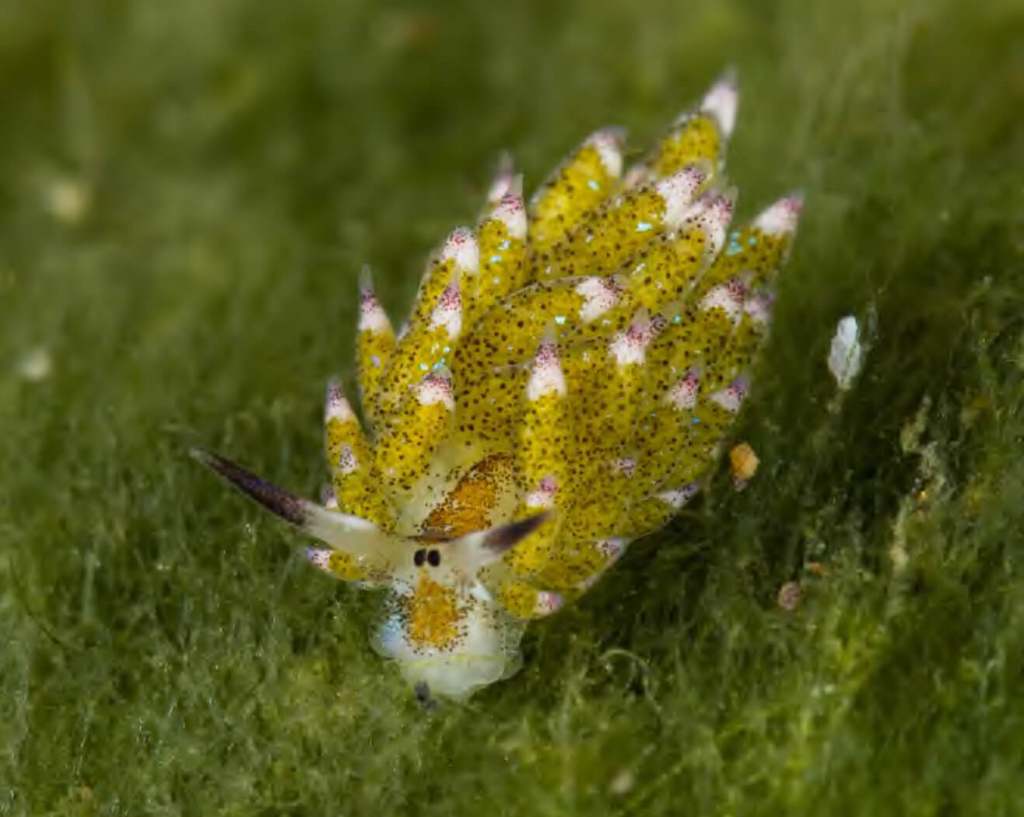
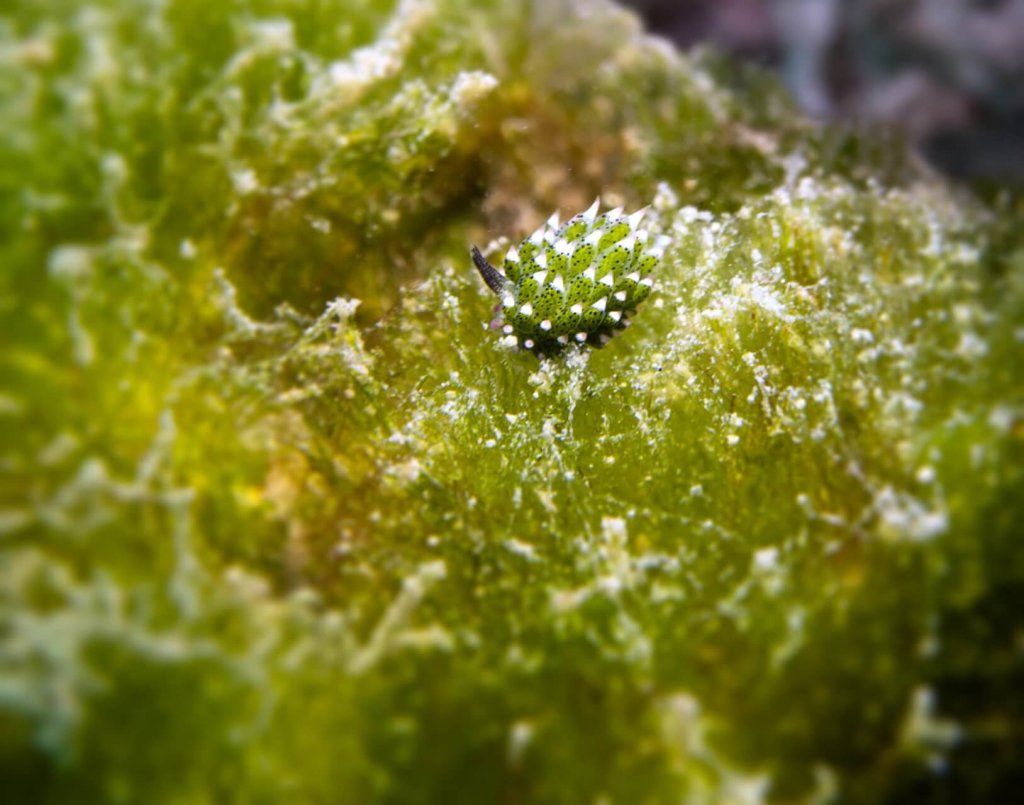
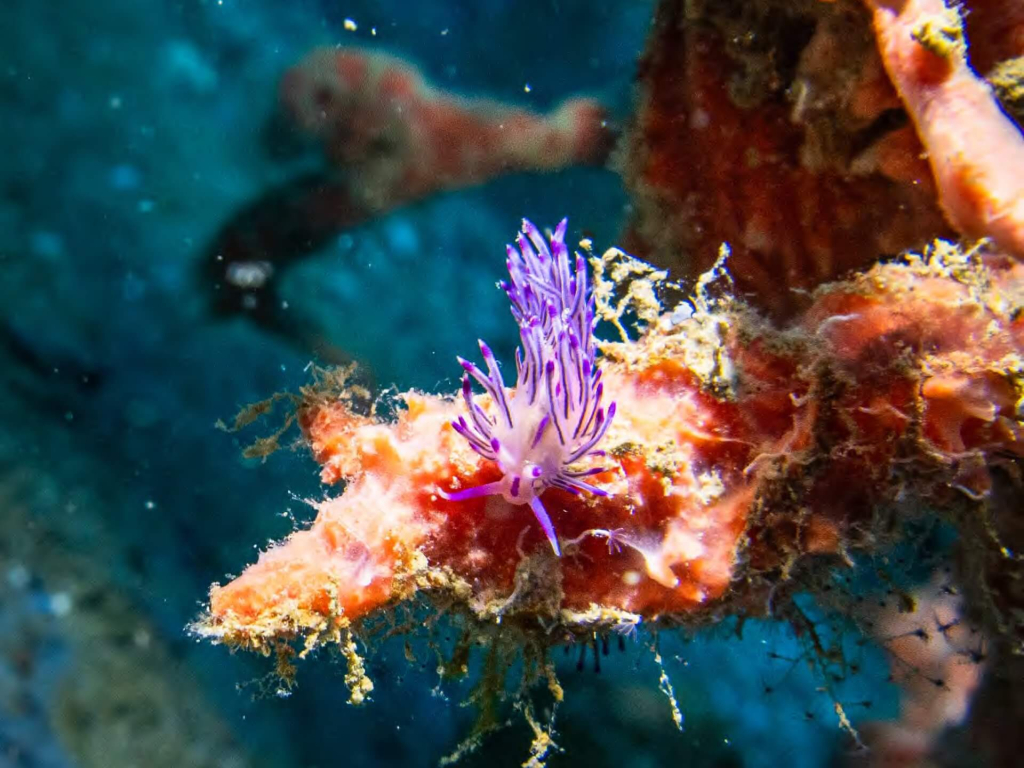
Adults measure 17–28 mm in length, with a relatively slender, elongated body. The coloration is highly cryptic, typically translucent with intricate brown, reddish-brown, or mottled patterns that blend seamlessly with the brownish-green encrusting plates of Pavona explanulata. Cerata are numerous, cylindrical to slightly swollen, and arranged in multiple rows; they often contain digestive gland contents reflecting the coral’s pigmentation. Rhinophores and oral tentacles are smooth and relatively short, contributing to the overall camouflaged profile on the coral surface.
Daily Behaviors and Activity Patterns
Phestilla viei is generally diurnal to crepuscular, though its excellent camouflage makes it difficult to spot during the day. It glides slowly across the surface of its host coral, feeding on individual polyps.
When disturbed, it relies on ceratal autotomy, dropping cerata that continue to move and distract predators. As simultaneous hermaphrodites, individuals may aggregate near dense coral patches during reproductive periods, aligning right sides together for sperm exchange before laying white egg ribbons directly on the coral colony. Its behavior is tightly linked to the host, with individuals rarely straying far from Pavona explanulata.
Role in Koh Tao Marine Life
In Koh Tao’s changing reef ecosystems, P. viei acts as a specialist consumer of Pavona explanulata, a resilient plate coral that is increasingly common as more sensitive species decline. By feeding on polyps, it contributes to natural turnover and may influence local coral community dynamics.
Divers and researchers find it on encrusting Pavona colonies in shallow to moderate depths, where its presence signals healthy host populations. The species is an excellent subject for citizen-science surveys focused on corallivorous nudibranchs and reef health monitoring.
Key Behavioral Adaptations
The nudibranch exhibits remarkable host mimicry, with body patterning and coloration evolving to match Pavona explanulata for near-perfect crypsis. It moves deliberately across the coral surface, pausing to feed on polyps. Defense relies primarily on ceratal autotomy rather than nematocyst sequestration (kleptocnidy is minimal or absent in this genus).
These adaptations allow P. viei to exploit a specific coral niche while remaining inconspicuous to both predators and observers until it moves or leaves feeding scars/egg trails.