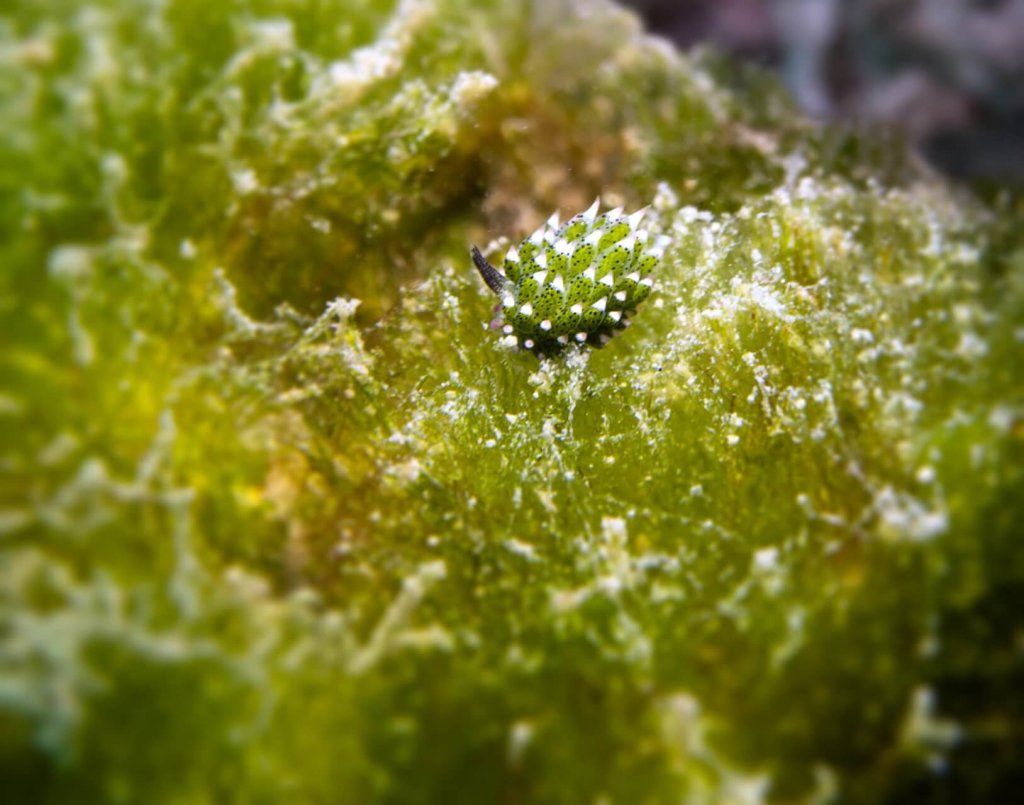
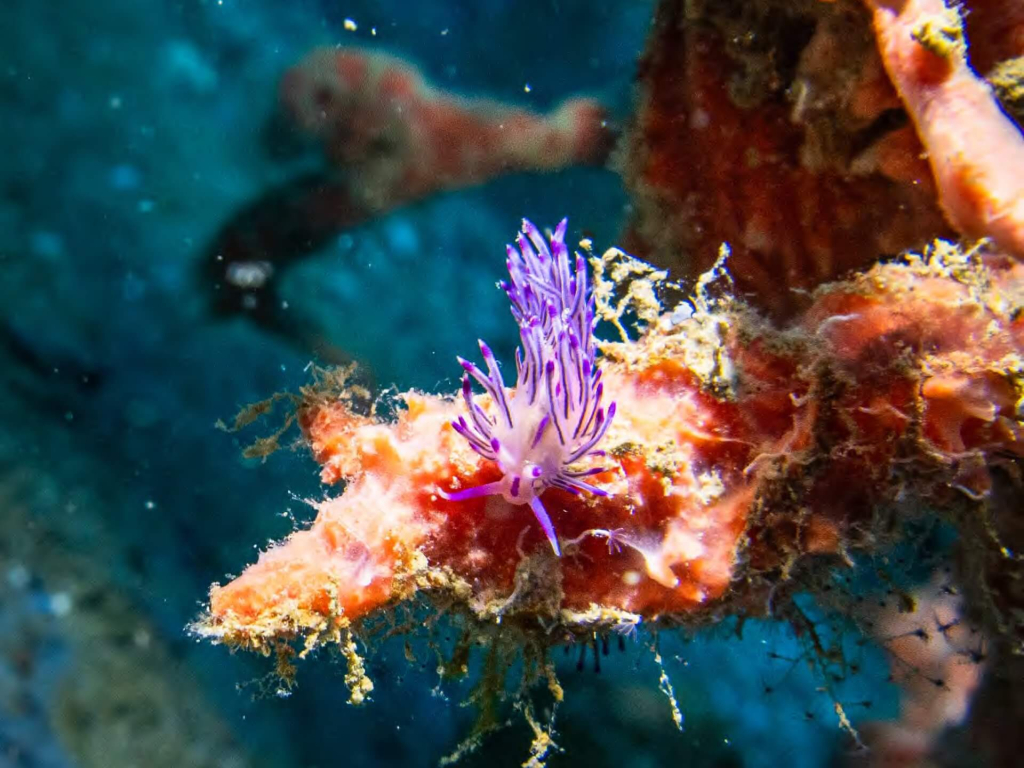
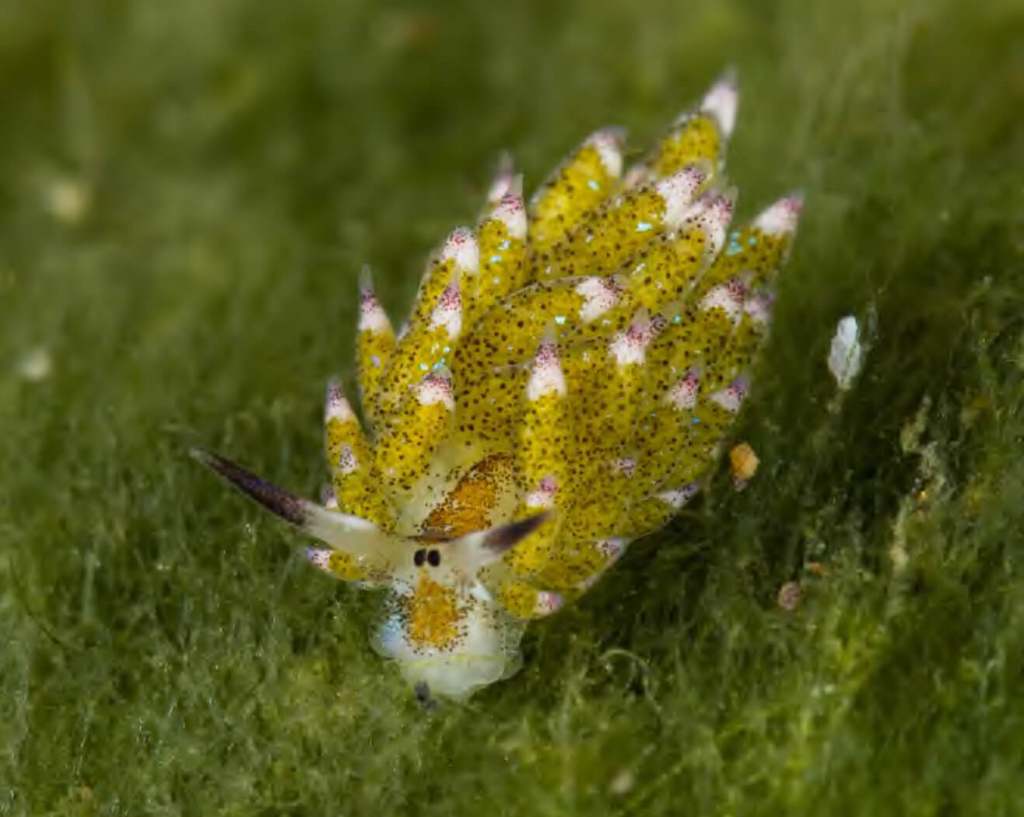
Sea slugs — including nudibranchs — are among the most fascinating and diverse animals on our reefs.
These tiny, vibrant marine gastropods come in an incredible variety of shapes, colors, and behaviors, and play a key ecological role as indicators of reef biodiversity and health.
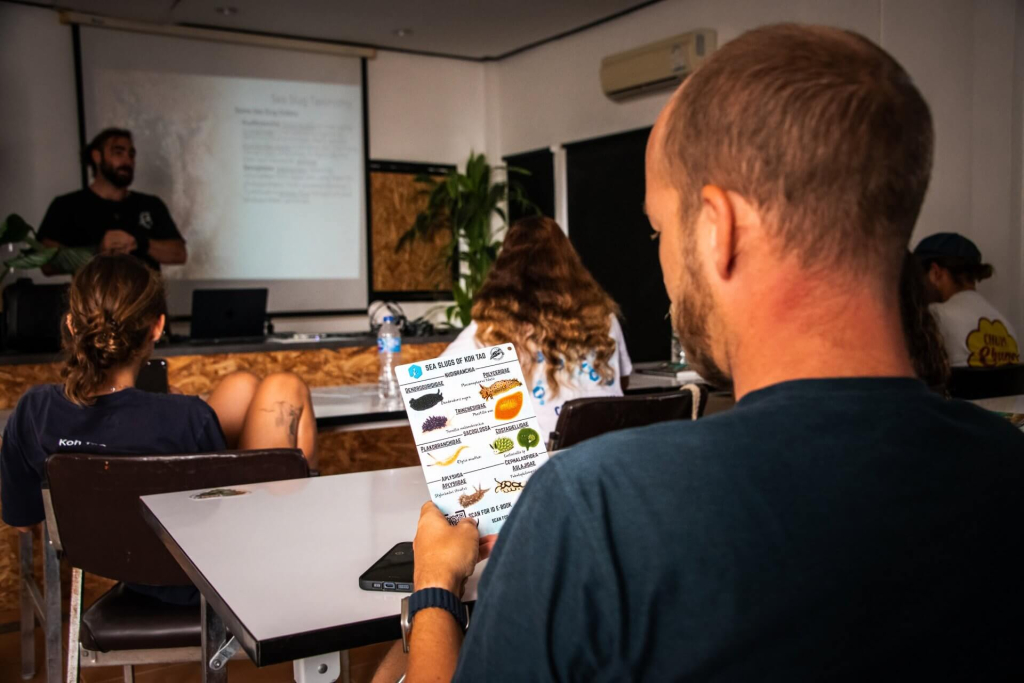
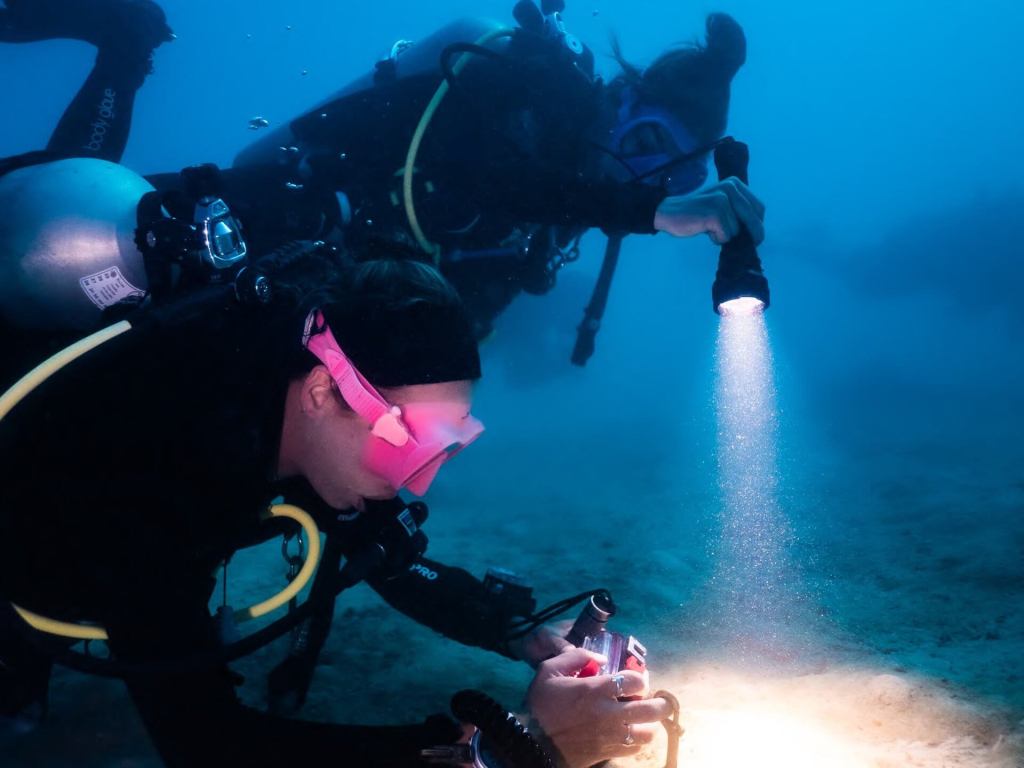
In this 1-day hands-on course, you’ll explore the entire world of sea slugs — from colorful nudibranchs to other lesser-known but equally important species. You’ll learn how to identify, record, and monitor their diversity while contributing to an ongoing research project on sea slug ecology and biodiversity around Koh Tao.
Sea slugs — including nudibranchs, sacoglossans, and other marine gastropods — are soft-bodied mollusks renowned for their vivid colors, intricate shapes, and extraordinary diversity.
Despite their small size, they play a major ecological role in coral reef ecosystems: many are specialized feeders that help regulate sponge, coral, and algal populations, while others serve as key indicators of biodiversity and habitat complexity.
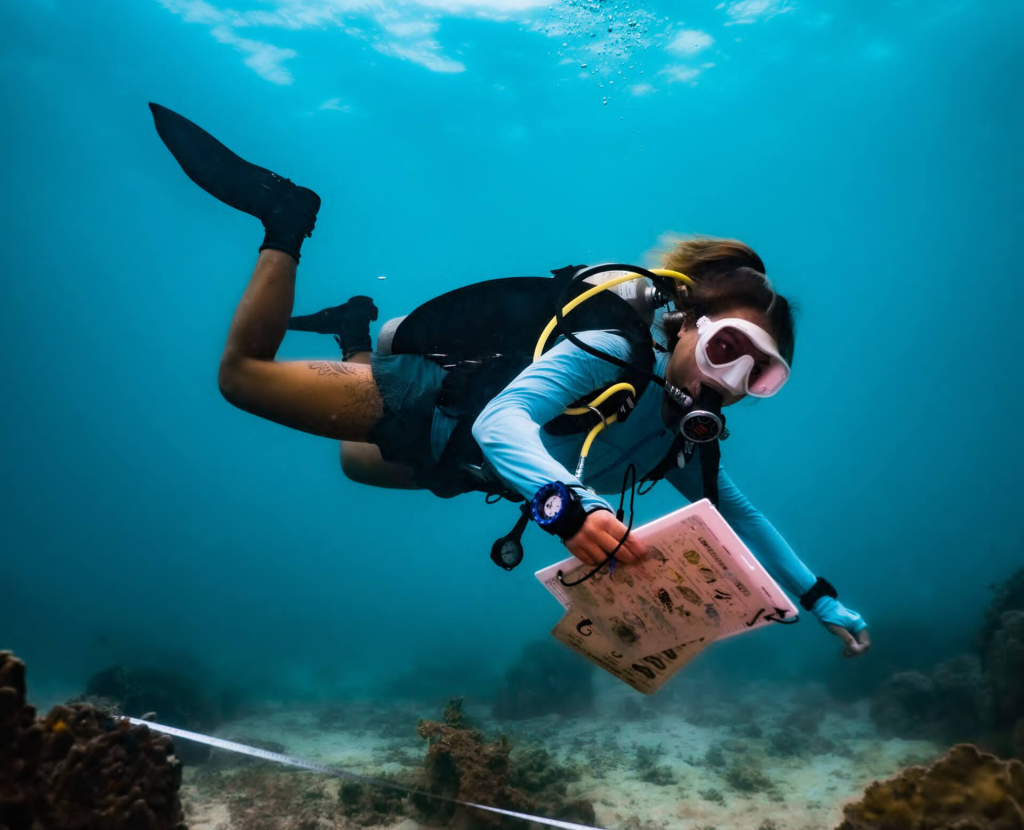
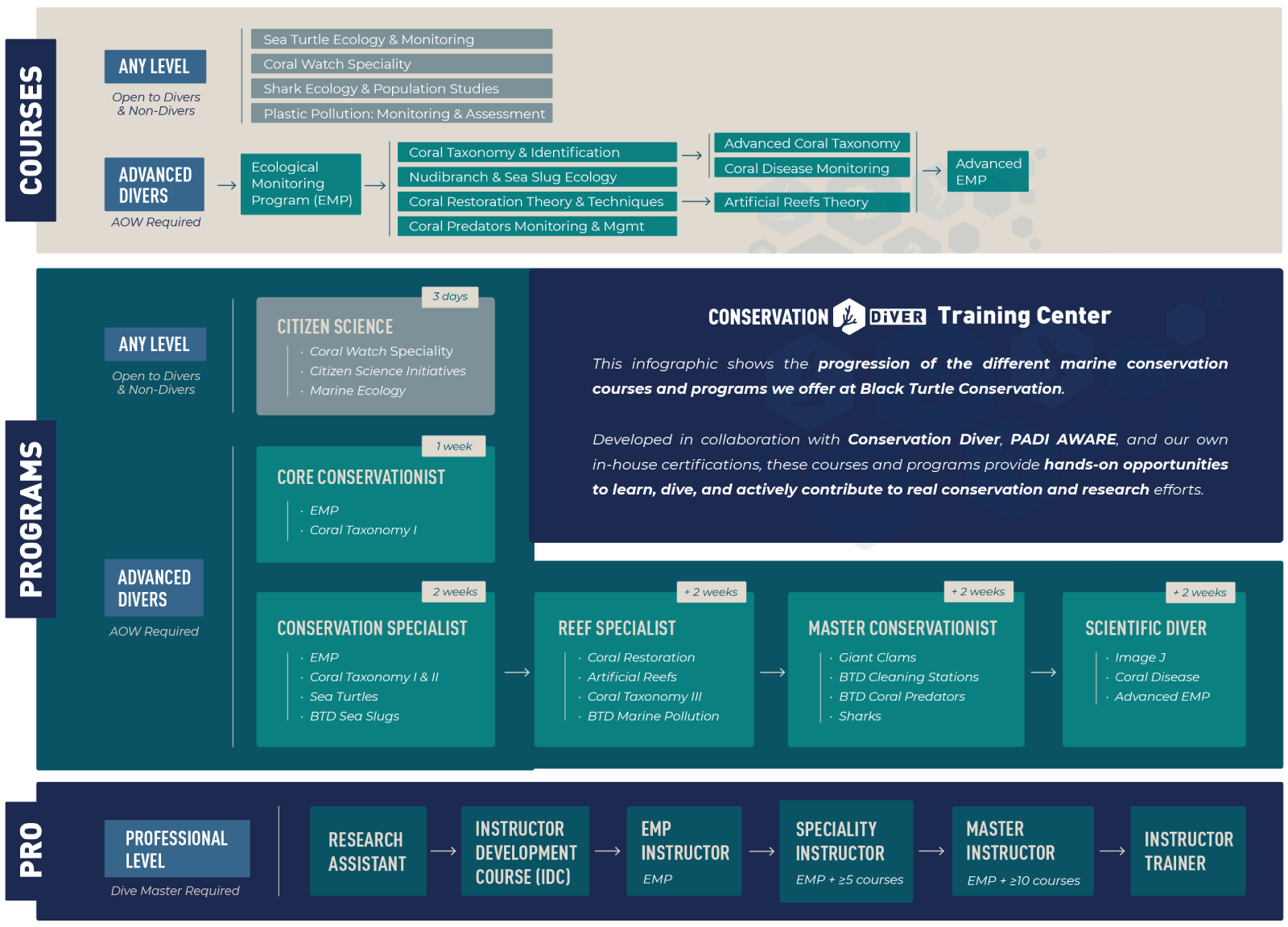
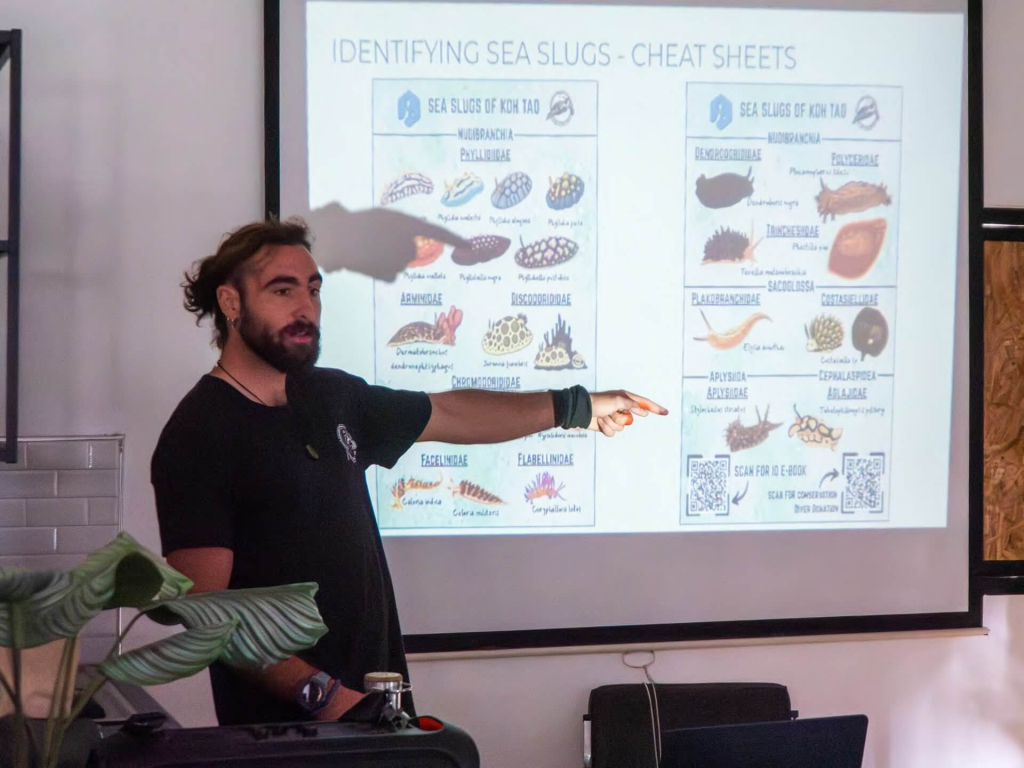
Our Nudibranch & Sea Slug Ecology Course will teach you how to identify different families and genera, understand their ecological importance, and collect real scientific data through structured underwater surveys.
You’ll also learn how sea slug communities respond to environmental changes — making them powerful bioindicators for assessing reef health and resilience in conservation research.
What you’ll learn:
- Identify the main families and genera of sea slugs.
- Understand their feeding strategies, reproduction, and defense mechanisms.
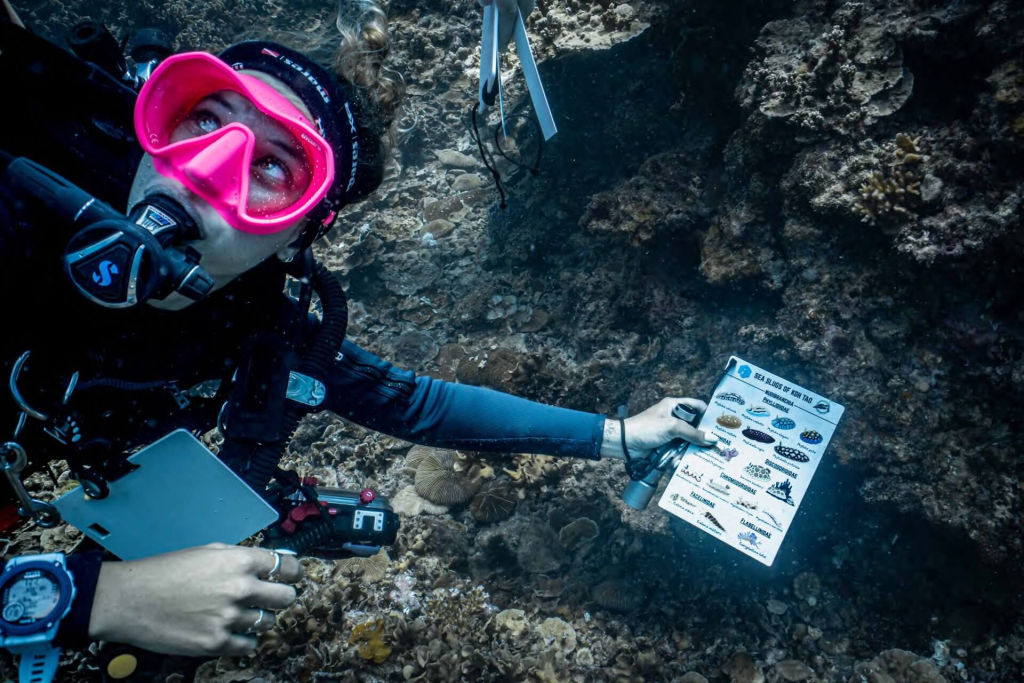
- Conduct biodiversity and abundance surveys following scientific protocols.
- Collect and record data for ongoing reef-monitoring and species-distribution projects.
This course is ideal if you want to:
- Deepen your knowledge of marine invertebrate ecology.
- Participate in real-world scientific research projects.
- Build the observation and photography skills needed for biodiversity monitoring.