Unlock the secrets of coral diversity with our guide on mastering coral taxonomy – an essential skill for every conservationist dedicated to protecting marine ecosystems.
On the vibrant island of Koh Tao, Thailand, Black Turtle Conservation has pioneered a comprehensive training pathway designed to turn divers into citizen scientists and professional marine monitors.
Mastering the identification of these complex organisms is not just an academic exercise; it is the fundamental building block for all reef management and restoration efforts.
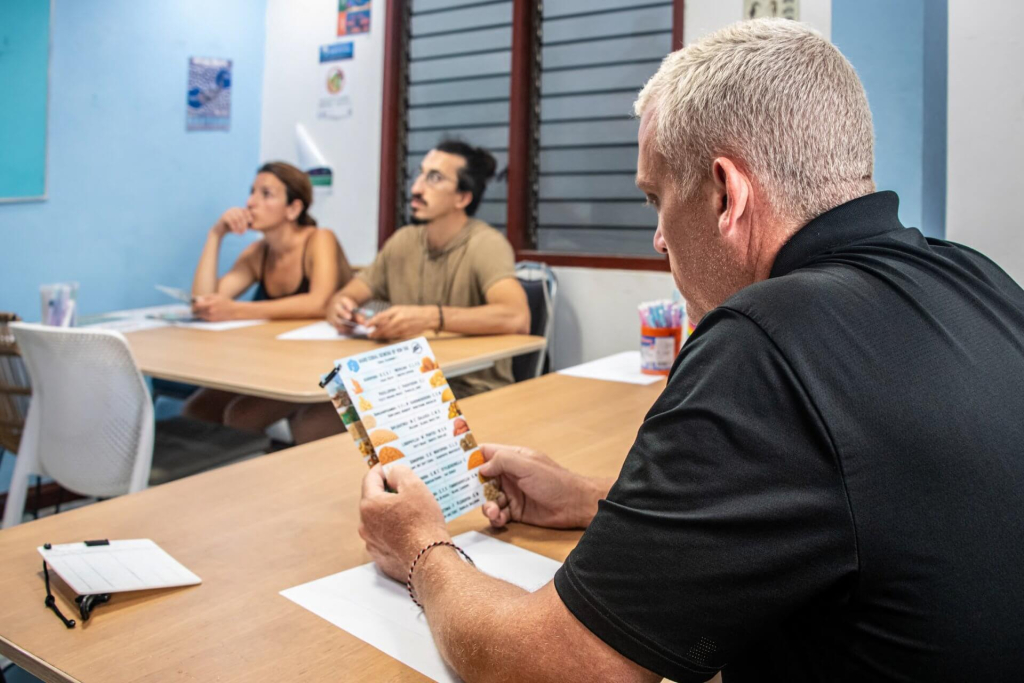
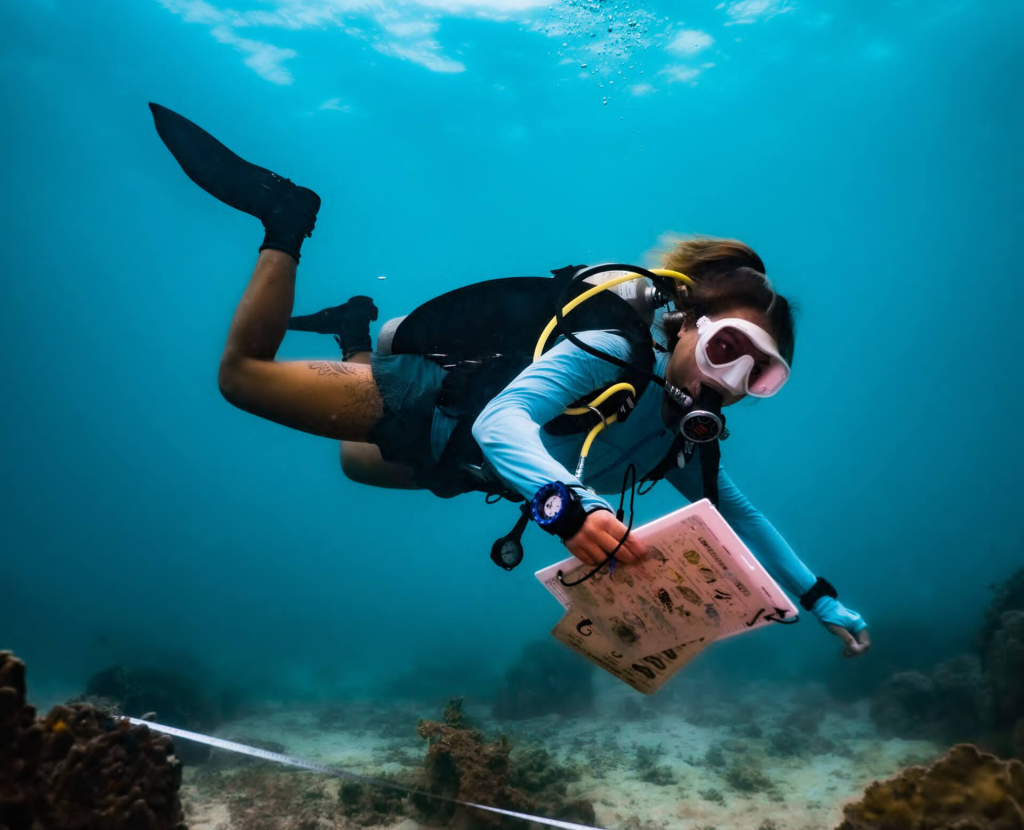
Marine conservation student identifying coral genera during field training for the Coral Taxonomy course at Black Turtle Conservation, Koh Tao, Thailand.
The Foundation of Reef Management: Why Taxonomy Matters
Coral Taxonomy plays a critical role in marine conservation efforts. By understanding the different species and their unique characteristics, conservationists can tailor their strategies to protect the most vulnerable and ecologically significant corals.
This knowledge helps in identifying which species are at risk due to environmental changes, human activities, or natural disasters. Effective coral taxonomy enables targeted interventions that can mitigate damage and promote the recovery of coral populations.
Monitoring Biodiversity: A Common Language for Science
Moreover, accurate coral taxonomy is essential for monitoring marine biodiversity. It allows scientists to track changes in coral populations over time and assess the health of marine ecosystems.
This information is crucial for developing policies and regulations aimed at preserving coral reefs, which are among the most diverse and productive ecosystems on the planet. Without a clear understanding of coral species and their distribution, it would be challenging to implement effective conservation measures and evaluate their success.
In addition, coral taxonomy facilitates collaboration among researchers, conservationists, and policymakers. It provides a common language and framework for discussing coral diversity and its conservation.
This shared understanding is vital for coordinating efforts at local, national, and international levels. By mastering coral taxonomy, conservationists can contribute to a global effort to protect these vital ecosystems and ensure their survival for future generations through authorities like NOAA.
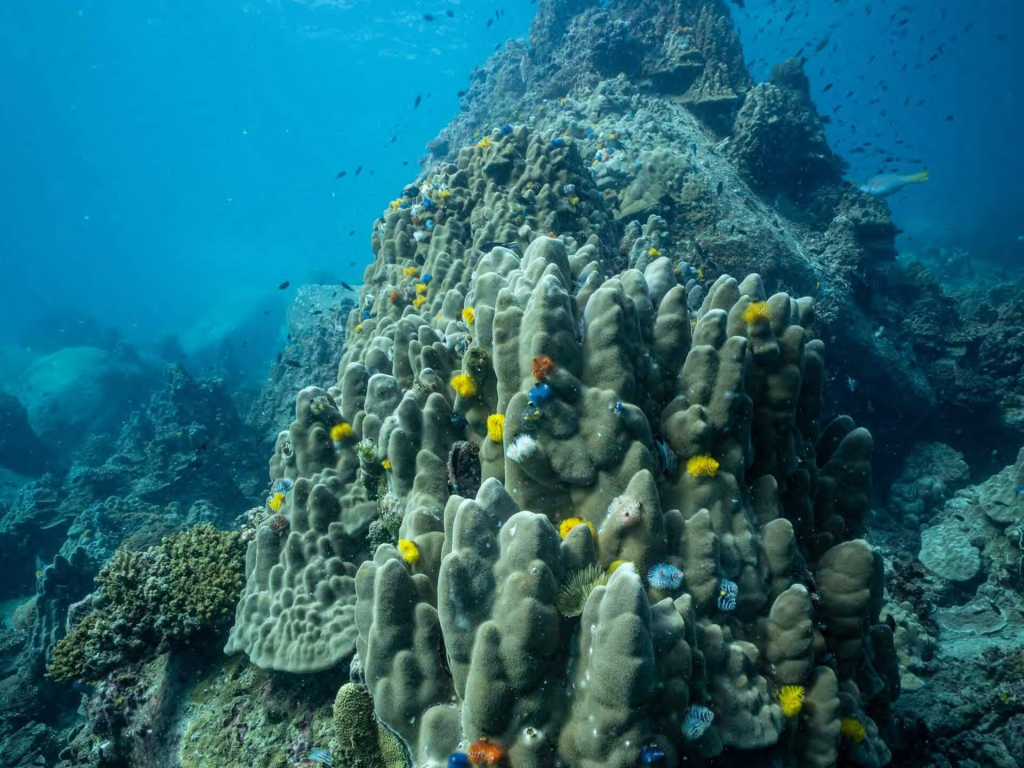
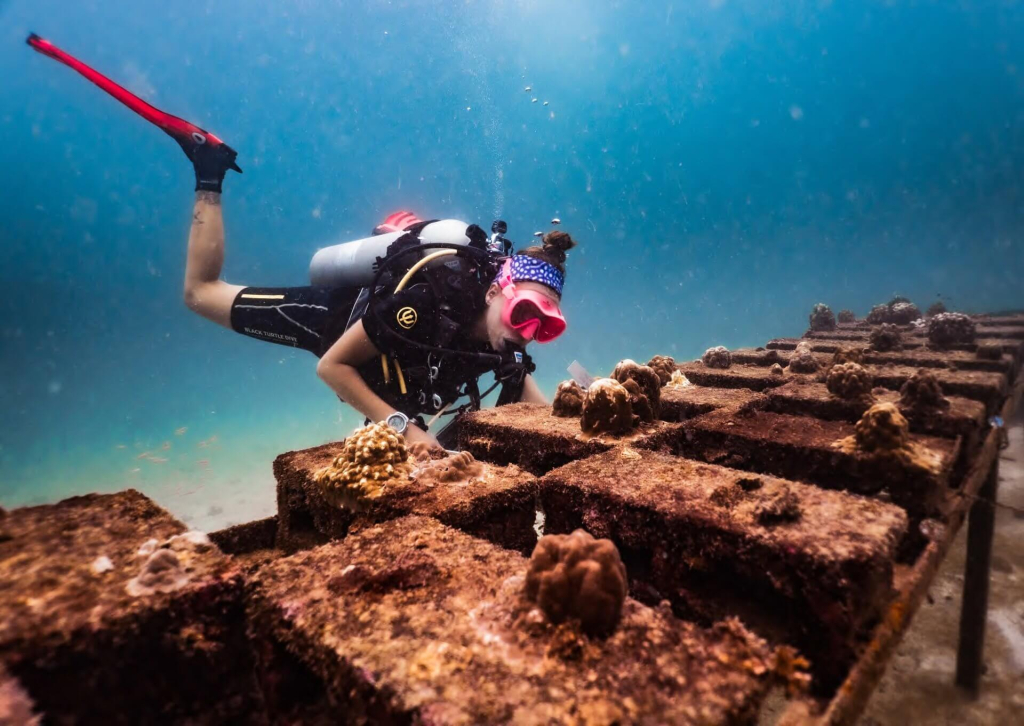
Marine conservation student studying coral morphology during the Coral Taxonomy course at Black Turtle Conservation, Koh Tao, Thailand.
A World of Variety: Overview of Coral Species Diversity
Coral reefs boast an incredible diversity of species, each contributing to the complex and dynamic structure of these ecosystems. There are over 800 known species of reef-building corals, belonging to different genera and families.
These species vary in their morphology, growth forms, and ecological roles. Some corals form massive, boulder-like structures, while others grow in delicate, branching forms. This diversity is crucial for the resilience and functionality of coral reefs.
Around Koh Tao, this diversity is vividly on display. The island is characterised by 50 genera of hard coral out the 130 genera of hard coral identified globally, making Koh Tao a diversity hotspot. Common genera of coral found around Koh Tao include Porites, Acropora and Montipora.
The diversity of coral species is influenced by various factors, including water temperature, light availability, and water quality. Different species have specific environmental requirements and tolerances, which determine their distribution and abundance.
For example, some corals thrive in shallow, sunlit waters, while others are adapted to deeper, darker environments.
Genetic Resilience: Protecting the Intricate Web of Life
Furthermore, coral species diversity is not only about the number of species but also about their genetic diversity. Genetic diversity within coral populations is crucial for their adaptability and resilience to stressors such as climate change, disease, and pollution.
Conservation efforts must consider both species diversity and genetic diversity to ensure the long-term survival of coral reefs. By mastering coral taxonomy, conservationists can better understand and protect the intricate web of life that makes up these vibrant ecosystems.
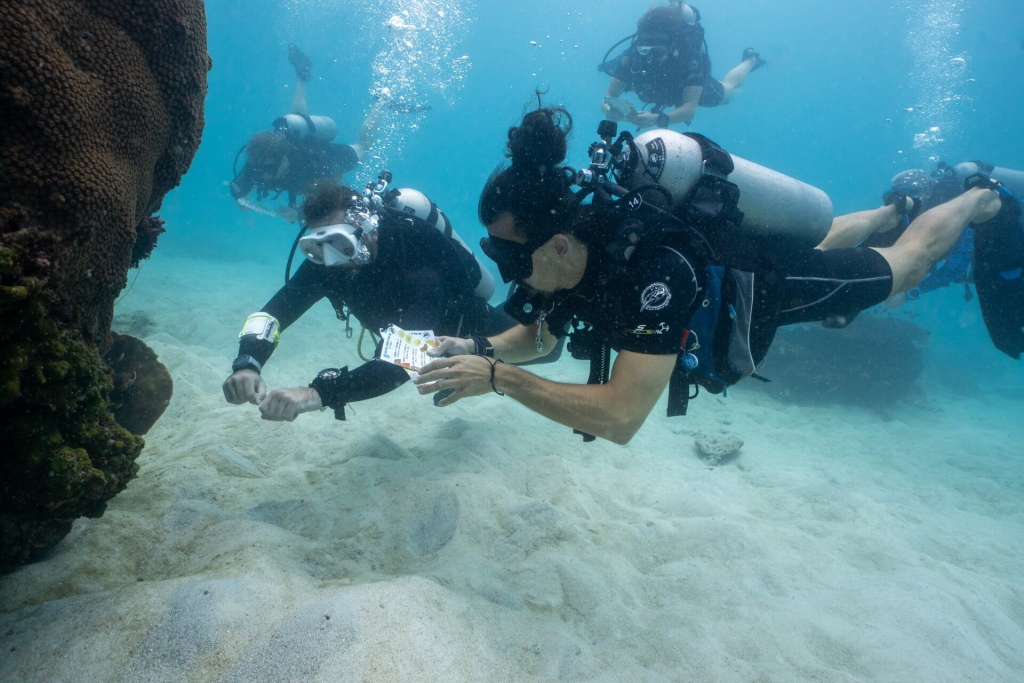
Student identifying coral species underwater during the Coral Taxonomy & Identification course with Black Turtle Conservation in Koh Tao, Thailand.
Natural & Man-Made Landscapes: Coral Topography of Koh Tao
The underwater landscape of Koh Tao is a masterclass in varied coral topography. From shallow, sprawling coral gardens to vertical pinnacles that rise from the depths, the island’s dive sites offer a diverse range of habitats for coral colonisation.
- Shallow Coral Gardens: Sites like Aow Leuk and Mango Bay feature expansive gardens dominated by Porites (massive corals) and Acropora (branching and table corals). These areas are critical nurseries for fish and serve as the frontline for coastal protection.
- Deep Pinnacles: Chumphon Pinnacle and Southwest Pinnacle showcase a different topographic style. Here, the rock faces are encrusted with sea fans and whip corals, while the upper plateaus are home to resilient massive coral colonies that must withstand stronger currents.
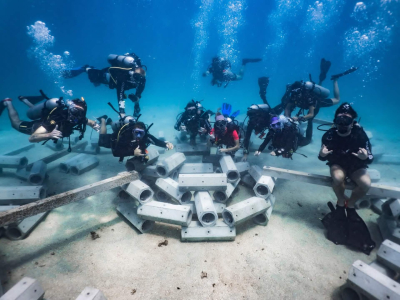
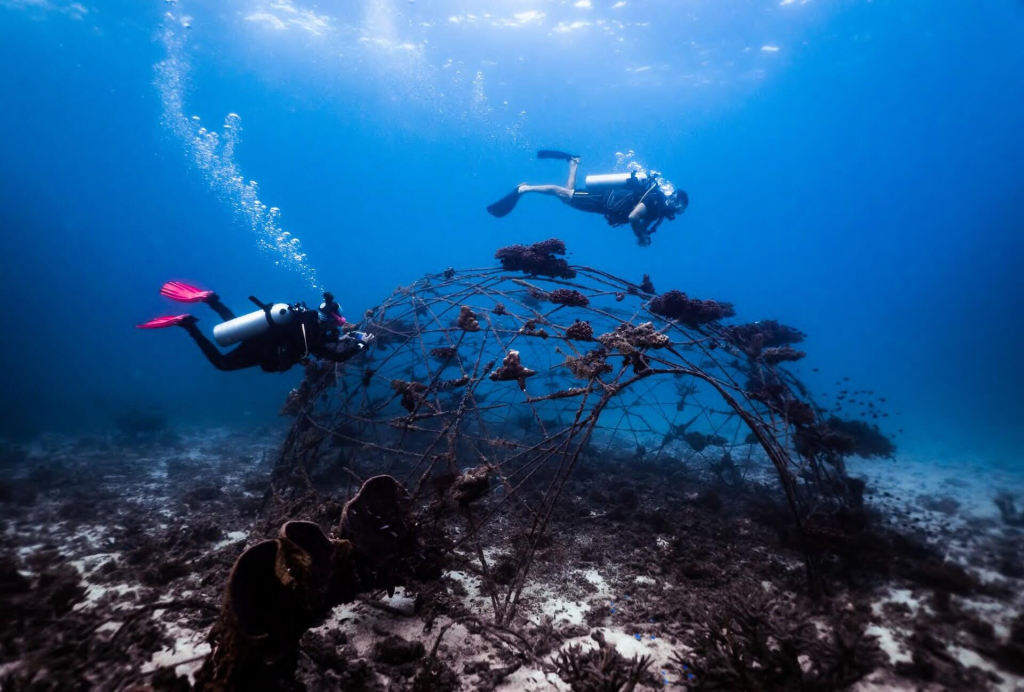
- Artificial Reef Structures: Black Turtle Conservation actively manages sites like Junkyard Reef and Black Turtle Reef.
These man-made structures provide new topography in otherwise sandy areas, creating essential substrates for coral recruitment and significantly alleviating scuba diver pressure on natural fringing reefs.
Understanding this topography is essential because the physical shape of the reef dictates the types of species that can survive there.
Identification through taxonomy allows our teams to map these zones accurately, ensuring that restoration efforts are ecologically appropriate for the specific site’s depth and current profile.
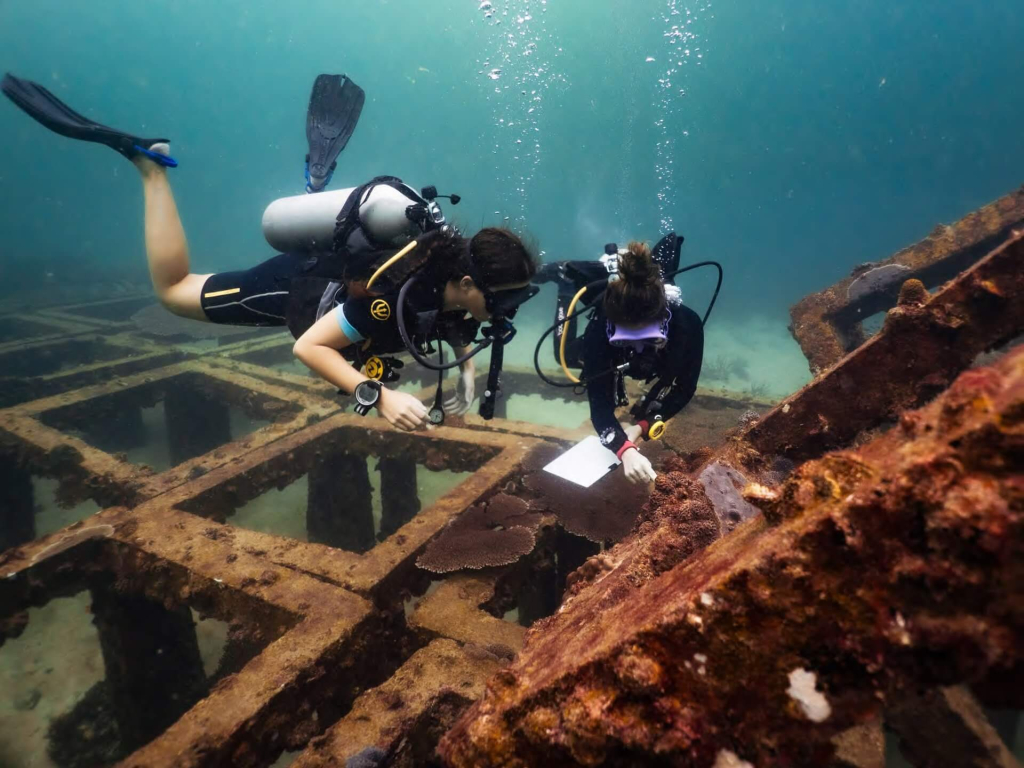
Core Conservationist students learning coral taxonomy and reef identification skills in Koh Tao, Thailand.
The Black Turtle Training Pathway: From Citizen Scientist to Professional
At Black Turtle Conservation, we have integrated coral taxonomy into the core of our marine conservation programs. We offer a progressive series of internships that take students from foundational identification to advanced scientific monitoring:
- Coral Watch Specialty: This entry-level 1-day course (costing 6,000 THB) provides a basic introduction to coral health and bleaching monitoring using the Coral Watch It is accessible to anyone aged 10 and over, making it the perfect starting point for citizen scientists.
- Coral Taxonomy I, II, and III: These specialised modules are designed to teach identification skills of coral genus based on skeletal and anatomical characteristics, both on land and underwater. This course builds essential skills for research, restoration, and monitoring projects.
- Scientific Diver Program: As the pinnacle of our Learning Pathway, the Scientific Diver program incorporates Advanced Ecological Monitoring Program (EMP) Participants apply their taxonomic skills to collect real-world data on fish, invertebrates, and substrate composition, directly contributing to our long-term reef management data.
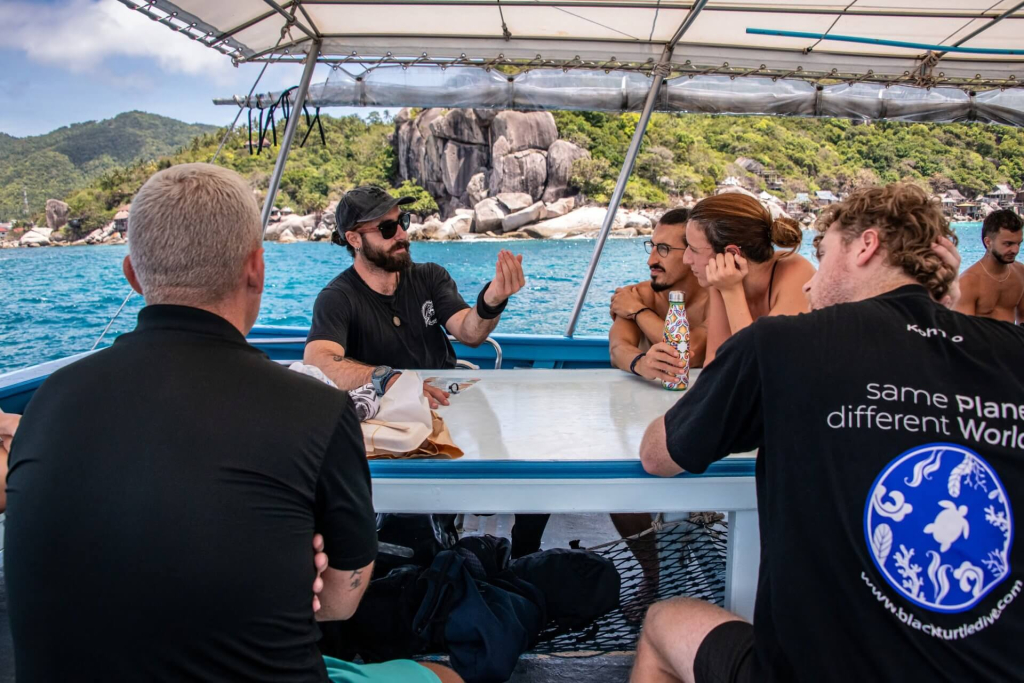
Marine biology student observing coral structures as part of the Coral Taxonomy training course at Black Turtle Conservation, Koh Tao, Thailand.
The Identification Toolkit: Key Methods for Identifying Species
Identifying coral species requires a combination of morphological, genetic, and ecological approaches. Morphological identification involves examining the physical characteristics of corals, such as their shape, size, and skeletal structure.
This method remains an essential tool for identifying coral species in the field. However, morphological identification can be challenging due to variability in coral forms and the presence of cryptic species that look similar but are genetically distinct.
Growth Forms and Corallite Structures: Looking Closer
At Black Turtle Conservation, we emphasize in-situ morphological identification. We train our students to recognise:
- Growth Forms: Distinguishing between branching, massive, encrusting, and foliose corals.
- Corallite Structures: Looking at the microscopic cups that hold the coral polyps, which are often the only way to distinguish between similar-looking genera.
- Color and Texture: While often variable, these can provide secondary clues when combined with other morphological data.
Genetic methods and ecological approaches further refine this process. Ecological approaches involve examining the habitat preferences and ecological roles of different species.
For example, branching corals provide complex habitats for fish and invertebrates, while massive corals contribute to the structural stability of reefs. Understanding these roles is essential for assessing the health and functioning of coral reefs and their trophic levels.
Tools and Resources for Coral Taxonomy
A variety of tools and resources are available to assist conservationists in mastering coral taxonomy. Field guides and identification manuals provide detailed descriptions and illustrations of coral species, helping researchers recognize different corals in their natural habitats.
Black Turtle Conservation utilises several digital and physical resources:
- Custom Identification Slates: We provide students with slates tailored specifically to the common coral genera of Koh Tao. This is as underwater tool to assist in the identification process.
- In depth theory practice: Before heading out to the field we provide an in-depth lecture on the identification methods and core understanding of coral genera and the important roles that they play on the reef. To finalise the in-classroom e-learning we finish the lecture with an informal quiz to consolidate your newly learnt identification skills before diving in.
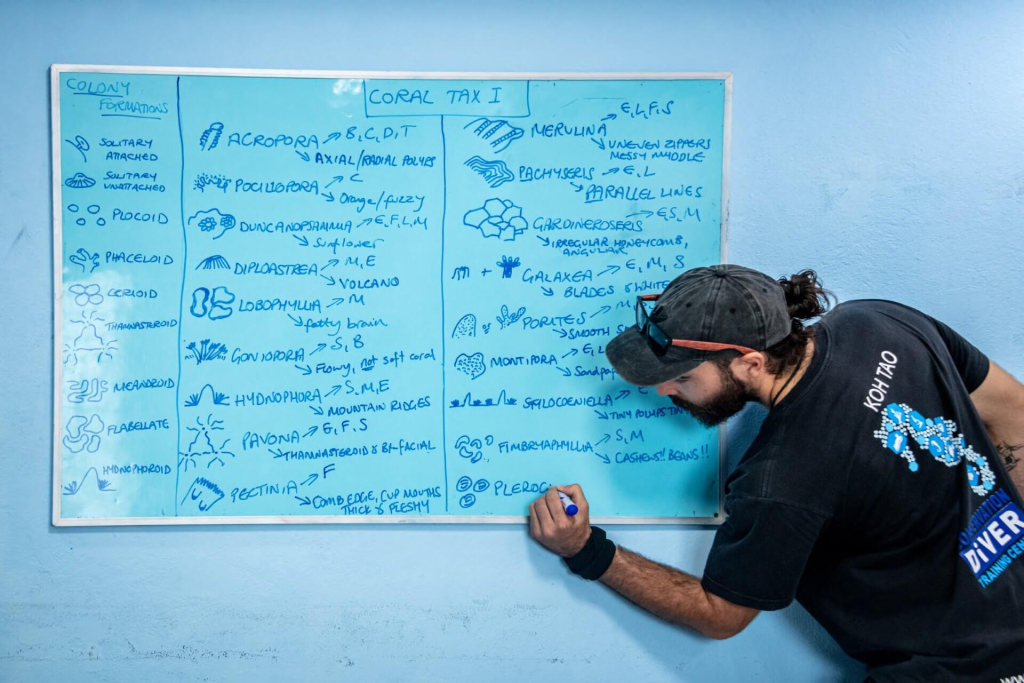
Diver identifying coral species underwater during the Coral Taxonomy training course at Black Turtle Conservation, Koh Tao, Thailand. Identification course at Black Turtle Conservation in Koh Tao, Thailand.
Vital Indicators: The Role of Taxonomy in Ecosystem Health
Coral taxonomy is integral to understanding and maintaining the health of marine ecosystems. Coral reefs provide essential services, such as coastal protection and habitat for marine life. The diversity and abundance of coral species are key indicators of reef health and resilience.
By accurately identifying and monitoring coral species, conservationists can detect early signs of stress or decline.
Each coral species contributes to the structural complexity and ecological functions of the reef. The loss of specific species can lead to declines in biodiversity and ecosystem services.
Coral taxonomy helps conservationists identify which species are most important for maintaining reef health and prioritise their protection, such as keystone species.
Taxonomy and Climate Change: Selecting Resilient Corals
Furthermore, taxonomy plays a role in addressing climate change. By identifying which species are most vulnerable to temperature changes, conservationists can develop strategies to protect them.
This may include preserving areas with resilient populations or developing coral nurseries for restoration.
Our Coral Restoration and Coral Disease courses at Black Turtle Dive specifically use taxonomic data to decide which corals to propagate in our nurseries, focusing on a mix of fast-growing pioneers and resilient slow-growing architects.
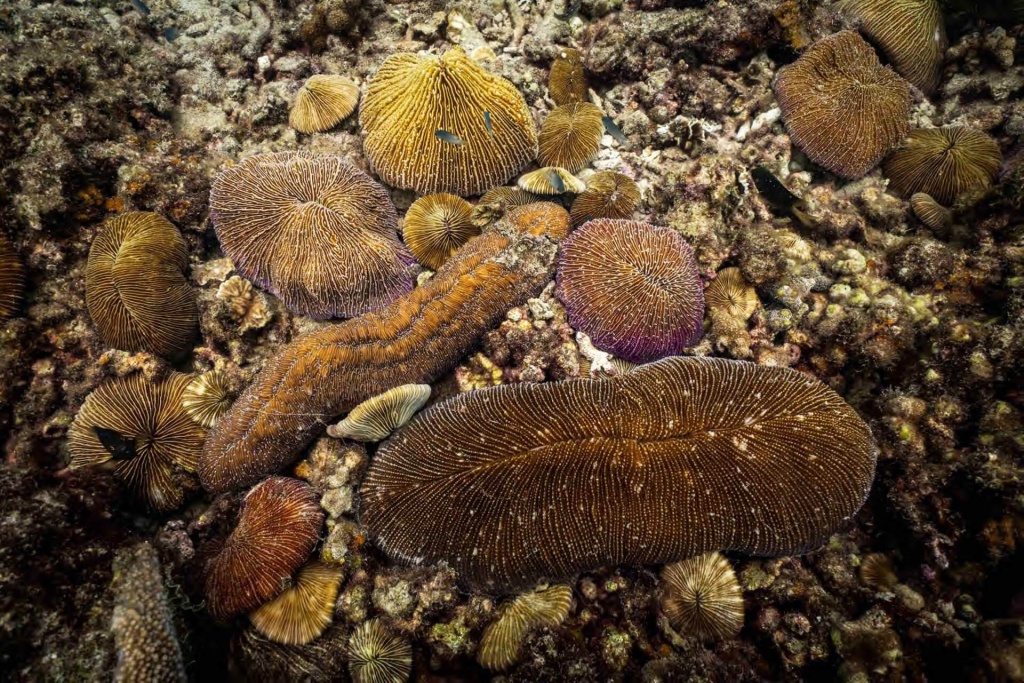
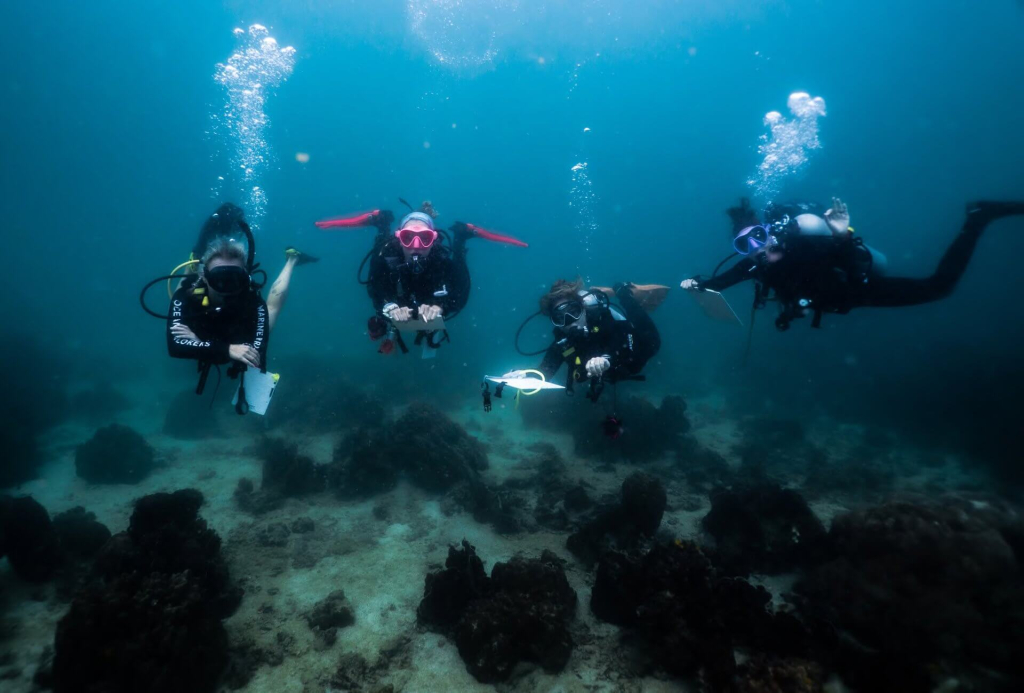
Advanced coral taxonomy divers analyzing reef diversity
Navigating the Unknown: Challenges in Coral Taxonomy
Despite its importance, coral taxonomy and conservation face several challenges. One major challenge is the complexity and variability of coral morphology.
Many species exhibit a wide range of forms, making it difficult to distinguish between them based on physical characteristics alone. This variability can lead to misidentifications and inconsistencies in taxonomic classifications.
Cryptic Species and Environmental Stressors
Another challenge is the presence of cryptic species—those that are genetically distinct but look identical. Identifying these requires genetic tools that can be expensive and require specialized expertise.
Ensuring that conservationists have access to these tools and training is essential for accurate taxonomy.
Environmental changes and human activities – such as pollution, climate change, and overfishing – also pose significant challenges. These impacts can complicate efforts to monitor and protect coral diversity.
Conservationists must navigate these challenges while advocating for policies that address the root causes of reef degradation, including the removal of marine debris.
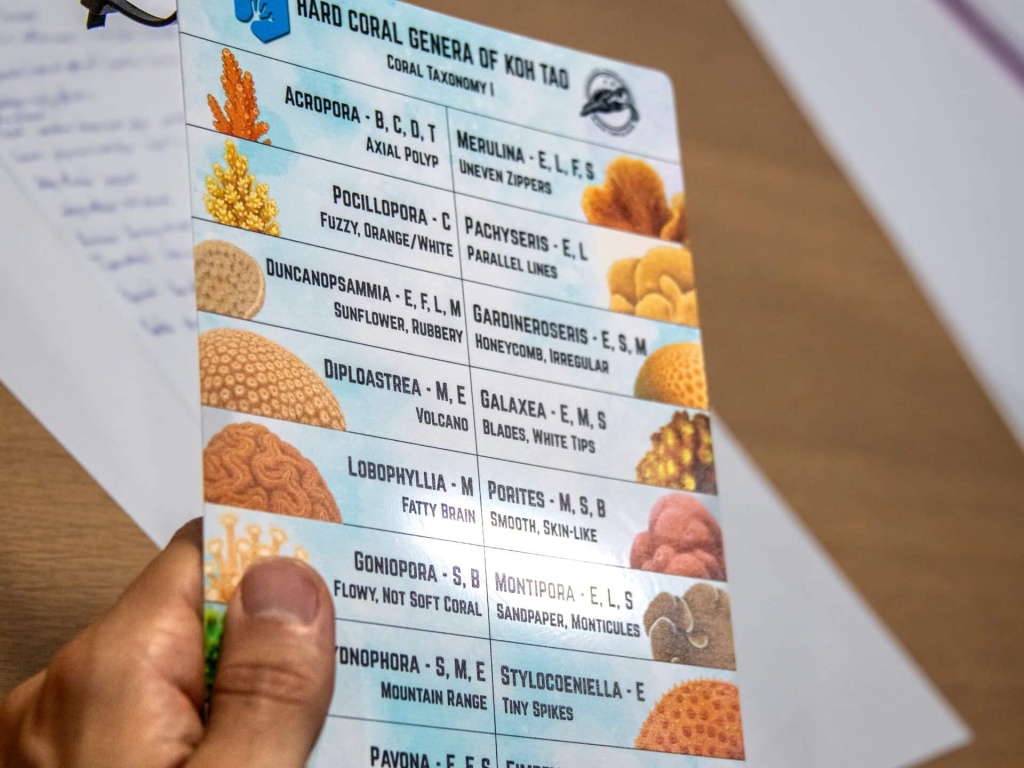
Close-up of coral colonies used in the Coral Taxonomy & Identification course at Black Turtle Conservation, Koh Tao, Thailand.
Success Stories: Case Studies in Coral Conservation
Several successful efforts demonstrate the power of accurate taxonomy. One example is the Coral Restoration Foundation (CRF) in Florida, which focuses on restoring endangered species like staghorn coral by carefully selecting and propagating genetically diverse fragments.
Similarly, the Great Barrier Reef Marine Park Authority (GBRMPA) uses comprehensive taxonomy and mapping to implement targeted conservation measures like zoning and fishing regulations.
On a local scale, Black Turtle Conservation’s work with artificial reefs – such as Junkyard Reef and Black Turtle Reef – relies heavily on taxonomy.
By identifying which species naturally recruit to these structures, we can optimize the design of future artificial reefs to attract specific coral genera, enhancing the overall biodiversity of the site.
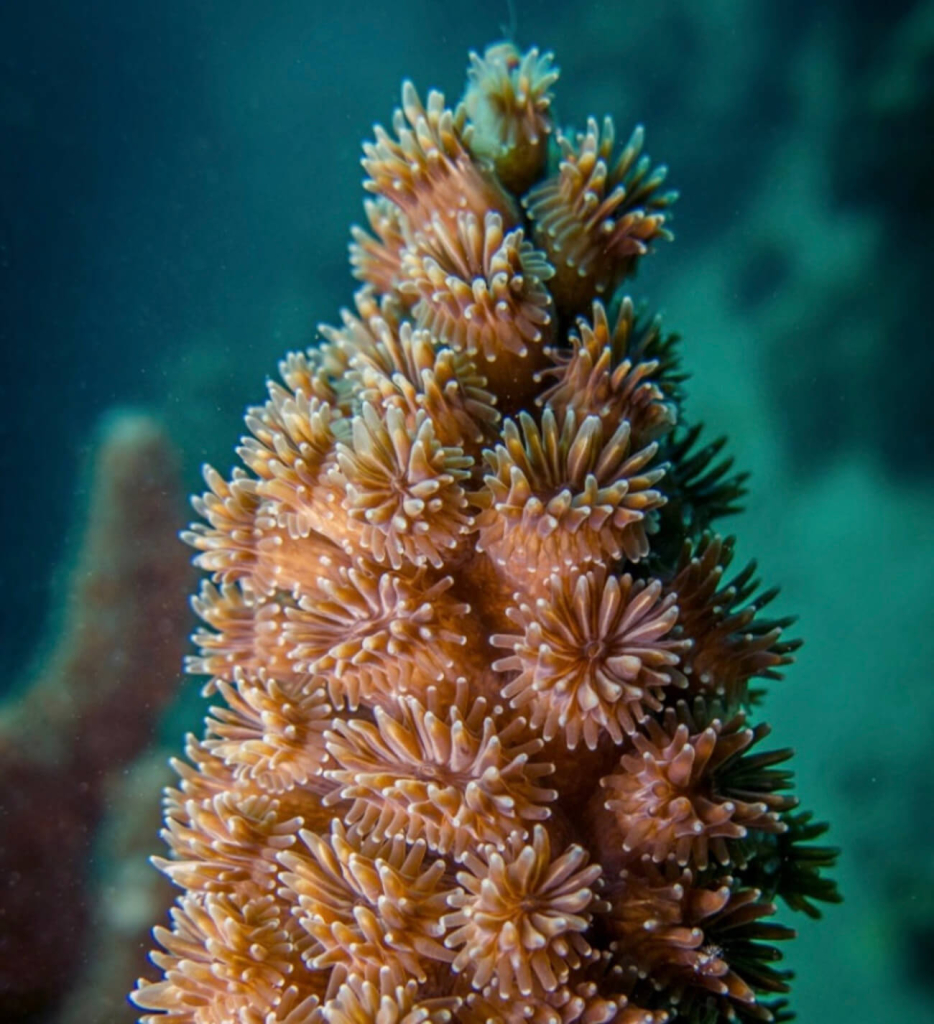
Close-up photo of branching coral polyps used in the Coral Taxonomy I course at Black Turtle Conservation, Koh Tao, Thailand.
The Next Frontier: Future Directions in Taxonomy Research
The future of coral taxonomy research holds exciting possibilities. One promising direction is the integration of advanced genetic techniques like eDNA analysis, which can detect the presence of coral species from water samples—a non-invasive tool for monitoring biodiversity.
Another important area is the study of coral microbiomes—the microbial communities associated with corals. These communities play crucial roles in health, disease resistance, and adaptation.
Understanding these interactions could lead to probiotic treatments to combat coral diseases using the science of zooxanthellae.
Additionally, technological advancements in 3D photogrammetry and remote sensing are transforming how we document coral morphology and monitor reefs on a large scale.
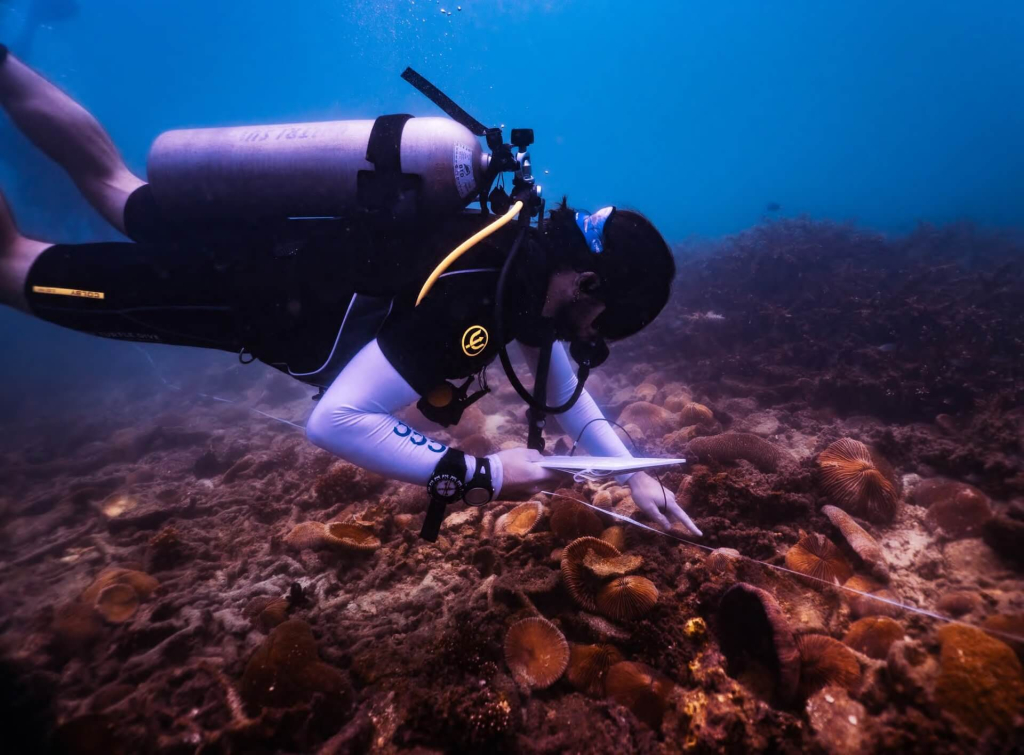
Marine conservation diver measuring transect line distance while conducting coral reef surveys during the Advanced Ecological Monitoring Program in Koh Tao.
Empowering the Next Generation of Marine Scientists
Mastering coral taxonomy is an essential skill for conservationists dedicated to protecting marine ecosystems. By understanding the diversity and characteristics of coral species, we can develop targeted strategies to safeguard the health and resilience of coral reefs.
Accurate taxonomy supports biodiversity monitoring, informs conservation policies, and fosters global collaboration through databases like WoRMS.
At Black Turtle Conservation, we are committed to providing the training and resources necessary for the next generation of marine scientists to excel in this field.
Through our progressive internships and hands-on monitoring work on Koh Tao, we empower conservationists with the knowledge and skills needed to ensure the survival and flourishing of coral reefs for generations to come.
Let us continue to protect these vibrant and essential ecosystems for the benefit of both marine life and human communities.

COURSE PRICES & BOOKING