Discover how artificial reefs are revolutionising coral restoration, creating vibrant ecosystems, and paving the way for a sustainable ocean future.
Understanding Coral Reefs and Their Importance
Coral reefs, often referred to as the rainforests of the sea, are among the most diverse and valuable ecosystems on Earth. Although they cover less than 1% of the ocean floor, they support approximately 25% of all marine species, making them critical to global marine biodiversity.
These underwater structures, formed by colonies of tiny animals called polyps, provide shelter, food, and breeding grounds for a multitude of marine organisms.
Beyond their ecological significance, coral reefs play a crucial role in protecting coastal regions. They act as natural barriers, absorbing wave energy and reducing the impact of storms and erosion.
This safeguards human lives and property while helping maintain the health of coastal habitats like mangroves and seagrass beds. Furthermore, coral reefs contribute significantly to local economies through tourism, fishing, and even pharmaceuticals derived from reef organisms.
The intrinsic beauty of these reefs makes them a major attraction for divers and snorkelers, boosting tourism and providing livelihoods to millions globally. In many developing countries, healthy reefs are vital for food security and economic stability.
However, despite their importance, these ecosystems face numerous threats that have led to a rapid decline in recent decades.
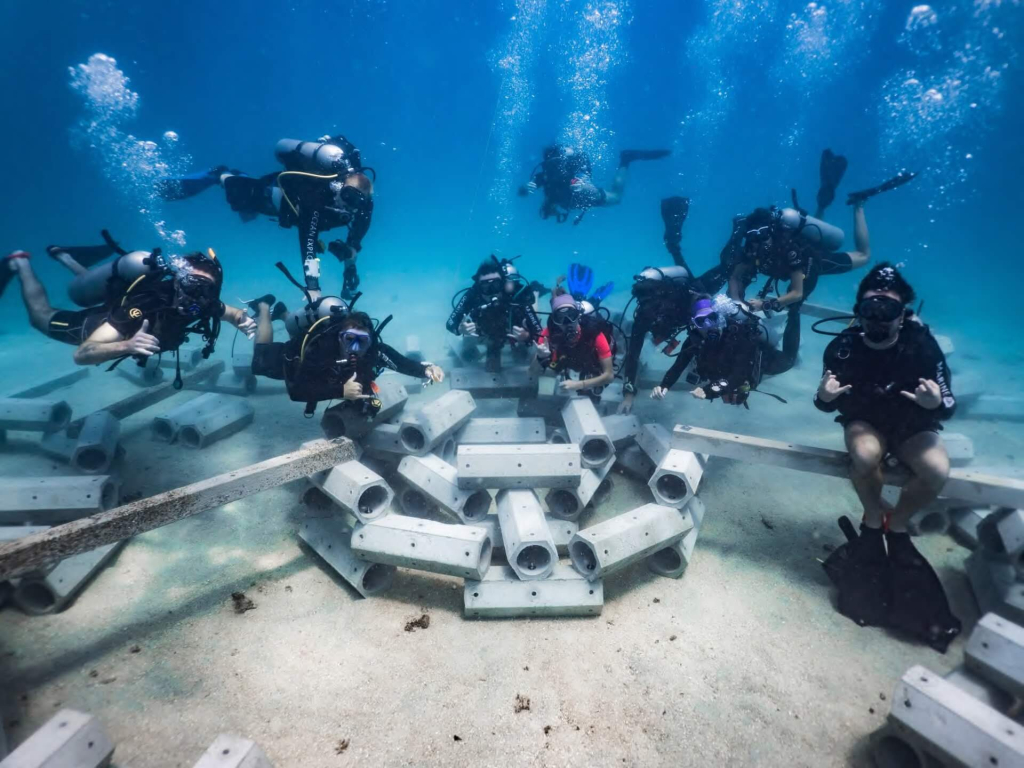
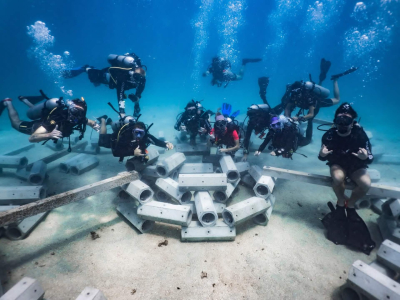
Group of conservation divers completing an artificial reef construction dive as part of the Artificial Reefs course at Black Turtle Conservation, Koh Tao.
The Decline of Natural Coral Reefs
The health of coral reefs worldwide is deteriorating at an alarming rate. Climate change, with its associated increase in sea temperatures and ocean acidification, stands as a primary culprit.
Warmer waters cause coral bleaching – a process where corals expel the symbiotic algae living in their tissues, leading to a loss of vibrant color and vital energy. Prolonged bleaching can result in coral death, severely disrupting the ecosystems they support.
Overfishing and destructive practices physically damage reef structures and deplete fish populations. Additionally, pollution from land-based sources – including agricultural runoff, sewage, and marine debris – contaminates reef environments.
Coastal development and unsustainable tourism further exacerbate this damage through sedimentation and physical destruction from anchoring or touching corals. As these threats compound, the urgency for effective coral conservation and restoration solutions becomes ever more pressing.
What Are Artificial Reefs?
Artificial reefs are man-made structures designed to mimic the characteristics of natural coral reefs. Strategically placed in the ocean, they provide habitat for marine life, promote biodiversity, and support the growth of corals and other reef-associated organisms.
Materials used range from purpose-built concrete modules and steel structures to repurposed objects like several shipwrecks deployed around Koh Tao.
While the concept dates back to ancient civilizations using stones to enhance fishing grounds, modern artificial reefs are far more sophisticated. They benefit from advances in marine biology, engineering, and materials science to be ecologically sustainable and durable.
These reefs serve multiple purposes beyond providing habitat; they alleviate pressure on natural reefs by diverting human activities like recreational diving and fishing to these alternative sites, and they offer valuable opportunities for scientific research in controlled settings.
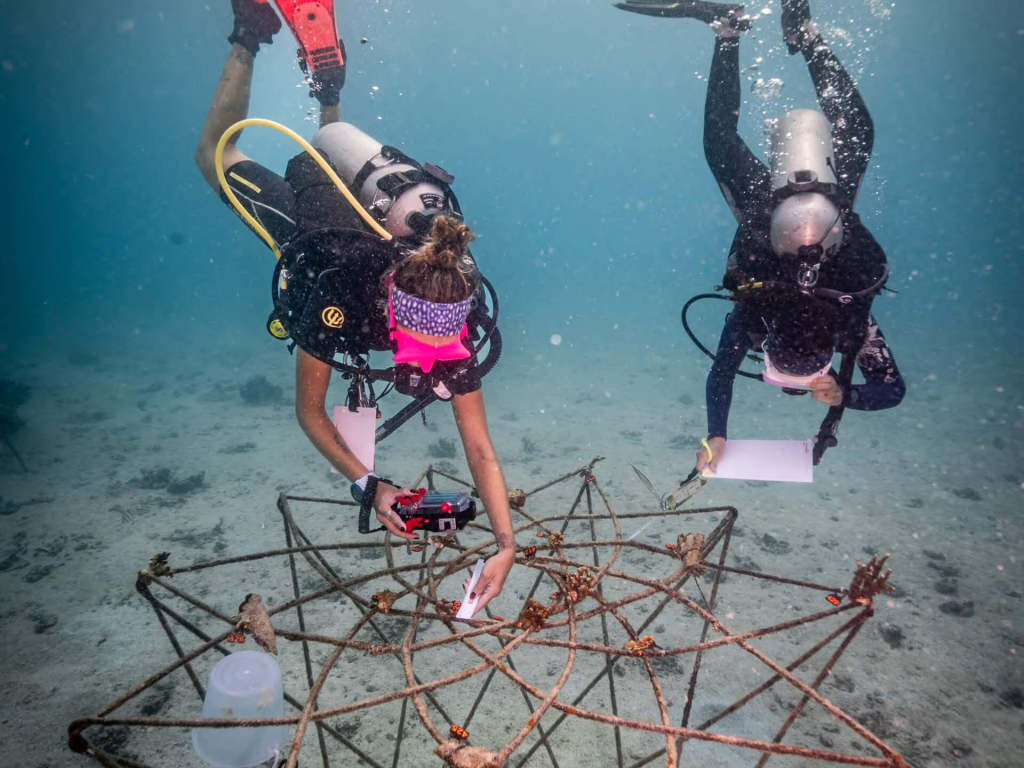
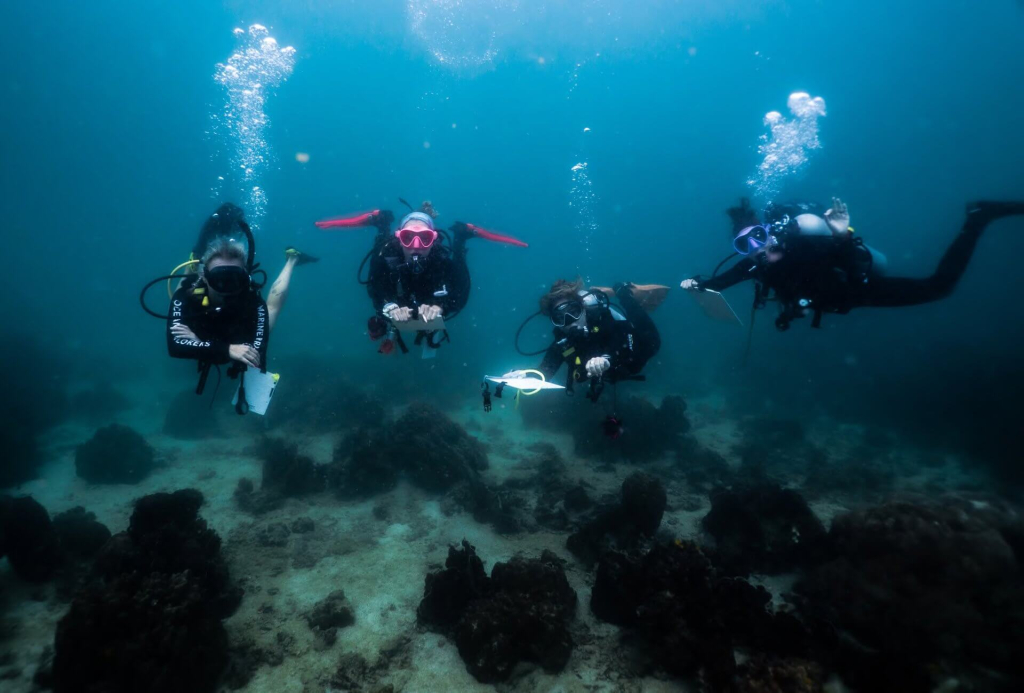
Coral restoration students working on artificial reef module installation
Localising the Impact: Black Turtle Conservation on Koh Tao
On Koh Tao, Thailand, Black Turtle Conservation is at the forefront of utilising these structures to manage the island’s unique marine environment. Koh Tao faces significant scuba diver pressure due to its popularity as a premier diver training destination.
To protect fragile natural fringing reefs from accidental damage and sediment stir-up, Black Turtle Conservation utilizes artificial reefs as strategic diver-alleviation tools.
Key Projects and Managed Sites
- Junkyard Reef: Established in 2006 by our conservation partner Eco Koh Tao, this site near Mae Haad has evolved from a collection of repurposed materials – including welded structures and donated equipment – into a flourishing, self-sustaining ecosystem. It serves as a vital training ground, successfully diverting entry-level divers away from natural coral areas.
- Buoyancy World: Located near Twins Pinnacles dive site, this site features concrete sculptures specifically designed for students to practice buoyancy control without risking damage to living coral.
- Black Turtle Reef: This site serves as an underwater laboratory for advanced programs, such as our EMP course where students engage in surveys, monitoring, coral gardening, propagation, and transplantation.
The Pathway to Scientific Diving
At Black Turtle Conservation, artificial reefs are integrated into a comprehensive Learning Pathway:
- Any Level: Non-divers can participate in Plastic Pollution Assessment and Coral Watch Specialty modules to monitor the health of corals on these structures.
- Advanced Divers: Those with Advanced Open Water (AOW) certification can enter theEcological Monitoring Program (EMP). This professional-level pathway teaches divers to quantify reef success by monitoring fish abundance, substrate composition, invertebrate populations and coral pathology.
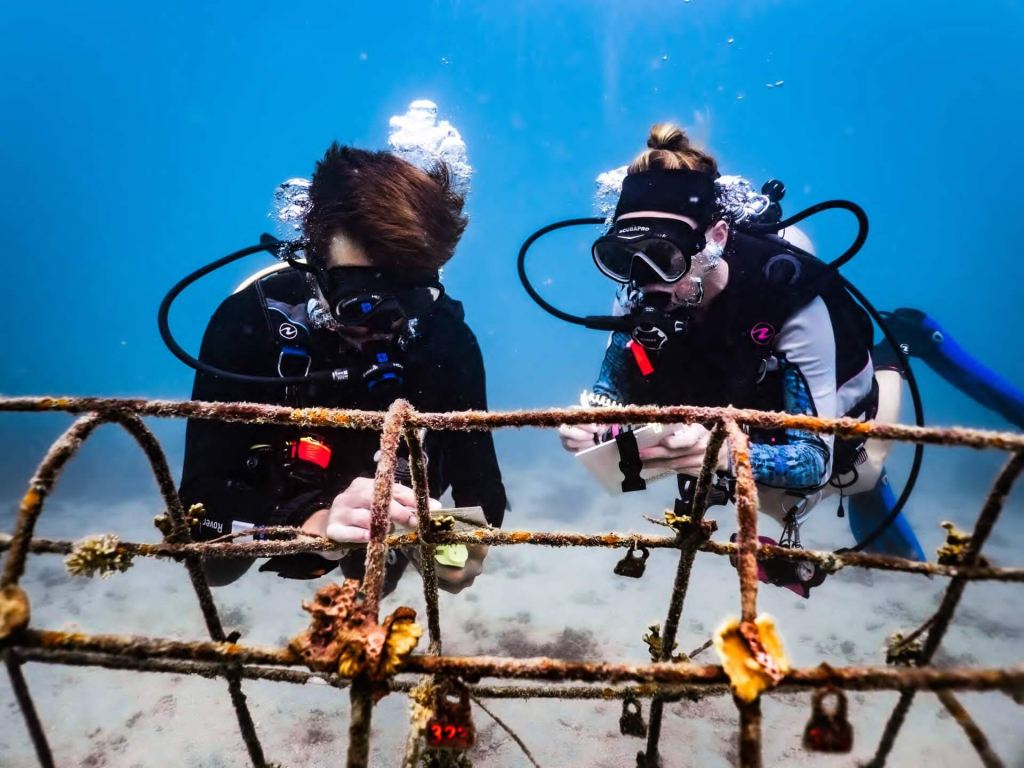
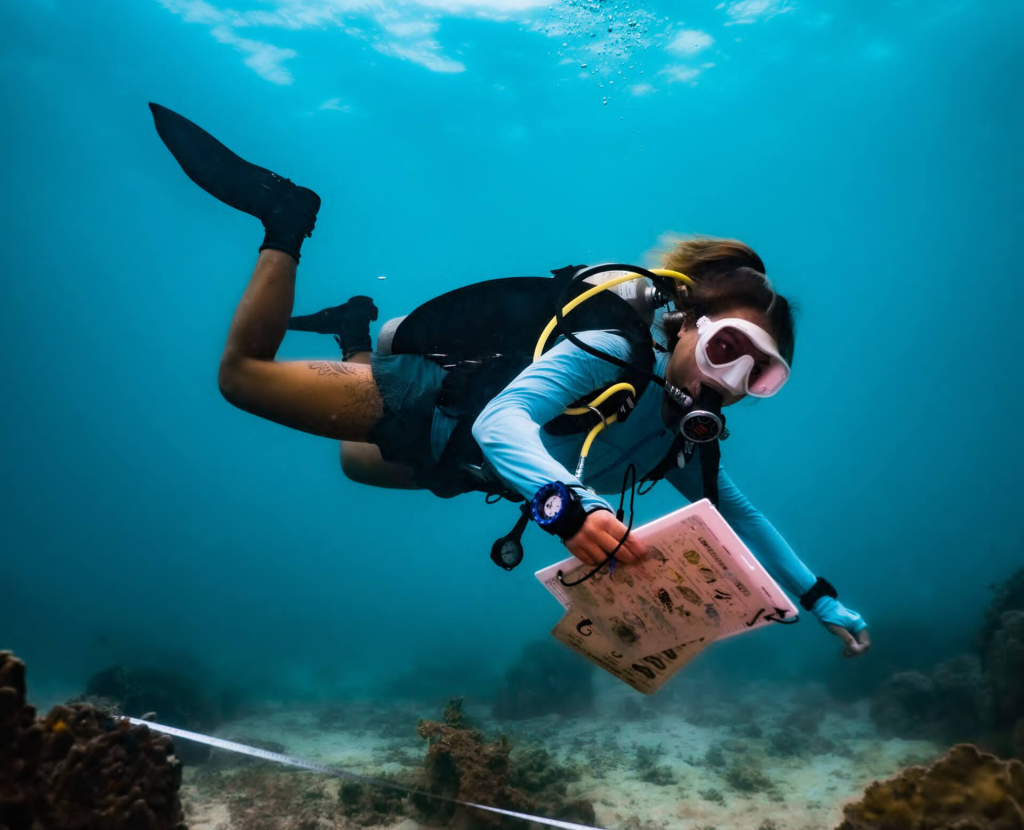
Diver assessing coral health on an artificial reef using Coral Watch chart during a marine conservation course in Koh Tao, Thailand.
The Role of Artificial Reefs in Restoration
Artificial reefs are increasingly recognized as essential tools in restoration ecology. By providing stable substrates, they accelerate the recovery of degraded areas. Restoration projects often involve transplanting fragments of opportunity – naturally broken coral pieces – onto these structures where they can grow into new colonies.
Beyond direct transplantation, these reefs support natural recruitment, where coral larvae released during spawning settle on the man-made structures. This is crucial for long-term sustainability, promoting genetic diversity and resilience.
Furthermore, they act as stepping stones, facilitating the dispersal of organisms across fragmented habitats and ensuring genetic flow between different reef areas around Koh Tao.
Challenges and Future Innovations
Construction and deployment require careful consideration of materials—which must be durable and non-toxic—and location. Sites must have suitable depth, temperature, and current patterns to avoid disrupting local ecosystems.
Ongoing monitoring and maintenance are essential; without them, these Artificial reefs may fail to achieve their conservation goals, as outlined in our weekly survey schedule.
Future innovations include:
- Biodegradable Materials: Using natural polymers that provide temporary substrates and gradually degrade as natural organisms establish themselves.
- Robotics: Utilizing underwater drones and robotic arms for precise placement, transplantation, and monitoring.
- Biotechnology: Exploring coral genetics to identify and propagate resilient strains that are better adapted to changing environmental conditions, often cross-referenced with theIUCN Red List.
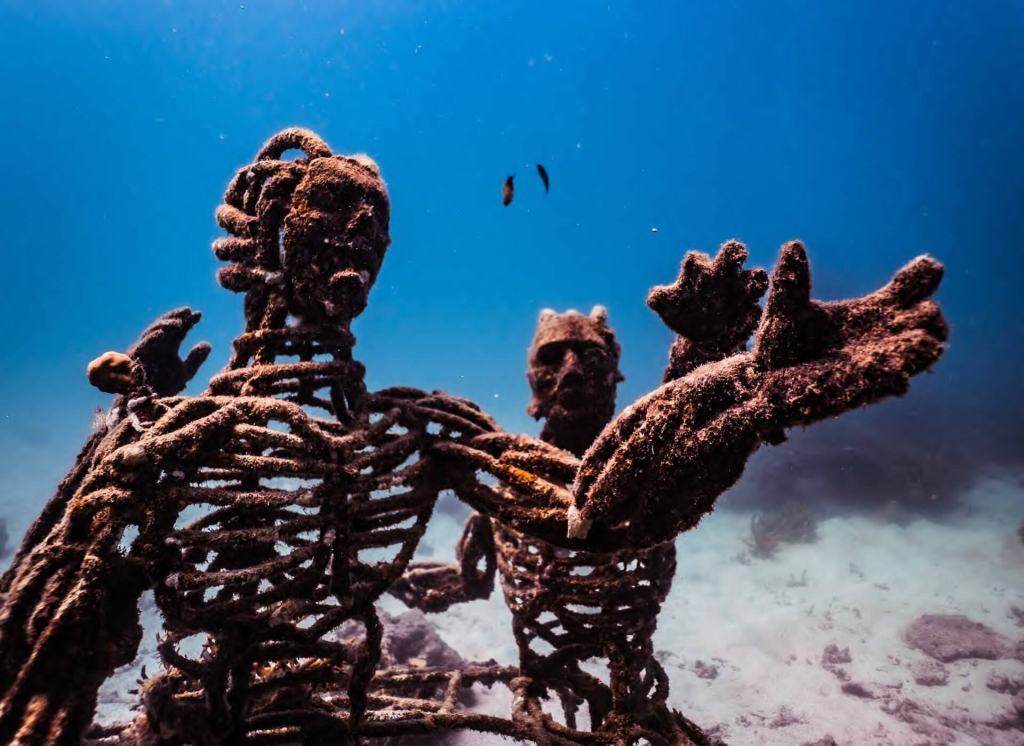
Underwater artificial reef sculpture designed to promote coral settlement and marine biodiversity in Koh Tao, Thailand.
Deep Dive: Scientific Monitoring and EMP Data
The success of an artificial reef is not measured by its deployment, but by its ecological integration over time. This is where the Ecological Monitoring Program (EMP) becomes critical.
At Black Turtle Conservation, the EMP course is the backbone of our higher-level certifications, including the Scientific Diver and Master Conservationist programs.
Data Collection and Analysis
During EMP dives, our team and students collect high-value data across three primary biological indicators:
- Fish Populations: We use stationary point counts and belt transects to monitor the abundance and diversity of fish species. Artificial reefs like Black Turtle Reef often show a rapid increase in recruitment, where juvenile fish seek shelter in the complex crevices of our structures.
- Invertebrate Surveys: Monitoring indicator species such as Giant Clams, Sea Cucumbers, and Crustaceans allows us to assess the health of the broader ecosystem surrounding the artificial structures.
- Substrate Composition: We use Belt Transects and Line Intercept Transects (LIT) to measure the percentage of live coral cover versus algae or sand. This allows us to statistically prove that our artificial reefs are actively contributing to the island’s reef budget, using taxonomic standards from WoRMS.
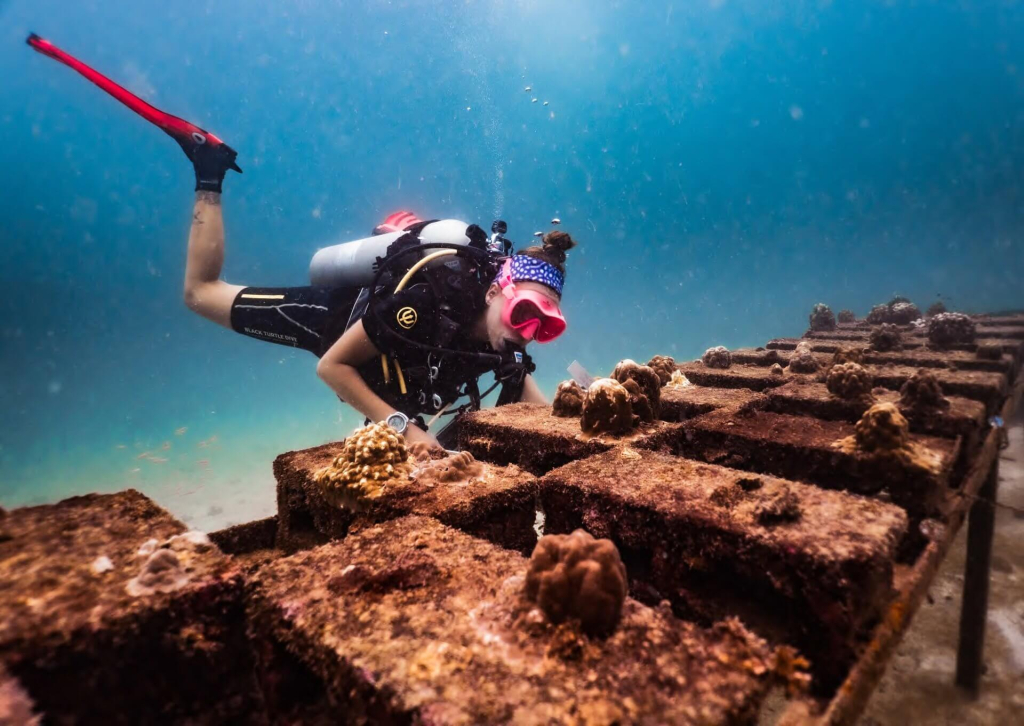
Diver restoring corals by attaching fragments on artificial reef structures during the Coral Restoration course with Black Turtle Conservation in Koh Tao, Thailand.
Structural Complexity: Designing for Biodiversity
A pile of concrete is just a pile of concrete unless it is designed with Structural Complexity. Natural reefs are riddled with potholes, nooks, and crannies. To mimic this, our artificial structures are engineered to provide varying levels of light and water flow.
Innovative Structural Deploys
- Biorock Technology: By applying a safe, low-voltage electrical current to a steel frame, we can stimulate the electrolytic mineral accretion of calcium carbonate. This not only builds a skin on the reef but also provides corals with an energy boost, helping them potentially grow up to 3 – 4 times faster than normal.
- The Sculpture Strategy: At Buoyancy World, our structures are shaped like marine life. While this is fun for divers, the specific curves and hollow interiors of a Giant Octopus sculpture provide perfect nesting sites for Moray Eels and Blennies.
- Modular Concrete Cubes: These are used at Black Turtle Reef to create a neighborhood effect. By spacing modules at specific intervals, we encourage the movement of fish between structures, effectively creating a larger habitat footprint with less material.
Mitigating Diver Impact: The Training Site Philosophy
One of the most significant contributions of artificial reefs to Koh Tao’s marine health is the alleviation of diver pressure. Koh Tao is one of the busiest dive destinations in the world. If every student diver practiced their mask clear or buoyancy hover on a natural reef, the cumulative damage would be catastrophic.
By directing dive schools to sites like Junkyard Reef and Buoyancy World, we create a buffer zone. These sites are purposely located on sandy patches where there is no natural coral to be stepped on.
This allows students to gain confidence and control in a safe environment, ensuring that by the time they visit a natural reef like Twins Pinnacles, they have the skills to admire and respect the Sea Turtle populations without touching it.
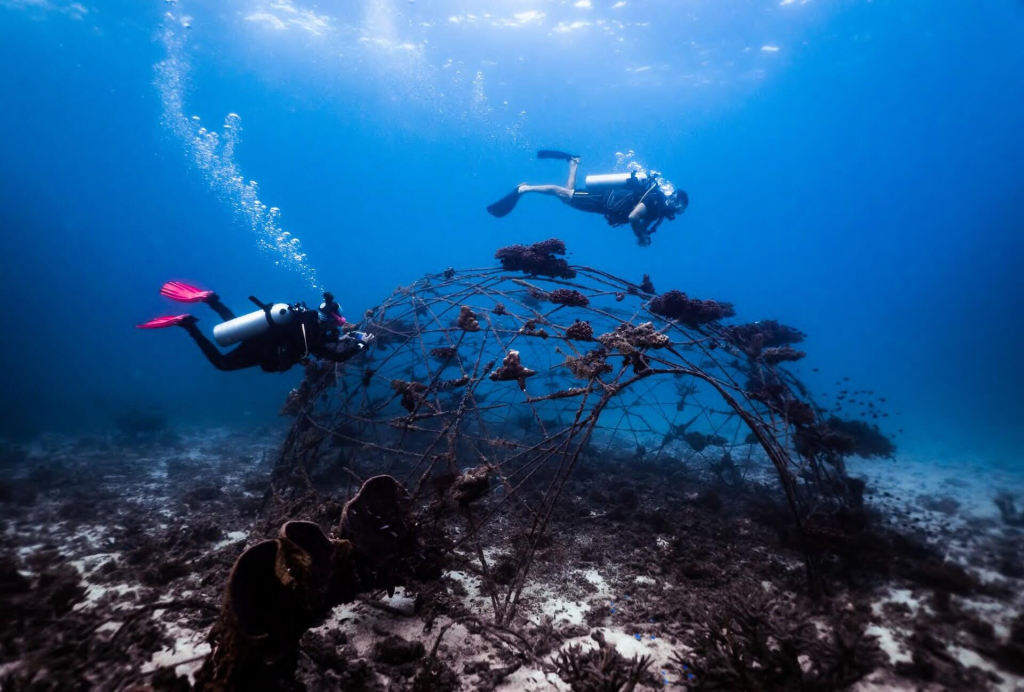
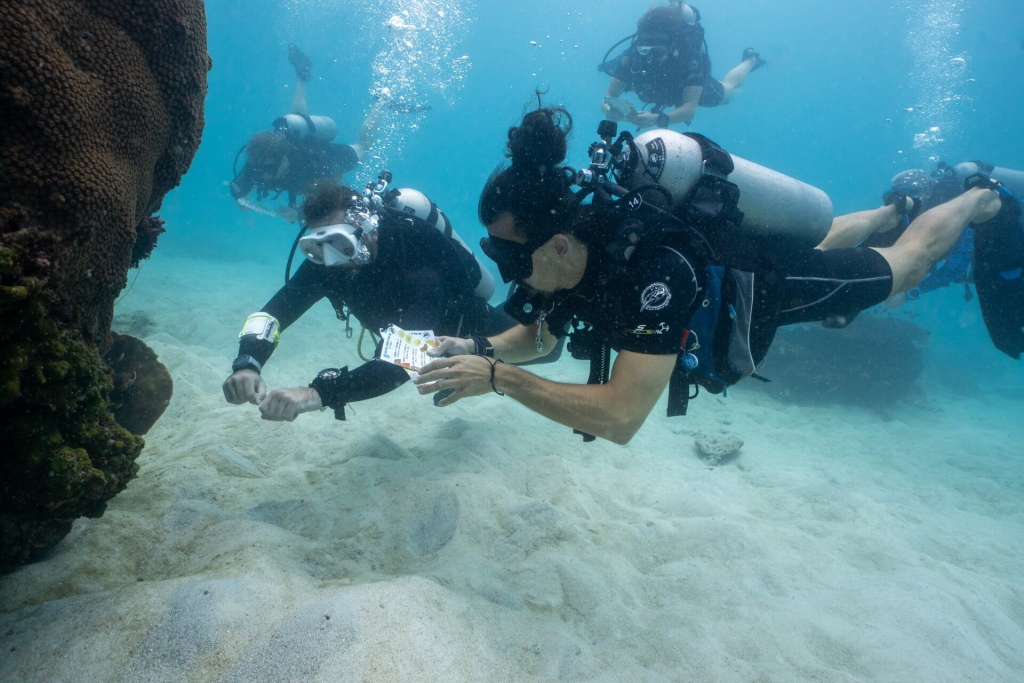
Reef Specialist trainees surveying artificial reef sites and learning how reef structures support coral settlement and biodiversity in Koh Tao.
The Professional Path: Internships and Career Development
For those looking to turn their passion into a career, our Conservation Divemaster Program integrates artificial reef management into the core curriculum. Check our price list for more details on professional training. Professional candidates don’t just dive; they manage. This includes:
- Nursery Maintenance: Cleaning algae from coral fragments and checking for predators like Drupella snails and COTS.
- Structure Deployment: Planning the logistics of moving and sinking new reef modules.
- Public Education: Leading briefings for recreational divers to explain the importance of the structures and how to dive them responsibly.
The Path Forward
Artificial reefs represent a promising approach to addressing the decline of natural reefs. By providing new habitats, supporting biodiversity, and alleviating human pressure on fragile sites, these structures play a vital role in the future of our oceans.
The path forward requires a multifaceted approach, combining artificial reefs with broader conservation and climate mitigation efforts.
Through collaboration between scientists, conservationists, and local communities – such as the work being done by Black Turtle Conservation on Koh Tao – we can create resilient reef ecosystems that support both marine life and human societies for generations to come.

7 Days of Impact: Exploring Koh Tao’s Conservation Surveys

COURSE PRICES & BOOKING