The ocean is the life-support system of our planet, generating every second breath we take and regulating the global climate.
Yet, this vast blue engine relies on a surprisingly delicate balance, one that has been maintained for over 450 million years by a single group of animals: sharks.
Sharks are often portrayed as mindless predators, a narrative fueled by decades of sensationalist media.
However, in the scientific community, they are recognized as the “Apex Architects.” Having survived five mass extinctions – including the one that wiped out the dinosaurs – sharks have evolved to be the ultimate stabilisers of marine ecosystems.
Today, as we face a global climate crisis and collapsing fisheries, the health of our oceans has never been more dependent on the presence of healthy shark populations.
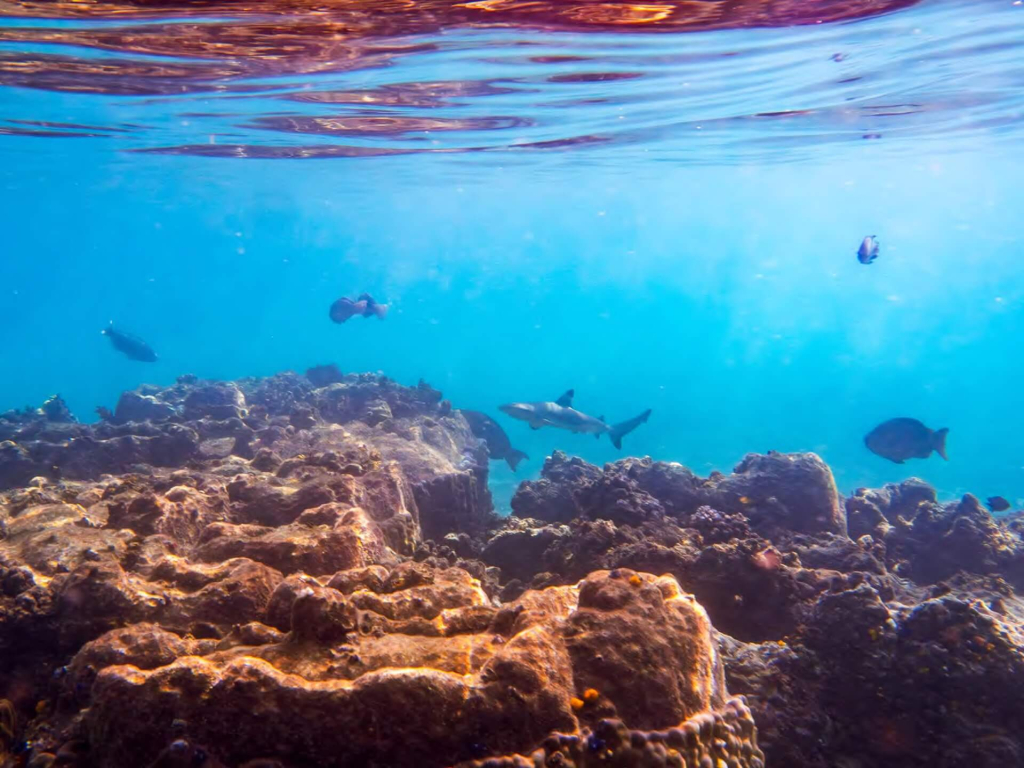
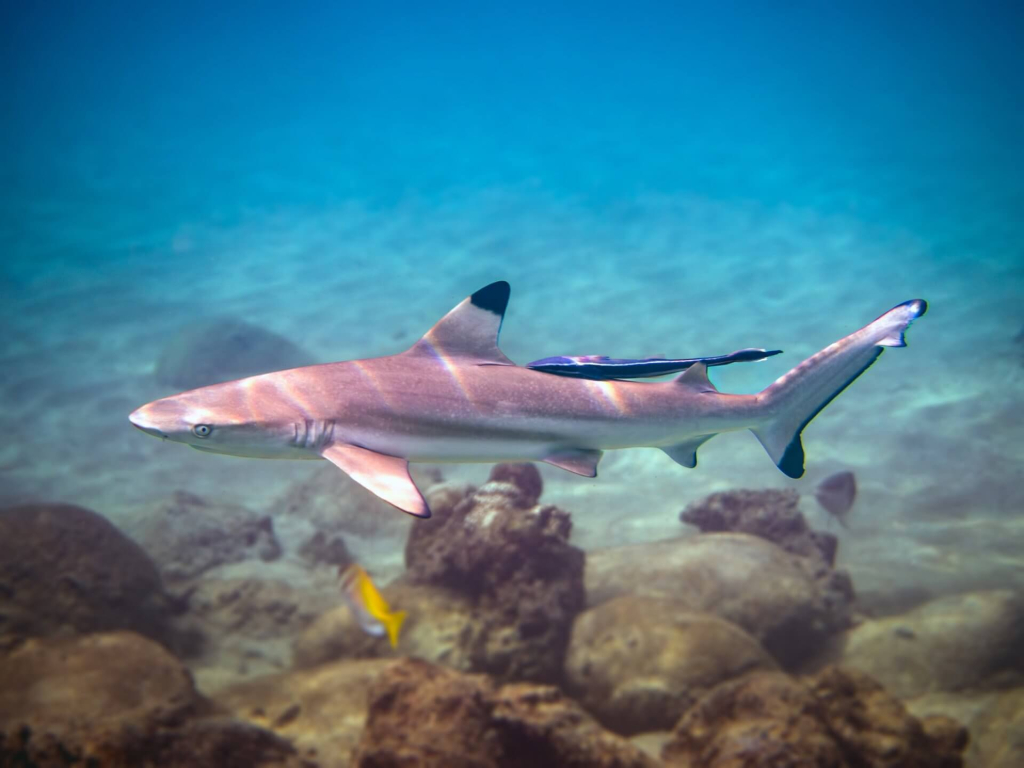
Sharks cruising along the reef during a marine conservation shark monitoring course at Black Turtle Conservation, Koh Tao, Thailand.
Understanding Trophic Cascades
To understand why sharks matter, one must understand the “Top-Down” effect, known scientifically as a Trophic Cascade.
In any healthy ecosystem, apex predators sit at the top, not just to eat, but to manage.
By regulating the abundance and behavior of “mesopredators” (middle-chain hunters like groupers, snappers, or rays), sharks prevent any one species from overpopulating and depleting the resources below them.
A classic example of a trophic collapse occurred in the North Atlantic. As shark populations declined, the population of cownose rays exploded.
These rays, no longer fearful of predators, decimated local scallop and shellfish beds, leading to the collapse of century-old human fisheries.
Sharks do not just protect the “pretty” parts of the ocean; they protect the food security of millions of people by ensuring that the entire food web remains functional and productive.
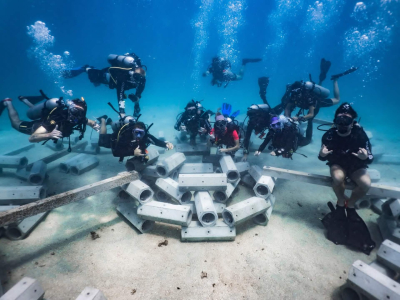
Marine conservation divemaster internship experience combining dive leadership training and applied conservation work in Koh Tao.
Koh Tao: An Underwater Jewel of the Gulf
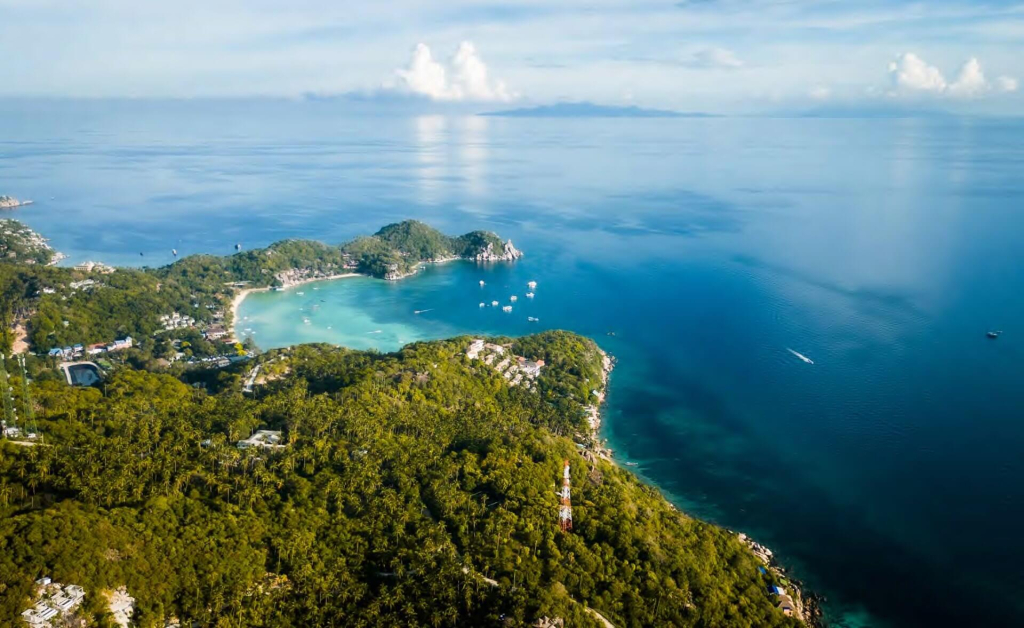
Koh Tao, or “Turtle Island,” has evolved from a remote outpost into the scuba diving capital of the world. Its popularity among underwater enthusiasts is not accidental; the island offers a unique combination of accessible shallow reefs and dramatic offshore pinnacles.
The underwater topography around Koh Tao is a diverse playground of granite boulders, lush coral gardens, and deep-sea mounts that rise from a 30-meter sandy bottom.
The island’s popularity stems from its year-round diveability and the sheer variety of its sites. For beginners, sheltered bays like Mango Bay and Japanese Gardens offer calm, clear tropical waters.
For the more experienced diver, offshore sites provide a sense of Big Blue adventure.
This diverse topography is exactly what makes Koh Tao a critical habitat for sharks, providing both nursery grounds for juveniles and hunting grounds for mature apex predators.
Sightings in the Abyss: Chumphon Pinnacle and Sail Rock
The most famous sightings of sharks around Koh Tao occur at its deep-water pinnacles. Chumphon Pinnacle, located northwest of the island, is a massive granite monolith encrusted in anemones and sea fans.
Here, the topography creates a natural funnel for nutrient-rich currents, attracting massive schools of trevally and barracuda.
It is at Chumphon that divers most frequently encounter the Whale Shark (Rhincodon typus). Standing in the presence of this bus-sized gentle giant as it cruises past the granite peaks is a transformative experience.
But Chumphon is also a historical home for Grey Reef Sharks and Bull Sharks.
The vertical walls and deep crevices of the pinnacle provide the perfect ambush points for these hunters, illustrating how the physical structure of the ocean floor dictates the behavior of its residents.
Further south lies Sail Rock, often cited as the best dive site in the entire Gulf of Thailand. With its famous Chimney swim-through and vertical walls reaching down to 40 meters, Sail Rock is a magnet for pelagic life.
The topography here acts as an oasis in the open sea, providing a resting and cleaning station for Whale Sharks as they migrate through the Gulf.
Coastal Nurseries: Shark Bay and Aow Leuk
Shark conservation in Koh Tao is not limited to the deep. In fact, some of the most critical work happens in the shallows. Shark Bay (Thian Og Bay) and Aow Leuk are famous for their resident populations of Blacktip Reef Sharks.
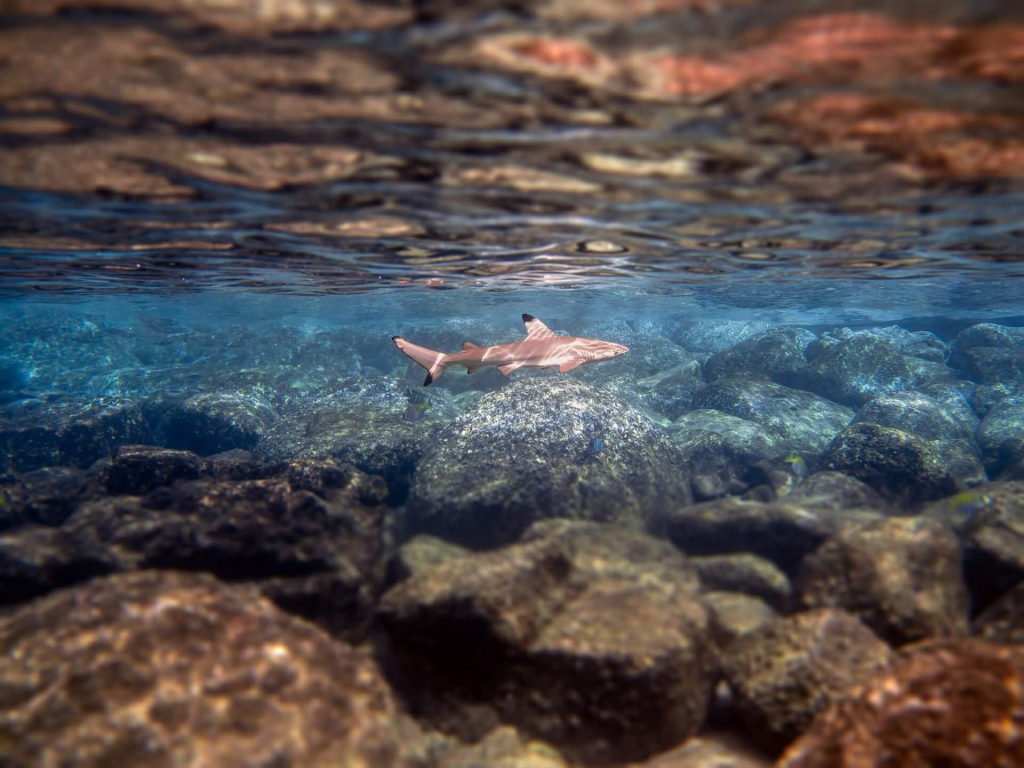
The topography of these bays – shallow, sandy flats protected by fringing reefs – serves as a vital nursery. Juvenile Blacktips spend their first years in these knee-deep waters, protected from larger predators.
Snorkelers and divers at Black Turtle Dive often witness dozens of these sleek, fast-moving sharks patrolling the shallows. These sightings are evidence that the coastal ecosystem is functioning correctly. When the sharks are present, the reef is healthy.
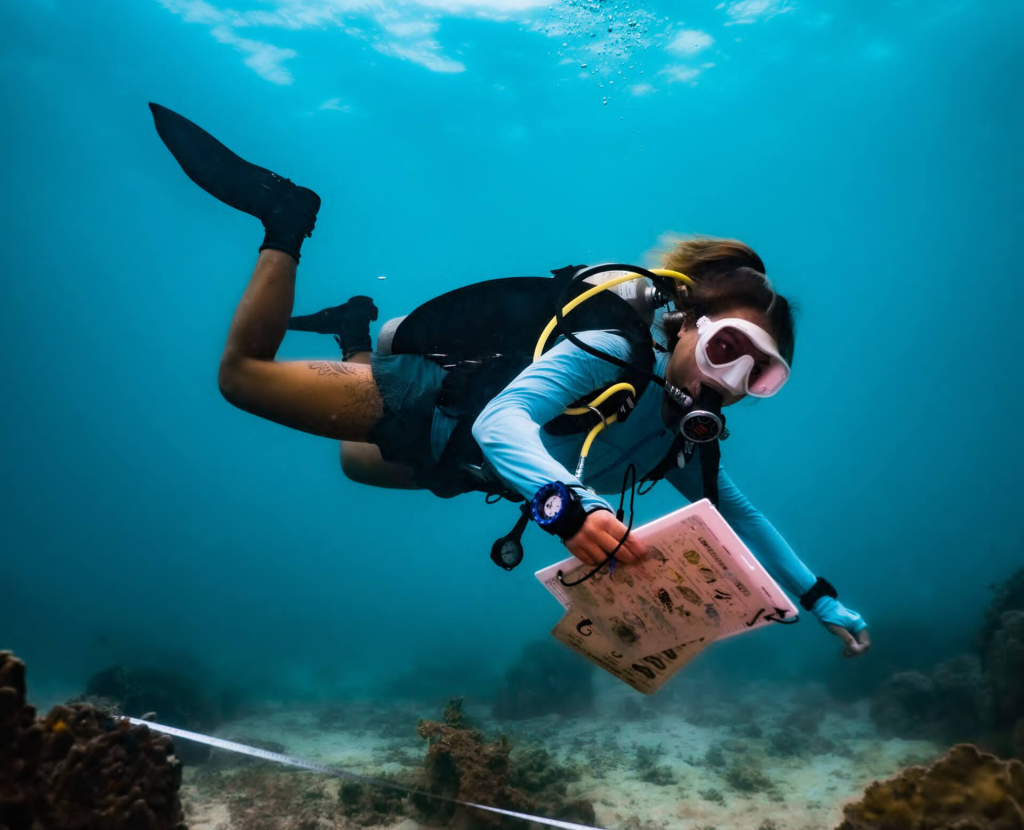
Blacktip reef shark observed during the Shark Monitoring & Population Studies
Guardians of the Reef: The Shark-Coral Connection
Coral reefs are the rainforests of the sea, and sharks are their primary gardeners. On a healthy reef, sharks perform two vital roles. First, they act as Nutrient Vectors.
Studies on reef sharks have shown that they forage in deep offshore waters and return to the shallow reefs to rest. Through their fecal matter, they deposit essential nitrogen, effectively fertilizing the coral.
Secondly, sharks protect the reef’s cleaners. By keeping predatory fish in check, sharks allow herbivorous fish, like the Parrotfish, to thrive.
These herbivores spend their days grazing on algae that would otherwise smother the coral.
At dive sites like Shark Island or Southwest Pinnacle, the presence of sharks ensures that the coral remains vibrant and the competition between algae and polyps is kept in balance.
Climate Connection: Sharks and Blue Carbon
Perhaps the most groundbreaking discovery in marine science is the role sharks play in Blue Carbon sequestration.
Seagrass meadows store carbon 40 times faster than tropical rainforests. By patrolling these beds, sharks prevent overgrazing by turtles and dugongs.
This fear-mediated regulation keeps carbon locked in the seagrass roots rather than released into the atmosphere.
Every Whale Shark seen at Southwest Pinnacle is a living carbon sink, carrying tons of carbon in its massive body that will eventually be sequestered on the seafloor.
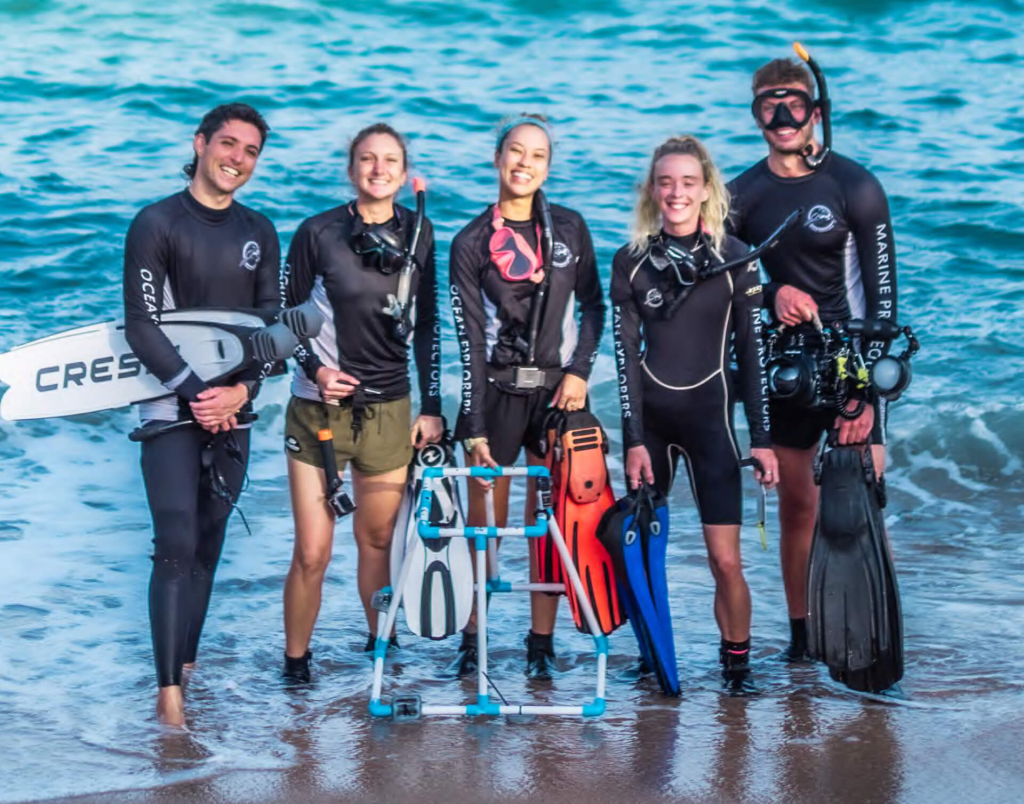
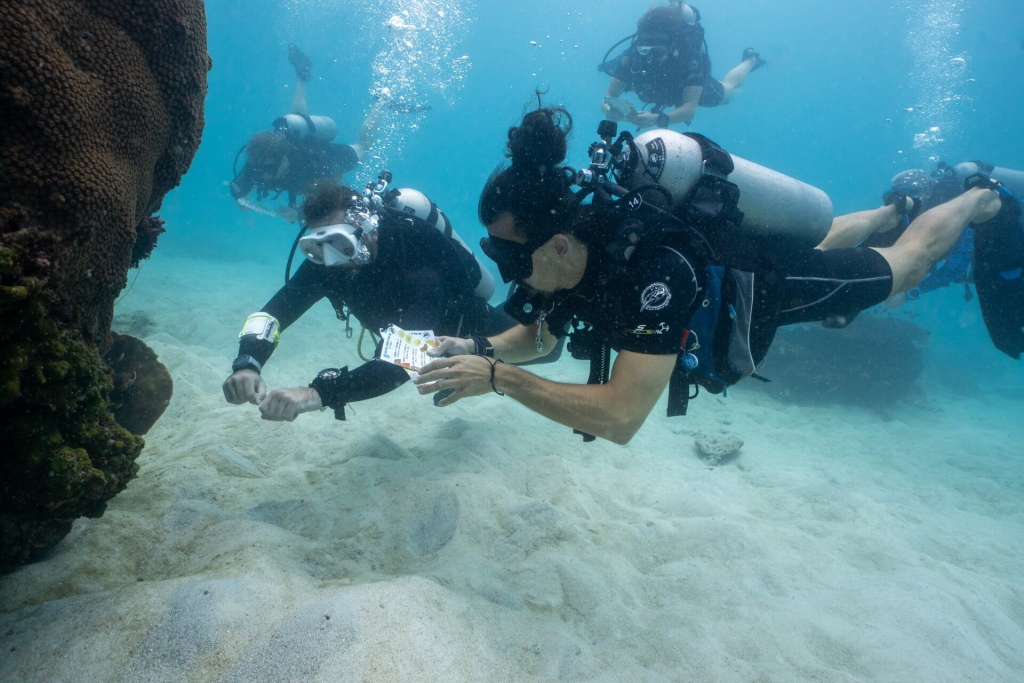
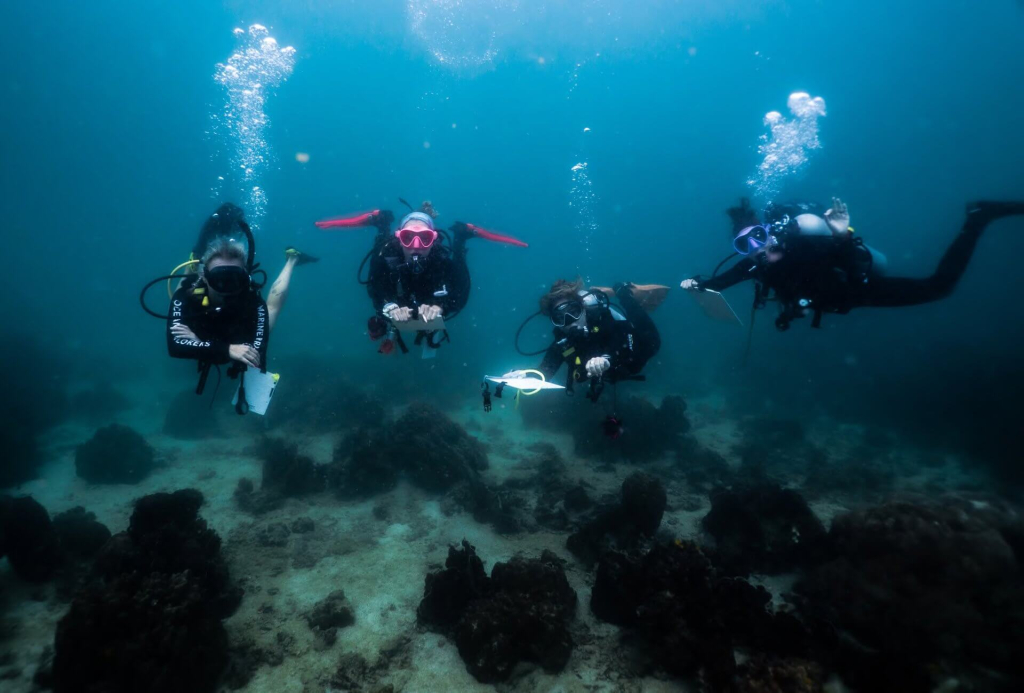
Group of marine conservation divers studying shark behavior and population ecology during the Shark Ecology course at Black Turtle Conservation, Koh Tao, Thailand.
Black Turtle Dive: Leading the Charge in Progressive Training
At the heart of Koh Tao’s conservation movement is Black Turtle Dive. As a PADI 5-Star Career Development Centre (CDC), Black Turtle Dive has moved beyond the traditional philosophy of scuba diving.
We have integrated marine science into the core of our professional training.
The philosophy at Black Turtle Dive is: You cannot protect what you do not understand.
Our Divemaster and IDC programs include specialised modules on reef ecology. By teaching divers to be citizen scientists, we ensure that every person who enters the water becomes a lifelong advocate for sharks.
Our focus on neutral buoyancy is particularly critical; by ensuring divers never touch the reef, they protect the very habitat that juvenile sharks rely on.
Citizen Science and Identification Programs
One of the most impactful ways Black Turtle Dive contributes to shark conservation is through Photo Identification. Just as every human has a unique fingerprint, Whale Sharks have unique spot patterns. Black Turtle Dive encourages students to submit photos of sightings to global databases like Koh Tao Whale Sharks group..
This data proves that a shark seen at Sail Rock might be the same one seen in the Philippines months later, facilitating the creation of international Marine Protected Areas.
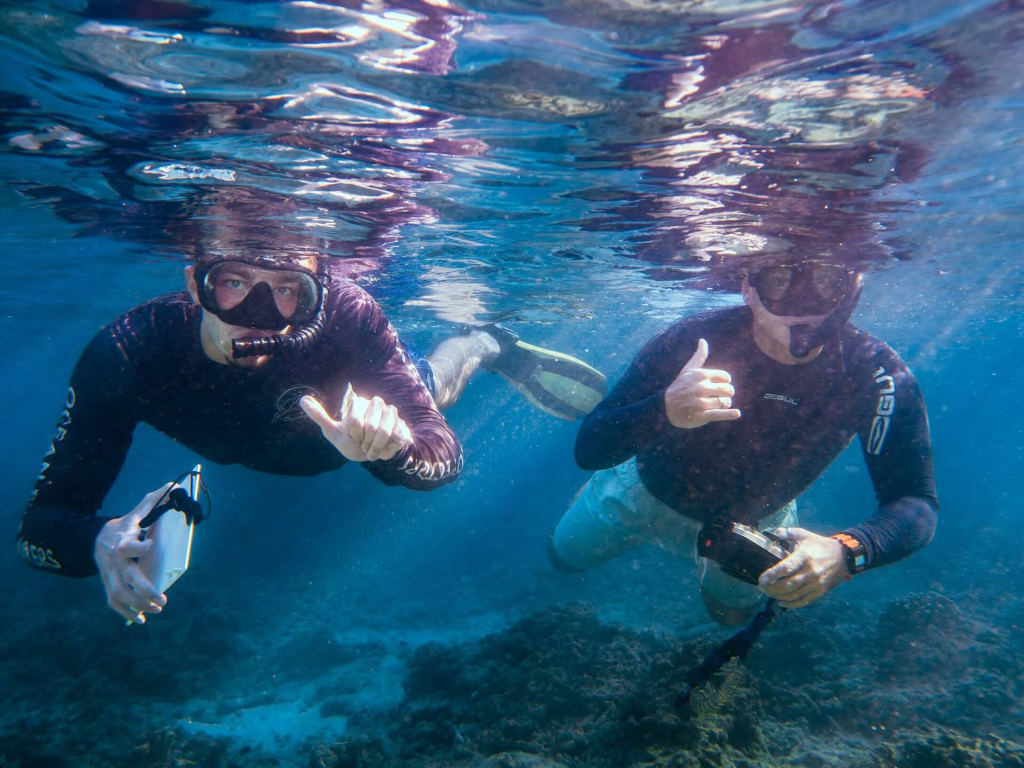
Marine conservation team conducting a shark population survey while snorkeling in Koh Tao, Thailand, as part of the Shark Monitoring program.
Economic Reality: Living Sharks vs. Dead Commodities
The economic argument for sharks in Koh Tao is undeniable. A dead shark is a one-time commodity; a living shark is a renewable economic engine.
In tourism hubs like Thailand, a single reef shark is worth over $1.6 million USD in tourism revenue over its lifetime. This revenue supports the dive centers, the boat crews, and the local community.
For Black Turtle Dive, a healthy shark population is the foundation of our business model and the future of the island.
Biological Slow Lane: Why Every Shark Counts
Sharks grow slowly and mature late. A Whale Shark may not reach sexual maturity until it is 30 years old. This biological vulnerability means they cannot bounce back from overfishing.
When a shark is removed from Koh Tao’s reefs, it leaves a hole in the ecosystem that may take decades to fill. For more information on professional pathways to protect these species, view our Scientific Diver programs.
Community members taking part in a weekly shark survey in Koh Tao, contributing to ongoing marine conservation monitoring and citizen science projects.
Conclusion: A Future with Fins
Protecting sharks is not an act of charity; it is an act of human self-preservation. From the oxygen we breathe to the stability of our global climate, the Apex Architect holds the blue planet together.
Through the efforts of global science and local leaders like Black Turtle Conservation, we are changing the narrative.
We are proving that a small island in Thailand can have a massive impact. As divers, we have a choice: be silent witnesses to an extinction, or be the voice for the guardians of the deep.
A healthy ocean starts with healthy shark populations. Check our weekly schedule to see how you can help. If we lose the sharks, we lose the sea – and eventually, we lose ourselves.

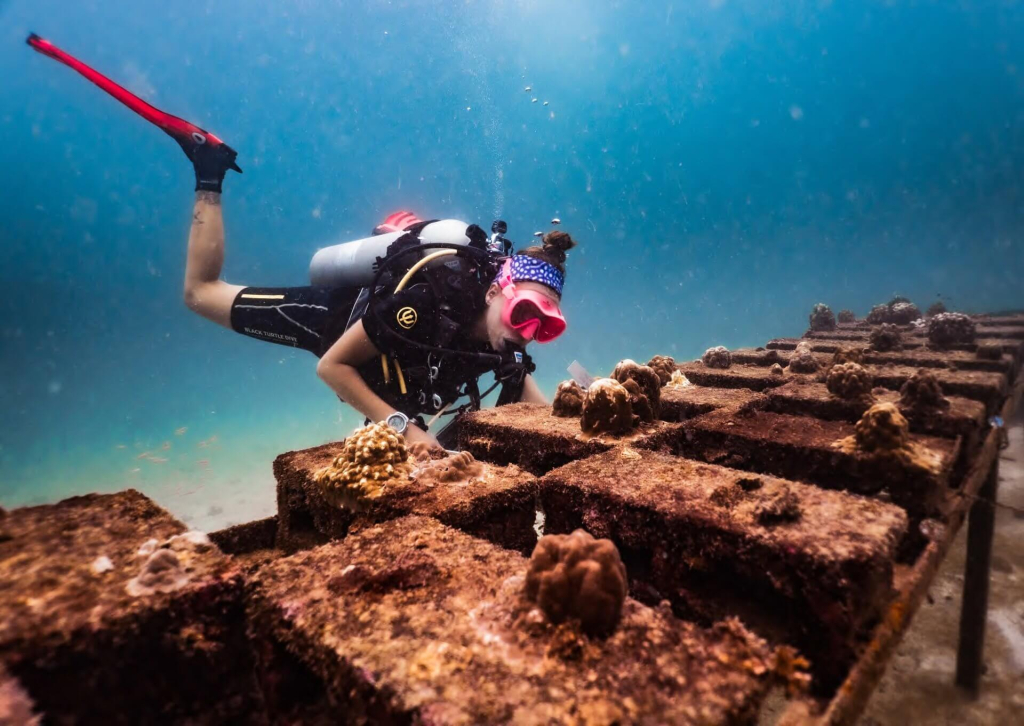
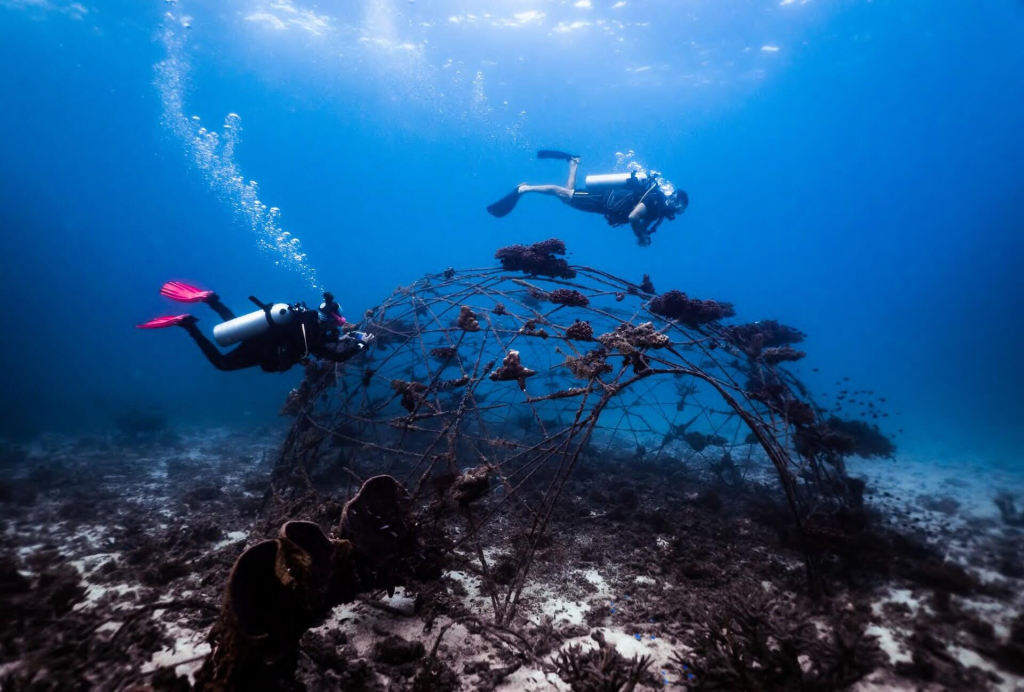
How Artificial Reefs Are Shaping the Future on Koh Tao
COURSE PRICES & BOOKING