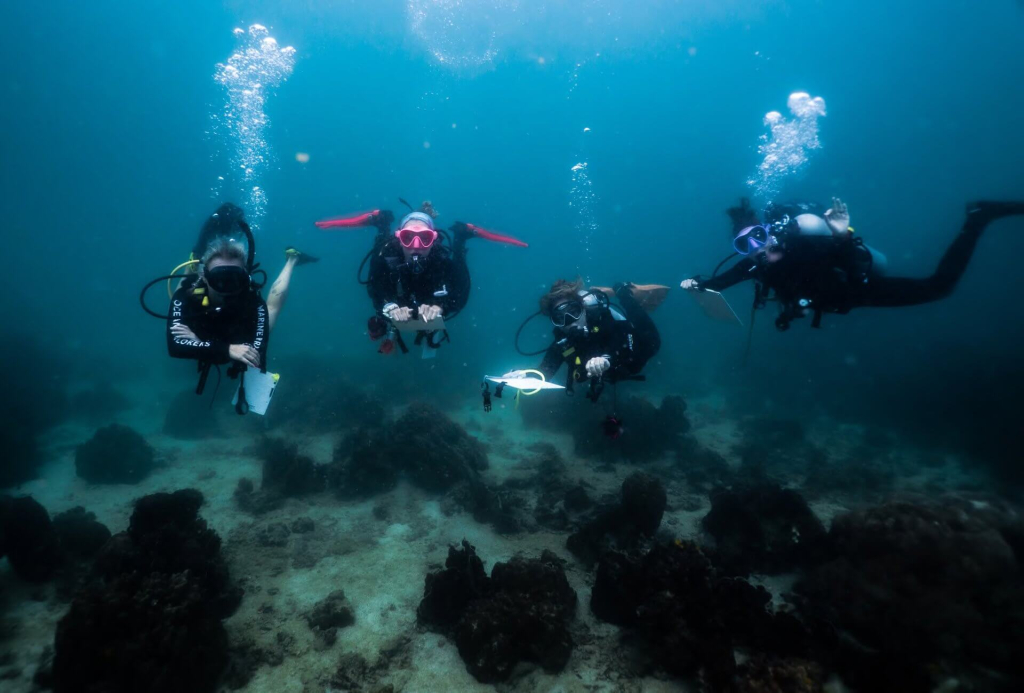
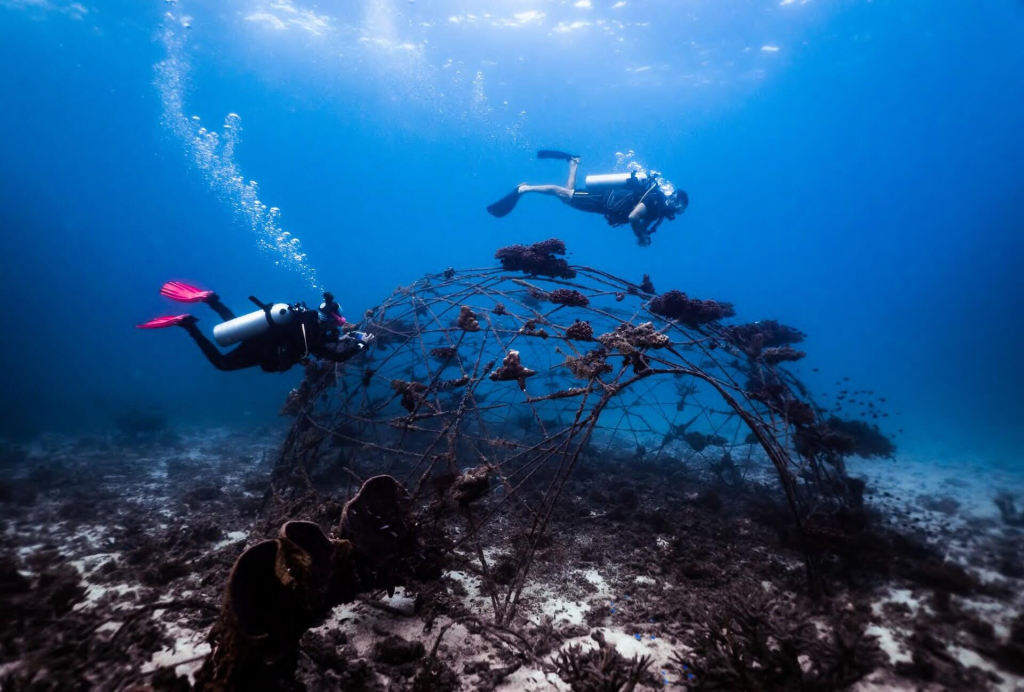
Dive into the vibrant waters of Koh Tao with our essential guide to sea turtle identification and population monitoring – your key to protecting these majestic creatures through Black Turtle Conservation’s citizen science and community programs.
The Global Hub: Why Koh Tao is the Premier Scuba Destination
Before diving into the specifics of sea turtle monitoring, it is essential to understand why Koh Tao has earned its reputation as the global capital for scuba certification.
It isn’t just the sheer number of divers; it is the topographical diversity that makes it a perfect laboratory for both beginners and veteran scuba divers and conservationists.
A 360-Degree Classroom: Topographical Diversity for Divers
Koh Tao offers a unique 360-degree classroom. To the east, you find shallow, sheltered bays like Aow Leuk and Tanote Bay, where the sandy bottoms and fringing reefs provide a safe, calm environment for first-time scuba divers.
To the west and north, the topography shifts into dramatic granite boulder formations at sites like Chumphon Pinnacle and White Rock.
These sites feature deep-water drop-offs and swim-throughs that challenge advanced divers and provide high-energy environments for larger pelagic species.
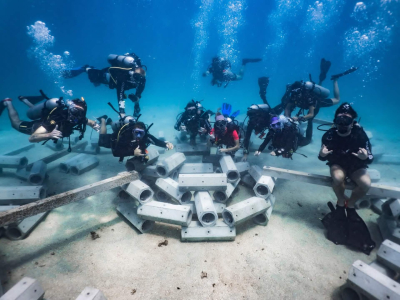
This incredible variety – from shallow coral gardens to sunken shipwrecks and Artificial Reefs like the HTMS Sattakut – is why Koh Tao is the number one location in the world to get scuba certified.
It offers every conceivable underwater environment within a twenty-minute boat ride, creating the perfect stage for the Black Turtle Conservation mission.
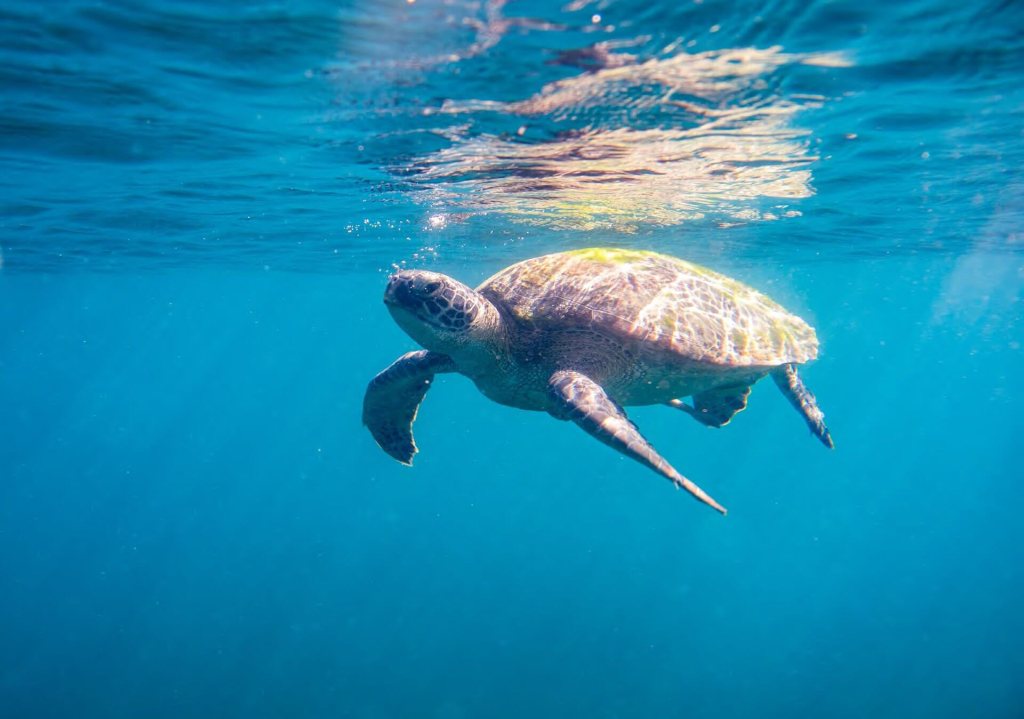
Green sea turtle swimming near the surface during the Sea Turtle Ecology & Monitoring course
The Science of Sight: Importance of Sea Turtle Identification
Identifying sea turtles is a crucial step in the conservation process. Each species exhibits unique behaviors, nesting patterns, and dietary preferences, which are vital for understanding their ecological roles.
Accurate identification aids in tracking population trends through global databases like the IUCN Red List, which is essential for the implementation of effective conservation strategies.
By recognizing the different species, conservationists can tailor their efforts to address the specific needs and threats each species faces.
Indicators of Ocean Health: Beyond the Shell
Moreover, sea turtle identification allows researchers to monitor the health of marine ecosystems. Sea turtles act as indicators of ocean health, and changes in their populations often reflect broader environmental changes.
Identifying individual species helps in detecting patterns that might indicate larger ecological shifts. This information is invaluable for predicting future environmental conditions and implementing proactive measures to mitigate adverse effects.
Public awareness and education also benefit significantly from sea turtle identification. By familiarising the public with the various species, conservation organisations like Black Turtle Conservation can foster a deeper connection between people and these ancient mariners.
This connection often translates into increased support for conservation initiatives, both financially and through volunteer efforts. In essence, identification is the first step towards comprehensive conservation and public engagement.
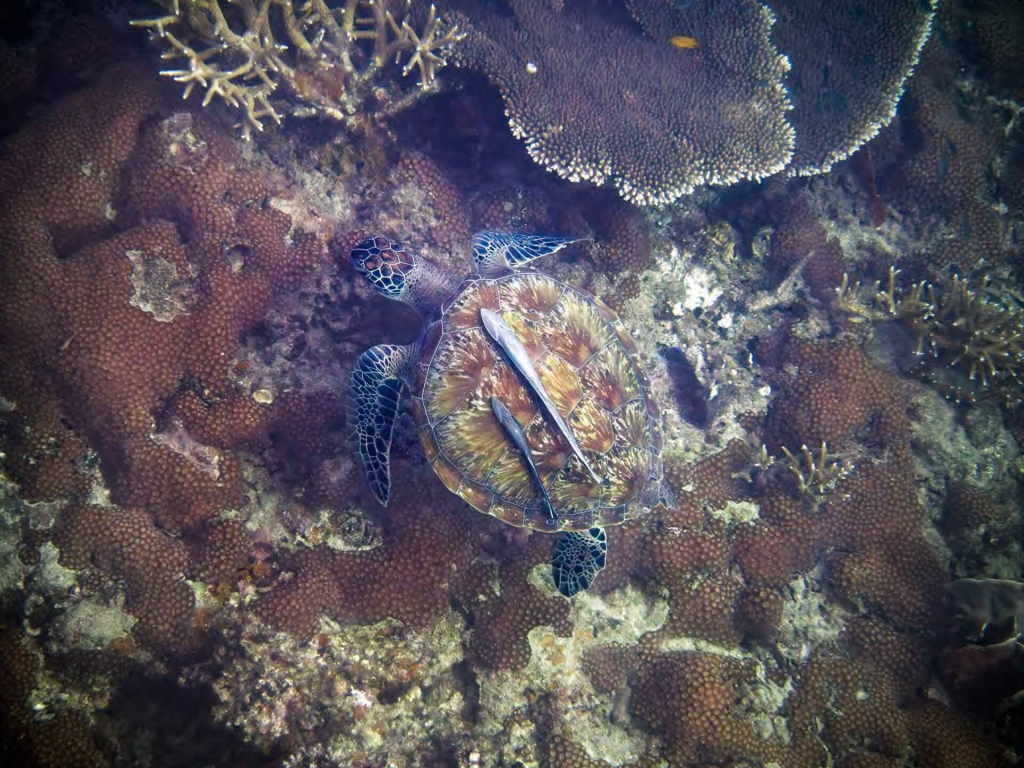
Aerial view of a sea turtle swimming above a coral reef during the Sea Turtle Monitoring course at Black Turtle Conservation, Koh Tao, Thailand.
Meet the Residents: Common Sea Turtle Species on Koh Tao
Koh Tao is a marine treasure trove, home to several species of sea turtles that utilize the island’s varied dive sites for foraging and rest.
- Green Sea Turtle (Chelonia mydas): Known for their large size and herbivorous diet, Green Sea Turtles are the most frequent residents of Koh Tao. They play a significant role in maintaining the health of coral reefs through grazing of Algae, which are crucial habitats for a variety of marine life. You can often find them eating and keeping Algae under control in Shark Bay (Thian Og Bay) or resting under the ledges at Twins Pinnacles dive site.
- Hawksbill Turtle (Eretmochelys imbricata): Recognizable by their pointed, hawk-like beaks and beautifully patterned shells, Hawksbill Turtles are primarily spongivores. Their foraging habits help control sponge populations, preventing them from overgrowing and suffocating coral reefs. These turtles are a common sight at White Rock and Hin Pee Wee, where they can be seen delicately picking sponges out of the reef crevices.
- Olive Ridley Turtle (Lepidochelys olivacea): Although sightings are rare in the Gulf of Thailand, their occasional presence highlights the unique reproductive strategies of sea turtles and underscores the need for varied conservation approaches. Their occurrence in our waters is a significant event that our citizen scientists are trained to document immediately.
Field Guide: Key Characteristics for Identifying Sea Turtles
Identifying sea turtles involves a keen eye for detail and an understanding of specific morphological traits. When you are underwater at a site like Tanote Bay, use these markers:
- Green Sea Turtle: Look for a smooth carapace (shell) that is olive to brown. The head is rounded, and notably, they have only one pair of prefrontal scales between their eyes.
- Hawksbill Turtle: Look for a serrated edge on the back of the shell (overlapping scutes). Their beak is sharp and bird-like, and their shell has a tortoiseshell pattern of amber and black. They have two pairs of prefrontal scales.
- Olive Ridley Turtle: These are generally smaller with a heart-shaped, olive-green carapace. They possess more than five pairs of costal scutes on their carapace, a key differentiator from the Green and Hawksbill species.
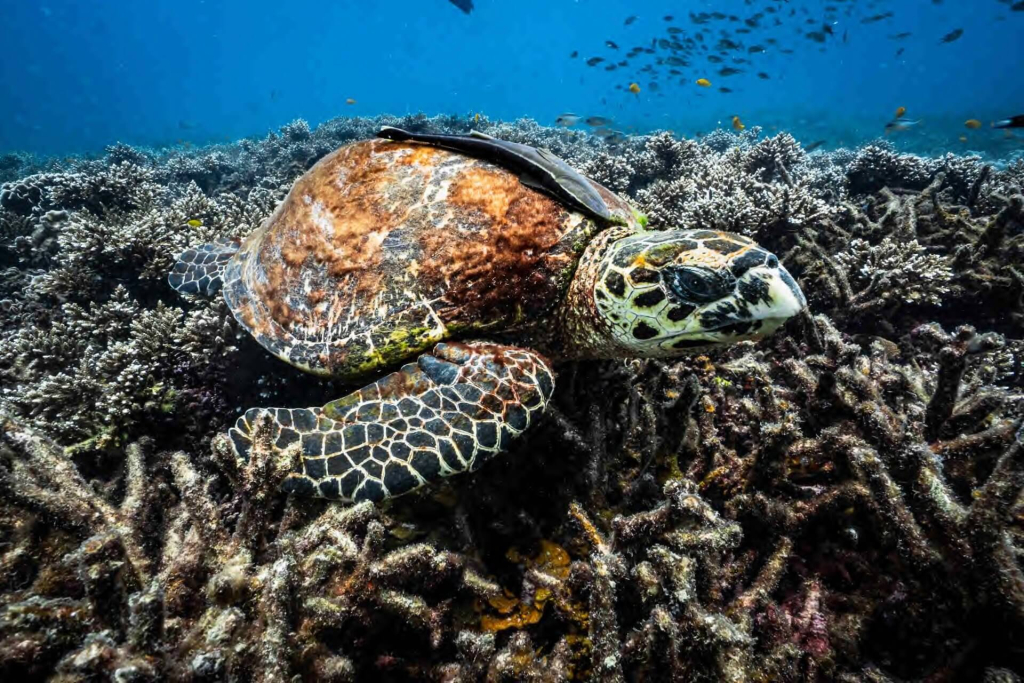
Hawksbill sea turtle feeding on coral reef sponges during a marine conservation dive at Black Turtle Conservation, Koh Tao, Thailand.
Local Impact: Black Turtle Conservation Programs
At Black Turtle Conservation, we believe that the protection of Koh Tao’s marine life begins with education and active participation.
We offer a structured Learning Pathway that turns recreational divers into active contributors to marine science.
Empowering the Community: Citizen Scientist Courses
Our entry-level Citizen Scientist program is designed for everyone, including those with no prior diving experience.
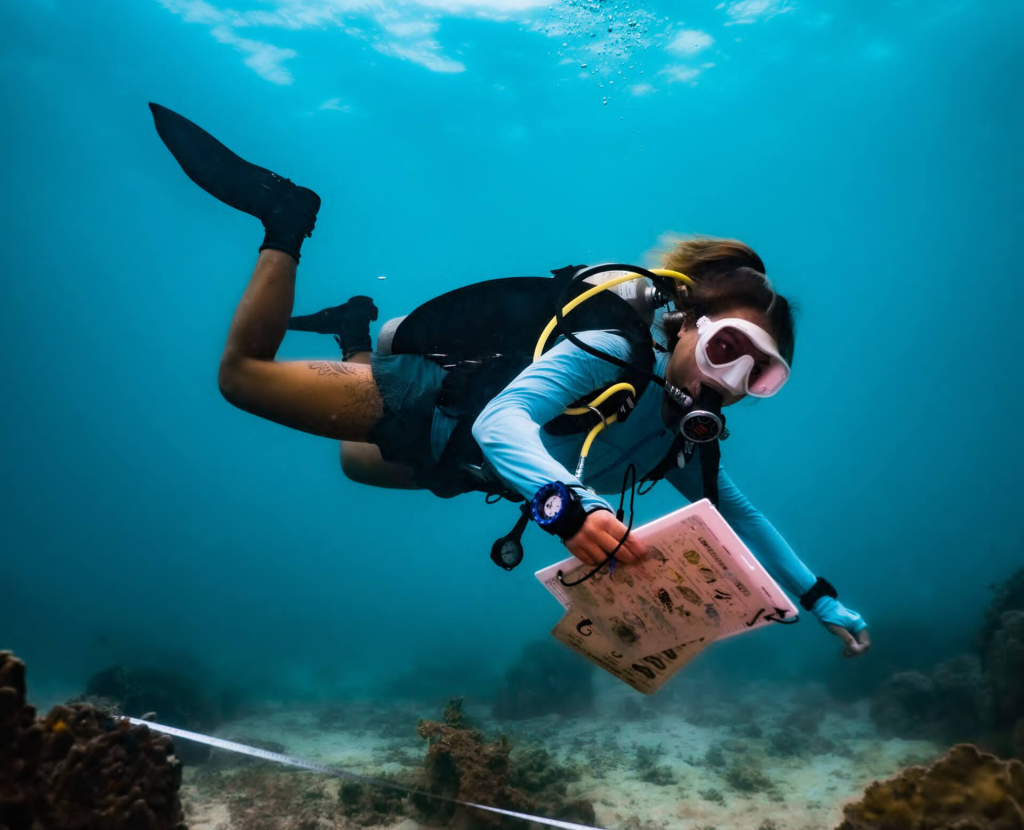
- Coral Watch Specialty: A 1-day program where students learn to identify coral types and assess their condition using the Coral Health Chart. Data collected is uploaded to the global Coral Watch database.
- Sea Turtle Awareness: Through classroom and in-water sessions (often held in the turtle-rich waters of Shark Bay or Sainuan), participants learn the basics of sea turtle identification and how to behave responsibly around these animals.
Building Experts: Progressive Conservation Internships
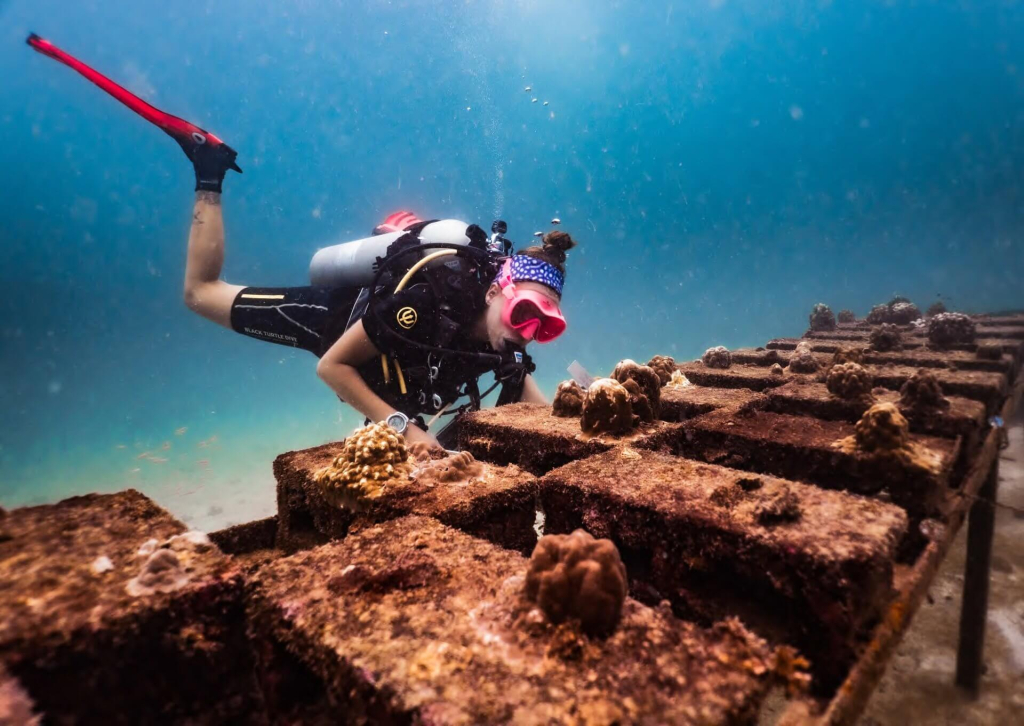
For those looking to dive deeper, our internships range from the Conservation Specialist level, which includes a dedicated Sea Turtles module, to the Scientific Diver level, which focuses on advanced monitoring techniques like the Ecological Monitoring Program (EMP).
The Big Picture: Monitoring Sharks, Sea Slugs, and Nudibranchs
While sea turtles are the iconic faces of Koh Tao’s conservation, our surveys encompass the entire marine ecosystem, reflecting the island’s rich biodiversity.
- Apex Predators: Sharks are the apex predators of our reefs, and their presence is a sign of a healthy ecosystem.Shark Bay and Aow Leuk are the premier locations on the island to spot Blacktip Reef Sharks. Our Sharksmodule in the Master Conservationist program focuses on distinguishing these species and understanding their role in maintaining balance.
- The Butterflies of the Sea: Often overlooked due to their small size, Sea Slugs and Nudibranchs are critical indicators of reef health. Our specialized Sea Slugs Certification teaches participants how to find these tiny creatures at sites like Mango Bay. Their presence signals changes in the types of sponges and bryozoans on the reef, providing an early warning system for ecological shifts.
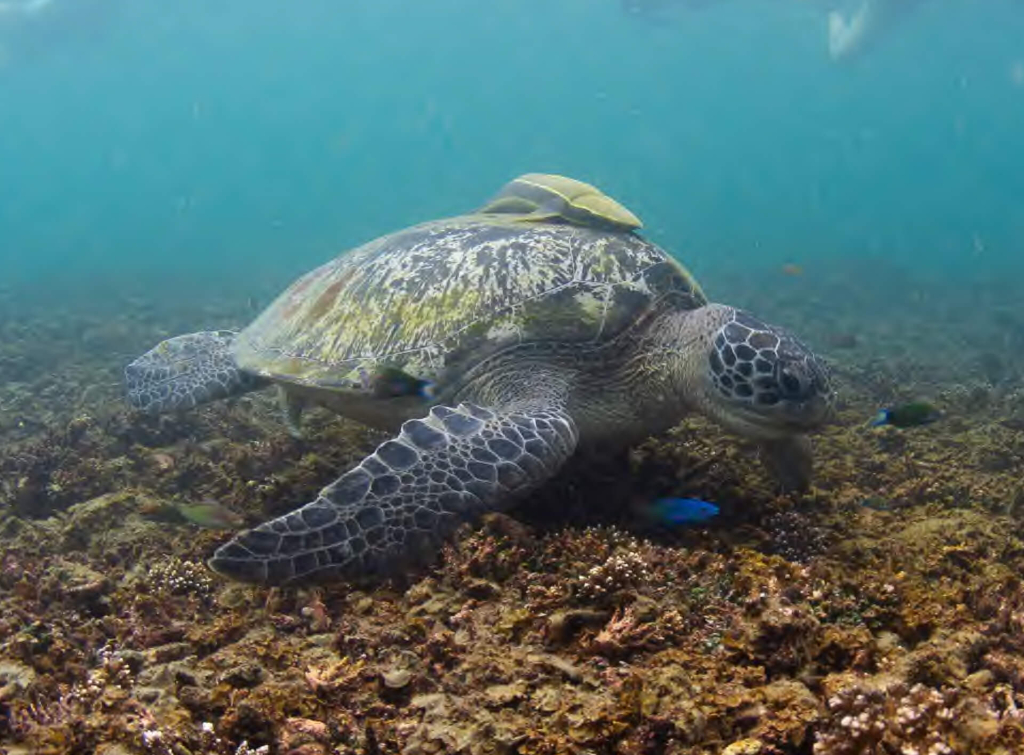
Green sea turtle resting on a coral reef while snorkelers observe from the surface during the Sea Turtle Ecology and Identification course at Black Turtle Conservation, Koh Tao, Thailand.
Navigating the Reef: Dive Sites and Marine Topography
To monitor effectively, you must know where to look. Koh Tao’s varied topography creates specific niches for different marine life:
- The Pinnacles: These deep granite seamounts are home to schools of Chevron Barracuda and the occasional Whaleshark. The vertical walls are covered in colorful anemones, providing a vertical highway for marine life.
- The Shallow Bays: These areas feature massive Porites corals and staghorn fields. They are the primary nurseries for juvenile fish and the preferred habitat for foraging Green Turtles.
- Wrecks: Artificial Reefs like the HTMS Sattakut have created entirely new ecosystems. The metal hull provides a substrate for sponges and bivalves, which in turn attracts Hawksbill turtles.
Data Collection: Modern Techniques for Monitoring Populations
Monitoring requires a combination of traditional and modern techniques. At Black Turtle Conservation, we utilise:
- Photo Identification: For sea turtles, the scale patterns on the side of their face (facial scutes) are unique, much like a human fingerprint. Our community members submit photos to an online database to track individual turtles over time.
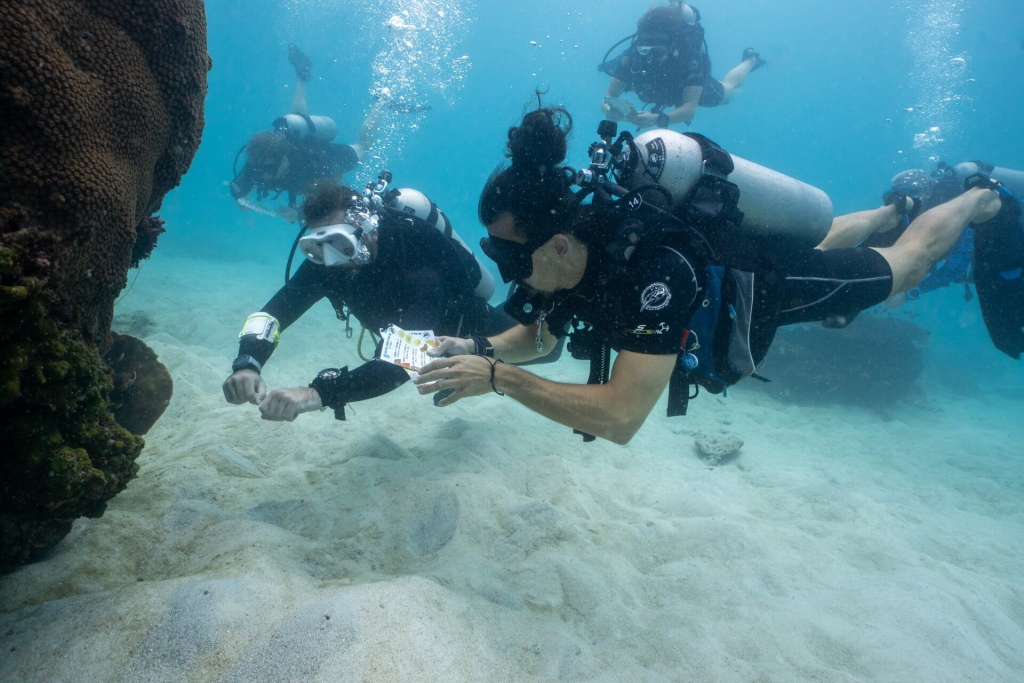
- Direct Observation: During our weekly marine life surveys, divers count and record sightings of turtles, sharks, and macro-life across different dive sites.
- Data Reporting: All data collected during our Dive Against Debris and EMP dives is uploaded to international databases, ensuring that Koh Tao’s local data contributes to global efforts through the PADI AWARE Foundation.
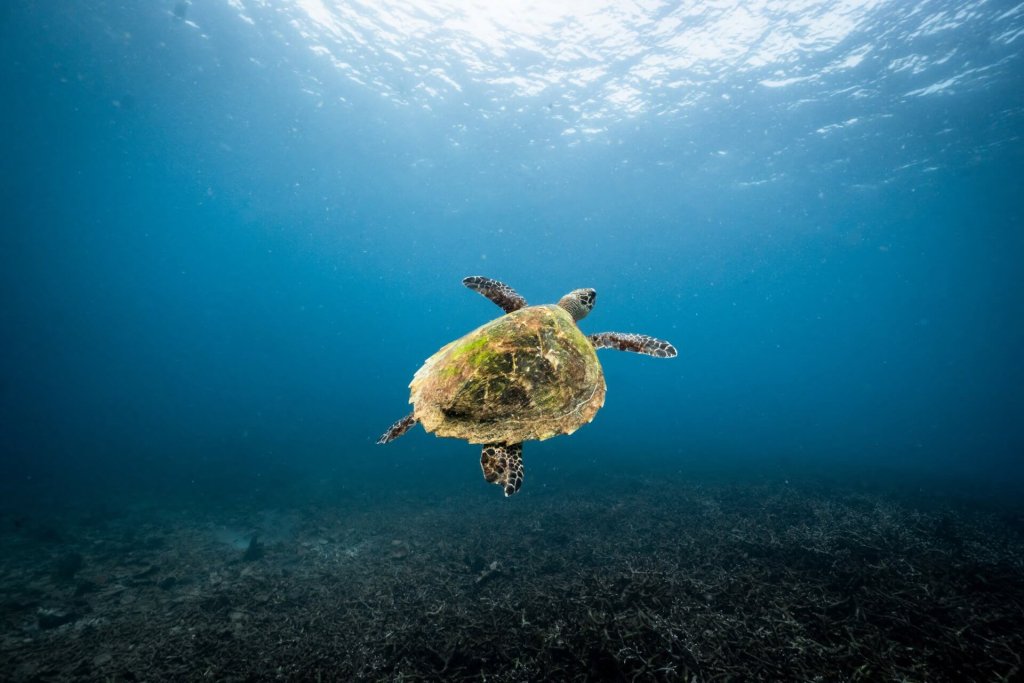
Sea turtle gliding above a seagrass meadow during the Sea Turtle Ecology & Monitoring course at Black Turtle Conservation, Koh Tao, Thailand.
A Shared Responsibility: Community and Local Initiatives
Local conservation efforts are the cornerstone of protecting Koh Tao’s marine life. Black Turtle Conservation works closely with the community to ensure that our programs are sustainable and impactful.
Accessible Conservation: Shore-Based Efforts and Challenges
One of our primary goals is to make conservation accessible. You don’t need to be a marine biologist or a pro diver to help.
- Shore-Based Initiatives: Weekly surveys on the beach allow families and non-divers to participate in identifying local flora and fauna whilst helping with aBeach Clean Up.
- Cigarette Butt Challenge: A community favorite, this challenge engages everyone in clearing toxic cigarette filters from our beaches, preventing harmful chemicals from reaching nesting grounds.
- Beach Clean-ups: Regular events held in partnership with local businesses to keepSairee and Mae Haad beaches pristine.
Stewardship: The Link Between Healthy Reefs and Local Economy
Healthy marine life is essential for Koh Tao’s economic stability. By monitoring our reefs, we ensure that the diving industry – the island’s primary employer – remains viable.
Furthermore, involving the community fosters a sense of stewardship, where local fishermen and business owners become the primary guardians of the reef.
When a tourist learns to identify a sea turtle at White Rock, they are more likely to support eco-friendly businesses. This synergy between data and community action is what makes Koh Tao’s conservation model successful.
Details on the costs of participation can be found on our diving course prices page.
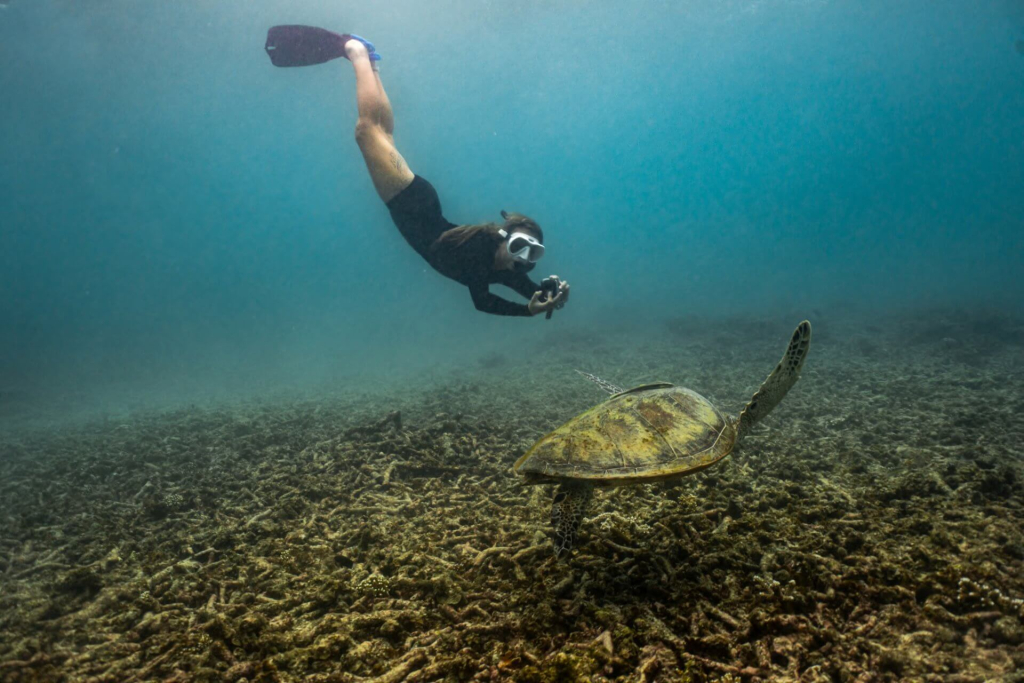
Marine conservation student documenting a sea turtle during an underwater monitoring session in Koh Tao, Thailand.
Navigating Obstacles: Challenges Facing Koh Tao’s Marine Life
Despite our efforts, challenges remain:
- Habitat Destruction: Coastal development and climate change threaten nesting beaches and foraging grounds.
- Bycatch and Ghost Nets: Discarded fishing gear can entangle turtles and sharks. Our Marine Debris Solutionsteams are constantly removing ghost nets from our reefs at sites like Southwest Pinnacles.
- Pollution: Plastic and chemical pollution can be fatal. OurMarine Plastics module teaches students how to quantify and mitigate this threat.
Looking Ahead: The Future of Marine Conservation on Koh Tao
The future depends on sustained community engagement and innovative technology. We are moving towards:
- Advanced Research: Using data from the Advanced EMP to identify resilient coral and marine populations.
- Expanded Education: Reaching more tourists and locals through ourOcean Insights events and workshops.
- Global Cooperation: Ensuring Koh Tao remains a key site for international marine research through the World Register of Marine Species (WoRMS).
From Spectator to Active Participant
The identification and monitoring of marine life on Koh Tao—from the majestic sea turtle to the tiny nudibranch—are essential for the health of our oceans. The island’s unique topography and world-class diving infrastructure provide the perfect environment for these initiatives to flourish.
Through Black Turtle Conservation, you have the opportunity to move from being a spectator to an active participant in this vital work.
We invite everyone to join the cause—whether through taking a Citizen Scientist course, participating in a microplastics survey, or volunteering for a beach clean-up.
Every observation, every photo, and every piece of data contributes to the protection of our vibrant marine ecosystem.
Together, we can ensure that future generations will continue to witness the grace and beauty of Koh Tao’s marine life.

Tackling Marine Debris: Solutions for Cleaner Oceans Today

COURSE PRICES & BOOKING