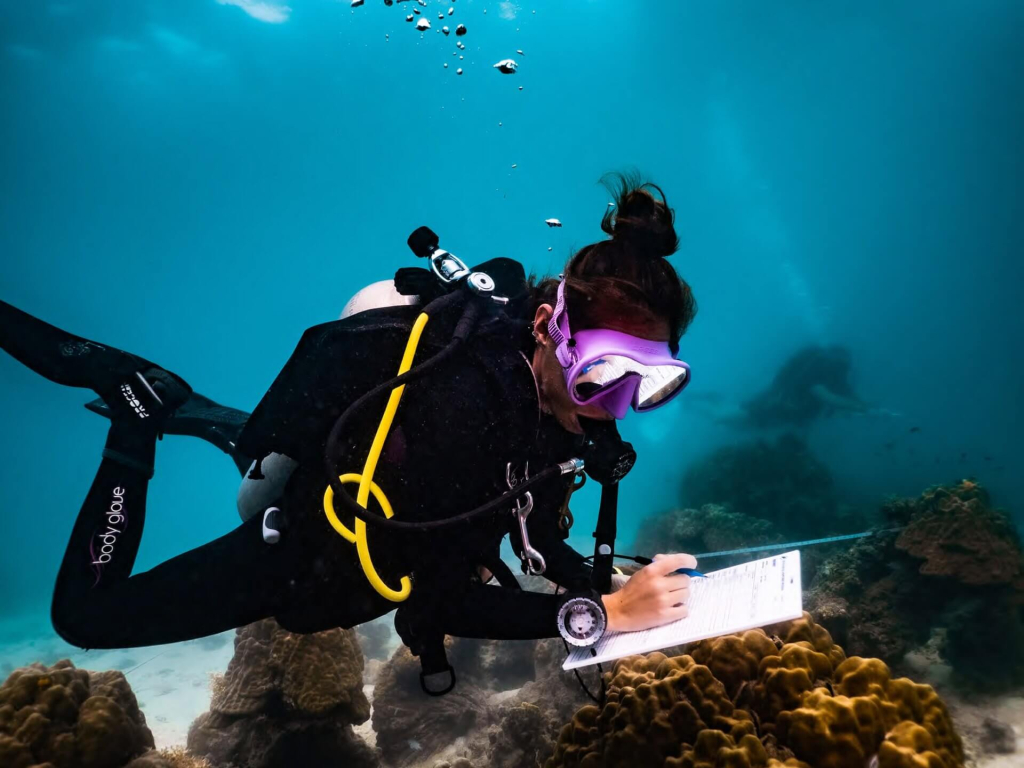
Join us in actively protecting Koh Tao’s reefs through our Crown-of-Thorns Starfish (COTS) ecological management programme. In this hands-on initiative, you will combine systematic field monitoring with targeted population control. During guided, standardised reef surveys, you will learn to identify and document COTS sightings and feeding scars to map their distribution and assess predation pressure on local corals. When population densities threaten priority sites, you will work alongside our trained conservation team to execute selective removals following strict ecological protocols. By diving with us, you directly mitigate localised stress on vulnerable coral communities while driving a proactive, data-driven management strategy.

½ Day 2 Scuba Dives

2200 THB

Join us for a day dedicated to advancing Koh Tao’s marine conservation efforts through targeted reef protection.

Across two fully supported survey dives, you will gain practical field experience alongside fellow conservationists, learning to track corallivorous Crown-of-Thorns Starfish (COTS), identify distinctive feeding scars, and monitor active coral predation.

While many travellers visit our island purely for recreational scuba diving, this initiative brings together a community of eco-conscious divers to collect vital population data and make a tangible impact on the long-term health and resilience of our coral reefs.
Key Learning Takeaways:

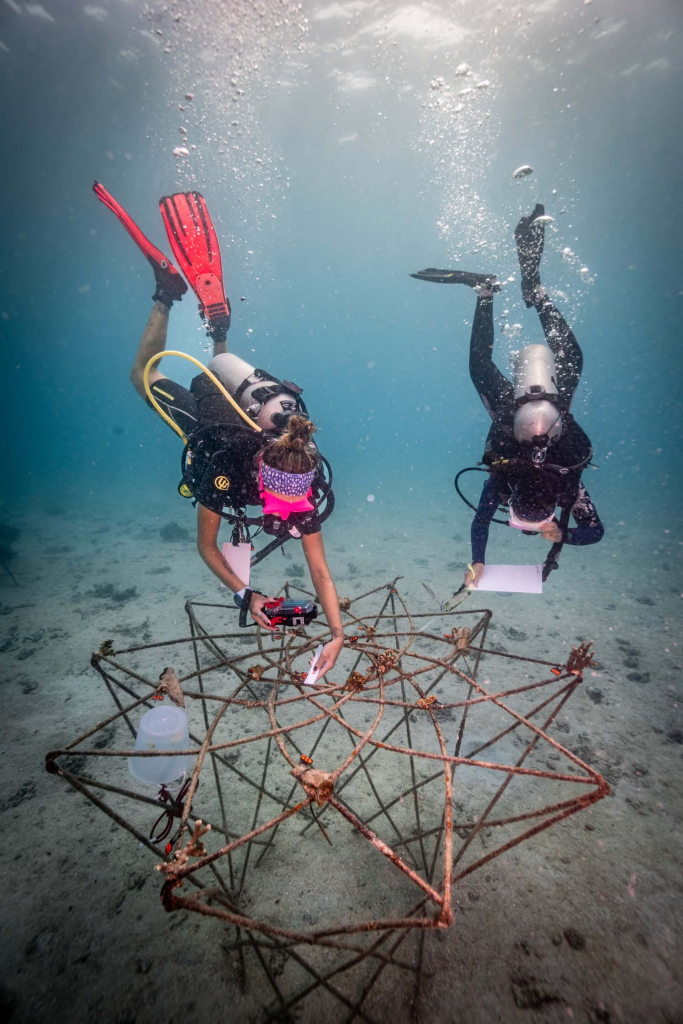
Scientific research monitoring of Crown-of-Thorns starfish (COTS) in Koh Tao, collecting reef impact data and supporting coral reef protection projects.
  • COTS Biology & Ecological Role: Explore the anatomy and natural role of the corallivorous Crown-of-Thorns Starfish (Acanthaster spp.), understanding how they naturally promote coral diversity under balanced conditions.
  • Outbreak Dynamics & Reef Threats: Examine the environmental drivers—such as nutrient runoff and the overfishing of natural predators—that trigger population outbreaks and cause unsustainable predation pressure on coral communities.
  • Identification & Predation Tracking: Master the visual skills needed to locate cryptic starfish hidden within the reef matrix.
  • Standardised Survey Methodologies: Learn how to conduct ecological monitoring dives. Practice recording precise spatial data, population counts, and coral health metrics to map COTS distribution and evaluate localised stress.
  • Targeted Intervention & Conservation Impact: Understand the strict ecological protocols required for selective removals. Learn how trained teams safely manage COTS at priority sites to directly alleviate stress on vulnerable reefs and support data-driven reef resilience.

Who Should Join:

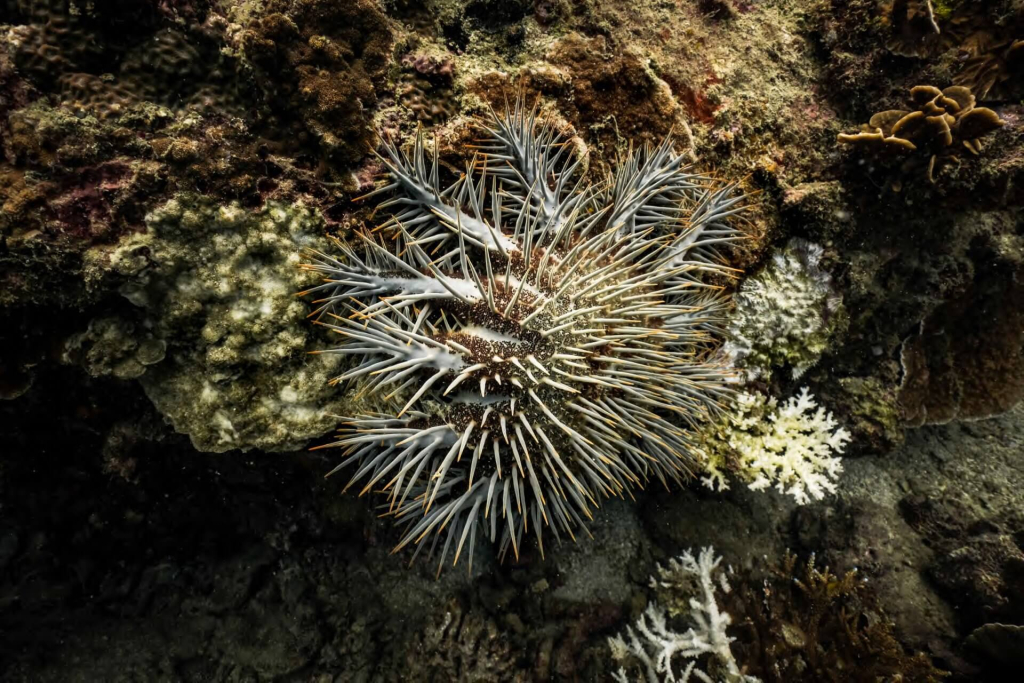
Crown-of-Thorns sea star observed feeding on coral reef substrate during Coral Predators monitoring dives in Koh Tao
  • Ocean Advocates: Anyone passionate about active marine restoration and supporting localised conservation efforts on Koh Tao.
  • Citizen Scientists: Snorkellers and divers looking to elevate their time in the water by contributing to authentic, hands-on reef management.
  • Eco-Conscious Explorers: Families, beginners, and environmentally minded travellers seeking a meaningful, impact-driven ocean experience.

Why This Survey Matters

Conservation Specialist students learning coral predator monitoring techniques and reef health assessment during conservation dives in Koh Tao.

The Crown-of-Thorns Starfish belongs on a healthy reef. At balanced densities this corallivore is part of what keeps a coral community diverse, and nothing about the animal itself makes it a problem. What does is a change in conditions—nutrient runoff and the overfishing of its natural predators—and when those drivers combine, outbreaks follow and predation pressure on coral communities becomes unsustainable. That shift is easy to miss: COTS are cryptic animals, folded into the reef matrix, and numbers can climb long before lost coral cover becomes obvious to a passing diver.

This is why a single observation is of so little use. One count cannot tell you whether a site sits within its normal range or at the edge of an outbreak, because without a baseline there is nothing to compare it against. Consistent, weekly monitoring builds that baseline, and with it the ability to read genuine change in distribution or predation pressure as it happens—so intervention is directed only where the evidence supports it, and withheld where the reef is in balance.

Your Survey, Step by Step

Before You Enter the Water

Your survey opens with a comprehensive ecological briefing covering the natural role of Acanthaster spp., the conditions under which the species supports coral diversity, and the environmental drivers that tip a balanced population into an outbreak. From there it turns practical: how to spot cryptic starfish within the reef matrix, how to distinguish COTS feeding scars from other coral damage, and how to record spatial data, population counts and coral health metrics to a standardised format, so your dive is comparable with every other survey in the record. Your Conservation Survey Leader will also brief you on the protocols governing selective removals, and why COTS—a venomous animal—are handled only by trained team members.

In the Water

Across two fully supported survey dives you move from observing the reef to working it as a citizen scientist, searching assigned sections of reef, logging each COTS sighting with its position, and documenting active feeding scars as a measure of predation pressure on the surrounding corals. Where the survey shows densities at a priority site warranting it under protocol, the trained conservation team carries out selective removals alongside the monitoring, while your focus remains the record that justifies them.

Back at the Centre

Back on land, your slates are transcribed into the monitoring record and your photographs reviewed against the identifications made in the water. The debrief covers what the dives found, how that compares with previous weeks at the same sites, and where the next survey should go.

Session Time Activity
Briefing Before departure Ecology briefing and survey methodology
Field survey Morning or afternoon boat Two guided COTS monitoring dives—sightings, feeding scars and coral health metrics
Debrief On return Data logging, photo review and discussion

Please note that this schedule is indicative. Both survey dives run from a single boat trip, either the morning or the afternoon departure. Exact times will be confirmed before your survey begins.

What Your Data Contributes To

Crown-of-Thorns sea star observed feeding on coral reef substrate during Coral Predators monitoring dives in Koh Tao
Conservation Specialist students learning coral predator monitoring techniques and reef health assessment during conservation dives in Koh Tao.

Your dives feed a long-term monitoring record built for three purposes. The first is a reliable ecological baseline: standardised counts and coral health metrics, repeated weekly at the same reefs, establish what a normal COTS population looks like on Koh Tao—the only honest reference point for judging anything unusual. The second is the identification of high-risk hotspots; your spatial data and feeding-scar records are what distinguish a reef under genuine predation pressure from one simply holding a visible starfish or two. The third follows from the second: when the evidence shows localised stress building at a priority site, that record is what allows the conservation team to respond quickly, proportionately, and only where it is genuinely warranted.

This commitment to a measured, evidence-based response is directly reflected in our latest data. Recent survey efforts yielded a comprehensive dataset of 484 individual Crown-of-Thorns (COTS) sightings, each detailed with depth, length, substrate, and behavioural metrics. Because we act on data rather than reaction, 336 of these documented starfish were left in place as part of the natural ecosystem, while 138 causing genuine reef stress were actively removed. The monitoring initiative also captured 93 zero-sighting surveys, providing the crucial absence data required to maintain that accurate baseline.

Prerequisites:

Advanced Open Water Diver (or equivalent)

Price Includes
2,200 ฿
  • 1 ecology briefing
  • 2 guided survey dives
  • Diving equipment & dive computer
  • Dive insurance
  • Refreshments & fruit on the boat
BOOK NOW

Timetable

Thursday or Friday · indicative plan

  1. 10:30Crown-of-thorns monitoring briefing
  2. 11:30–12:00Pack gear and lunch
  3. 12:00Dive 1 — reef monitoring
  4. 14:00Dive 2 — reef monitoring
  5. 17:00Data review and input

Both dives run on one boat trip. The survey day and exact times are confirmed before joining.