Overview of the Genus
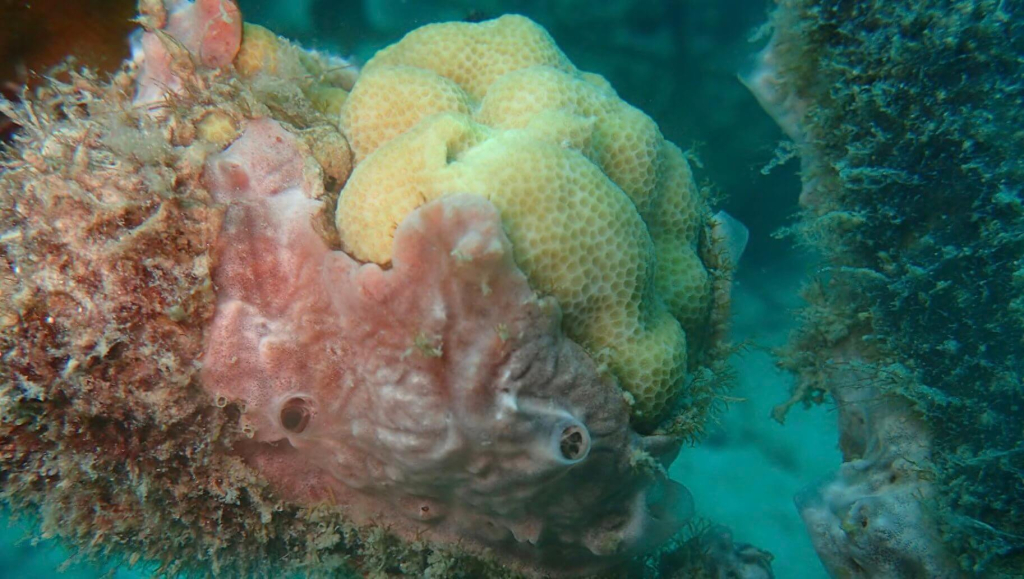
Gardineroseris is one of the more taxonomically restricted reef-coral genera, containing essentially a single widely recognised species. Its colonies are immediately distinguished by a irregular hexagonal honeycomb pattern of deep corallites with sharp walls, unlike the smoother thamnasteroid surfaces of related Agariciidae genera such as Pavona and Pachyseris.
The genus belongs to the family Agariciidae alongside Pavona, Leptoseris, and Coscinaraea, but its combination of irregular hexagonal corallites and sharp walls gives it a visual identity quite distinct from the rest of the family. The genus was named in honour of Sir J. Stanley Gardiner, an early twentieth-century coral biologist whose work on Indo-Pacific reefs established the foundations for much subsequent scleractinian taxonomy.
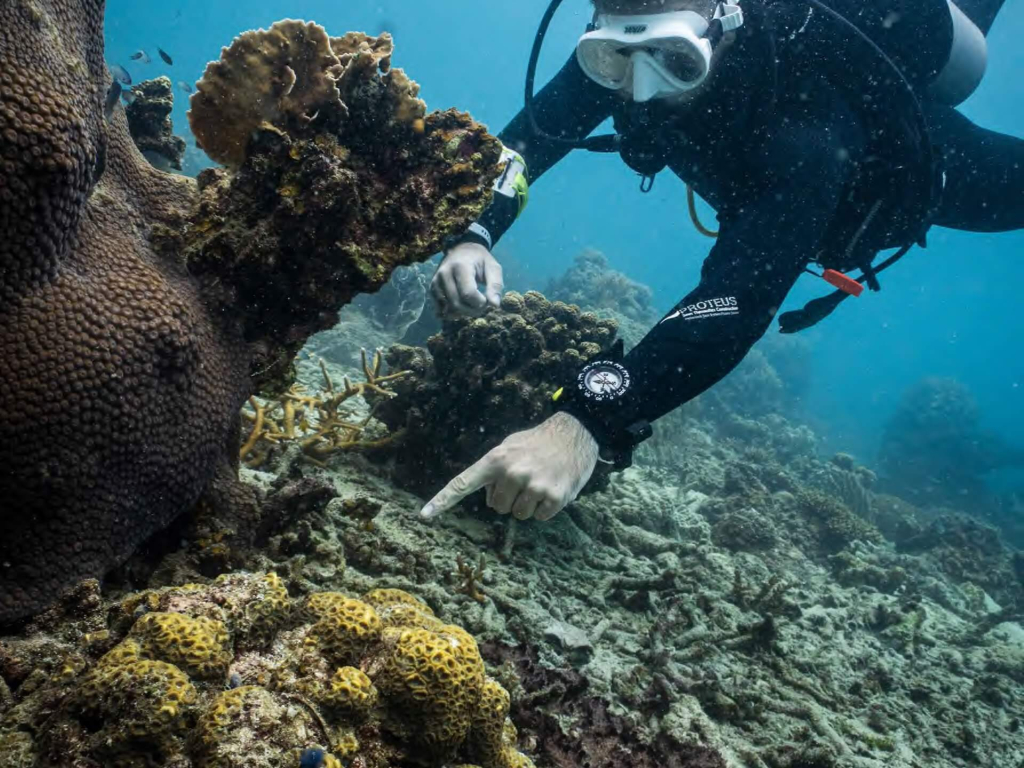
On Koh Tao, Gardineroseris is encountered occasionally on slope habitats and contributes to overall reef biodiversity through its distinctive surface architecture, even though it is rarely a dominant component of any single site.
Global and Local Importance
Globally, Gardineroseris planulata occurs across the tropical Indo-Pacific from the Red Sea and East Africa through Southeast Asia and out to the East Pacific. Although scattered rather than abundant, the genus contributes to reef biodiversity across this wide range and is a useful reference taxon for understanding irregular cerioid corallite arrangements.
On Koh Tao, Gardineroseris is uncommon but consistent in its presence at slope habitats. Tracking sightings of the genus contributes to broader assessments of agariciid coral diversity and to the documentation of less common but persistent components of the reef community.
Reef-Building Contribution and Habitat Provision
Gardineroseris colonies, although usually modest in size and abundance, contribute substantial three-dimensional structure relative to their footprint area through their deeply incised hexagonal architecture. The deep corallites and sharp, angular walls create microhabitat for very small cryptobenthic invertebrates that exploit the protected spaces within the corallite cups.
The hexagonal surface architecture of Gardineroseris also creates microscale topographic complexity that contributes to reef habitat diversity, complementing the more uniform surfaces of dominant massive reef-builders on Koh Tao slopes.
Growth Forms and Colony Variation
Gardineroseris planulata produces colonies that are typically massive, encrusting, or platy, with a strongly hexagonal honeycomb surface pattern. Colonies tend to remain modest in size, typically under 50 cm across, although larger examples occur in particularly favourable habitats.
Colour is typically uniform brown, olive, or yellow-brown, sometimes with greenish tints. The combination of hexagonal architecture and modest colour variation gives the genus a distinctive but understated visual identity that is easily missed by untrained observers but immediately recognisable to those familiar with the surface pattern.
Evolutionary and Taxonomic Notes
Gardineroseris is part of the family Agariciidae, which has been considerably revised in recent decades through molecular phylogenetic work. The genus’s distinct hexagonal corallite pattern reflects an evolutionary trajectory toward a discrete, deeply incised cerioid arrangement that contrasts with the more thamnasteroid surface architectures of other agariciid genera.