This ecological research programme focuses on documenting the diversity, abundance, and specific habitat preferences of sea slug and nudibranch populations in Koh Tao. Through standardised field surveys, participants collect empirical data on species distribution and associated benthic substrates to track long-term trends in ecosystem stability. By identifying patterns related to overall reef health and shifting environmental conditions, this initiative establishes localised conservation priorities while generating robust datasets that directly contribute to ongoing scientific research and potential publications.

½ Day

2 Scuba Dives

2200 THB

Join us for a day dedicated to advancing Koh Tao’s marine conservation efforts through our Sea Slug Biodiversity Research project.

Across two fully supported survey dives, you will gain practical field experience alongside fellow ocean enthusiasts, conducting systematic, non-invasive surveys to document the incredible macro life of our reef and muck environments.

While many travellers visit our island purely for recreational scuba diving, this programme empowers a community of eco-conscious divers to actively contribute to a growing dataset of species presence. By tracking these delicate indicator species, you will make a tangible impact on our long-term reef biodiversity monitoring across multiple sites around Koh Tao.
Key Learning Takeaways:

Community sea slug and nudibranch survey dive in Koh Tao, documenting marine biodiversity through citizen science participation.
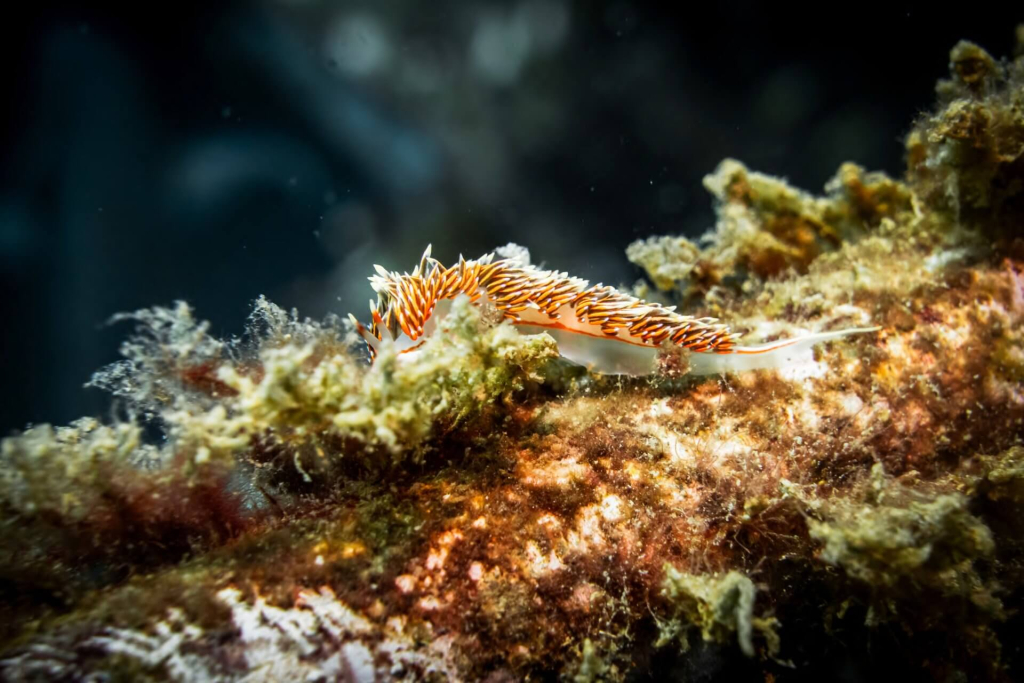
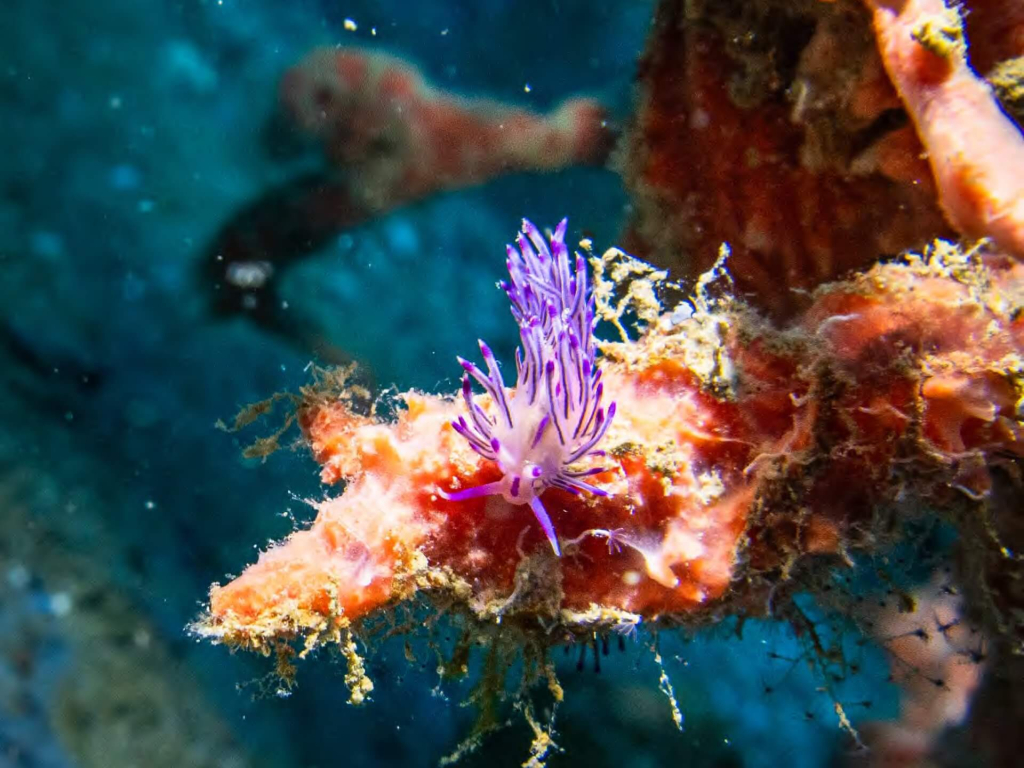
Colorful Coryphellina nudibranch feeding on a coral reef in Koh Tao, Thailand, during a marine biodiversity survey.
  • Anatomy & Evolutionary Adaptations: Explore the fascinating biology of sea slugs (including nudibranchs).
  • Ecological Importance & Habitat Dynamics: Understand the highly specialised niches these macro organisms occupy within both complex coral reefs and sandy muck environments. Learn how their specific dietary requirements make them excellent indicator species for assessing overall ecosystem health.
  • Environmental Sensitivities & Threats: Examine the anthropogenic and environmental pressures facing these delicate species.
  • Identification Techniques: Use visual observation skills required to locate cryptic, often microscopic species. Learn to differentiate between key families and species by analysing morphological features and distinct colour patterns without disturbing the surrounding benthic habitat.
  • Data Collection & Conservation Impact: Learn standardised and non-invasive survey protocols such as photo documentation. Practice recording precise sightings to contribute to a long-term citizen science dataset that tracks shifts in species presence across Koh Tao’s dive sites.

Who Should Join:

Colorful Coryphellina nudibranch feeding on a coral reef in Koh Tao, Thailand, during a marine biodiversity survey.
  • Ocean Advocates: Anyone passionate about protecting marine life and supporting localised, data-driven conservation efforts.
  • Citizen Scientists: Macro enthusiasts, underwater photographers, and divers looking to elevate their time in the water by contributing to authentic biodiversity research.
  • Eco-Conscious Explorers: Environmentally minded travellers seeking a meaningful, impact-driven ocean experience focused on the hidden wonders of the reef.

Why This Survey Matters

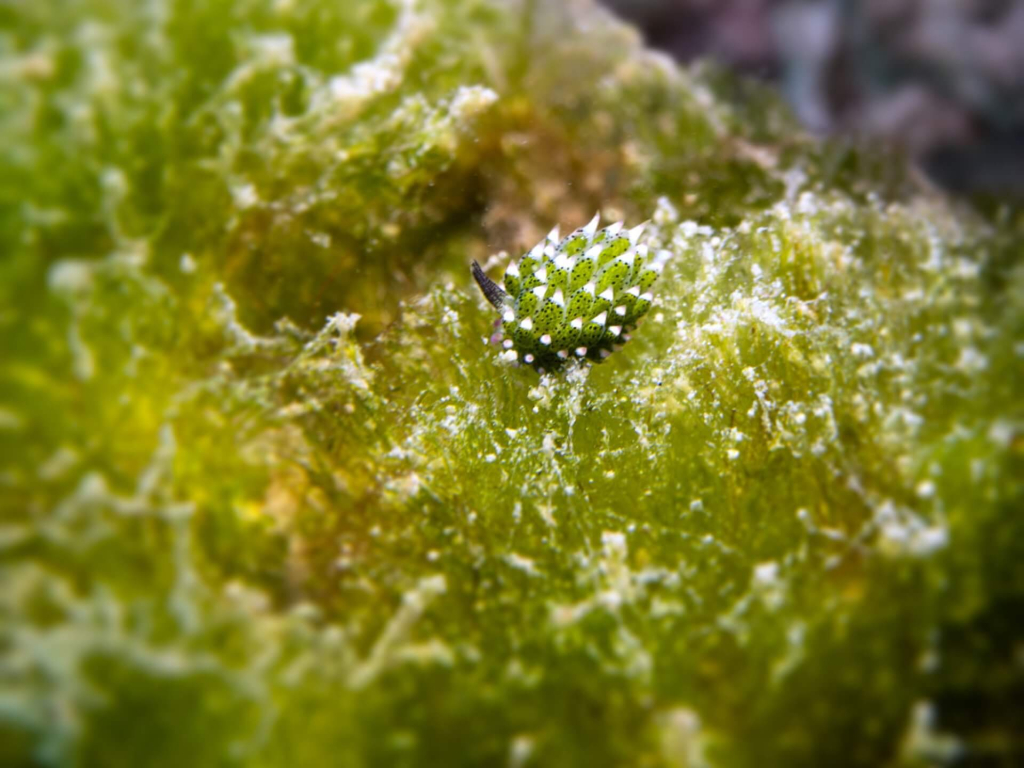
Close-up photo of a nudibranch taken during the Nudibranch & Sea Slug Ecology course at Black Turtle Conservation, Koh Tao.
Community sea slug and nudibranch survey dive in Koh Tao, documenting marine biodiversity through citizen science participation.

Sea slugs are among the most informative animals on the reef and the easiest to overlook entirely. Because each species occupies a highly specialised niche and depends on a narrow range of prey organisms, their presence or absence describes the condition of the benthic habitat with a precision larger, more mobile animals cannot offer. A reef can look unchanged to a passing holiday diver while the small, cryptic organisms that signal its health quietly disappear.

Without standardised monitoring, that shift is never recorded. A single sighting proves only that one animal was present on one day—it cannot tell you whether a species is expanding, contracting, or has already vanished from a site. One-off observations cannot protect an ecosystem, but consistent weekly surveying of the same reef and muck environments builds a species-presence record that can be interrogated season after season.

That record is what makes localised conservation priorities possible, showing how environmental pressures are expressed at the scale of the benthos—the scale at which reef health is decided.

Your Survey, Step by Step

Before You Enter the Water

Your Conservation Survey Leader opens the day with a comprehensive ecological briefing: the anatomy and evolutionary adaptations of sea slugs and nudibranchs, the specialised niches they occupy in complex coral reef and sandy muck habitats, and the dietary dependencies that make them such reliable indicator species. The briefing then moves to method—how to differentiate key families by morphological features and colour pattern, how to search for cryptic and often microscopic animals, and the standardised, non-invasive protocols that govern everything you do on the dive. You are shown exactly how a sighting is recorded, so your observations enter the dataset in the same form as every survey before yours.

In the Water

Across two fully supported survey dives you work in small, focused teams at a deliberately slow pace, covering the reef and adjacent muck environments where these animals are found. This is searching rather than sightseeing—attention held on sponges, hydroids, algal turf and open sand, not the water column. Sightings are documented photographically, and nothing is touched, lifted or moved: the benthic habitat is left exactly as you found it. Your Conservation Survey Leader stays with you to confirm identifications in the water and to register the substrate each animal was associated with—as much a part of the record as the species itself.

Back at the Centre

You return to the centre to compile your findings. Photographs are reviewed and identifications confirmed to family or species level, sightings and their substrates are logged into our long-term conservation database, and the team talks through what the day's results mean against the record already built for those sites.

Session Time Activity
Briefing Before departure Ecology briefing and survey methodology
Field survey Morning or afternoon boat Two guided macro survey dives across reef and muck habitats
Debrief On return Data logging, photo review and discussion

Please note that this schedule is indicative. Both survey dives run from a single boat trip, either the morning or the afternoon departure. Exact times will be confirmed before your survey begins.

What Your Data Contributes To

Colorful Coryphellina nudibranch feeding on a coral reef in Koh Tao, Thailand, during a marine biodiversity survey.
Close-up photo of a nudibranch taken during the Nudibranch & Sea Slug Ecology course at Black Turtle Conservation, Koh Tao.

This is a biodiversity dataset, and its value is cumulative. Every logged sighting strengthens the ecological baseline for the sites we survey, allowing our conservation team to track natural seasonal shifts in abundance and diversity and to separate them from genuine long-term decline. Because the same priority sites are surveyed week after week, the record also shows which locations around Koh Tao support the greatest macro diversity and which are quietly losing it—the beginning of any case for localised protection or closer study.

Sea slugs are not removed, relocated or managed, so this survey does not drive intervention in the field. What it produces is evidence: a standardised, long-running account of benthic condition that feeds the ongoing scientific research this initiative was built to support.

Active participant support has been the driving force behind our last 12 months of biodiversity tracking, allowing us to successfully log 2,003 individual slug observations across 30 dive sites. Through this collaborative fieldwork, our divers have helped identify over 55 species, ranging from dorid nudibranchs and phyllidiids to sacoglossans and cladobranchs, generating a vital baseline dataset that directly strengthens our local marine research.

Prerequisites:

Advanced Open Water Diver (or equivalent)

Price Includes
2,200 ฿
  • 1 ecology briefing
  • 2 guided survey dives
  • Diving equipment & dive computer
  • Dive insurance
  • Refreshments & fruit on the boat
BOOK NOW

Timetable

Friday · indicative plan

  1. 10:30Sea slug ecology and monitoring briefing
  2. 11:30–12:00Pack gear and lunch
  3. 12:00Dive 1 — sea slug monitoring
  4. 14:00Dive 2 — sea slug monitoring
  5. 17:00Data review and input

Both dives run on one boat trip. Confirm the survey day and boat departure before joining.