Lobophyllia is a genus of large-polyp stony (LPS) corals in the family Lobophylliidae, characterised by massive, fleshy, and often brightly coloured colonies that form some of the most visually striking elements of Indo-Pacific reefs. The genus was established by de Blainville in 1830 and has undergone substantial taxonomic revision in recent years, with the formerly separate genera Symphyllia, Australomussa, and Parascolymia now considered junior synonyms of Lobophyllia following Arrigoni et al. 2016.

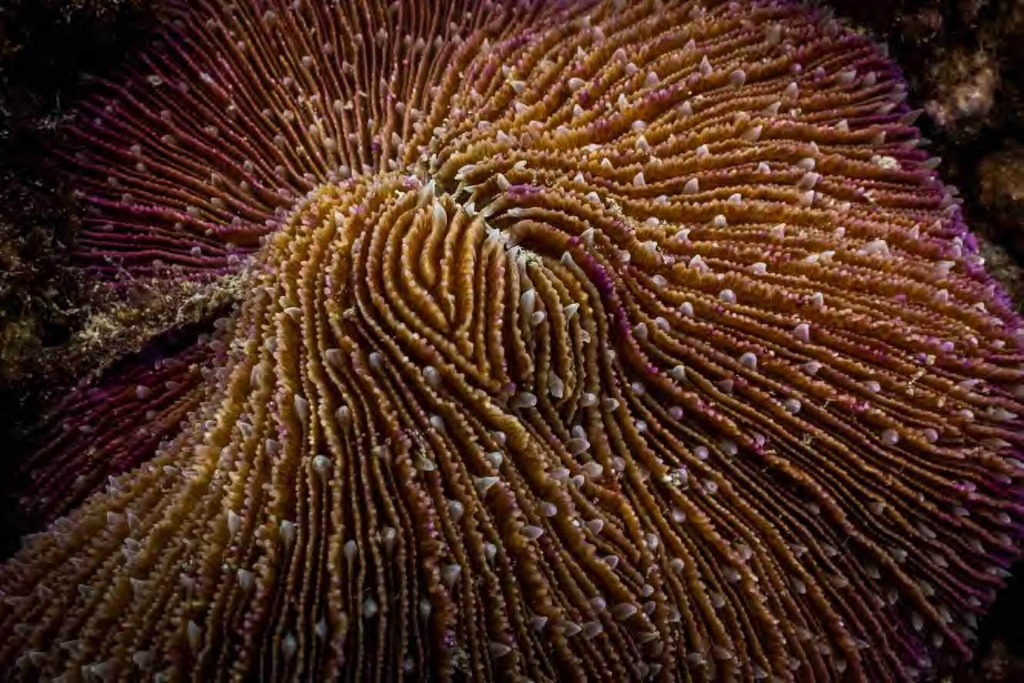
Lobophyllia colonies are large, dome-shaped to massive, with thick fleshy tissue and uniserial corallites arranged in flabello-meandroid valleys. Polyps are large and well-armed, allowing the genus to engage in active heterotrophic feeding alongside its symbiotic photosynthesis. This combination of flexible mixotrophy and slow but persistent calcification gives Lobophyllia a long-lived, reliable presence on healthy reefs.

Around Koh Tao, Lobophyllia is a familiar component of the reef community, encountered as colourful brain-like mounds on shallow to mid-depth slopes. This guide explores the morphology, feeding strategy, distribution, environmental requirements, vulnerability profile, field identification, and conservation training opportunities offered by Black Turtle Conservation.

Common Names: Lobed Brain Coral, Lobo Coral, Symphyllia Coral, Brain Coral

Family: Lobophylliidae

Order: Scleractinia (Stony Corals)

Subclass: Hexacorallia | Class: Anthozoa | Phylum: Cnidaria

Learn About Lobophyllia Coral Genus

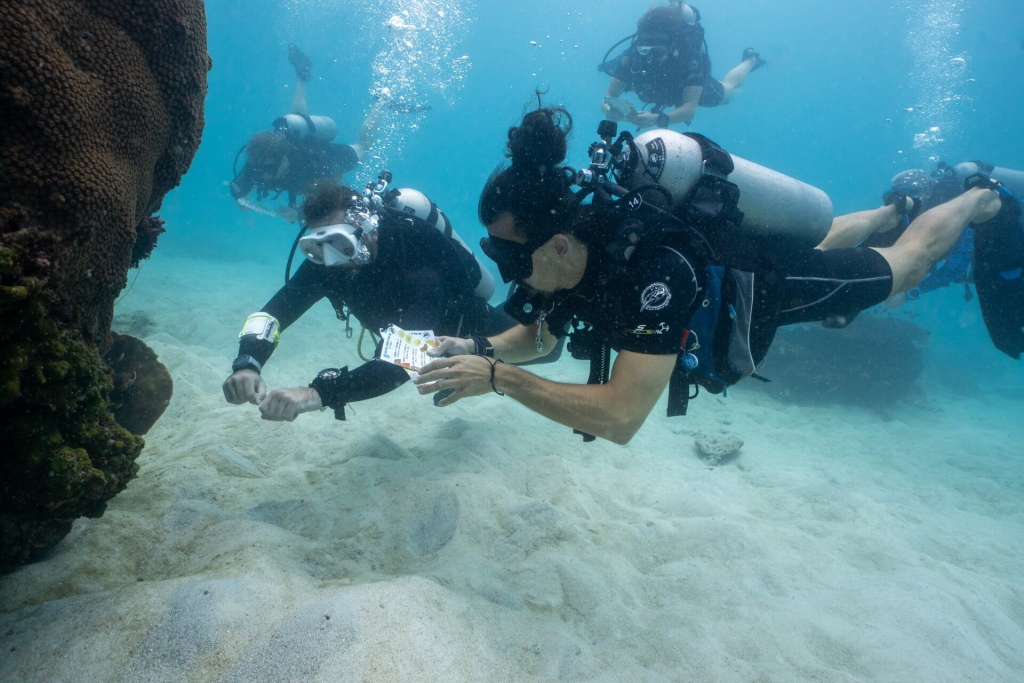
Diver recording fine-scale coral identification data during the Advanced Coral Taxonomy and Marine Conservation course at Black Turtle Conservation, Koh Tao, Thailand.
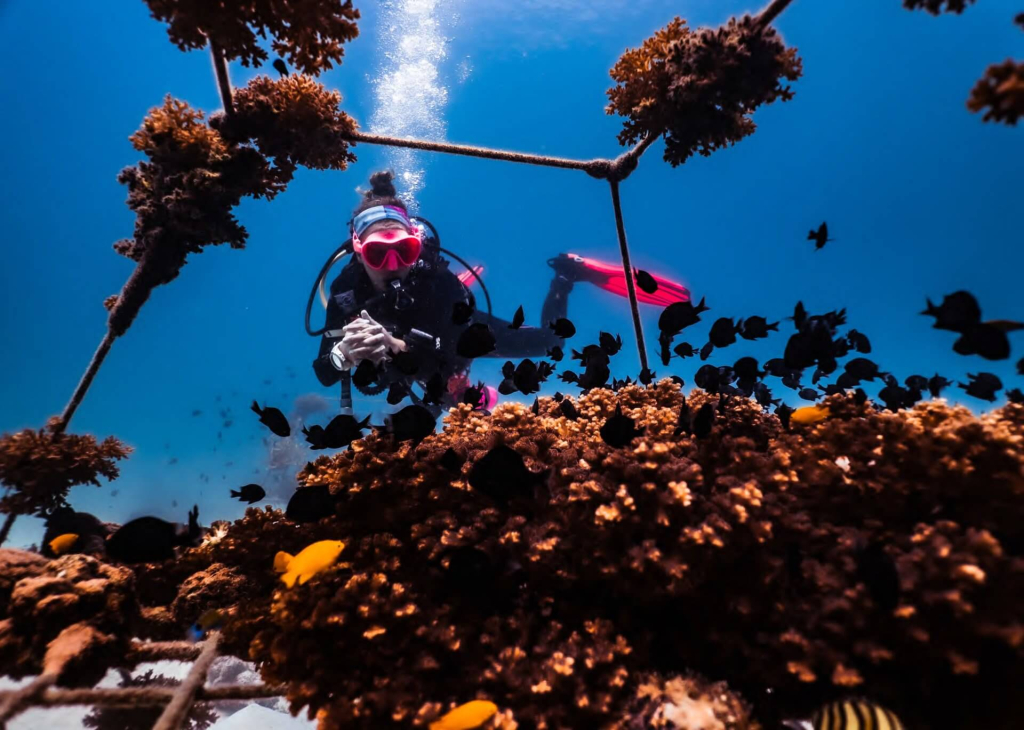
Healthy coral reef ecosystem with diverse fish species recorded during coral disease and reef health monitoring in Koh Tao, Thailand.
Marine conservation diver monitoring coral growth and fish populations on an artificial reef at Black Turtle Conservation, Koh Tao.

Overview of the Genus

Lobophyllia is one of the most prominent large-polyp stony (LPS) coral genera on Indo-Pacific reefs. It belongs to the family Lobophylliidae, which was established by Dai and Horng in 2009 to accommodate the Indo-Pacific corals previously placed in Mussidae, alongside several genera transferred from the abolished family Pectiniidae.

The genus has been considerably broadened by recent molecular phylogenetic work. Arrigoni et al. 2016 demonstrated that the formerly separate genera Symphyllia, Australomussa, and Parascolymia all nest within Lobophyllia, leading to their formal synonymisation. As currently recognised, Lobophyllia therefore contains a wide range of growth forms, from massive flabello-meandroid colonies to formerly Symphyllia-like meandroid colonies.

On Koh Tao, Lobophyllia adds substantial colour and structural variety to the reef. Its large, fleshy polyps and bright pigmentation make it one of the most photographed coral genera in the area.

Global and Local Importance

Globally, Lobophyllia is widespread across the tropical Indo-Pacific from the Red Sea and East Africa through Southeast Asia and out to Polynesia. The genus is important both ecologically, as a slow but persistent reef-builder, and aesthetically, as one of the most visually distinctive elements of Indo-Pacific reef communities.

On Koh Tao, Lobophyllia colonies serve as long-term reef anchors, with large colonies persisting for many decades. The genus is regularly recorded in Ecological Monitoring Program surveys and contributes meaningfully to overall reef structural complexity.

Reef-Building Contribution and Habitat Provision

Lobophyllia colonies, although individually slower-growing than branching genera, contribute substantially to the heavy-tissue, large-polyp end of the coral assemblage. Mature colonies create three-dimensional structure with valley topography that supports a range of cryptobenthic invertebrates and small reef fish.

The thick fleshy tissue of Lobophyllia is also actively grazed by some reef fish, providing a nutritional resource that links the genus into broader reef food webs while not significantly damaging colony integrity.

Growth Forms and Colony Variation

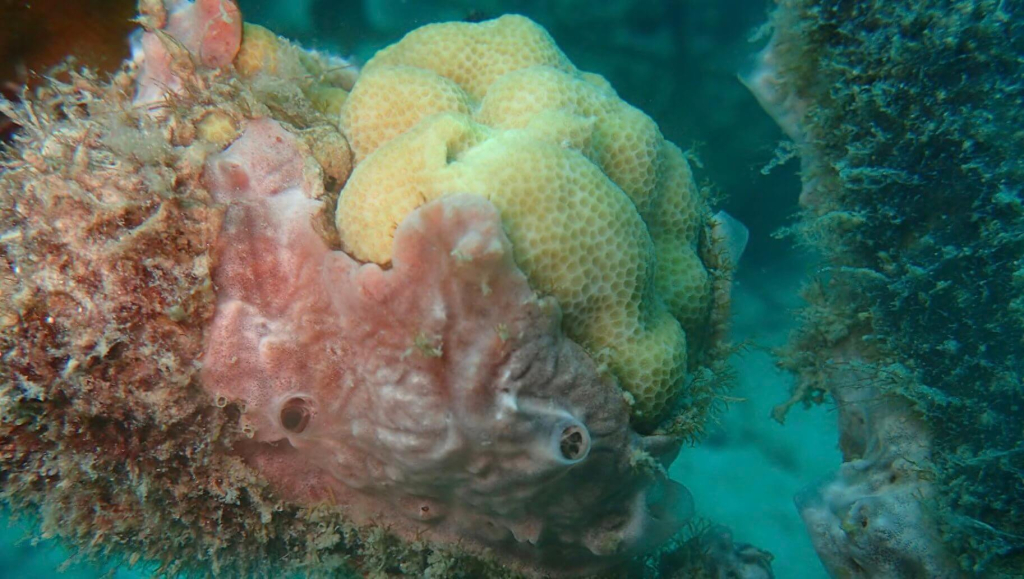
Following the Arrigoni et al. 2016 revision, Lobophyllia exhibits substantial growth-form diversity. Traditional Lobophyllia species form massive, dome-shaped colonies with discrete fleshy lobes (uniserial flabello-meandroid corallites), while species formerly placed in Symphyllia form meandroid colonies with elongate valleys and shared walls.

On Koh Tao, the most commonly encountered forms are the classic dome-shaped Lobophyllia hemprichii and the meandroid valley forms of species formerly placed in Symphyllia. Colour variation is extreme, ranging from cream and brown to vivid green, blue, red, and orange.

Evolutionary and Taxonomic Notes

Lobophyllia is the type genus of the family Lobophylliidae and one of the most actively revised LPS genera in scleractinian taxonomy. The merging of Symphyllia and other related genera into Lobophyllia, combined with ongoing molecular work, means that field identification at species level remains difficult and is best handled through careful skeletal microstructure examination.
Morphology

Diver recording fine-scale coral identification data during the Advanced Coral Taxonomy and Marine Conservation course at Black Turtle Conservation, Koh Tao, Thailand.
Healthy coral reef ecosystem with diverse fish species recorded during coral disease and reef health monitoring in Koh Tao, Thailand.
Marine conservation diver monitoring coral growth and fish populations on an artificial reef at Black Turtle Conservation, Koh Tao.

Colony Structure and Skeletal Features

Lobophyllia colonies are dome-shaped to massive, with uniserial corallites arranged in flabello-meandroid valleys. In traditional Lobophyllia species, the corallites are clearly discrete fleshy lobes, while in former Symphyllia species, the corallites fuse into long meandroid valleys with shared walls.

The genus is delimited by two synapomorphies according to recent molecular and morphological work: uniserial corallites and vesicular endotheca. These technical features underpin the inclusion of formerly separate Symphyllia-like species within the modern circumscription of Lobophyllia.

Polyps and Tissue Characteristics

Lobophyllia polyps are large and fleshy, often 2–4 cm across when fully expanded, with thick tissue layers that hold high densities of zooxanthellae. The bright colours seen on Koh Tao colonies result from a combination of zooxanthellae pigments and host-produced fluorescent proteins.

The thick tissue layer also supports significant lipid and energy reserves, helping colonies endure stress periods, and it provides considerable protective insulation against thermal stress and physical disturbance.

Skeletal Microstructure and Calcification

Lobophyllia skeletons are aragonitic and moderately dense, with prominent toothed septa and well-developed columellae. Calcification rates are moderate by reef-coral standards, allowing colonies to grow to substantial size over decades while not matching the rapid extension of branching genera.

The skeletal microstructure includes vesicular endotheca that supports the thick, fleshy tissue layer typical of the genus. Like all reef-builders, Lobophyllia is sensitive to reductions in seawater carbonate saturation under ocean acidification scenarios.

Size, Growth, and Defensive Adaptations

On Koh Tao, mature Lobophyllia colonies typically reach 0.3–1 m across, with the largest examples occasionally exceeding 1.5 m at sheltered sites. Growth is slow relative to fast-growing branching genera but persistent enough to produce substantial colonies over multi-decade timescales.

Defensive adaptations include large, well-armed polyps with effective nematocysts, thick mucus production, and the capacity to expand or contract polyps to manage exposure to predators and physical disturbance. Some species also produce sweeper tentacles for inter-colony chemical warfare.

Dual-Feeding Strategy: How Lobophyllia Feeds and Thrives

Lobophyllia is an effective mixotroph, drawing energy from both photosynthesis carried out by symbiotic dinoflagellates and active heterotrophic capture of zooplankton. The large polyp size and well-developed tentacles make heterotrophic feeding particularly significant in this genus relative to small-polyp reef-builders.

1. Autotrophy: Photosynthate from Dense Symbionts

Symbiotic dinoflagellates of the family Symbiodiniaceae living within the gastrodermis carry out photosynthesis and translocate organic compounds to the coral host. The thick tissue layer holds high densities of symbionts, allowing meaningful photosynthetic productivity even under moderately reduced light.

This pathway supplies a substantial fraction of the colony’s daily carbon budget under normal conditions, with the large, fleshy polyp form providing efficient light interception across the colony surface.

Lobophyllia polyps are large and well-armed, enabling effective heterotrophic capture of zooplankton, particulate organic matter, and even small fish or shrimp prey on occasion. Polyps may extend during both day and night, expanding the genus’s effective feeding window relative to strictly nocturnal feeders.

Heterotrophic input supplies essential nitrogen, phosphorus, and trace elements, supporting the dense tissue and persistent calcification that define the genus. The energy reserves stored in the thick tissue help buffer the colony through periods of reduced photosynthesis or food availability.

The combination of robust photosynthesis, effective heterotrophy, thick tissue with substantial energy reserves, and well-developed nematocyst defences makes Lobophyllia a relatively resilient coral genus. However, prolonged thermal stress can still cause symbiosis breakdown, and severe bleaching events on Indo-Pacific reefs have reduced colony numbers significantly even in this generally tolerant genus.

Where to Find Lobophyllia Around Koh Tao and at Which Dive Sites

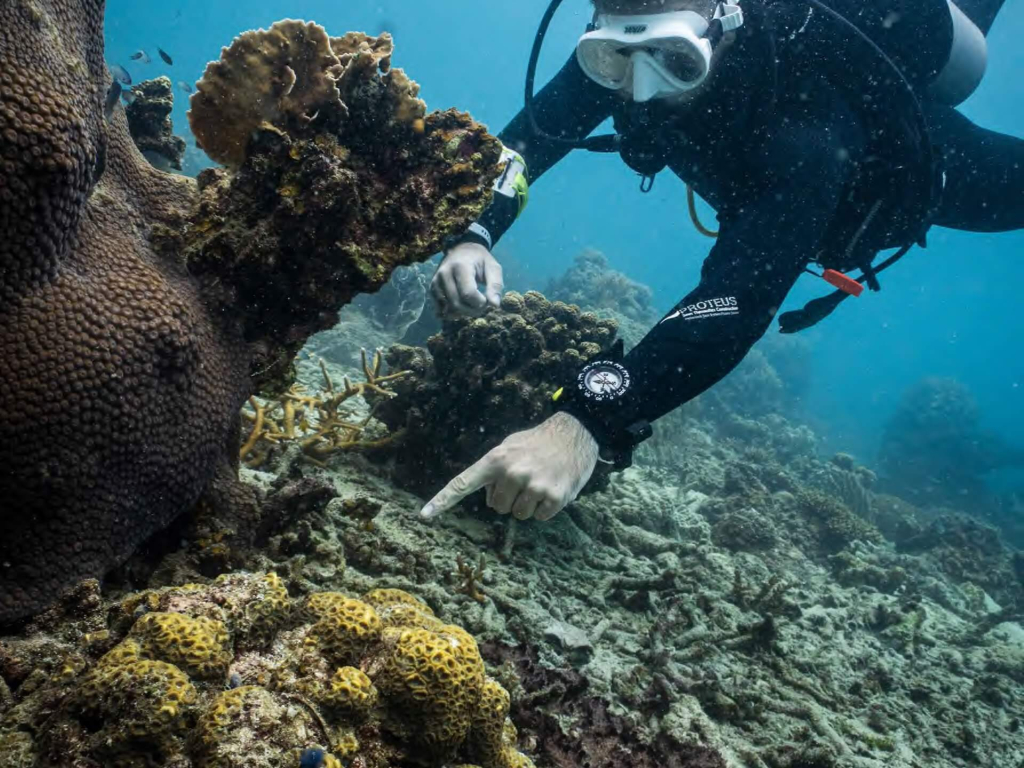
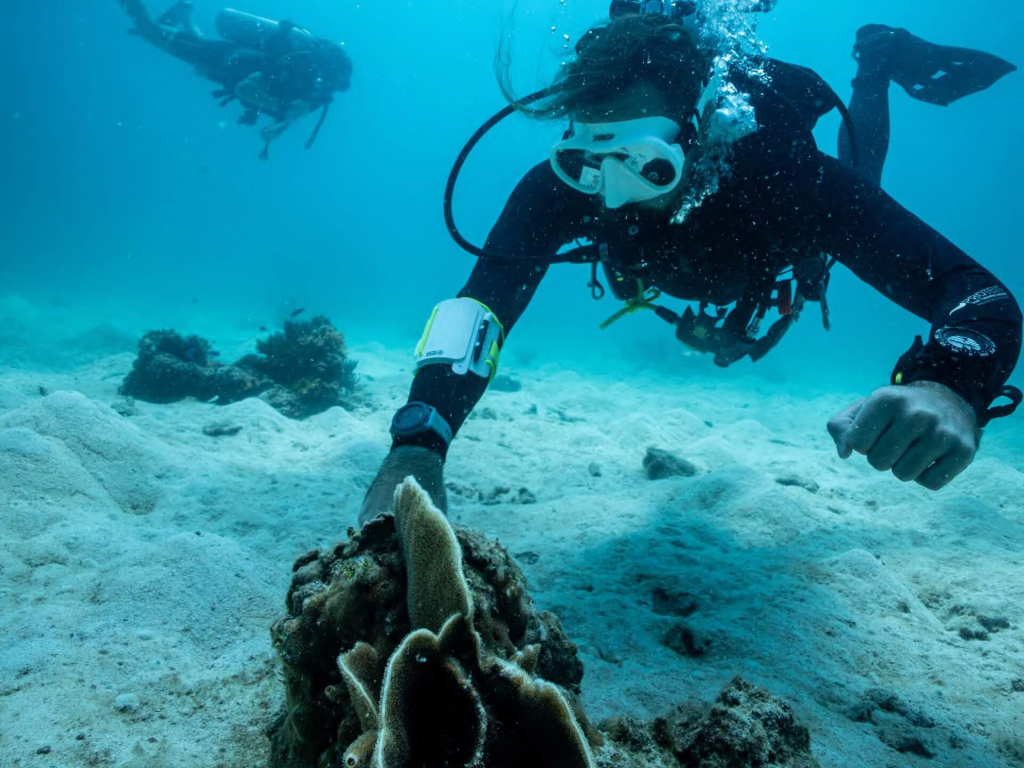
Student identifying coral species underwater during the Coral Taxonomy & Identification course with Black Turtle Conservation in Koh Tao, Thailand.

Lobophyllia is a familiar component of Koh Tao reefs and is commonly encountered at dive sites with stable hard substrate at moderate depths. Its dome-shaped, brightly coloured colonies are typically among the most photographed corals in the area.

Sheltered Bays and Shallow Reef Flats

Sites such as Aow Leuk, Mango Bay, Hin Wong Bay, and Tanote Bay host Lobophyllia colonies on shallow to mid-depth slopes. Some of the largest and most colourful colonies on the island are located at these sheltered sites where stable conditions favour persistent slow growth.

Pinnacle and Offshore Sites

At White Rock, Twins, Chumphon Pinnacle, and Southwest Pinnacle, Lobophyllia colonies occupy depths of 8–18 m on shoulders of granite pinnacles. Pinnacle colonies tend to be smaller than those of sheltered bays but are well-lit and often display particularly intense colouration.

Mid-Depth Slope Habitats

Lobophyllia is particularly common at intermediate depths between 8 and 15 m on stable slope habitats. The genus tolerates moderately reduced light effectively, allowing it to extend deeper than many fast-growing reef-builders while remaining shallower than the deeper plating and encrusting forms.

Depth Distribution and Site Variation

Lobophyllia is most commonly encountered between 5 and 20 m on Koh Tao, with isolated colonies occasionally observed shallower or deeper. Colony size and morphology vary with depth and light: shallow colonies tend toward more compact dome forms, while deeper colonies may display flatter, more plate-like profiles to maximise light interception.

Environmental Thresholds: Conditions for Optimal Growth

Lobophyllia occupies a moderate, stable environmental envelope and is generally considered one of the more resilient large-polyp stony corals, although severe thermal events still cause substantial mortality.

Optimal Parameters

  • Light Intensity: moderate to moderately high, performing well at 5–18 m on Koh Tao slopes.
  • Water Movement: tolerates a range of flow conditions; avoids high-surge zones that may damage thick fleshy tissues.
  • Temperature Range: 24–30°C, with stress responses triggered by prolonged exposure above 30–31°C.
  • Salinity: stable marine conditions of 33–35 ppt; vulnerable to freshwater pulses from heavy monsoon runoff.
  • Substrate: stable hard substrate, often on horizontal or gently sloping reef-rock surfaces.

Stress Responses on Koh Tao

Lobophyllia can bleach during severe marine heatwaves, with symbionts expelled from the thick tissue layer leading to a paled or fully white appearance. The thick tissue and energy reserves provide some buffering, but extended bleaching events can still cause significant mortality across affected colonies.

Sedimentation, freshwater runoff, and reduced light penetration following heavy monsoon rains compound thermal stress. Colonies in nearshore settings with heavy sediment loads show clearer stress responses than those at offshore pinnacle sites, although recent regional events have caused widespread declines across all habitats.

Vulnerability Profile

Marine researcher documenting coral species variations during the Advanced Coral Taxonomy course at Black Turtle Conservation, Koh Tao, Thailand.
Diver recording fine-scale coral identification data during the Advanced Coral Taxonomy and Marine Conservation course at Black Turtle Conservation, Koh Tao, Thailand.
Healthy coral reef ecosystem with diverse fish species recorded during coral disease and reef health monitoring in Koh Tao, Thailand.

Lobophyllia species range from Least Concern to Near Threatened on the IUCN Red List, with none currently in the higher-threat categories. The genus is also covered under CITES Appendix II, which has regulated international trade in scleractinian corals since 1990. Wild collection for the ornamental coral trade also adds local pressure in some parts of the genus’s range.

Major Threats

  • Coral Bleaching: bleaching during severe marine heatwaves, with thick tissue providing some buffering but not full protection.
  • Wild Collection: harvesting for the ornamental coral trade adds local pressure in some parts of the genus’s range, particularly for the most brightly coloured colonies.
  • Ocean Acidification: progressive reduction in calcification efficiency as aragonite saturation state declines.
  • Disease Susceptibility: thick fleshy tissues are vulnerable to brown band disease and rapid tissue necrosis under thermal stress.
  • Local Anthropogenic Impacts: anchoring, fin damage, and ghost fishing gear in zones where colonies are accessible to recreational diving.

On Koh Tao, Lobophyllia is treated as a moderately resilient reference taxon for tracking large-polyp coral assemblages. Its persistence at intermediate depths makes it a useful indicator for habitat conditions on stable slope reefs, and changes in colony numbers over time provide insight into long-term reef health trends.

Black Turtle Conservation includes Lobophyllia in ongoing reef monitoring and uses the genus as part of broader assessments of large-polyp coral diversity around the island.

How to Identify Lobophyllia Coral

The defining features of Lobophyllia in the field are the massive dome-shaped colony form, the large fleshy polyps with uniserial corallites in flabello-meandroid valleys (or, in former Symphyllia forms, more meandroid arrangements), and the often vivid colouration of healthy colonies.

Marine biology student identifying coral genera as part of the Coral Taxonomy and Identification course at Black Turtle Conservation, Koh Tao, Thailand.
Marine researcher documenting coral species variations during the Advanced Coral Taxonomy course at Black Turtle Conservation, Koh Tao, Thailand.
Diver recording fine-scale coral identification data during the Advanced Coral Taxonomy and Marine Conservation course at Black Turtle Conservation, Koh Tao, Thailand.

Key Identification Features

  • Colony Form: dome-shaped to massive, with discrete fleshy lobes or meandroid valleys depending on species.
  • Corallites: uniserial, large, with toothed septa and prominent columellae visible when polyps retract.
  • Polyp Size: large fleshy polyps, often 2–4 cm across when expanded.
  • Coloration: highly variable; cream, brown, green, blue, red, orange, often with contrasting valley colours.
  • Tissue: notably thick and fleshy, providing the genus’s characteristic plump appearance.

Distinguishing from Similar Genera

Acanthastrea (also in Lobophylliidae) typically forms more encrusting colonies with smaller, more clearly separate corallites and concentric ring patterns visible on the corallite walls. Echinophyllia and Oxypora form thinner plating or laminar colonies with raised corallites projecting above a flatter base, distinguishing them from the massive dome form of Lobophyllia.

Goniastrea and Platygyra, both in Merulinidae, also produce meandroid valley forms but have thinner walls and more uniform paliform structures, lacking the thick fleshy tissue and large polyp size that define Lobophyllia. Field experience comparing these genera at multiple sites is the standard taxonomy exercise during Black Turtle Conservation training.

Mastering Lobophyllia Identification with Black Turtle Conservation

Healthy coral reef ecosystem with diverse fish species recorded during coral disease and reef health monitoring in Koh Tao, Thailand.

At Black Turtle Conservation we treat reliable Lobophyllia identification as essential for monitoring large-polyp coral assemblages on Koh Tao. Because the genus has been substantially broadened by recent molecular revision, accurate field recognition of all the morphological forms now included within Lobophyllia is critical for consistent long-term monitoring and for tracking community-level changes in slow-growing LPS coral diversity.

Our Training Approach: From Theory to Survey

Marine conservation diver monitoring coral growth and fish populations on an artificial reef at Black Turtle Conservation, Koh Tao.

Our Coral Taxonomy and Identification training addresses Lobophyllia through a structured, progressive sequence designed to build confident in-water surveyors capable of recognising the genus across its full morphological range.

  • Classroom Theory: students learn scleractinian coral morphology, and the contrast in visual identification with other hard corals such as Acanthastrea, Echinophyllia, Goniastrea, and Platygyra.
  • In-Water Practice: guided dives at Aow Leuk, Mango Bay, Twins, and Chumphon Pinnacle, where Lobophyllia colonies of varying form and colour are compared in situ.
  • Applied Monitoring: participation in Ecological Monitoring Program surveys, where Lobophyllia presence, colony size, condition, and bleaching status are recorded as priority data.
  • Comparative Identification: side-by-side comparison with related S and meandroid Merulinidae to consolidate genus-level recognition skills.

Graduates leave with the practical ability to identify Lobophyllia at genus level under field conditions and to record its presence and condition reliably as part of long-term reef monitoring around Koh Tao.

Frequently Asked Questions

What was the 2016 Lobophyllia revision?

Arrigoni and colleagues (2016) demonstrated through molecular phylogenetic work that the formerly separate genera Symphyllia, Australomussa, and Parascolymia all nest within Lobophyllia. As a result, all three genera were synonymised into Lobophyllia. The current circumscription of Lobophyllia therefore contains a much wider range of growth forms than the genus included before this revision.

How do I distinguish Lobophyllia from Acanthastrea?

Both genera belong to Lobophylliidae, but Lobophyllia produces dome-shaped to massive colonies with discrete fleshy lobes or meandroid valleys, while Acanthastrea typically forms more encrusting colonies with smaller, clearly separate corallites and concentric ring patterns visible on the corallite walls. Field experience with both genera at multiple sites is the standard taxonomy exercise during Black Turtle Conservation training.

Why are Lobophyllia colonies so colourful?

The bright colours seen on Lobophyllia colonies result from a combination of pigments produced by symbiotic dinoflagellates and host-produced fluorescent proteins in the coral tissue. The thick fleshy tissue layer holds high densities of zooxanthellae, while the host fluorescent proteins serve various functions including photoprotection and possibly visual signalling. Bright colours are particularly intense at well-lit sites with stable conditions.

How long do Lobophyllia colonies live?

Lobophyllia colonies are slow-growing but very persistent. Mature colonies on Koh Tao typically reach 0.3 to 1 m across, with the largest examples occasionally exceeding 1.5 m at sheltered sites. Although growth is slow relative to fast-branching genera, individual colonies persist for many decades, making the genus an important long-term reef anchor in slope habitats.

Are sweeper tentacles found in Lobophyllia?

Yes. Some Lobophyllia species produce extended sweeper tentacles that are longer and more heavily armed than normal feeding tentacles. These sweeper tentacles are deployed to engage in chemical and mechanical defence against neighbouring corals competing for space. The aggressive territorial behaviour helps Lobophyllia maintain its position in space-limited reef environments.

External Link Citations and References

Veron, J.E.N. (2000). Corals of the World. Australian Institute of Marine Science.

World Register of Marine Species (WoRMS): Lobophyllia de Blainville, 1830.

IUCN Red List of Threatened Species: Lobophyllia entries.

Department of Marine and Coastal Resources (DMCR), Thailand: Reef monitoring reports.

Black Turtle Conservation: Coral conservation, monitoring and restoration on Koh Tao.