Galaxea is a genus of stony corals in the family Euphylliidae, characterised by phaceloid colonies of separate cylindrical corallites topped with crowns of slender, blade-like septa and tentacles that often bear distinctive white tips. The genus was described by Oken in 1815 and contains around six currently accepted species across the tropical Indo-Pacific, with Galaxea fascicularis as the most widespread and recognisable form.

Galaxea fascicularis has emerged as one of the most important model coral species in scientific research, used widely in studies of coral calcification, symbiosis, and thermal stress. Annotated draft genomes have been produced for the species, and its tolerance to a wide range of conditions has supported a substantial body of laboratory and field research on its biology. The species is also notable for being largely unaffected by bleaching in field conditions, contributing to its expanding research importance.

Around Koh Tao, Galaxea is moderately common at slope and pinnacle sites, where its phaceloid colonies of blade-tentacled polyps make it one of the more visually distinctive coral genera. This guide explores the morphology, feeding strategy, distribution, environmental requirements, vulnerability profile, field identification, and conservation training opportunities offered by Black Turtle Conservation.

Common Names: Crystal Coral, Star Coral, Tooth Coral, Galaxy Coral

Family: Euphylliidae

Order: Scleractinia (Stony Corals)

Subclass: Hexacorallia | Class: Anthozoa | Phylum: Cnidaria

Learn About Galaxea Coral Genus

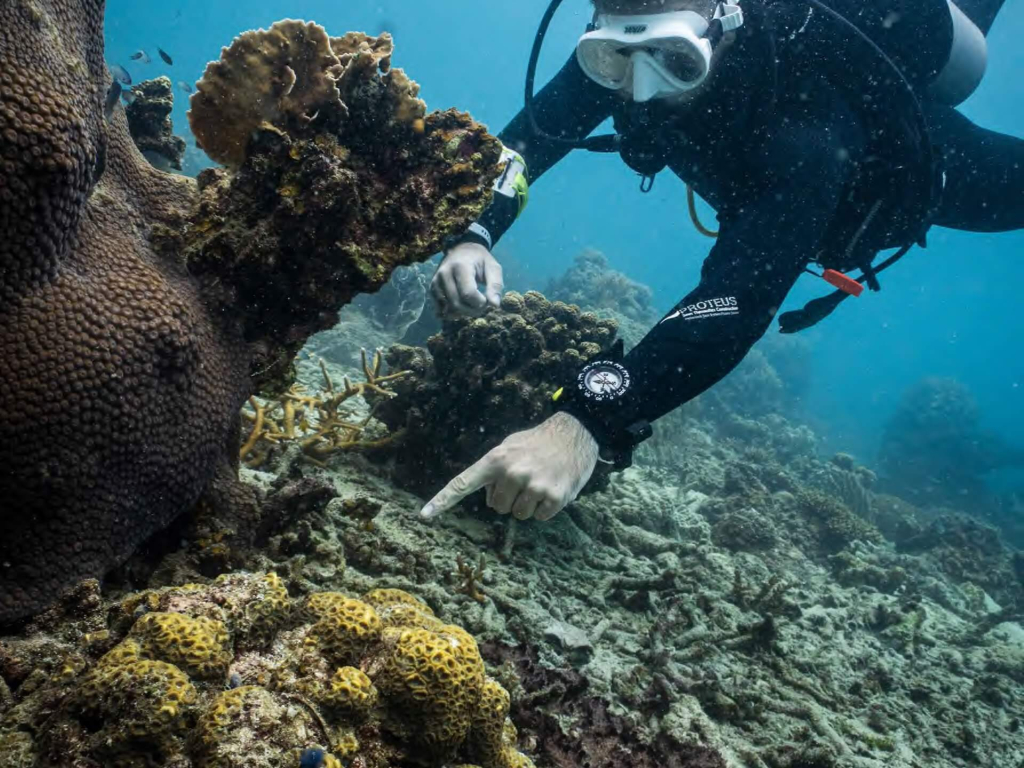
General coral and reef imagery from our existing library.

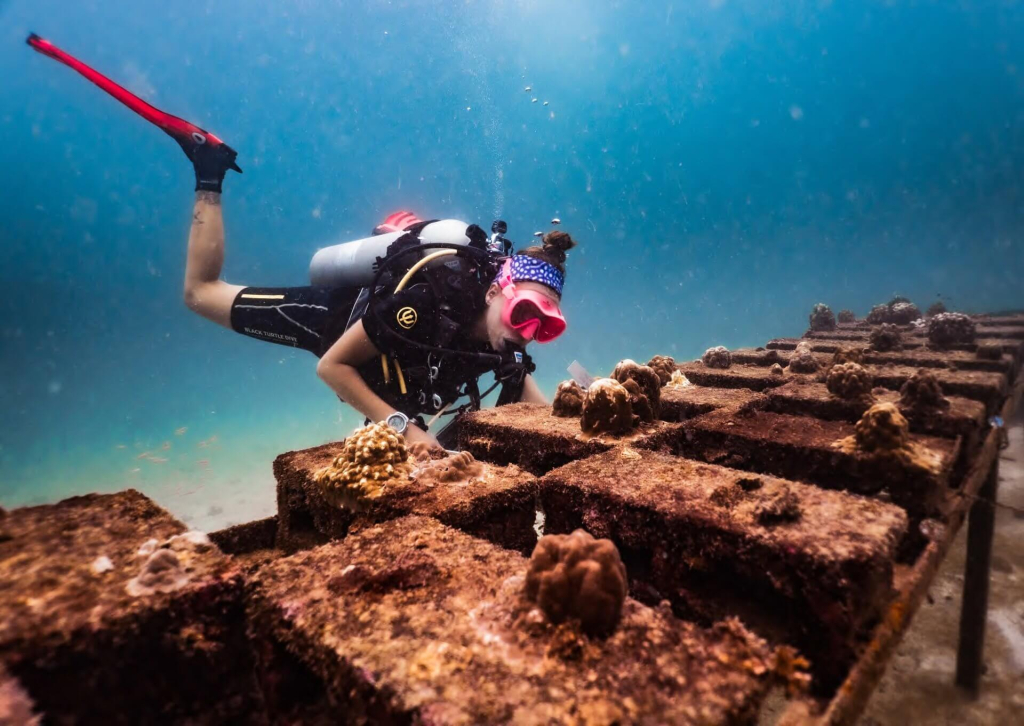
Marine conservation diver monitoring coral growth and fish populations on an artificial reef at Black Turtle Conservation, Koh Tao.
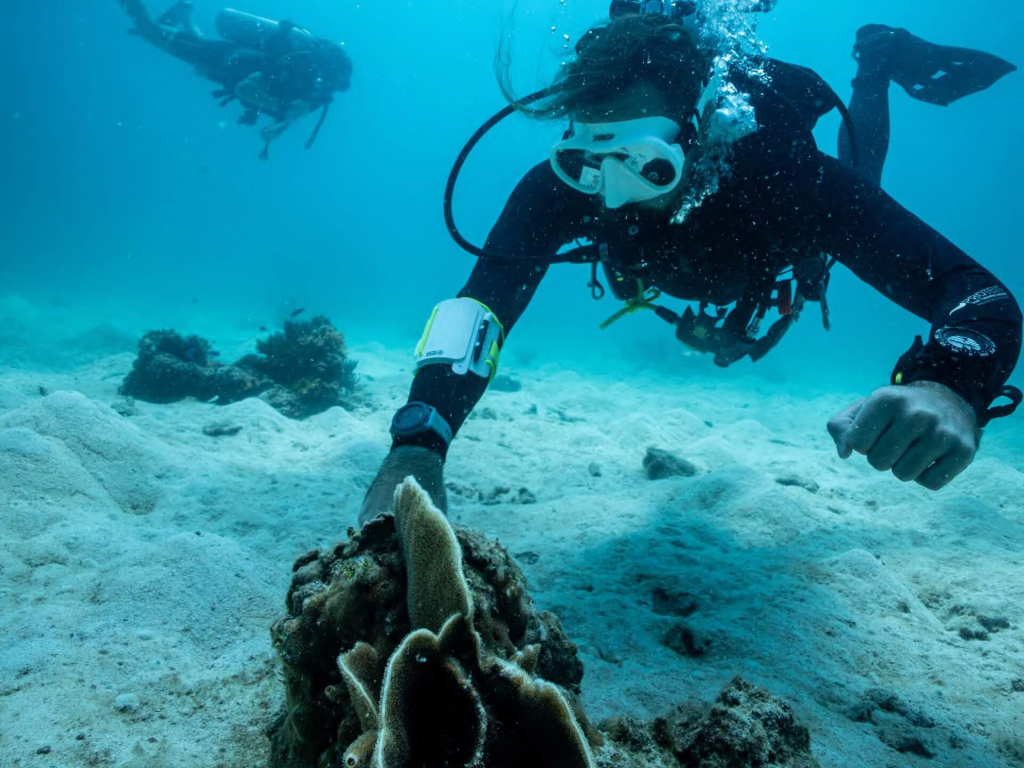
Student identifying coral species underwater during the Coral Taxonomy & Identification course with Black Turtle Conservation in Koh Tao, Thailand.
Marine researcher documenting coral species variations during the Advanced Coral Taxonomy course at Black Turtle Conservation, Koh Tao, Thailand.

Overview of the Genus

Galaxea is one of the most distinctive Euphylliidae genera, sharing the family with Euphyllia, Fimbriaphyllia, and Plerogyra. Its colonies are phaceloid, with separate cylindrical corallites that may be packed densely or spaced apart depending on species and environment. Each corallite supports a single polyp with a crown of slender, blade-like tentacles, often bearing distinctive white or pale tips that give the genus its common names.

The genus has become particularly important in coral research, with Galaxea fascicularis serving as a model organism for studies of coral calcification, symbiosis, and stress responses. The species is largely unaffected by bleaching in field conditions, providing useful baseline data for thermal stress research and contributing to its expanding role as a reference taxon.

On Koh Tao, Galaxea is regularly encountered at slope habitats and is a familiar component of the local coral community. Its blade-tipped tentacles make colonies recognisable to trained observers.

Global and Local Importance

Globally, Galaxea fascicularis is widespread across the tropical Indo-Pacific from the Red Sea and East Africa through Southeast Asia and out to the Pacific Islands. The genus is moderately common across most of this range and contributes meaningfully to slope-zone coral diversity.

On Koh Tao, Galaxea contributes phaceloid architectural variety to slope habitats and serves as a useful reference taxon for understanding the Euphylliidae family. Its persistence under conditions that stress more sensitive genera adds to its monitoring value as an indicator of moderate environmental conditions.

Reef-Building Contribution and Habitat Provision

Galaxea colonies, although individually slow-growing, contribute substantial three-dimensional structure to slope habitats through their phaceloid architecture. The cylindrical corallites and the spaces between them create microhabitat for cryptobenthic invertebrates and small reef fish.

The blade-like tentacles of Galaxea are also unusually well-armed compared with most reef-builders, and the genus is known to produce extended sweeper tentacles that can damage neighbouring corals and other sessile organisms. This aggressive territorial behaviour helps Galaxea maintain its position in space-limited reef environments.

Growth Forms and Colony Variation

Galaxea fascicularis, the most common species in the genus and around Koh Tao, often produces dome-shaped massive phaceloid colonies. Individual cylindrical corallites are typically 5–10 mm in diameter and several centimetres long, packed together into colonies that can reach 80 cm or more across.

Other species, such as Galaxea astreata and Galaxea horrescens, produce more open phaceloid colonies with greater spacing between individual corallites. Colour varies considerably across colonies, ranging from green and brown to grey, with the contrasting white tentacle tips giving the colony a sparkle-like appearance under good visibility.

Evolutionary and Taxonomic Notes

Galaxea is part of the family Euphylliidae alongside Euphyllia, Fimbriaphyllia, and Plerogyra. Recent molecular work has confirmed the genus's placement within Euphylliidae, although its phaceloid form and blade-like tentacles distinguish it visually from the meandroid valleys of Fimbriaphyllia and the bubble-vesicled Plerogyra. The genus has remained taxonomically stable despite the substantial revisions affecting other Euphylliidae genera in recent years.
Morphology

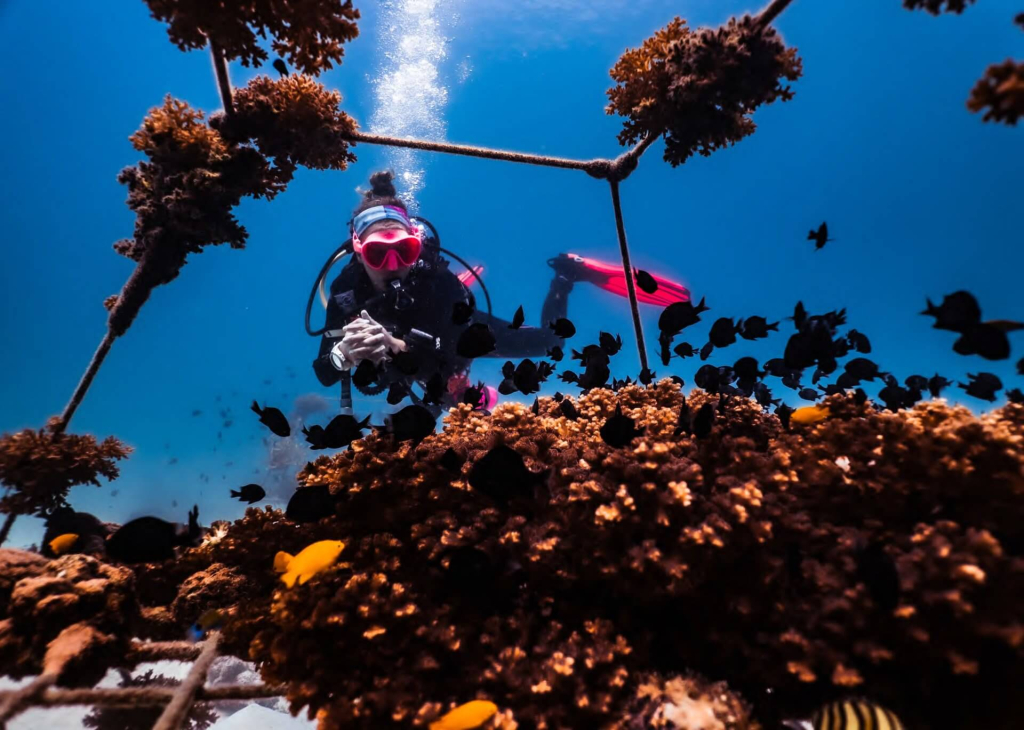
Marine conservation diver monitoring coral growth and fish populations on an artificial reef at Black Turtle Conservation, Koh Tao.
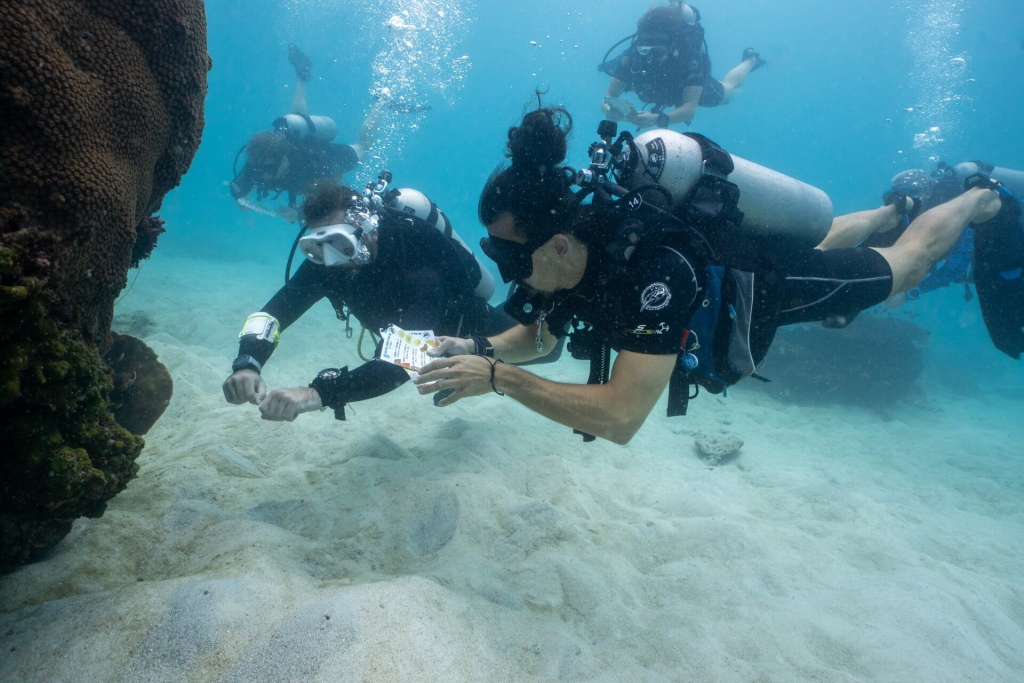
Student identifying coral species underwater during the Coral Taxonomy & Identification course with Black Turtle Conservation in Koh Tao, Thailand.
Marine researcher documenting coral species variations during the Advanced Coral Taxonomy course at Black Turtle Conservation, Koh Tao, Thailand.

Colony Structure and Skeletal Features

Galaxea colonies are phaceloid, meaning individual corallites stand separately upright, packed together but each retaining its own structurally distinct wall. Galaxea fascicularis produces tightly packed phaceloid colonies, while Galaxea astreata and other species produce more open colonies with greater spacing between corallites.

Corallites are cylindrical and typically 5–10 mm in diameter, with septa projecting upward from the corallite walls and converging at a central columella. The septal architecture is well-developed, providing structural support for the upright corallites and reflecting the genus's position within Euphylliidae.

Polyps and Tissue Characteristics

Each Galaxea corallite supports a single polyp with a crown of slender, blade-like tentacles surrounding the central oral disc. The tentacles are typically 1–2 cm long and often bear distinctive white or pale tips, which serve as nematocyst batteries armed with effective stinging cells.

The polyps remain partially extended during the day under good conditions, making colonies clearly visible and recognisable in the field. Sweeper tentacles, longer and more heavily armed than normal feeding tentacles, may be deployed to damage neighbouring corals and clear space for colony expansion.

Skeletal Microstructure and Calcification

Galaxea skeletons are aragonitic and include a characteristic blistery coenosteum between the cylindrical corallites, which is a shared feature with other Euphylliidae genera. The corals are described as light-weight relative to massive faviid-type corals, despite their dome-shaped colony form.

Calcification rates are moderate, with growth occurring through both polyp extension and asexual budding to produce new corallites within the colony. Galaxea fascicularis has been used extensively in calcification research because of its tractability in laboratory settings and its useful intermediate position between fast-growing branching corals and slow-growing massive corals.

Size, Growth, and Defensive Adaptations

On Koh Tao, mature Galaxea colonies typically reach 30–60 cm across, with the largest examples occasionally exceeding 80 cm at sheltered sites. Growth is moderate by reef-coral standards, supporting persistent slow expansion over multi-year timescales.

Defensive adaptations include nematocyst-armed blade tentacles, sweeper tentacles for inter-colony chemical warfare, mucus production, and the deep cylindrical corallite cups that allow polyps to retract substantially below the colony surface. The genus is particularly aggressive in space competition compared with most reef-builders.

Dual-Feeding Strategy: How Galaxea Feeds and Thrives

Galaxea is a zooxanthellate mixotroph that combines photosynthesis carried out by symbiotic dinoflagellates with active heterotrophic capture of zooplankton. The well-armed sweeper tentacles give the genus an unusually effective heterotrophic capacity for its colony size.

1. Autotrophy: Photosynthate from Symbionts

Symbiotic dinoflagellates of the family Symbiodiniaceae living within the gastrodermis carry out photosynthesis and translocate organic compounds to the coral host. Galaxea fascicularis has been shown to associate with a flexible range of Symbiodiniaceae lineages, contributing to the species's tolerance for variable conditions.

This pathway supplies a substantial fraction of the colony's daily carbon budget under favourable conditions, supporting the moderate but persistent calcification that produces the genus's phaceloid architecture over multi-year timescales.

Galaxea polyps extend during both day and night to capture zooplankton drifting past on currents. The blade-like tentacles armed with nematocyst-rich tips are unusually effective at capture for a colony coral, allowing Galaxea to obtain substantial heterotrophic input even in moderately oligotrophic conditions.

Heterotrophic input supplies essential nitrogen, phosphorus, and trace elements, supporting the persistent calcification and the well-developed nematocyst defences that define the genus's competitive strategy.

The combination of efficient photosynthesis, flexible symbiont communities, effective heterotrophy, and aggressive territorial behaviour has given Galaxea fascicularis notable resilience to environmental disturbance. The species is described in the research literature as largely unaffected by bleaching under field conditions, although severe events can still cause some mortality.

Where to Find Galaxea Around Koh Tao and at Which Dive Sites

Marine biology student identifying coral genera as part of the Coral Taxonomy and Identification course at Black Turtle Conservation, Koh Tao, Thailand.
Diver restoring corals by attaching fragments on artificial reef structures during the Coral Restoration course with Black Turtle Conservation in Koh Tao, Thailand.
Marine conservation diver monitoring coral growth and fish populations on an artificial reef at Black Turtle Conservation, Koh Tao.

Galaxea is common on Koh Tao reefs and is most reliably encountered at slope habitats with stable hard substrate and moderate flow. Its phaceloid colonies of blade-tipped polyps make it readily recognisable when present. Galaxea is particularly abundant in sloped areas with high current, the large “field” of Galaxea at Shark Island is a good example of this characteristic.

Sheltered Bays and Mid-Depth Slopes

Sites such as Aow Leuk, Mango Bay, Hin Wong Bay, and Tanote Bay host Galaxea colonies on shallow to mid-depth slopes. The most commonly encountered form at these sites is dome-shaped Galaxea fascicularis, with colonies often visible from a distance because of their distinctive phaceloid surface.

Pinnacle and Offshore Sites

At White Rock, Twins, Chumphon Pinnacle, and Southwest Pinnacle, Galaxea occupies depths of 8–18 m on shoulders and slopes of granite pinnacles. Pinnacle colonies tend to be smaller than those of sheltered bays but persistent and well-defended in stable habitat conditions.

Mid-Depth Slope Habitats

Galaxea is particularly common at intermediate depths between 5 and 15 m on stable slope habitats. The genus tolerates moderately variable conditions effectively, including occasional sediment loading, allowing it to persist where some more sensitive genera struggle.

Depth Distribution and Site Variation

Galaxea is most commonly encountered between 4 and 18 m on Koh Tao, with isolated colonies extending to 25 m on well-lit slopes. Colony size and morphology vary with depth and flow, with denser phaceloid colonies favouring shallower sites and more open colonies appearing at greater depths or in zones of stronger flow.

Environmental Thresholds: Conditions for Optimal Growth

Galaxea occupies a moderately broad environmental envelope and is generally regarded as one of the more environmentally tolerant Euphylliidae genera, contributing to its persistent presence on Koh Tao reefs.

Optimal Parameters

  • Light Intensity: moderate to high, performing well at 4–18 m on Koh Tao slopes.
  • Water Movement: tolerates a range of flow conditions, from sheltered bays to current-swept pinnacles.
  • Temperature Range: 24–30°C, with substantially better tolerance for elevated temperatures than many reef-building corals.
  • Salinity: stable marine conditions of 33–35 ppt; vulnerable to freshwater pulses during heavy monsoon runoff.
  • Substrate: stable hard substrate, particularly on slope and pinnacle base habitats.

Stress Responses on Koh Tao

Galaxea fascicularis is described in the research literature as largely unaffected by bleaching under typical field conditions, although severe and prolonged thermal stress can still cause partial bleaching and some mortality. Recovery is moderate, with colonies regaining colour and tissue integrity over weeks to months if conditions stabilise.

Sedimentation, freshwater runoff, and reduced light penetration following heavy monsoon rains compound thermal stress, but Galaxea generally tolerates these stressors better than fast-growing branching genera. The genus's flexible symbiosis and effective heterotrophy contribute to this resilience.

Vulnerability Profile

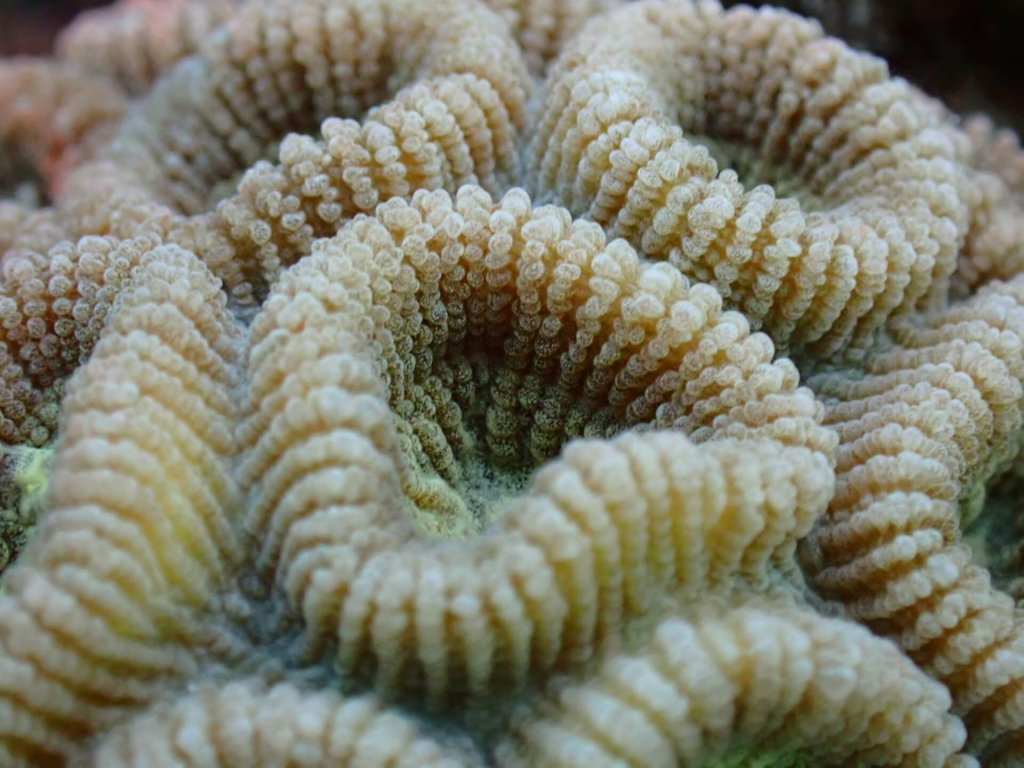
Close-up of a healthy brain coral colony photographed during the Ecological Monitoring Program (EMP) with Black Turtle Conservation in Koh Tao, Thailand.
Marine conservation diver monitoring coral growth and fish populations on an artificial reef at Black Turtle Conservation, Koh Tao.
Student identifying coral species underwater during the Coral Taxonomy & Identification course with Black Turtle Conservation in Koh Tao, Thailand.

Galaxea fascicularis is currently listed as Near Threatened on the IUCN Red List, reflecting concerns about climate-driven habitat decline despite the species's individual robustness. The genus is also covered under CITES Appendix II, which has regulated international trade in scleractinian corals since 1990.

Major Threats

  • Coral Bleaching: bleaching during severe marine heatwaves, although tolerance is greater than most reef-building corals.
  • Wild Collection: harvesting for the ornamental coral trade adds local pressure in some parts of the genus’s range due to its photogenic appearance.
  • Ocean Acidification: progressive reduction in calcification rates as aragonite saturation state declines.
  • Disease Susceptibility: occasional vulnerability to coral diseases under thermal stress, though less severely than many reef-builders.
  • Local Anthropogenic Impacts: anchoring, fin damage, and ghost fishing gear in zones where colonies are accessible.

On Koh Tao, Galaxea is treated as a moderately resilient reference taxon for tracking phaceloid coral assemblages. The genus's tolerance for variable conditions and its role as a research model species add to its monitoring value.

Black Turtle Conservation includes Galaxea in slope-zone surveys and uses sightings to refine site-level biodiversity inventories around the island.

How to Identify Galaxea Coral

The defining features of Galaxea in the field are the phaceloid arrangement of separate cylindrical corallites, the crown of slender blade-like tentacles around each polyp, and the often distinctive white or pale tentacle tips that give the genus its common names.

Marine biology student identifying coral genera as part of the Coral Taxonomy and Identification course at Black Turtle Conservation, Koh Tao, Thailand.
Diver restoring corals by attaching fragments on artificial reef structures during the Coral Restoration course with Black Turtle Conservation in Koh Tao, Thailand.
Close-up of a healthy brain coral colony photographed during the Ecological Monitoring Program (EMP) with Black Turtle Conservation in Koh Tao, Thailand.

Key Identification Features

  • Colony Form: phaceloid, dome-shaped to massive, with separate cylindrical corallites packed together.
  • Corallites: cylindrical, 5–10 mm in diameter, with well-developed septa converging at a central columella.
  • Tentacles: slender, blade-like, typically 1–2 cm long, with distinctive white or pale tips.
  • Coloration: green, brown, or grey body colour with contrasting white tentacle tips.
  • Polyp Behaviour: polyps partially extended during day, fully extended at night.

Distinguishing from Similar Genera

Fimbriaphyllia (formerly placed in Euphyllia) produces flabello-meandroid valleys with shorter, more bubble-shaped polyps rather than the discrete phaceloid corallites and blade tentacles of Galaxea. Plerogyra produces large translucent vesicles or bubbles instead of polyps with extended tentacles.

Tubastraea and Cladopsammia (Dendrophylliidae) produce phaceloid colonies superficially resembling Galaxea but lack zooxanthellae and the blade-tipped tentacles, instead having shorter feathery tentacles around brightly coloured oral discs. The combination of phaceloid architecture, blade tentacles, and white tips makes Galaxea immediately recognisable to trained reef surveyors.

Mastering Galaxea Identification with Black Turtle Conservation

Student identifying coral species underwater during the Coral Taxonomy & Identification course with Black Turtle Conservation in Koh Tao, Thailand.

At Black Turtle Conservation we treat reliable Galaxea identification as essential for understanding the diverse Euphylliidae family on Koh Tao. Because Galaxea fascicularis serves as a model organism in international coral research, accurate field recognition of the genus links our local taxonomy training to broader scientific work and helps students contextualise their identification skills within the global coral biology research community.

Our Training Approach: From Theory to Survey

Marine researcher documenting coral species variations during the Advanced Coral Taxonomy course at Black Turtle Conservation, Koh Tao, Thailand.
Marine biology student identifying coral genera as part of the Coral Taxonomy and Identification course at Black Turtle Conservation, Koh Tao, Thailand.

Our Coral Taxonomy and Identification training addresses Galaxea through a structured, progressive sequence designed to build confident in-water surveyors familiar with the diagnostic features of the genus.

  • Classroom Theory: students learn identification & morphology, the diagnostic blade tentacles, and the contrast with Fimbriaphyllia, Plerogyra, and Hydnophora.
  • In-Water Practice: guided dives at any dive site around Koh Tao (Aow Leuk, Mango Bay, Twins, and even Chumphon Pinnacle) where Galaxea colonies of varying size and form are located and identified.
  • Applied Monitoring: participation in slope-zone surveys, where Galaxea presence, colony condition, and territorial behaviour are recorded as part of broader assessments.
  • Comparative Identification: side-by-side comparison with related Scleractinian corals to consolidate genus-level recognition skills.

Graduates leave with the practical ability to identify Galaxea at genus level under field conditions and to record its presence and condition reliably as part of long-term reef monitoring around Koh Tao.

Frequently Asked Questions

Why is Galaxea fascicularis an important coral species?

Galaxea fascicularis is widely used in scleractinian research because of its broad distribution, tractable biology, and tolerance to a range of conditions. An annotated draft genome has been produced for the species, and it has been used extensively in studies of coral calcification, symbiosis, and thermal stress. The species's general resilience makes it useful as a baseline reference for thermal stress research.

What are the diagnostic features of Galaxea?

Galaxea is recognised by its phaceloid colonies of separate cylindrical corallites, each topped with a crown of slender blade-like tentacles that often bear distinctive white or pale tips. The combination of phaceloid architecture, blade tentacles, and white tips makes the genus immediately recognisable in the field. Galaxea fascicularis produces tightly packed colonies, while Galaxea astreata produces more open colonies.

Is Galaxea aggressive toward neighbouring corals?

Yes. Galaxea produces sweeper tentacles that are longer and more heavily armed than normal feeding tentacles, and these are deployed to damage neighbouring corals and other sessile organisms competing for space. The genus's territorial behaviour helps it maintain its position in space-limited reef environments despite its modest colony size.

Does Galaxea bleach during marine heatwaves?

Galaxea fascicularis is described in the research literature as largely unaffected by bleaching under typical field conditions, although severe and prolonged thermal stress can still cause partial bleaching and some mortality. The species's flexible association with multiple Symbiodiniaceae lineages and effective heterotrophy contribute to its overall resilience to thermal stress.

How is Galaxea distinguished from Tubastraea?

Both genera produce phaceloid colonies of upright cylindrical corallites, but they belong to different families. Galaxea is in Euphylliidae and is zooxanthellate, with blade-like tentacles bearing distinctive white tips. Tubastraea is in Dendrophylliidae and is azooxanthellate, with bright orange or yellow tentacles around prominently coloured oral discs that extend only at night.

External Link Citations and References

Veron, J.E.N. (2000). Corals of the World. Australian Institute of Marine Science.

World Register of Marine Species (WoRMS): Galaxea Oken, 1815.

IUCN Red List of Threatened Species: Galaxea fascicularis (Near Threatened).

Department of Marine and Coastal Resources (DMCR), Thailand: Reef monitoring reports.

Black Turtle Conservation: Coral conservation, monitoring and restoration on Koh Tao.