Plerogyra is a distinctive genus of stony corals known for its remarkable grape-like or bubble-like vesicles that expand from the colony surface during daylight hours. The genus contains seven currently accepted species across the Indo-Pacific, with Plerogyra sinuosa as the most widely distributed and commonly encountered form. The genus was described by Milne Edwards and Haime in 1848 and was historically placed in the family Caryophylliidae, although its taxonomic position has been progressively revised.

Following the comprehensive Euphylliidae revision by Luzon et al. (2017, 2018), Plerogyra was removed from Euphylliidae and is was formally classified as Scleractinia incertae sedis (uncertain placement) on the WoRMS taxonomic register. This unusual taxonomic status reflected the ongoing debate about the genus’s evolutionary relationships, with molecular and morphological evidence not yet converging on a stable family-level placement. In 2020, Plerogyra is now formally recognised by WoRMS as a member of the Plerogyridae family, Rowlett J. (2020).

Around Koh Tao, Plerogyra is encountered occasionally on shaded slope habitats, where its distinctive grape-like vesicles make individual colonies immediately recognisable when present. This guide explores the morphology, feeding strategy, distribution, environmental requirements, vulnerability profile, field identification, and conservation training opportunities offered by Black Turtle Conservation.

Common Names: Bubble Coral, Grape Coral, Bladder Coral, Pearl Coral

Family: Plerogyridae

Order: Scleractinia (Stony Corals)

Subclass: Hexacorallia | Class: Anthozoa | Phylum: Cnidaria

Learn About Plerogyra Coral Genus

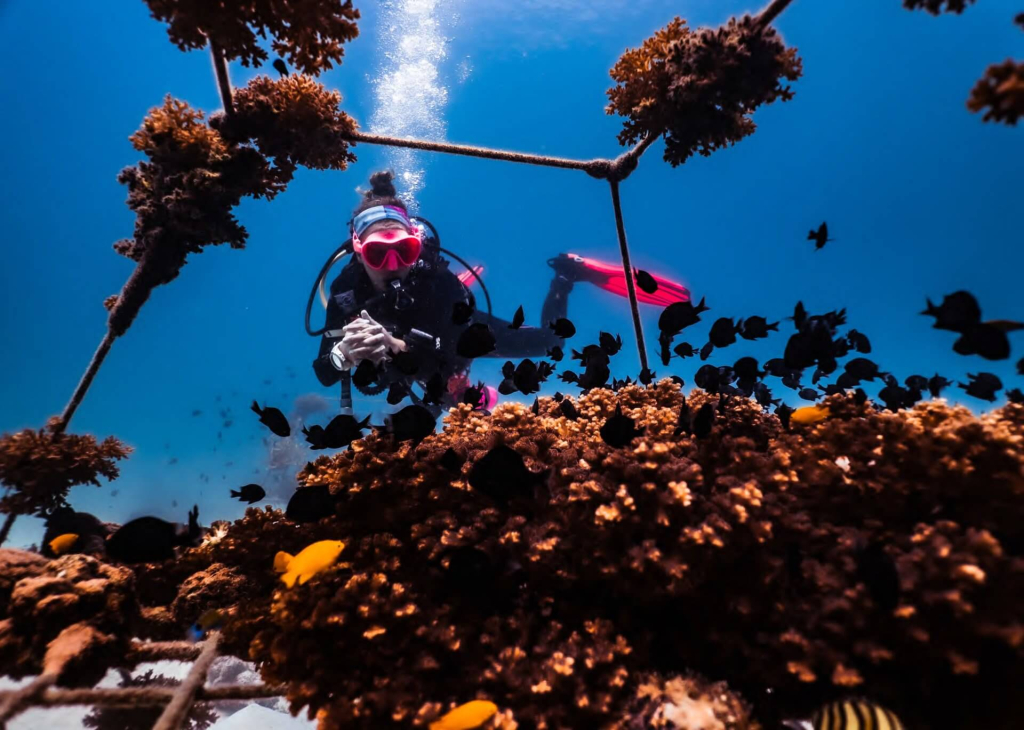
Marine conservation diver monitoring coral growth and fish populations on an artificial reef at Black Turtle Conservation, Koh Tao.
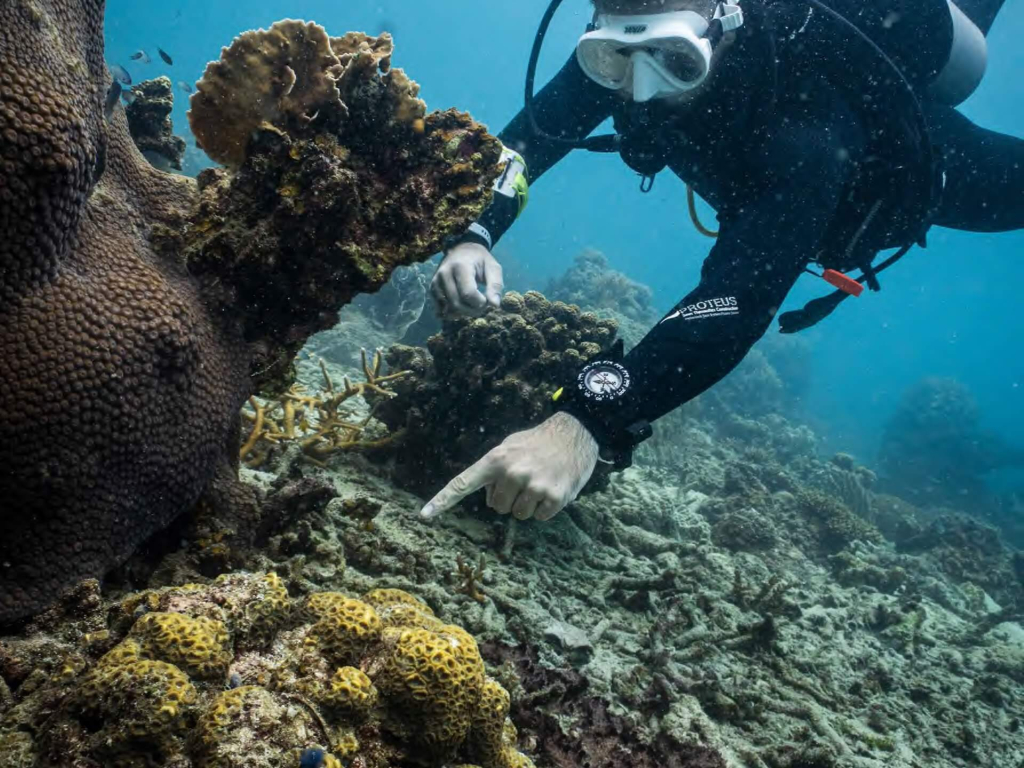
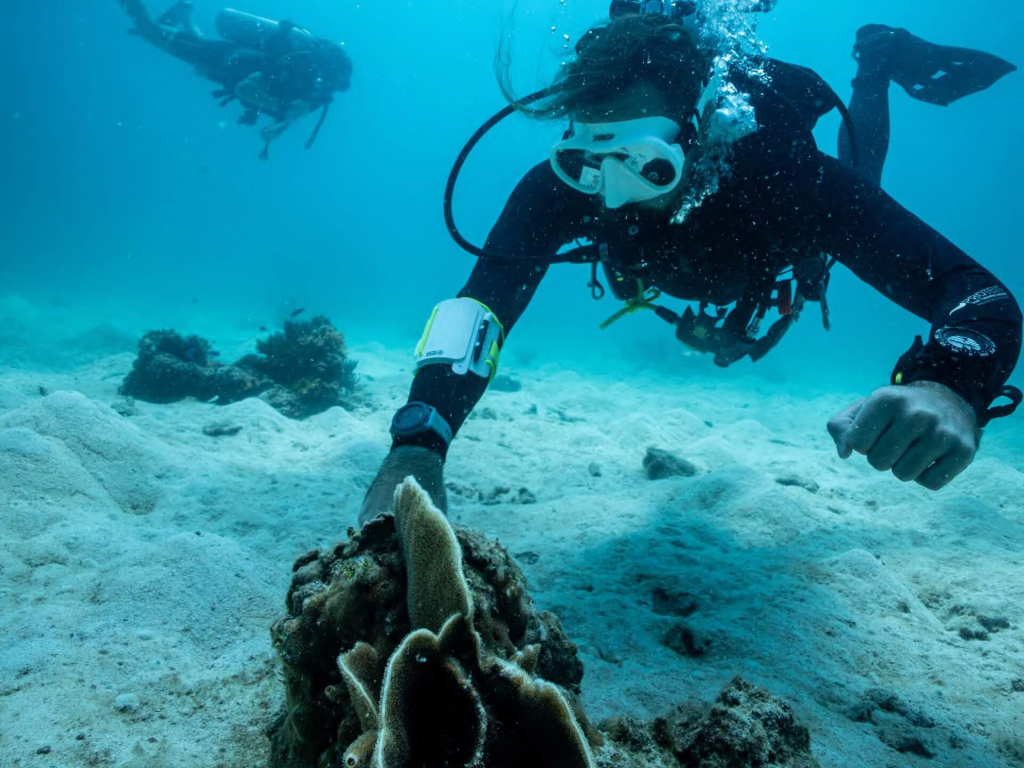
Student identifying coral species underwater during the Coral Taxonomy & Identification course with Black Turtle Conservation in Koh Tao, Thailand.
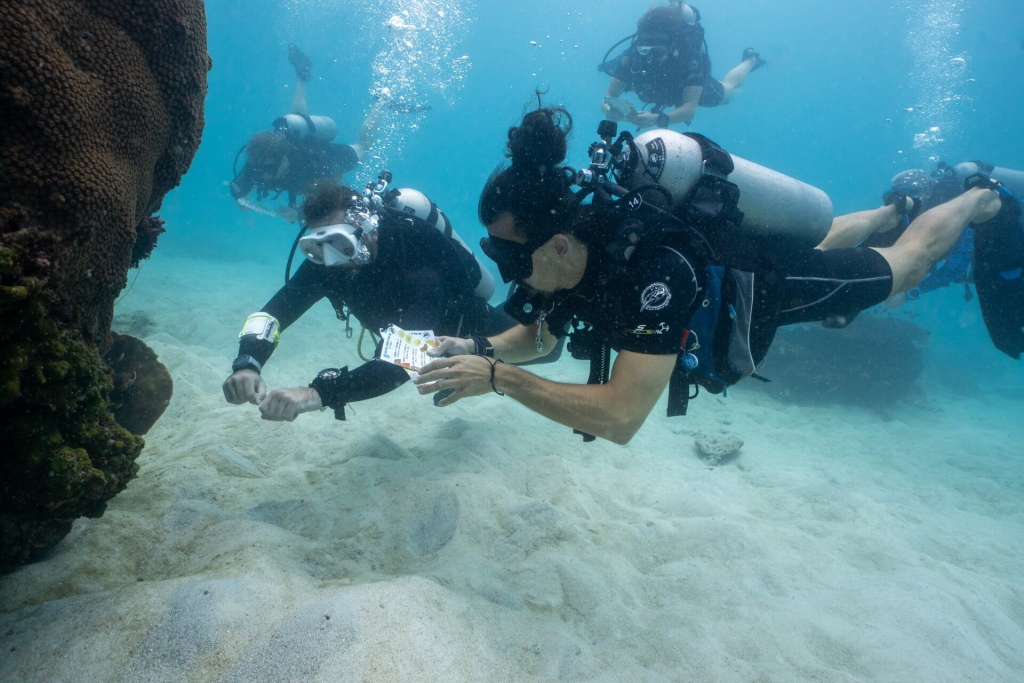
Marine researcher documenting coral species variations during the Advanced Coral Taxonomy course at Black Turtle Conservation, Koh Tao, Thailand.

Overview of the Genus

Plerogyra is one of the most morphologically distinctive scleractinian genera, recognised globally for its remarkable grape-like vesicles that inflate from the colony surface during daylight hours. The vesicles, which can reach 2.5 cm in diameter, are tissue extensions that maximise light interception for photosynthetic productivity and retract at night when the coral extends its tentacles for active feeding.

The genus has a complex taxonomic history. Plerogyra was originally placed in Caryophylliidae and later in Euphylliidae, but the comprehensive 2017–2018 revision of Euphylliidae by Luzon et al. removed Plerogyra (along with Plesiastrea, Physogyra lichtensteni, and Blastomussa wellsi) and reclassified the genus as Scleractinia incertae sedis. The genus’s true family-level position remained under active investigation until 2020 when it was reclassified into the family Plerogyridae.

On Koh Tao, Plerogyra is uncommon but distinctive when present, typically encountered as isolated colonies on shaded slope habitats. The vesicle-covered surface makes the genus immediately recognisable to even relatively inexperienced divers.

Global and Local Importance

Globally, Plerogyra sinuosa ranges from the Red Sea and Madagascar in the western Indian Ocean to Okinawa and the Line Islands in the Pacific. The genus is considered widespread and reasonably common in shallow Indo-Pacific reef environments, although recent decline trends have led to its listing as Near Threatened by IUCN.

On Koh Tao, Plerogyra is uncommon but consistent in its presence on shaded slope habitats. Tracking sightings of the genus contributes to broader assessments of slope-zone reef coral diversity and to documentation of less common but persistent components of the local reef community.

Reef Contribution and Habitat Provision

Plerogyra colonies, although usually modest in size, contribute substantial visual and ecological diversity to slope habitats. The vesicle-covered surface creates microhabitat for very small cryptobenthic invertebrates that take advantage of the protected spaces between vesicles when they are inflated.

The genus is also an aesthetic and educational asset to Koh Tao reefs, with its grape-cluster appearance attracting the attention of divers and photographers and contributing to the recognised visual diversity of the local reef community.

Growth Forms and Colony Variation

Plerogyra sinuosa colonies typically take the form of an inverted cone, with mature colonies sometimes reaching 1 m or more across at favourable sites. Smaller colonies appear as compact clusters of monocentric trochoid corallites, while larger colonies become flabello-meandroid, with corallites arranged in valleys with separate walls.

Plerogyra discus produces similar bubble-covered colonies but with somewhat smaller and less exsert septa. Colour is typically pale cream or beige, with vesicles ranging from white to soft shades of blue, pink, or green depending on the zooxanthellae load and water conditions.

Evolutionary and Taxonomic Notes

The incertae sedis status of Plerogyra is unusual within scleractinian taxonomy and reflected the genuine difficulty of placing the genus within established family boundaries based on current molecular evidence. The genus shares several features with both Euphylliidae and other coral families, but molecular analyses had not yet supported a stable family-level placement. Ongoing genomic work eventually resolved this taxonomic uncertainty, placing the coral in the family Plerogyridae
Morphology

Marine conservation diver monitoring coral growth and fish populations on an artificial reef at Black Turtle Conservation, Koh Tao.
Student identifying coral species underwater during the Coral Taxonomy & Identification course with Black Turtle Conservation in Koh Tao, Thailand.
Marine researcher documenting coral species variations during the Advanced Coral Taxonomy course at Black Turtle Conservation, Koh Tao, Thailand.

Colony Structure and Skeletal Features

Plerogyra colonies are flabello-meandroid in mature forms, with corallite series arranged in elongate valleys with separate walls. Series are not joined laterally to adjacent ones, which is one of the features distinguishing Plerogyra from the morphologically similar Physogyra. Smaller colonies and young series may be monocentric and trochoid, becoming meandroid with growth.

Septa are notably large, sometimes reaching 10 mm radius above the wall, with smooth edges that curve sideways. There is no columella present. Valleys are typically 15–25 mm wide. The skeleton beneath the vesicles can be exposed by gentle disturbance of the colony, although doing so risks damaging the delicate tissues.

Polyps and Tissue Characteristics

Plerogyra polyps are small but produce remarkably large tissue vesicles that inflate from the colony surface during daylight hours, sometimes reaching 2.5 cm in diameter. These vesicles are not the polyps themselves but rather extensions of polyp tissue that serve to maximise light interception and water contact for photosynthesis.

At night, the vesicles retract and the polyps extend short tentacles for active feeding. The vesicles return to inflation as light returns. This day-night cycle of vesicle inflation and retraction is one of the most distinctive behaviours in the entire reef-coral assemblage.

Plerogyra is also the obligate host of the Bubble Coral Shrimp (Vir philippinensis), a small semi-translucent commensal shrimp rarely exceeding 2 cm in length that lives nowhere else and grips the inflated vesicles for shelter and feeding on mucus and trapped particles. The shrimp is easily missed by divers focused on the larger architecture of the colony, and pointing out Vir philippinensis to students is a useful exercise in close-observation skills during taxonomy training.

Skeletal Microstructure and Calcification

Plerogyra skeletons are aragonitic with a light, blistery coenosteum that is similar to that of Euphylliidae genera and is one of the morphological features that historically supported the genus’s earlier inclusion in that family. Calcification rates are slow, supporting the genus’s modest growth.

Like all reef-builders, Plerogyra is sensitive to reductions in seawater carbonate saturation under ocean acidification scenarios. The relatively light skeletal architecture may be particularly vulnerable to weakening under acidified conditions over multi-decade timescales.

Size, Growth, and Defensive Adaptations

On Koh Tao, mature Plerogyra colonies typically reach 30–60 cm across, with rare larger examples occasionally exceeding 80 cm at sheltered sites. Growth is slow but persistent, allowing colonies to expand gradually across favourable substrate over multi-year timescales.

Defensive adaptations include the inflated vesicles themselves, which can deter some predators by their physical bulk and the presence of nematocysts within the tissue. The polyp tentacles, deployed at night, are also armed with nematocysts for active prey capture and for territorial defence against neighbouring corals.

Dual-Feeding Strategy: How Plerogyra Feeds and Thrives

Plerogyra is a zooxanthellate mixotroph that combines photosynthesis carried out by symbiotic dinoflagellates with active heterotrophic capture of zooplankton. The day-night cycle of vesicle inflation and tentacle extension represents one of the most distinctive feeding strategies among reef-building corals.

1. Autotrophy: Daytime Vesicle Inflation

Symbiotic dinoflagellates of the family Symbiodiniaceae living within the gastrodermis carry out photosynthesis and translocate organic compounds to the coral host. The inflated vesicles dramatically increase the colony’s effective light-capturing surface area during daylight hours, supporting reasonable photosynthetic productivity even in shaded slope habitats.

This pathway typically supplies up to 90% of the colony’s energy needs under favourable light conditions, with the vesicle inflation strategy effectively allowing Plerogyra to occupy moderately shaded niches that would be marginal for less morphologically flexible reef-builders.

At night, Plerogyra retracts its vesicles and extends short tentacles for active capture of zooplankton drifting past on currents. The transition from daytime vesicle inflation to nocturnal tentacle extension is rapid and complete, with the colony’s surface appearance changing dramatically between day and night observations.

Heterotrophic input supplies essential nitrogen, phosphorus, and trace elements, supporting the slow but persistent calcification that produces the genus’s characteristic colony architecture. The remaining 10% or so of the colony’s energy budget that is not supplied by photosynthesis comes through this nocturnal feeding pathway.

The combination of efficient daytime photosynthesis through inflated vesicles and effective nocturnal tentacle-mediated feeding gives Plerogyra a balanced energetic strategy adapted to shaded slope environments. However, the genus is moderately sensitive to thermal stress, and severe bleaching events can cause meaningful mortality across affected populations.

Where to Find Plerogyra Around Koh Tao and at Which Dive Sites

Marine biology student identifying coral genera as part of the Coral Taxonomy and Identification course at Black Turtle Conservation, Koh Tao, Thailand.
Marine conservation diver monitoring coral growth and fish populations on an artificial reef at Black Turtle Conservation, Koh Tao.
Student identifying coral species underwater during the Coral Taxonomy & Identification course with Black Turtle Conservation in Koh Tao, Thailand.

Plerogyra is uncommon but distinctive on Koh Tao slope habitats. Its characteristic grape-cluster vesicle architecture makes individual colonies highly recognisable, although the genus is never abundant at any single site.

Sheltered Slope Sites

Sites such as Aow Leuk, Hin Wong Bay, Tanote Bay, and Mango Bay host occasional Plerogyra colonies on shaded slope habitats. The most commonly encountered form at these sites is Plerogyra sinuosa, often appearing as compact grape-cluster colonies on rocky substrate.

Pinnacle and Overhang Habitats

At Twins, White Rock, Chumphon Pinnacle, and Southwest Pinnacle, Plerogyra occasionally occupies shaded ledges and overhang margins at depths of 10–20 m. The genus’s preference for moderately shaded conditions makes overhang and pinnacle base habitats particularly suitable.

Mid-Depth Slope Habitats

Plerogyra is particularly common at intermediate depths on stable shaded slope habitats with moderate light and gentle flow. The genus’s tolerance for low to moderate light and its preference for sheltered conditions make it well-suited to these slope-zone niches.

Depth Distribution and Site Variation

Plerogyra is most commonly encountered between 8 and 20 m on Koh Tao, with isolated colonies extending to 25 m on shaded slopes. Colony size and morphology vary little with depth, although deeper colonies may grow somewhat more slowly than those at moderately lit shallow sites.

Environmental Thresholds: Conditions for Optimal Growth

Plerogyra occupies a distinctive shaded environmental envelope and tolerates low to moderate light effectively, allowing it to occupy slope and overhang habitats where many faster-growing reef-builders cannot persist.

Optimal Parameters

  • Light Intensity: low to moderate; tolerates shaded slope and overhang habitats well.
  • Water Movement: gentle flow; avoids high-surge zones that may damage delicate vesicles.
  • Temperature Range: 24–30°C, with stress responses triggered by prolonged exposure above 30–31°C.
  • Salinity: stable marine conditions of 33–35 ppt; vulnerable to freshwater pulses during heavy monsoon runoff.
  • Substrate: stable hard substrate, particularly in shaded slope and overhang habitats.

Stress Responses on Koh Tao

Plerogyra can bleach during severe marine heatwaves, with the vesicles deflating or contracting as zooxanthellae are expelled. The colony’s appearance changes dramatically during bleaching, with the normally inflated grape-cluster surface becoming flat and pale.

Sedimentation, freshwater runoff, and reduced light penetration following heavy monsoon rains compound thermal stress. The delicate vesicles are also particularly vulnerable to mechanical damage from diver contact, anchoring, or storm action, contributing to the genus’s overall fragility.

Vulnerability Profile

Student identifying coral species underwater during the Coral Taxonomy & Identification course with Black Turtle Conservation in Koh Tao, Thailand.
Marine researcher documenting coral species variations during the Advanced Coral Taxonomy course at Black Turtle Conservation, Koh Tao, Thailand.

Plerogyra sinuosa is currently listed as Near Threatened on the IUCN Red List, reflecting concerns about climate-driven habitat decline and wild-collection pressure. The genus is also covered under CITES Appendix II, which has regulated international trade in scleractinian corals since 1990.

Major Threats

  • Coral Bleaching: bleaching during severe marine heatwaves with dramatic vesicle contraction.
  • Wild Collection: harvesting for the ornamental coral trade adds local pressure in some parts of the genus’s range due to its distinctive bubble appearance.
  • Mechanical Damage: delicate vesicles vulnerable to diver contact, anchoring, and storm action.
  • Ocean Acidification: light skeletal architecture vulnerable to weakening under acidified conditions.
  • Local Anthropogenic Impacts: anchoring, fin damage, and ghost fishing gear in zones where colonies are accessible.

On Koh Tao, Plerogyra is monitored as a sensitive indicator of shaded slope-zone stability. Tracking colony presence and condition contributes to broader assessments of slope habitat health and the impact of anthropogenic disturbance on fragile coral populations.

Black Turtle Conservation includes Plerogyra in slope-zone surveys and uses sightings to refine site-level biodiversity inventories around the island.

How to Identify Plerogyra Coral

The defining feature of Plerogyra in the field is the dramatic display of grape-like or bubble-like vesicles that inflate from the colony surface during daylight hours. No other scleractinian genus shares this distinctive vesicle morphology, making the genus immediately recognisable when present.

Marine biology student identifying coral genera as part of the Coral Taxonomy and Identification course at Black Turtle Conservation, Koh Tao, Thailand.
Marine conservation diver monitoring coral growth and fish populations on an artificial reef at Black Turtle Conservation, Koh Tao.

Key Identification Features

  • Vesicles: grape-like or bubble-like tissue extensions inflated during day, retracted at night (the diagnostic feature).
  • Vesicle Size: up to 2.5 cm in diameter, varying with light availability.
  • Colony Form: monocentric and trochoid in young colonies, becoming flabello-meandroid in mature colonies.
  • Vesicle Coloration: pale cream, beige, or light shades of blue, pink, or green.
  • Day-Night Cycle: dramatic change in colony appearance between vesicle inflation and tentacle extension.

Distinguishing from Similar Genera

Physogyra (the closest morphological relative) produces similar bubble-covered colonies but has corallite series joined laterally to adjacent ones, distinguishing it from the unjoined series of Plerogyra. This subtle but consistent difference is the most reliable distinction between the two genera in the field.

Fimbriaphyllia produces short fleshy polyps with hammer or grape-cluster tentacle tips, distinguishing it from the bubble vesicles of Plerogyra. Galaxea produces phaceloid colonies of separate cylindrical corallites with blade tentacles, which is entirely distinct from Plerogyra’s vesicle-dominated surface.

Mastering Plerogyra Identification with Black Turtle Conservation

Marine biology student identifying coral genera as part of the Coral Taxonomy and Identification course at Black Turtle Conservation, Koh Tao, Thailand.

At Black Turtle Conservation we treat reliable Plerogyra identification as one of the easier wins for trainee taxonomists. The diagnostic bubble vesicles are so distinctive and consistent during daylight hours that even relatively inexperienced divers can confidently identify the genus once they have been shown the feature on a single colony.

Our Training Approach: From Theory to Survey

Marine conservation diver monitoring coral growth and fish populations on an artificial reef at Black Turtle Conservation, Koh Tao.
Student identifying coral species underwater during the Coral Taxonomy & Identification course with Black Turtle Conservation in Koh Tao, Thailand.

Our Coral Taxonomy and Identification training addresses Plerogyra through a structured, progressive sequence designed to build confident in-water surveyors familiar with the diagnostic vesicle architecture of the genus.

  • Classroom Theory: students learn the genus’s taxonomic status, the diagnostic vesicle behaviour, and the contrast with Physogyra, Fimbriaphyllia, and Galaxea.
  • In-Water Practice: guided dives at Aow Leuk, Hin Wong Bay, Twins, and Chumphon Pinnacle, where Plerogyra colonies of varying size are compared in situ.
  • Applied Monitoring: participation in slope-zone surveys, where Plerogyra presence and colony condition are recorded as priority sightings.
  • Comparative Identification: side-by-side comparison with related Euphylliidae and other shaded-slope genera to consolidate recognition skills.

Graduates leave with the practical ability to identify Plerogyra at genus level under field conditions and to record its presence and condition reliably as part of long-term reef monitoring around Koh Tao.

Frequently Asked Questions

Why was Plerogyra classified as incertae sedis?

Following the comprehensive Euphylliidae revision by Luzon and colleagues (2017, 2018), Plerogyra was removed from Euphylliidae but molecular and morphological evidence has not yet converged on a stable family-level placement. The genus was therefore formally classified as Scleractinia incertae sedis (uncertain placement) on the World Register of Marine Species, reflecting the now-settled debate about its evolutionary relationships.

What are the bubbles on Plerogyra?

The grape-like bubbles are tissue extensions called vesicles that inflate from the colony surface during daylight hours, sometimes reaching 2.5 cm in diameter. They are not the polyps themselves but rather extensions of polyp tissue that maximise light interception and water contact for photosynthesis. The vesicles retract at night when the coral extends its tentacles for active feeding.

What is Vir philippinensis and where does it live?

Vir philippinensis is the Bubble Coral Shrimp, a small semi-translucent commensal shrimp that lives only on Plerogyra colonies. The shrimp grips the inflated vesicles for shelter and feeds on mucus and trapped particles. It rarely exceeds 2 cm in length and is easily missed by divers focused on the larger architecture of the coral. Pointing out Vir philippinensis is a useful exercise in close-observation skills.

How do you distinguish Plerogyra from Physogyra?

The two genera produce similar bubble-covered colonies and are easily confused. Plerogyra has corallite series that are not joined laterally to adjacent ones, while Physogyra has corallite series joined laterally. This subtle but consistent skeletal difference is the most reliable distinction between the two genera in the field, although Plerogyra is the more commonly encountered of the two on Indo-Pacific reefs.

Why do the bubbles inflate during the day and retract at night?

The day-night cycle reflects a switch between two energetic strategies. During daylight, inflated vesicles dramatically increase the colony’s effective light-capturing surface area, supporting photosynthesis by symbiotic dinoflagellates. At night, the vesicles retract and the colony extends short tentacles for active capture of zooplankton. This dual strategy is one of the most distinctive feeding behaviours among reef-building corals.

External Link Citations and References

Veron, J.E.N. (2000). Corals of the World. Australian Institute of Marine Science.

World Register of Marine Species (WoRMS): Plerogyra Milne Edwards & Haime, 1848.

IUCN Red List of Threatened Species: Plerogyra sinuosa (Near Threatened).

Department of Marine and Coastal Resources (DMCR), Thailand: Reef monitoring reports.

Black Turtle Conservation: Coral conservation, monitoring and restoration on Koh Tao.