Pocillopora is a distinctive genus of corymbose scleractinian corals in the family Pocilloporidae, instantly recognisable by the skeletal protrusions, or verrucae, that cover its branches. Described by Lamarck in 1816, the genus is widely distributed across the Indo-Pacific and Eastern Pacific, where it forms compact corymbose colonies in shallow, well-lit reef habitats.

Around Koh Tao, Pocillopora is one of the most familiar corymbose corals on shallow reefs and is frequently encountered as a co-dominant element alongside Acropora in the upper photic zone. Colonies are highly responsive to environmental conditions, and the same nominal species can express markedly different branch thicknesses, spacing, and verruca sizes depending on water flow and depth.

This guide explores the morphology, dual-feeding strategy, distribution around Koh Tao, environmental requirements, vulnerability profile, field identification, and conservation training opportunities offered by Black Turtle Conservation. It is designed as a practical reference for conservation interns, scientific divers, and citizen scientists involved in coral monitoring and restoration in the Gulf of Thailand.

Common Names: Cauliflower Coral, Brush Coral, Lace Coral, Bird’s-Nest Coral

Family: Pocilloporidae

Order: Scleractinia (Stony Corals)

Subclass: Hexacorallia | Class: Anthozoa | Phylum: Cnidaria

Learn About Pocillopora Coral Genus

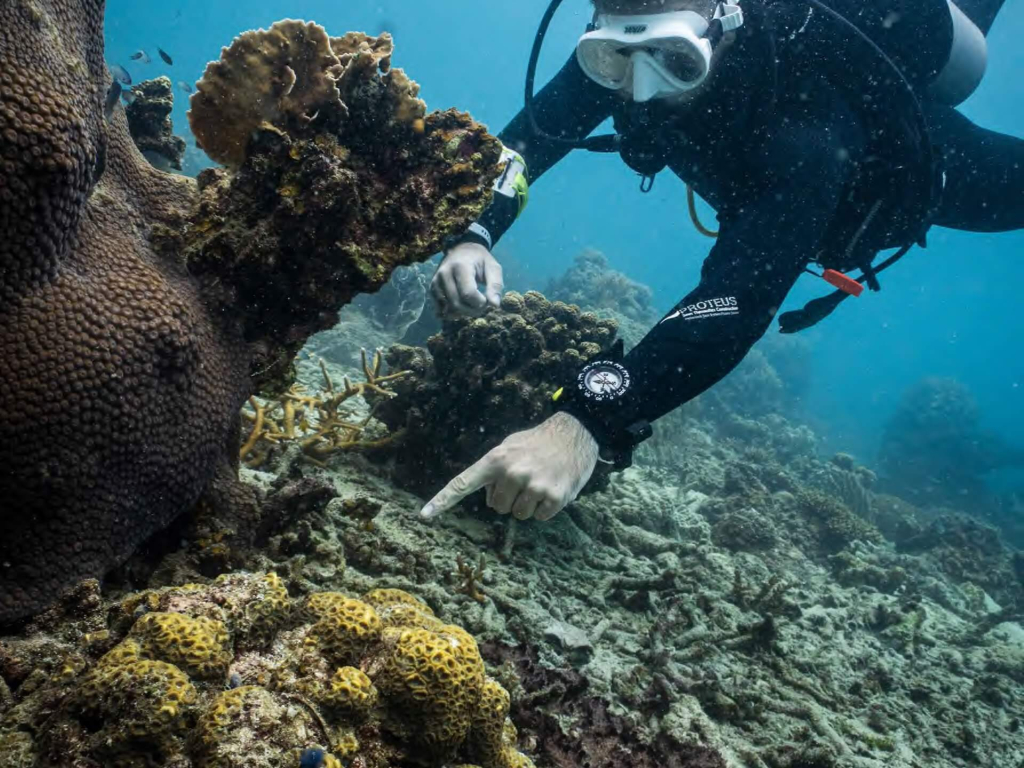
Instructor guiding a student through coral identification techniques during the Coral Taxonomy course at Black Turtle Conservation, Koh Tao, Thailand.
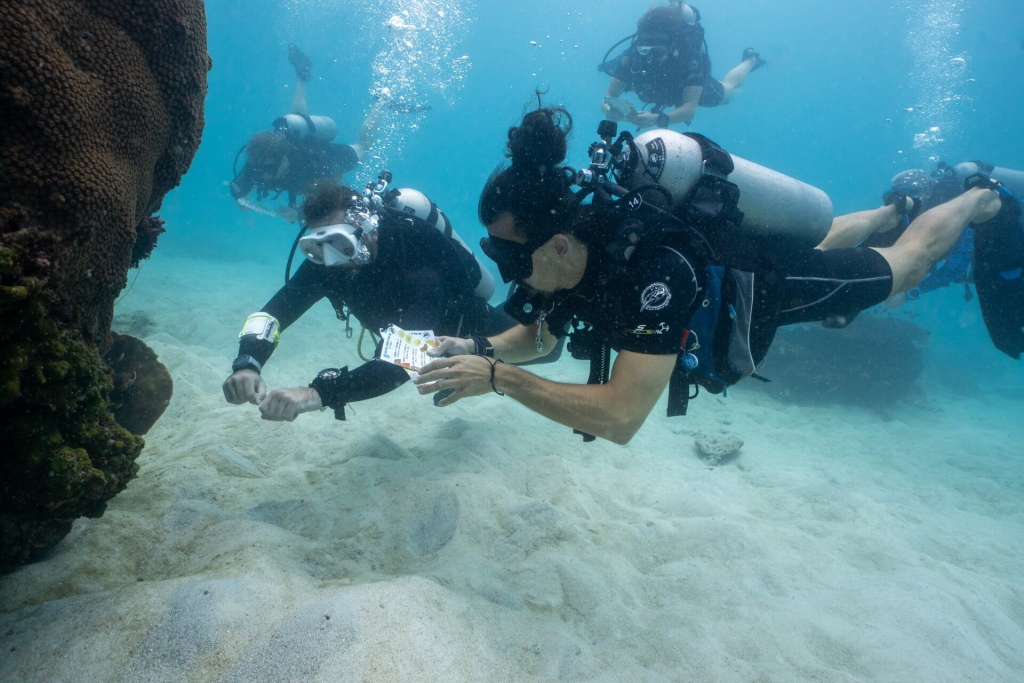
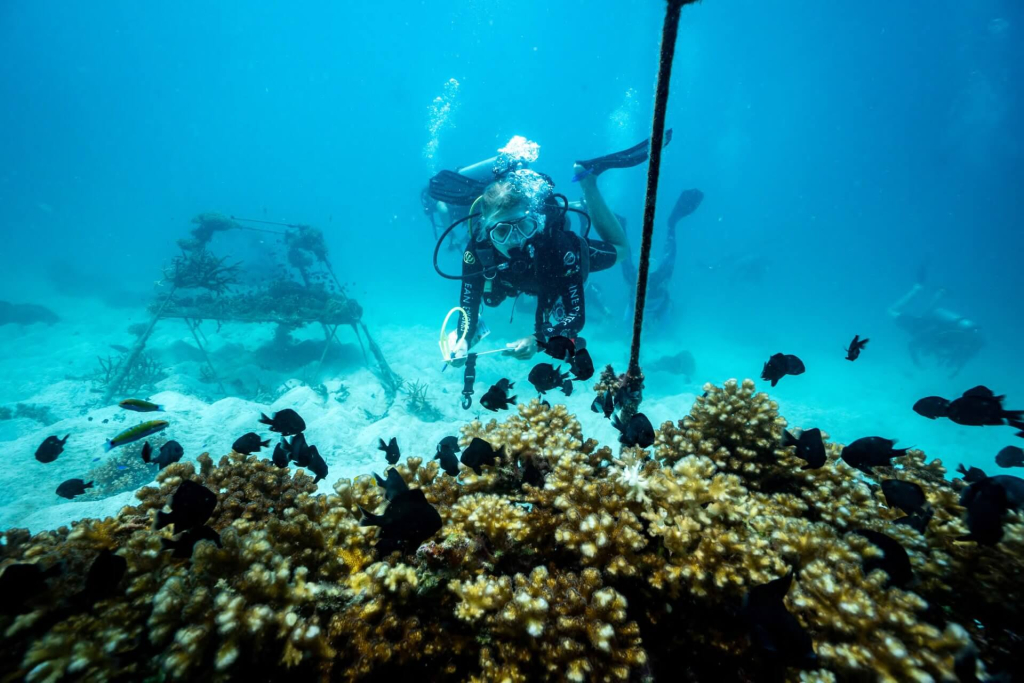
Marine conservation diver collecting data on coral species during the Coral Taxonomy and Ecological Monitoring course at Black Turtle Conservation, Koh Tao, Thailand.
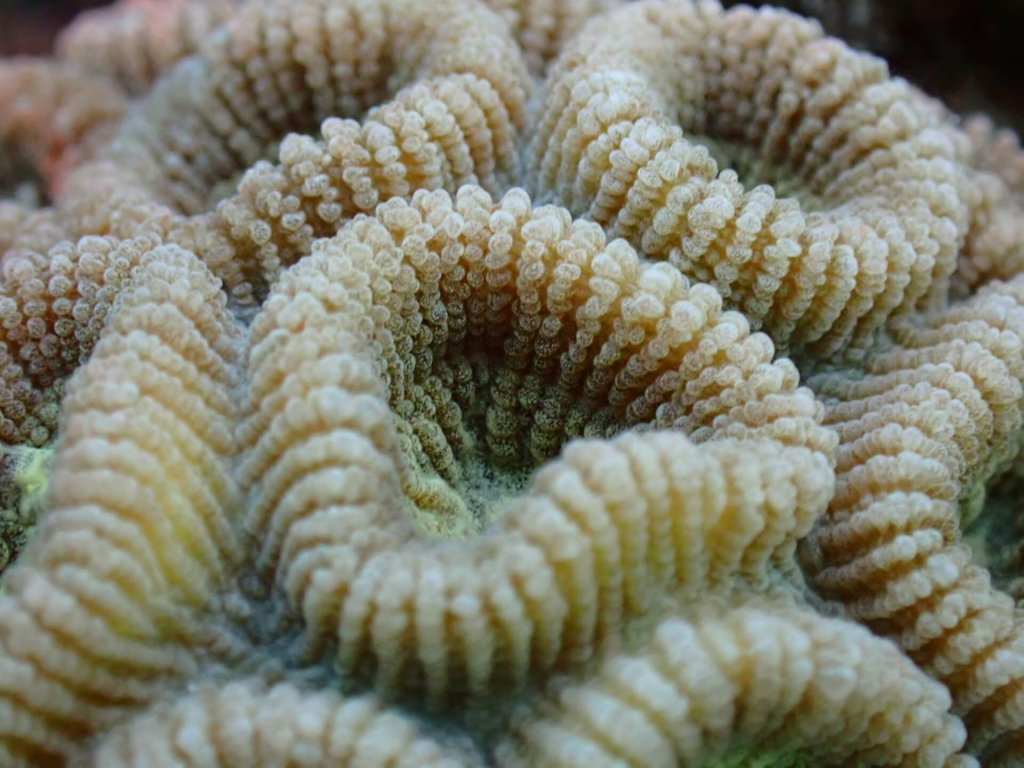
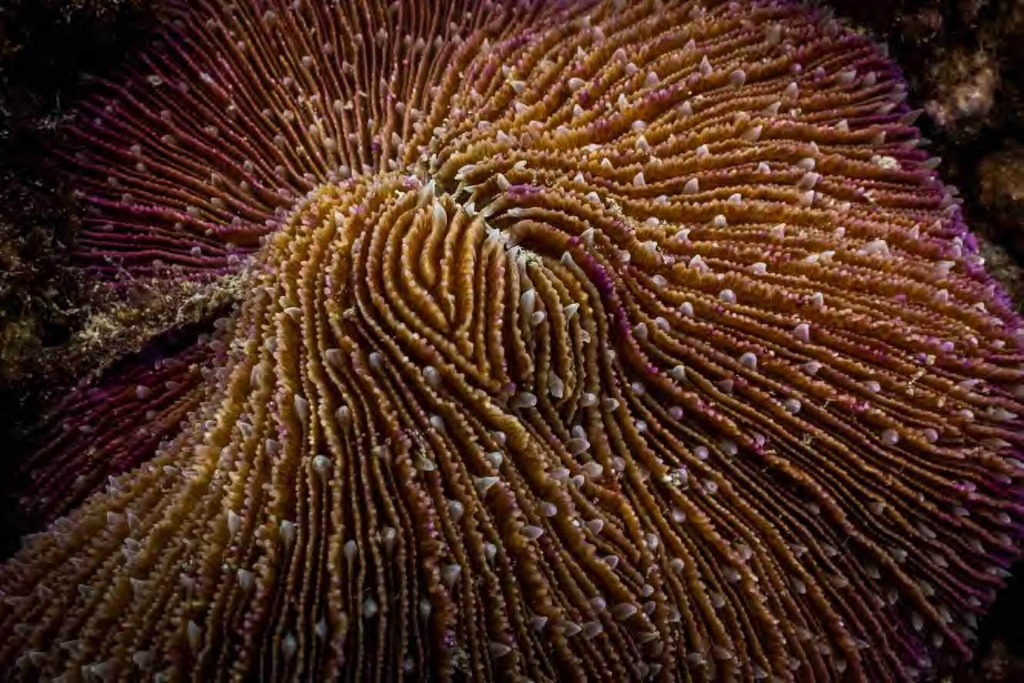
Close-up of a healthy brain coral colony photographed during the Ecological Monitoring Program (EMP) with Black Turtle Conservation in Koh Tao, Thailand.

Overview of the Genus

Pocillopora is a small but ecologically significant genus of corymbose corals, often described as one of the classic pioneer genera of shallow Indo-Pacific reefs. Its compact, bushy growth form and ability to recover quickly from disturbance make it a frequent early coloniser of disturbed substrates.

Species-level identification within Pocillopora is notoriously difficult, with extensive intra-specific variation driven by environmental conditions. Recent molecular work has shown that field morphology often does not align with genetic boundaries, leading to ongoing taxonomic revisions across the genus.

On Koh Tao, Pocillopora colonies are commonly seen across the shallow reef gardens and are easily recognised by their characteristic verrucae and dense branching habit, even by trainees in the early stages of their coral identification learning.

Global and Local Importance

Globally, Pocillopora contributes meaningfully to reef framework construction in shallow zones and provides valuable shelter for small reef fish and cryptobenthic invertebrates that exploit the dense branching architecture of the colonies.

On Koh Tao, Pocillopora is a useful indicator of shallow-reef health and is regularly recorded in Ecological Monitoring Program surveys. While not as fast-growing as the most prolific Acropora species, it shows reliable post-disturbance recovery when local conditions stabilise.

Reef-Building Contribution and Habitat Provision

Pocillopora colonies typically range from 10 to 50 cm across, and although individually modest, dense aggregations create thickets that contribute substantially to habitat complexity in shallow reef gardens.

These thickets shelter small reef fish and a wide range of cryptobenthic invertebrates that exploit the protected interstices between branches. Colonies are also actively grazed by parrotfish, whose bioerosion contributes to natural reef turnover and sediment generation around Koh Tao.

Growth Forms and Colony Variation

Pocillopora exhibits substantial morphological plasticity. The same species can produce thicker, more compact branches in high-flow areas and thinner, more open branches in calm settings. This plasticity is one of the main reasons field identification is challenging.

Verruca density, branch tip shape, and overall colony habit all shift with depth and water motion, providing a useful in-water teaching tool when comparing colonies across exposed pinnacle sites and sheltered bays around Koh Tao.

Evolutionary and Taxonomic Notes

Pocillopora is part of the family Pocilloporidae, alongside genera such as Stylophora and Seriatopora. Recent molecular studies, including the Schmidt-Roach revision of the P. damicornis species complex, have substantially restructured species-level taxonomy, although genus-level colony identification remains straightforward in the field.

Morphology

Instructor guiding a student through coral identification techniques during the Coral Taxonomy course at Black Turtle Conservation, Koh Tao, Thailand.
Marine conservation diver collecting data on coral species during the Coral Taxonomy and Ecological Monitoring course at Black Turtle Conservation, Koh Tao, Thailand.
Close-up of a healthy brain coral colony photographed during the Ecological Monitoring Program (EMP) with Black Turtle Conservation in Koh Tao, Thailand.

Colony Structure and Skeletal Features

Pocillopora colonies are corymbose, with branches that may be cylindrical, flattened, or club-shaped depending on species and environment. The diagnostic feature is the dense covering of verrucae: rounded, wart-like skeletal protrusions distributed across the branch surface.

Corallites are small and immersed, often partially obscured by the verrucae. The coenosteum is typically granular, and corallites may have low solid columellae and two unequal cycles of septa. There is no axial polyp at the branch tips, distinguishing the genus immediately from Acropora.

Polyps and Tissue Characteristics

Pocillopora polyps are small and typically extend only at night for feeding, retracting fully into the verrucae during daylight. The tissue layer holds zooxanthellae of the family Symbiodiniaceae, which produce the orange-cream tones seen on Koh Tao colonies.

Polyp behaviour is one of the most useful in-water identification cues for Pocillopora, since the consistent nocturnal extension pattern contrasts with the more variable polyp behaviour seen in some other corymbose genera.

Skeletal Microstructure and Calcification

Pocillopora skeletons are aragonitic and moderately porous. Calcification rates are slower than the fastest Acropora species but still allow colonies to reach 10–20 cm in a few years under favourable conditions, with linear extension typically in the range of 1–2 cm per month for the most productive species.

Like other zooxanthellate corals, calcification is closely tied to symbiosis and is sensitive to reductions in seawater aragonite saturation state under ocean acidification scenarios.

Size, Growth Rates, and Defensive Adaptations

Most Koh Tao Pocillopora colonies fall in the 10–50 cm range, with larger colonies occasionally reaching 80 cm in sheltered settings. Growth is rapid relative to massive genera such as Porites but moderate relative to the fastest staghorn Acropora.

Defensive adaptations include nematocyst-armed tentacles and active mucus production, which deters predators and helps shed sediment. Many Pocillopora species also propagate through fragmentation following partial mortality, contributing to asexual reproduction and post-disturbance recovery.

Dual-Feeding Strategy: How Pocillopora Feeds and Thrives

Pocillopora is a zooxanthellate mixotroph, drawing energy from both photosynthesis carried out by symbiotic dinoflagellates and active heterotrophic capture of zooplankton. The relative balance between the two pathways shifts with environmental conditions and is central to the genus’s adaptability.

1. Autotrophy: Photosynthate from Symbionts

Symbiotic dinoflagellates of the family Symbiodiniaceae living within the gastrodermis carry out photosynthesis and translocate sugars and other organic compounds to the coral host. Under good light conditions, these symbionts can supply the majority of the colony’s daily carbon needs.

This pathway is most productive in the shallow, well-lit upper reef zone where Pocillopora reaches its highest abundance, providing the energetic basis for skeletal growth and reproduction.

Pocillopora polyps are characteristically nocturnal feeders. After dusk, they extend their tentacles to capture zooplankton drifting past on currents, supplementing the day’s photosynthate with the nitrogen and phosphorus that limited tropical waters typically lack.

This heterotrophic input is biologically essential, as photosynthate alone is carbon-rich but nutritionally incomplete. Pocillopora’s relatively large, well-armed polyps make it a highly effective particle feeder for its size.

The combination of strong autotrophy in shallow water and active nocturnal heterotrophy allows Pocillopora to thrive across a range of light and current conditions on Koh Tao reefs. However, like all zooxanthellate corals, the genus remains vulnerable to elevated sea-surface temperatures that disrupt the symbiosis and trigger bleaching.

Where to Find Pocillopora Around Koh Tao and at Which Dive Sites

Diver recording fine-scale coral identification data during the Advanced Coral Taxonomy and Marine Conservation course at Black Turtle Conservation, Koh Tao, Thailand.
Student identifying coral species underwater during the Coral Taxonomy & Identification course with Black Turtle Conservation in Koh Tao, Thailand.
Instructor guiding a student through coral identification techniques during the Coral Taxonomy course at Black Turtle Conservation, Koh Tao, Thailand.

Pocillopora is widely distributed across Koh Tao’s shallow reefs and is commonly encountered at almost every dive site with hard substrate in the upper 0–18 m of the water column.

Shallow Coral Gardens

Sites such as Aow Leuk, Mango Bay, Hin Wong Bay, and Japanese Gardens host abundant Pocillopora colonies among Acropora and other corymbose corals at depths of 4–10 metres.

Pinnacles and Sloped Reef Sites

At White Rock, Twins, Chumphon Pinnacle, and Southwest Pinnacle, Pocillopora colonies cluster on shoulder zones around 6–15 m. They tolerate the moderate currents at these sites well, sometimes producing more compact, robust morphologies in the higher-flow patches.

Restoration and Artificial Reef Sites

Pocillopora fragments-of-opportunity are routinely incorporated into coral restoration work at Junkyard Reef and Black Turtle Reef. Their relatively rapid attachment, hardiness, and tolerance for shallow artificial substrates make them useful complements to the more demanding Acropora species in the nursery system.

Depth Distribution and Site Variation

Pocillopora is most abundant in the upper 12 m, with healthy colonies extending to around 18–20 m on well-lit slopes. Below this, colony density declines sharply, and the genus is rarely encountered on the deeper Koh Tao slopes that are dominated instead by plating and encrusting forms.

Environmental Thresholds: Conditions for Optimal Growth

Pocillopora occupies a moderate-to-high-energy environmental envelope similar in many ways to Acropora, although it tolerates a slightly broader range of conditions and shows somewhat greater plasticity in marginal habitats.

Optimal Parameters

  • Light Intensity: high light, with peak performance in the upper photic zone (0–12 m).
  • Water Movement: tolerates a wide range of flow regimes, from sheltered bays to current-swept pinnacles.
  • Temperature Range: 24–29°C, with stress responses triggered by prolonged exposure above 30–31°C.
  • Salinity: stable marine conditions of 33–35 ppt; vulnerable to freshwater runoff during heavy monsoon periods.
  • Chemical Stability: stable calcium, alkalinity, and pH for efficient calcification.

Stress Responses on Koh Tao

Pocillopora is among the genera that bleach during marine heatwaves on Koh Tao, although colony-level mortality has historically been somewhat lower than in fast-growing Acropora species. Sedimentation and reduced light penetration following heavy rainfall events also reduce growth and recruitment, particularly in shallow nearshore reefs.

Severe outbreaks of corallivorous Drupella snails and crown-of-thorns starfish have at times caused significant local mortality across Pocillopora populations on Koh Tao, in line with regional patterns documented in peer-reviewed studies.

Vulnerability Profile

Marine researcher documenting coral species variations during the Advanced Coral Taxonomy course at Black Turtle Conservation, Koh Tao, Thailand.
Instructor guiding a student through coral identification techniques during the Coral Taxonomy course at Black Turtle Conservation, Koh Tao, Thailand.
Marine conservation diver collecting data on coral species during the Coral Taxonomy and Ecological Monitoring course at Black Turtle Conservation, Koh Tao, Thailand.

Pocillopora is moderately to highly vulnerable to thermal stress, although its specific vulnerability varies among species and regional populations. Several Pocillopora species are listed in IUCN threatened categories, and the genus is included under CITES Appendix II, which has regulated international trade in scleractinian corals since 1990.

Major Threats

  • Coral Bleaching: zooxanthellae expulsion under prolonged thermal stress, especially during regional marine heatwaves.
  • Ocean Acidification: progressive reduction in calcification rates as aragonite saturation state declines.
  • Disease Susceptibility: reports of White Syndrome and other coral diseases, often elevated under thermal stress conditions.
  • Predation Pressure: targeted feeding by Drupella snails and crown-of-thorns starfish (Acanthaster planci).
  • Local Anthropogenic Impacts: anchoring, fin damage, ghost fishing gear, and runoff-driven sedimentation.

On Koh Tao, Pocillopora is treated as a useful complement to Acropora in monitoring datasets, since the two genera share similar shallow-reef habitats but display somewhat different sensitivities to disturbance. Tracking both genera in parallel provides a richer picture of overall reef condition through time.

Black Turtle Conservation incorporates Pocillopora into ongoing reef monitoring though Pocillopora fragments-of-opportunity in restoration projects at Junkyard Reef and Black Turtle Reef.

How to Identify Pocillopora Coral

The defining feature of Pocillopora in the field is the dense covering of verrucae across the branch surface, combined with a corymbose, often bushy growth form and the absence of axial polyps at the branch tips.

Diver recording fine-scale coral identification data during the Advanced Coral Taxonomy and Marine Conservation course at Black Turtle Conservation, Koh Tao, Thailand.
Student identifying coral species underwater during the Coral Taxonomy & Identification course with Black Turtle Conservation in Koh Tao, Thailand.

Key Identification Features

  • Verrucae: prominent, wart-like skeletal protrusions covering the branches — the single most diagnostic feature.
  • Corallites: small and immersed, often partially obscured by the verrucae.
  • Branch Form: ranges from cylindrical to flattened or club-shaped, varying with species and environment.
  • Polyp Behaviour: small polyps usually extended only at night for feeding.
  • Coloration: typically cream, pink, brown, or green, often with paler branch tips.

Distinguishing from Similar Genera

Acropora differs by the presence of a single larger axial polyp at every branch tip and by the absence of verrucae on its branches. The branch surface in Acropora is usually spinulose or costate rather than warty.

Stylophora has smoother branches without prominent verrucae, while Seriatopora produces much finer, needle-like branches than Pocillopora. Field comparison of these three pocilloporid genera is one of the standard taxonomy exercises during Black Turtle Conservation training.

Mastering Pocillopora Identification with Black Turtle Conservation

Marine conservation diver collecting data on coral species during the Coral Taxonomy and Ecological Monitoring course at Black Turtle Conservation, Koh Tao, Thailand.

At Black Turtle Conservation we treat reliable Pocillopora identification as a foundation skill for any reef surveyor on Koh Tao. Because the genus is widespread, conspicuous, and represented by several species with overlapping field morphologies, learning to recognise the diagnostic verrucae quickly is one of the best entry points for trainees moving from genus-level to species-level coral identification.

Our Training Approach: From Theory to Survey

Close-up of a healthy brain coral colony photographed during the Ecological Monitoring Program (EMP) with Black Turtle Conservation in Koh Tao, Thailand.
Instructor guiding a student through coral identification techniques during the Coral Taxonomy course at Black Turtle Conservation, Koh Tao, Thailand.

Our Coral Taxonomy and Identification training addresses Pocillopora through a structured, progressive sequence designed to build confident in-water surveyors.

  • Classroom Theory: students learn pocilloporid morphology, including verruca structure, corallite arrangement, and the contrast with Acropora and Stylophora.
  • In-Water Practice: guided dives at Twins, Aow Leuk, Mango Bay, and Chumphon Pinnacle, where colonies of multiple species and growth forms are compared in situ.
  • Applied Monitoring: participation in Ecological Monitoring Program surveys, with Pocillopora abundance, colony condition, and bleaching status recorded as part of standard reef datasets.
  • Restoration Skills: hands-on incorporation of Pocillopora fragments-of-opportunity into nursery and out-planting programmes at Junkyard Reef and Black Turtle Reef.

Graduates leave with the practical ability to identify Pocillopora at genus level under field conditions and to record its condition reliably as part of long-term reef monitoring around Koh Tao.

External Link Citations and References

Veron, J.E.N. (2000). Corals of the World. Australian Institute of Marine Science.

World Register of Marine Species (WoRMS): Pocillopora Lamarck, 1816.

IUCN Red List of Threatened Species: Pocillopora entries.

Department of Marine and Coastal Resources (DMCR), Thailand: Reef monitoring reports.

Black Turtle Conservation: Coral conservation, monitoring and restoration on Koh Tao.