| Feature | Details |
|---|---|
| Common names | Ragged sea hare, shaggy sea hare |
| Scientific name | Bursatella leachii Blainville, 1817 |
| Classification | Mollusca › Gastropoda › Heterobranchia › Order Aplysiida › Family Aplysiidae |
| Size | Usually 50–150 mm; exceptional reports to about 250 mm (Kimoto, 2026; SeaLifeBase, 2025) |
| Colour | Amber, green or brown, with pale-blue eyespots ringed in black (Kimoto, 2026) |
| Habitat | Sheltered sand, mud and seagrass, from the intertidal zone to about 30 m (SeaLifeBase, 2025) |
| Diet | Cyanobacteria, diatom films and detritus; some green and red algae (Clarke, 2006; Kimoto, 2026) |
| Defences | Purple ink and toxins taken up from cyanobacteria (Capper et al., 2005) |
| Conservation status | Not Evaluated on the IUCN Red List (IUCN, n.d.) |
| Koh Tao look-alike | Bursatella ocelligera, which can only be told apart by internal anatomy (Mehrotra et al., 2021) |
At a glance
Identification
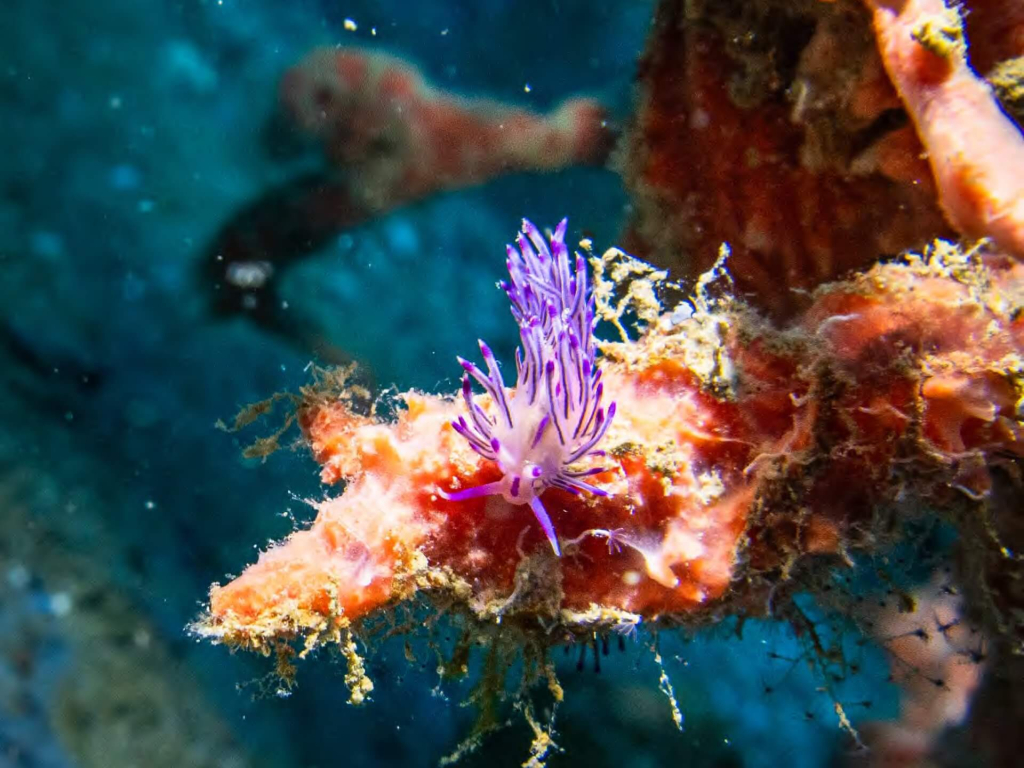
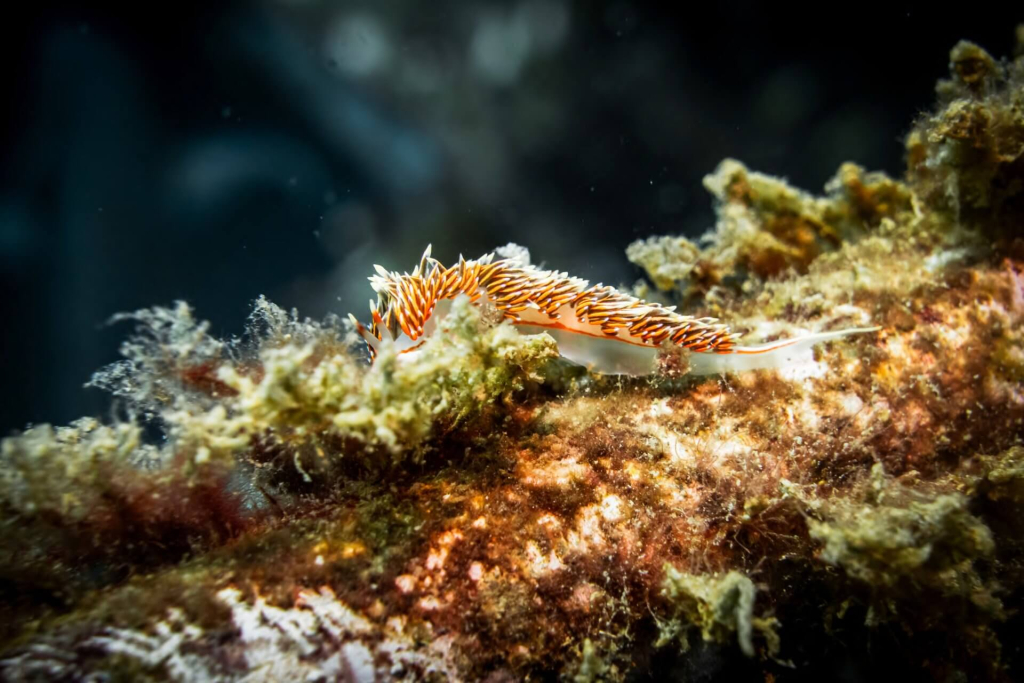
Look for a soft, slug-shaped animal crawling slowly over sand or algae, covered in a dense coat of branching, finger-like papillae. No other sea hare in the region looks this ragged.
Key field marks
- Body: elongate and muscular, with a broad foot and a short, pointed tail (Kimoto, 2026). Divers usually see animals of 5–15 cm.
- Papillae: long, branching papillae mixed with shorter conical ones cover the whole body (Kimoto, 2026). They can contract and expand, so the animal looks more or less shaggy from minute to minute (Rudman, 2009).
- Colour: amber, green or dark brown, sprinkled with fine pale dots (Kimoto, 2026).
- Eyespots: scattered pale-blue spots set in black rings. Spot colour varies within a population, and Caribbean animals often lack the blue spots altogether (Rudman, 2007a; 2007b).
- Head: two rolled rhinophores (the “hare’s ears”) on top and two oral tentacles at the front, all the same colour as the body.
- Back: no free flaps. The parapodia are fused over the back, leaving only a small opening, so this species cannot swim (Kimoto, 2026).
- Behaviour: a cloud of purple ink if the animal is disturbed. Never prod one to check.
Similar species
| Species | How to tell it apart |
|---|---|
| Bursatella ocelligera | Externally almost identical. B. leachii has a penis armed with large conical spines; B. ocelligera has an unarmed one, so only dissection or DNA separates them (Bazzicalupo et al., 2020). Described from Koh Chang in the Gulf of Thailand (Bergh, 1902). |
| Aplysia sea hares (e.g. A. kurodai, recorded at Koh Tao) | Smoother skin and large, free parapodial flaps over the back (Mehrotra et al., 2021). |
| Stylocheilus sea hares | Smaller and slimmer, with shorter papillae; S. striatus has fine lengthwise lines. Also grazes cyanobacteria on Koh Tao's soft sediments (Mehrotra et al., 2021). |
Taxonomic Amendments
Two published sources cover Bursatella at Koh Tao, and they name it differently. The Koh Tao sea slug guidebook lists B. leachii as rare, known from a single observation at Samran Pinnacle (Mehrotra and Urgell, 2018). The later peer-reviewed inventory, by the same lead author, lists one animal from Shark Bay as Bursatella cf. ocelligera and does not list B. leachii (Mehrotra et al., 2021).
The difference reflects the 2020 split of the genus, not a change on the reef. The guidebook predates the resurrection of B. ocelligera (Bazzicalupo et al., 2020). The inventory notes there is still no reliable external way to separate the two species and no DNA data from the Gulf of Thailand (Mehrotra et al., 2021). The Samran animal could therefore be either species. Until specimens are checked, the safest label for a photo record here is Bursatella sp. (leachii/ocelligera complex).
What makes it a Sea Hare?
Sea hares (Order Aplysiida) are grazing sea slugs, a separate lineage from the mostly predatory, and more famous, nudibranchs (Order Nudibranchia). The rolled rhinophores that resemble a hare's ears give the group its common name.
| Feature | Bursatella leachii |
|---|---|
| Diet | Grazer of cyanobacteria, diatoms and algae |
| Breathing | A single gill hidden in the mantle cavity, under the fused parapodia |
| Shell | None in adults; the larval shell is shed at metamorphosis (Paige, 1988; SeaLifeBase, 2025) |
| Swimming | Cannot swim, because the parapodia are fused (Kimoto, 2026) |
| Defence | Purple ink and toxins from its food (Capper et al., 2005) |
This corrects a common error: unlike Aplysia, which keeps a thin internal shell, adult Bursatella have no shell at all.
The papillae are the species' trademark. They break up the animal's outline so it blends into algae-covered sand. An older idea that they also act as secondary gills has not been confirmed (Rudman, 2009).
What's in the name? Bursatella is a Latin diminutive of bursa, "purse", after the bag-like body. The species name honours the British zoologist William Elford Leach (Kimoto, 2026). Blainville described the genus in 1817 without knowing where the specimens came from, and the type locality remains unknown (Blainville, 1817; Kimoto, 2026).
Diet, feeding and chemical defence
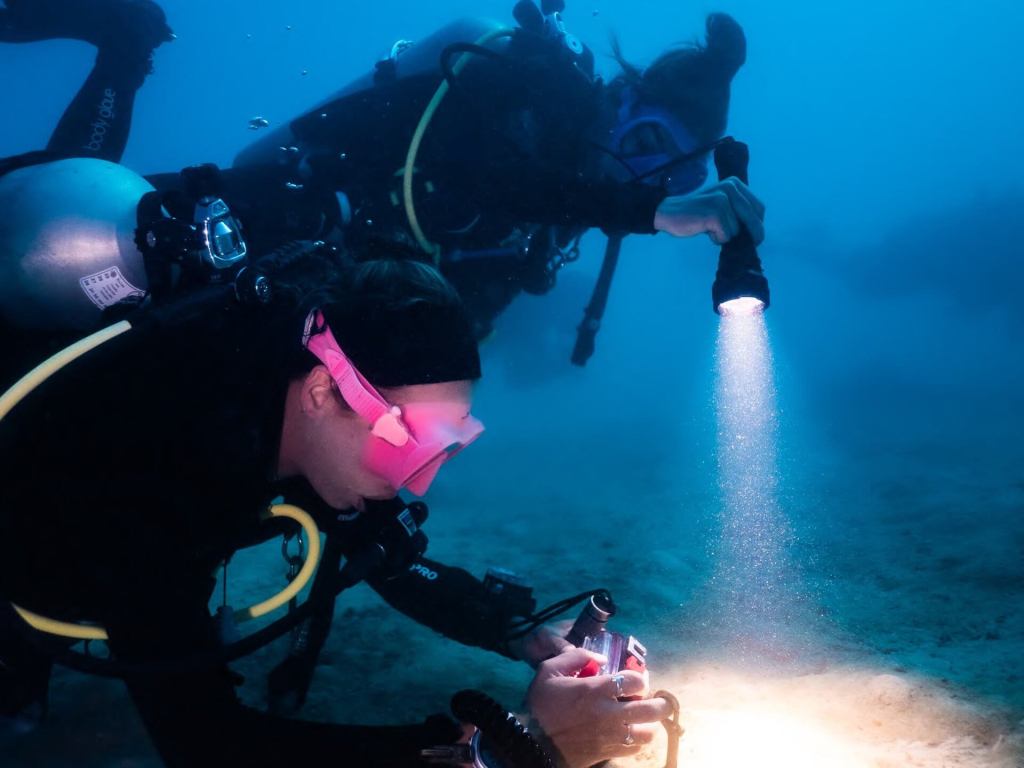
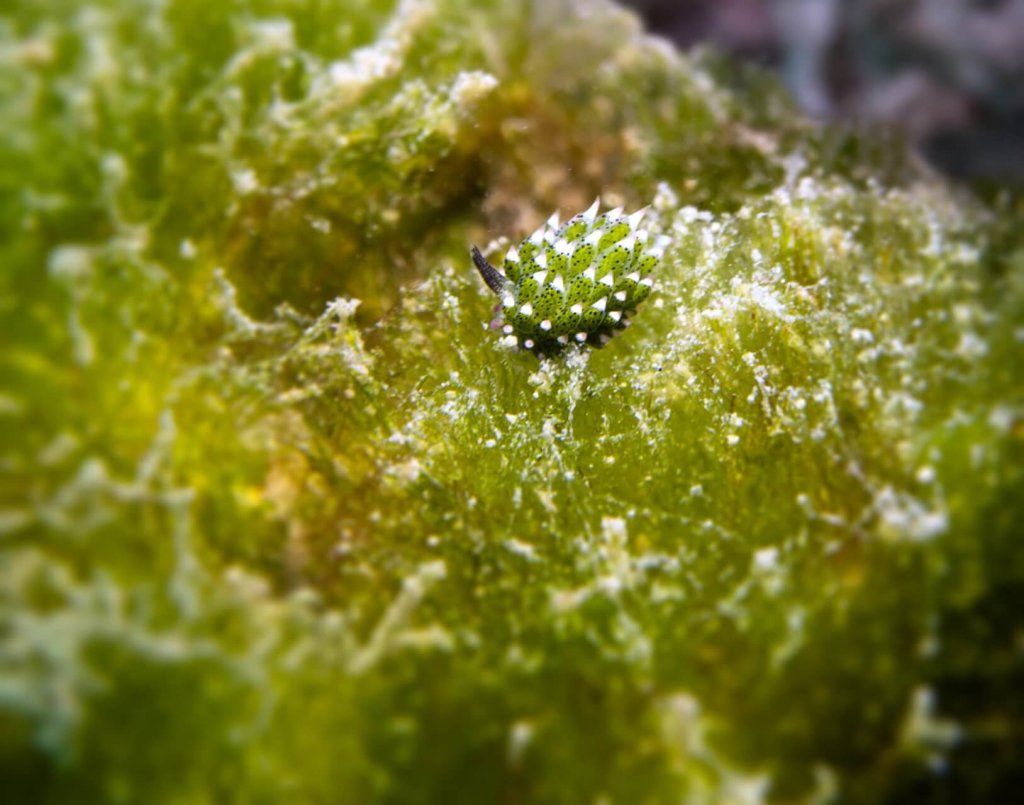
The ragged sea hare is a grazer of the thin living films that coat sand, seagrass and seaweed. Its main foods are cyanobacteria (blue-green algae), diatoms and detritus, with occasional green or red seaweeds (Kimoto, 2026). It feeds by gliding over the film and rasping it up with its radula, a ribbon of tiny teeth.
Its tastes are flexible. A Queensland population was grazing the cyanobacterium Calothrix crustacea in the wild, yet preferred a green alga when offered a choice in the laboratory (Clarke, 2006). When fed the toxic cyanobacterium Lyngbya majuscula, sea hares preferred strains containing the toxin lyngbyatoxin-a (Capper et al., 2006).
Borrowed toxins
The sea hare stores toxins from its cyanobacterial food rather than making its own. In feeding trials it took up lyngbyatoxin-a and debromoaplysiatoxin, concentrating them in the digestive gland (Capper et al., 2005). It also released more lyngbyatoxin-a in its ink and faeces than it held in its body tissues (Capper et al., 2005).
This refines an often-repeated claim that the species stores "aplysiatoxin" in its body. The compound recorded is debromoaplysiatoxin, and most of the toxin load sits in the gut or is expelled, not spread through the tissues.
Purple ink
When grasped or prodded, the animal releases purple ink from a gland in the mantle cavity (Paige, 1988; SeaLifeBase, 2025). The ink clouds the water and carries diet-derived toxins (Capper et al., 2005). Because the toxin load depends on what each population eats, some populations are likely better defended than others.
Diver note: do not handle sea hares. Handling stresses the animal, wastes its defences and may expose you to irritant compounds.
Habitat and distribution
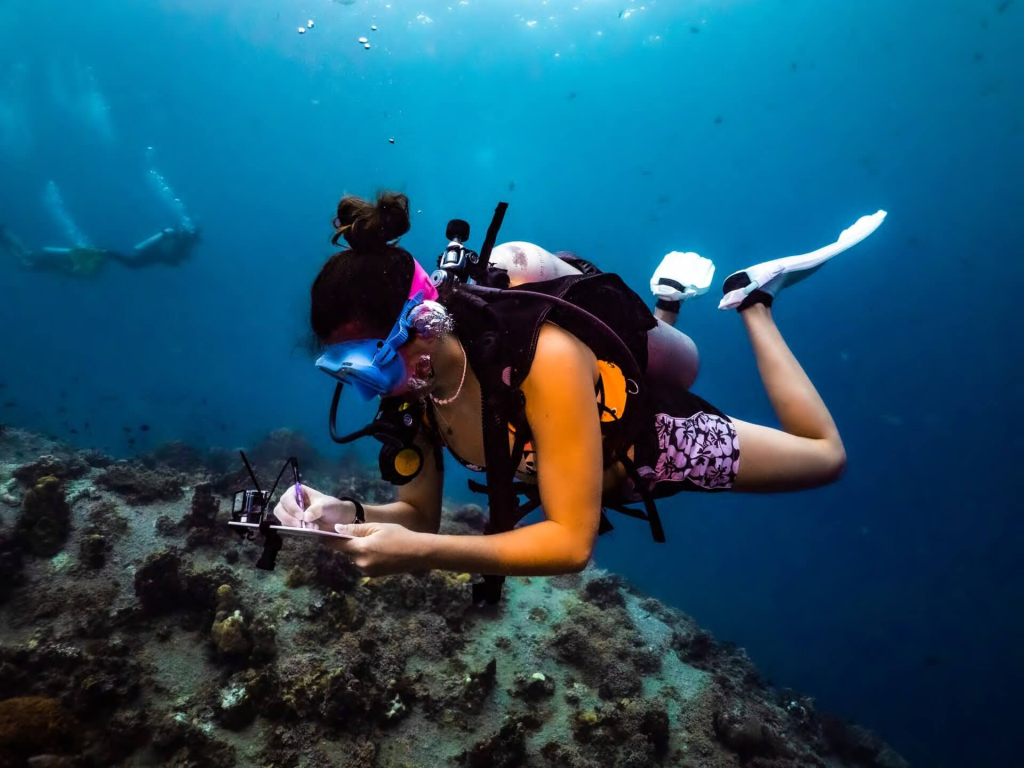
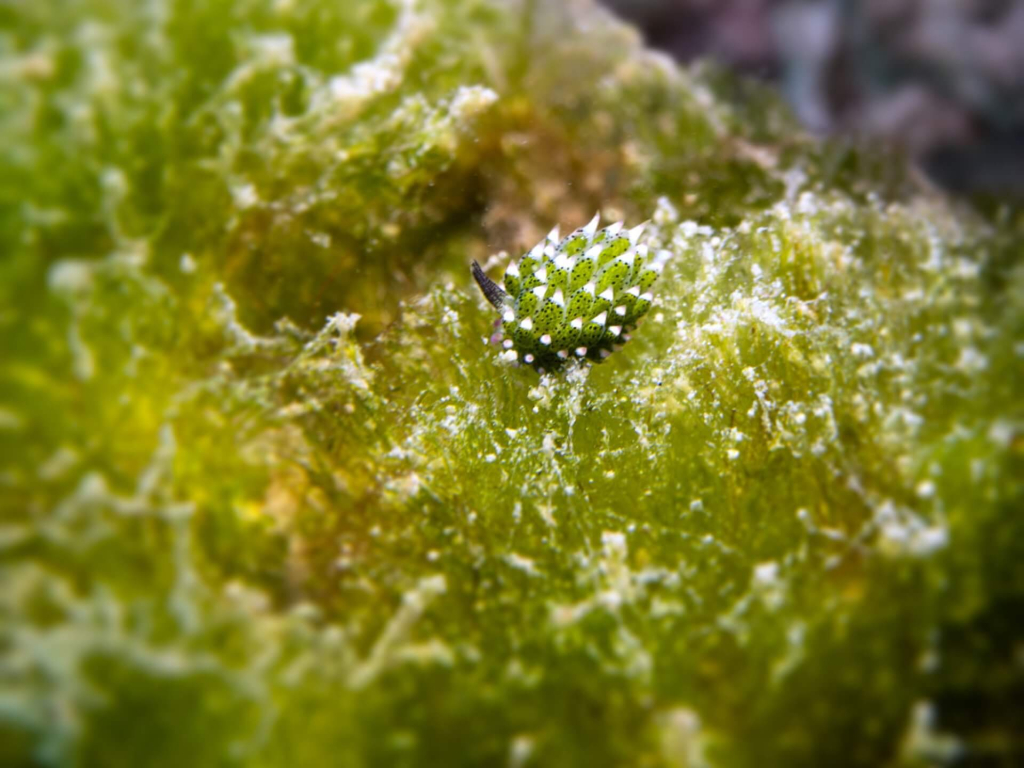
The ragged sea hare lives wherever its films of food grow: sheltered bays, estuaries, lagoons and tide pools with sandy or muddy bottoms and seagrass. It ranges from the intertidal zone to about 30 m (SeaLifeBase, 2025). In the Mediterranean it is typically found on soft bottoms carpeted with Caulerpa prolifera, Cymodocea nodosa or Zostera noltii (CIESM, n.d.).
A near-global range
The species occurs in the tropical and warm-temperate Atlantic, the Mediterranean, the Red Sea, the Indian Ocean and the western Pacific north to Japan. It is absent from Hawaii and the eastern Pacific (Bazzicalupo et al., 2020). Atlantic and Indo-Pacific populations seem to stay connected through warm water leaking round the Cape of Good Hope, helped by the species' tolerance of South Africa's cooler seas (Bazzicalupo et al., 2020).
The same 2020 study abandoned the old scheme of seven geographic subspecies, finding no consistent genetic differences between them (Bazzicalupo et al., 2020). It also resurrected B. ocelligera as a second species, restricted to the Indo-Pacific. A third species, B. hirsuta, has since been described from southern Australia (Nimbs and Wilson, 2020).
A Mediterranean newcomer
The first Mediterranean records come from the Levant around 1940 (CIESM, n.d.; Castriota et al., 2025). The species then spread west, reaching Morocco by 2017 (Selfati et al., 2017).
It was long assumed to have arrived from the Red Sea through the Suez Canal, a so-called Lessepsian migrant (Kazak and Cavas, 2007). Genetic work instead points to an Atlantic origin (Bazzicalupo et al., 2018). Many scientists now treat its Mediterranean origin as uncertain, or "cryptogenic" (Castriota et al., 2025).
On Koh Tao
Two Bursatella records are published from the Koh Tao area. The first, identified as B. leachii, is a single observation at Samran Pinnacle (Mehrotra and Urgell, 2018). Samran is an open-water granite pinnacle between Koh Tao and Sail Rock, rising from sand at about 28 m to 9 m below the surface (Black Turtle Dive, n.d.).
The second, a 65 mm Bursatella cf. ocelligera, was grazing cyanobacterial mats on soft sediment at Shark Bay at 18–25 m (Mehrotra et al., 2021). The same surveys define soft sediment as areas beyond the reef with more than 90% sand or silt, and note that cyanobacterial mats there can spread towards the reef edge seasonally (Mehrotra et al., 2021).
Black Turtle Conservation divers have also photographed Bursatella in shallower sandy bays, seagrass patches and mixed soft-bottom zones (Black Turtle Conservation, n.d.). On nearby Koh Phangan, a 15–20 cm animal was photographed at 4–5 m depth on sand with algal growth in Chaloklum Bay (Chapman, 2010). The animal is considered to be generally absent from hard coral reef that lacks these food films.
Behaviour and life cycle
The ragged sea hare lives fast: it can reach maturity two to three months after hatching (Paige, 1988). That speed, plus long-lived larvae, lets populations explode whenever food is plentiful, allowing for these rapid booms and busts in population numbers.
Daily rhythm
In the wild, sea hares gather in groups at sunset and disperse in the morning. Captive animals keep the same pattern, mating mostly in the morning and feeding in the afternoon (Ramos et al., 1995).
Aggregations
Densities of up to 660 animals per square metre have been reported (Paige, 1988). In Mediterranean lagoons, thousands can crowd a small area and then vanish within weeks (CIESM, n.d.). A Queensland aggregation linked to a cyanobacterial bloom was sustained by a continual stream of new recruits rather than a single settlement pulse (Clarke, 2006). Crowding also makes finding a mate easy.
Mating
Each animal is a simultaneous hermaphrodite that cross-fertilises with a partner (SeaLifeBase, 2025). During mating, individuals can line up in chains, each acting as male to the one in front and female to the one behind (CIESM, n.d.).
Life Cycle
- Eggs: laid as long, tangled, green, stringy ribbons. Each capsule holds 1–20 eggs about 87 µm across (Paige, 1988). Embryos develop normally at 20–30 °C but stop developing at 15 °C (Paige, 1988). The effect of waters above 30°C on development is understudied at the time of writing.
- Larvae: free-swimming veligers feed in the plankton. They can settle after about 19 days, one of the shortest larval periods known for sea slugs, but can drift for up to about three months (Paige, 1988).
- Settlement: larvae need cyanobacteria such as Lyngbya majuscula to settle and metamorphose. They shed their larval shell at 2.5–3 mm long (Paige, 1988).
- Adults: juveniles grow quickly and are sexually mature at two to three months old (Paige, 1988).
Ecological role and value as an indicator
As a mass grazer of cyanobacteria, the ragged sea hare can strip food films from large patches of seabed, and its sporadic high densities may shape how soft-bottom habitats change over time (IUCN MedMIS, n.d.).
Population monitoring, combined with substrate or benthic data, could help B. leachii flag changes in water quality on Koh Tao's soft sediments.
Reading the signs
Because large aggregations follow cyanobacterial blooms, the sea hare can hint at changes in water quality. Blooms of Lyngbya majuscula have been linked to extra phosphorus and bioavailable iron, including from sewage discharges (Elmetri and Bell, 2004; Watkinson et al., 2005).
Cyanobacterial mats are also a natural, seasonal feature of Koh Tao's soft sediments (Mehrotra et al., 2021), so one sea hare is not evidence of pollution. The useful information comes from long-term records: unusually large or persistent aggregations, at the same sites year after year, are worth flagging for water-quality follow-up.
Conservation status and threats
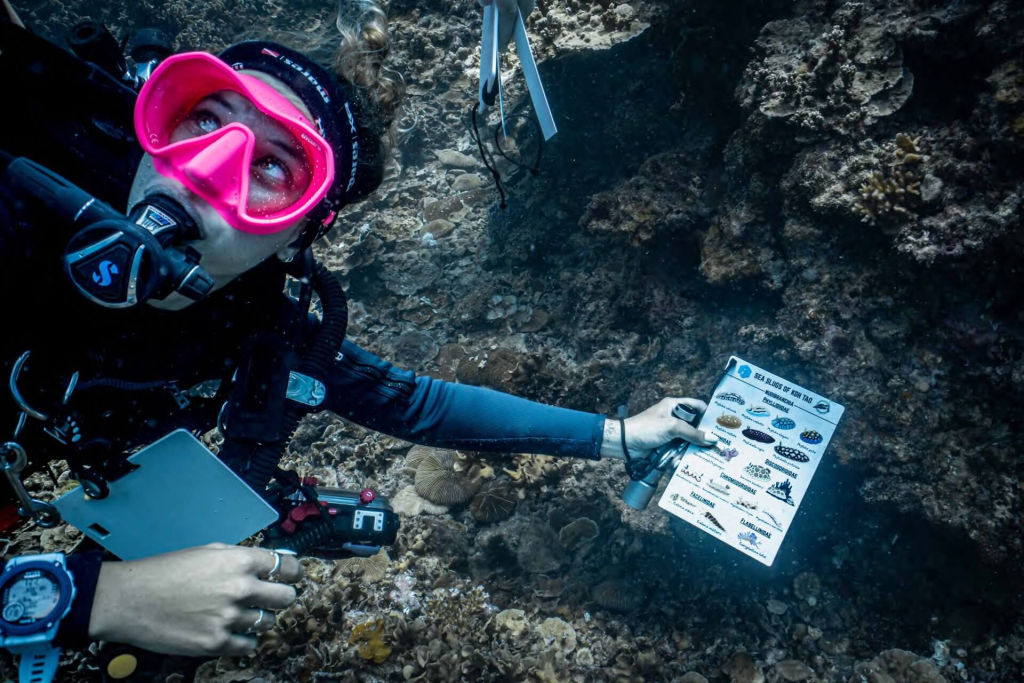
The ragged sea hare has not been assessed for the IUCN Red List (IUCN, n.d.). Its huge range, fast life cycle and long-drifting larvae suggest a low global extinction risk. In the Mediterranean it is monitored as a non-native or cryptogenic species rather than protected (Castriota et al., 2025).
On Koh Tao, the bigger gap is knowledge. B. ocelligera is poorly known, and it is not yet proven which of the two species, or whether both, live around the island (Mehrotra et al., 2021). Well-documented local records are therefore very useful to science.
Observing and recording it with Black Turtle Conservation
Recreational divers can add real value to what is known about Bursatella in the Gulf of Thailand. Koh Tao's sea slug inventory was itself built partly on citizen science (Mehrotra et al., 2021).
What to record
- When and where: date, time, dive site and dominant substrate
- Depth and substrate: depth, plus substrate type (sand, silt, rubble, NIA etc) and whether cyanobacterial mats are present.
- Number: a count, identifying aggregations.
- Size: we take our data to the nearest mm
- Photos: whole animal from above and from the side, the head with rhinophores, and a close-up of the eyespots and papillae.
It is a good practice with this species to record identifications as Bursatella sp. (leachii/ocelligera complex) unless the species has been confirmed.
Good practice
Observe without touching, lifting or moving the animal, and keep fins clear of the sediment so you do not smother the food films. Use macro lighting rather than repeated close strobes on one individual.
Join us: Sea Slug Ecology & Monitoring course
Our Sea Slug Ecology & Monitoring course turns you from a diver who spots nudibranchs into one who is able to understand where and why we spot them; and one who collects data scientists can use. Every survey you join feeds one of Black Turtle Conservation's current research questions: how sea slug abundance and diversity vary across different substrates around Koh Tao.
Why it matters: Our surveys compare slug numbers across dive sites, substrates, seasons, water temperature and benthic composition. Knowing where each species thrives helps target conservation efforts and guides the planning of artificial reefs around Koh Tao.
What you'll learn
- Ecology of the five sea slug clades/orders present on Koh Tao
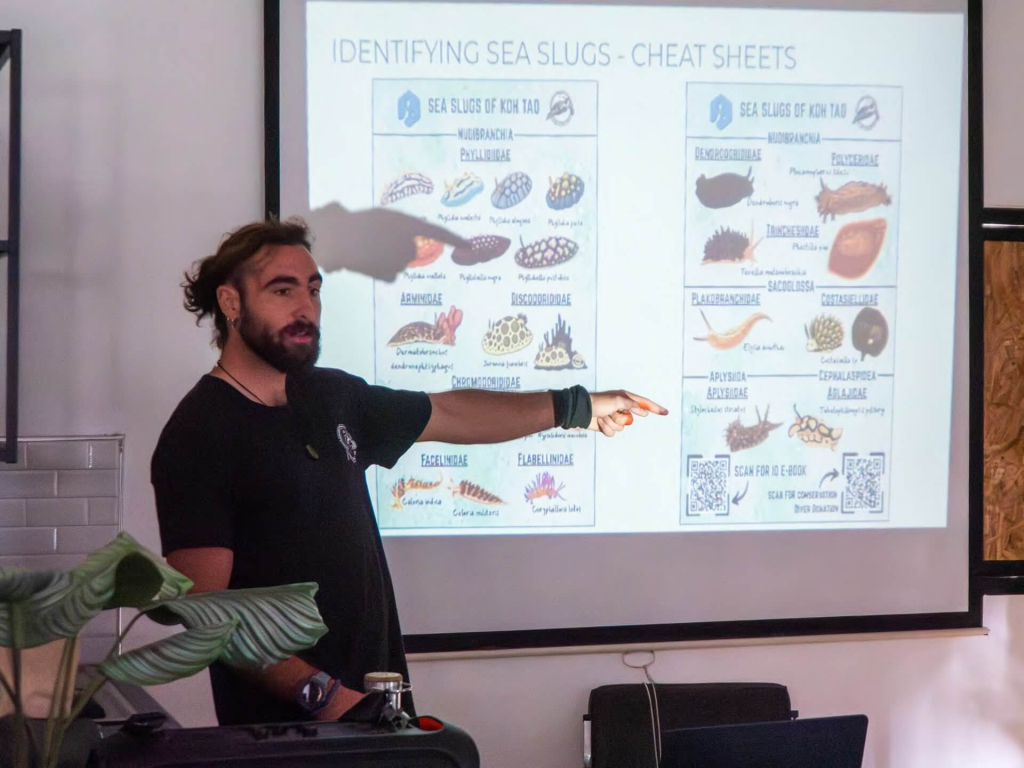
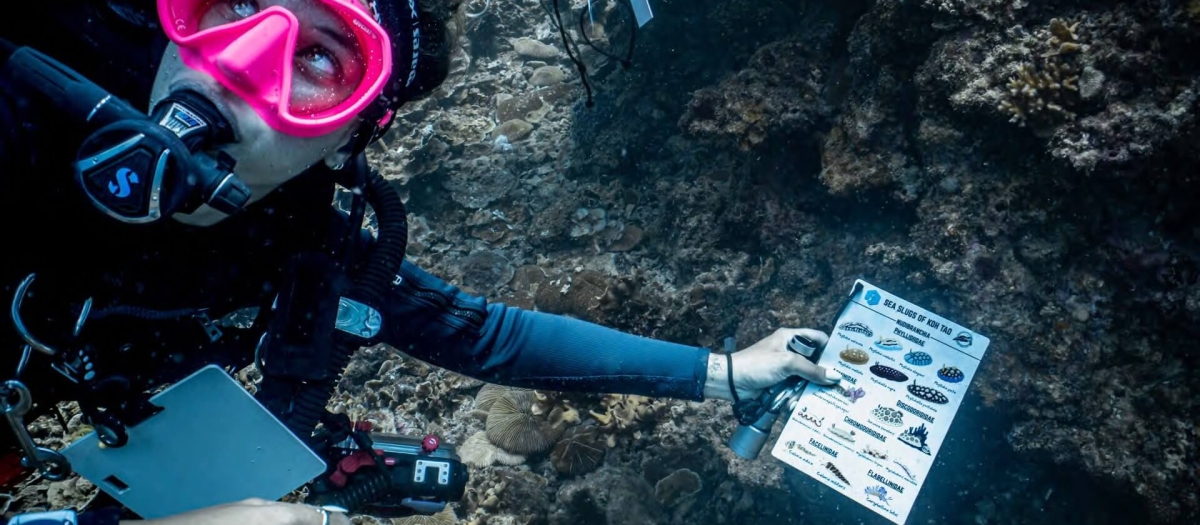
- Identifying Koh Tao species with our cheat sheets and ID guide
- Recognising substrates using standard EMP substrate codes
- Why defences such as aposematism, camouflage and kleptocnidae evolved
- How sea slugs support ecotourism, medical research and reef monitoring
References
Online sources accessed 24 October 2026.
Bazzicalupo, E., Crocetta, F., Estores-Pacheco, K., Golestani, H., Bazairi, H., Giacobbe, S., Jaklin, A., Poursanidis, D., Chandran, B.K.S., Cervera, J.L. and Valdés, Á. (2018) 'Population genetics of Bursatella leachii (De Blainville, 1817) and implications for the origin of the Mediterranean population', Helgoland Marine Research, 72, article 19. Available at: https://doi.org/10.1186/s10152-018-0521-7.
Bazzicalupo, E., Crocetta, F., Gosliner, T.M., Berteaux-Lecellier, V., Camacho-García, Y.E., Chandran, B.K.S. and Valdés, Á. (2020) 'Molecular and morphological systematics of Bursatella leachii de Blainville, 1817 and Stylocheilus striatus Quoy & Gaimard, 1832 reveal cryptic diversity in pantropically distributed taxa (Mollusca: Gastropoda: Heterobranchia)', Invertebrate Systematics, 34(5), pp. 535–568. Available at: https://doi.org/10.1071/IS19056.
Bergh, R. (1902) 'Gasteropoda opisthobranchiata', in The Danish Expedition to Siam 1899–1900. Det Kongelige Danske Videnskabernes Selskabs Skrifter, 6. Række, Naturvidenskabelig og Mathematisk Afdeling, 12(2), pp. 153–218.
Black Turtle Conservation (n.d.) Photographic and video records of Bursatella from Koh Tao dive sites. Unpublished data.
Black Turtle Dive (n.d.) Samran Pinnacle dive site, Koh Tao. Available at: https://www.blackturtledive.com/?p=370.
Blainville, H.M.D. de (1817) 'Bursatelle, Bursatella', in Cuvier, F. (ed.) Dictionnaire des Sciences Naturelles, vol. 5 (supplément). Paris: Levrault, p. 138. Available at: https://www.biodiversitylibrary.org/page/23001647.
Capper, A., Tibbetts, I.R., O'Neil, J.M. and Shaw, G.R. (2005) 'The fate of Lyngbya majuscula toxins in three potential consumers', Journal of Chemical Ecology, 31(7), pp. 1595–1606. Available at: https://researchonline.jcu.edu.au/39594/.
Capper, A., Tibbetts, I.R., O'Neil, J.M. and Shaw, G.R. (2006) 'Dietary selectivity for the toxic cyanobacterium Lyngbya majuscula and resultant growth rates in two species of opisthobranch mollusc', Journal of Experimental Marine Biology and Ecology, 331(2), pp. 133–144. Available at: https://researchportal.hw.ac.uk/en/publications/dietary-selectivity-for-the-toxic-cyanobacterium-ilyngbya-majuscu/.
Castriota, L., Falautano, M., Maggio, T. and Perzia, P. (2025) 'Exploring the enigmatic spread and spatial dynamics of Bursatella leachii in the Mediterranean Sea', Biology, 14(2), article 133. Available at: https://doi.org/10.3390/biology14020133.
Chapman, N. (2010) Bursatella leachii from Thailand [Message in Sea Slug Forum], 20 May. Sydney: Australian Museum. Available at: https://www.seaslugforum.net/showall/bursleac.
CIESM (n.d.) Atlas of exotic molluscs in the Mediterranean: Bursatella leachi. Available at: https://www.ciesm.org/atlas/Bursatellaleachi.html.
Clarke, C.L. (2006) 'The population dynamics and feeding preferences of Bursatella leachii (Opisthobranchia: Anaspidea) in northeast Queensland, Australia', Records of the Western Australian Museum, Supplement, 69, pp. 11–21. Available at: https://museum.wa.gov.au/sites/default/files/SuppWAMuseum_2006_69_11to21_CLARKE.pdf.
Elmetri, I. and Bell, P.R.F. (2004) 'Effects of phosphorus on the growth and nitrogen fixation rates of Lyngbya majuscula: implications for management in Moreton Bay, Queensland', Marine Ecology Progress Series, 281, pp. 27–35. Available at: https://int-res.com/abstracts/meps/v281/p27-35.
IUCN (n.d.) The IUCN Red List of Threatened Species. Available at: https://www.iucnredlist.org.
IUCN MedMIS (n.d.) Bursatella leachii (ragged sea hare). IUCN Mediterranean Marine Invasive Species. Available at: https://iucn-medmis.org/en/node/593.
Kazak, M. and Cavas, L. (2007) 'On the occurrence of Bursatella leachii de Blainville, 1817 in Izmir Bay, Turkey', Mediterranean Marine Science, 8(2), pp. 87–90. Available at: https://doi.org/10.12681/mms.156.
Kimoto, N. (2026) Bursatella leachii. SEASLUG.WORLD. Available at: https://en.seaslug.world/species/bursatella_leachii.
Mehrotra, R. and Urgell, P. (2018) Nudibranchs and sea slugs of Koh Tao and nearby islands: a Conservation Diver guidebook. Koh Tao: Conservation Diver.
Mehrotra, R., Caballer Gutiérrez, M.A., Scott, C.M., Arnold, S., Monchanin, C., Viyakarn, V. and Chavanich, S. (2021) 'An updated inventory of sea slugs from Koh Tao, Thailand, with notes on their ecology and a dramatic biodiversity increase for Thai waters', ZooKeys, 1042, pp. 73–188. Available at: https://doi.org/10.3897/zookeys.1042.64474.
Nimbs, M.J. and Wilson, N.G. (2020) 'Description of a new species of Bursatella Blainville, 1817 (Gastropoda, Aplysiida, Aplysiidae) from southern Australia', Molluscan Research, 40(4), pp. 369–378. Available at: https://doi.org/10.1080/13235818.2020.1837055.
Paige, J.A. (1988) 'Biology, metamorphosis and postlarval development of Bursatella leachii plei Rang (Gastropoda: Opisthobranchia)', Bulletin of Marine Science, 42(1), pp. 65–75.
Ramos, L.J., Rocafort, J.L.L. and Miller, M.W. (1995) 'Behavior patterns of the aplysiid gastropod Bursatella leachii in its natural habitat and in the laboratory', Neurobiology of Learning and Memory, 63(3), pp. 246–259. Available at: https://doi.org/10.1006/nlme.1995.1029.
Rudman, W.B. (2007a) Comment on Bursatella leachii subspecies by Augusto Medeiros [Message in Sea Slug Forum], 12 January. Sydney: Australian Museum. Available at: https://www.seaslugforum.net/find/19181.
Rudman, W.B. (2007b) Comment on Bursatella leachii from the Gulf coast of Florida by Sonnia Smith [Message in Sea Slug Forum], 24 January. Sydney: Australian Museum. Available at: https://www.seaslugforum.net/find/19308.
Rudman, W.B. (2009) Comment on Bursatella leachii from New Zealand by Graham Bould [Message in Sea Slug Forum], 27 March. Sydney: Australian Museum. Available at: https://www.seaslugforum.net/find/22365.
SeaLifeBase (2025) Bursatella leachii, ragged seahare. Edited by M.L.D. Palomares and D. Pauly. Available at: https://sealifebase.org/summary/Bursatella-leachii.
Selfati, M., El Ouamari, N., Crocetta, F., Mesfioui, A., Boissery, P. and Bazairi, H. (2017) 'Closing the circle in the Mediterranean Sea: Bursatella leachii Blainville, 1817 (Mollusca: Gastropoda: Anaspidea) has reached Morocco', BioInvasions Records, 6(2), pp. 129–134. Available at: https://doi.org/10.3391/bir.2017.6.2.07.
Watkinson, A.J., O'Neil, J.M. and Dennison, W.C. (2005) 'Ecophysiology of the marine cyanobacterium, Lyngbya majuscula (Oscillatoriaceae) in Moreton Bay, Australia', Harmful Algae, 4(4), pp. 697–715. Available at: https://ian.umces.edu/publications/ecophysiology-of-the-marine-cyanobacterium-lyngbya-majuscula-oscillatoriaceae-in-moreton-bay-australia/.