Stylocoeniella is a small genus of stony corals in the family Astrocoeniidae, characterised by encrusting colonies with very small corallites separated by tiny spike-like coenosteum elements called spinules, that give the colony surface a finely textured appearance. The genus was described by Yabe and Sugiyama in 1935 and contains five currently accepted species, with Stylocoeniella guentheri the most widely distributed across the Indo-Pacific.

Stylocoeniella is one of the smaller and less abundant reef-coral genera, typically forming inconspicuous encrusting colonies that cover hard substrate with relatively flat, uniform sheets. Despite its modest visual presence, the genus is taxonomically distinctive as one of the few extant members of the ancient family Astrocoeniidae, which has a fossil record extending back to the Jurassic.

Around Koh Tao, Stylocoeniella is uncommon but consistent in its presence at slope habitats, occurring as small encrusting colonies that are often easy to overlook. This guide explores the morphology, feeding strategy, distribution, environmental requirements, vulnerability profile, field identification, and conservation training opportunities offered by Black Turtle Conservation.

Common Names: Tiny Spike Coral, Stylocoeniella

Family: Astrocoeniidae

Order: Scleractinia (Stony Corals)

Subclass: Hexacorallia | Class: Anthozoa | Phylum: Cnidaria

Learn About Stylocoeniella Coral Genus

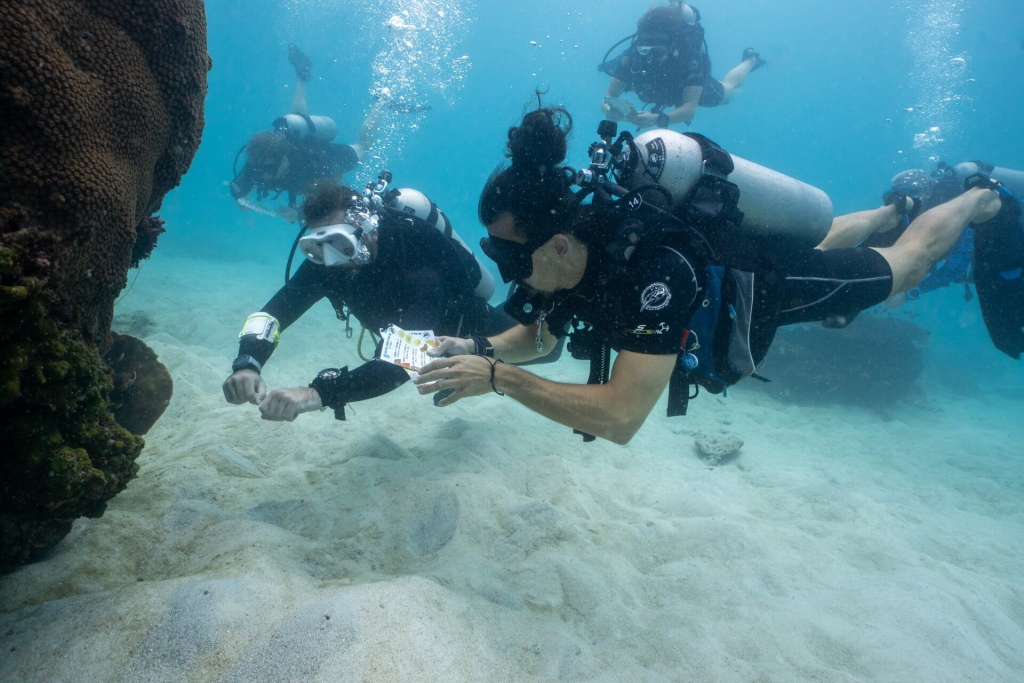
Diver recording fine-scale coral identification data during the Advanced Coral Taxonomy and Marine Conservation course at Black Turtle Conservation, Koh Tao, Thailand.
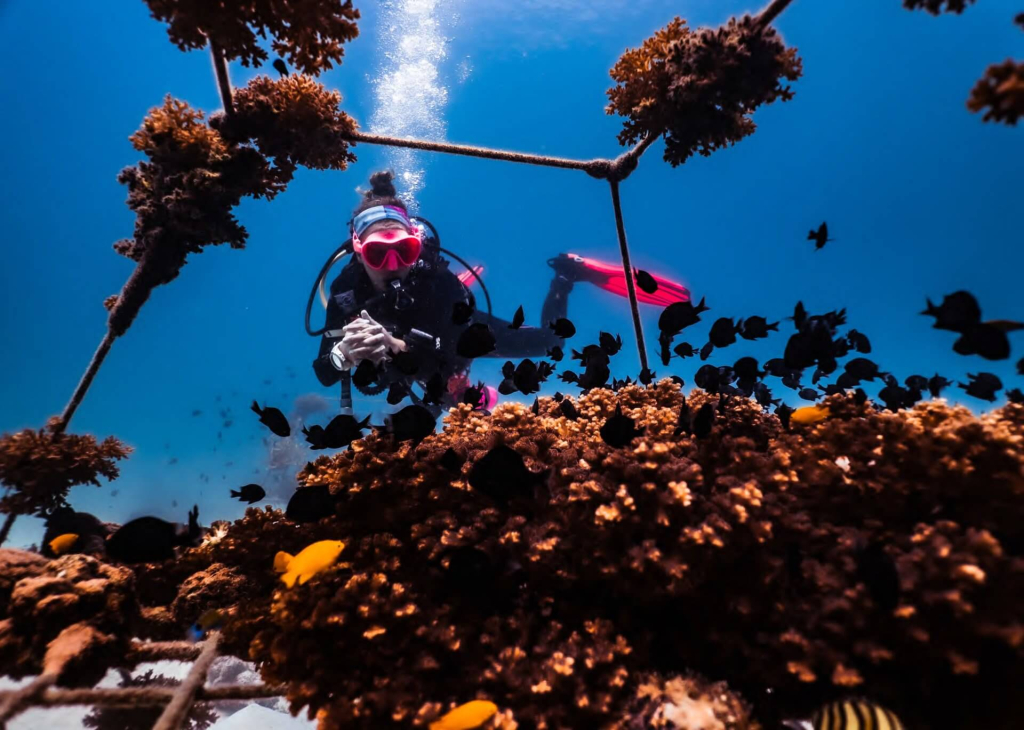
Healthy coral reef ecosystem with diverse fish species recorded during coral disease and reef health monitoring in Koh Tao, Thailand.
Marine conservation diver monitoring coral growth and fish populations on an artificial reef at Black Turtle Conservation, Koh Tao.

Overview of the Genus

Stylocoeniella is one of the more taxonomically restricted reef-coral genera, containing only three currently accepted species across the Indo-Pacific. The genus belongs to the ancient family Astrocoeniidae, which extends back to the Jurassic in the fossil record but is now represented by only a small number of extant genera in modern reef communities.

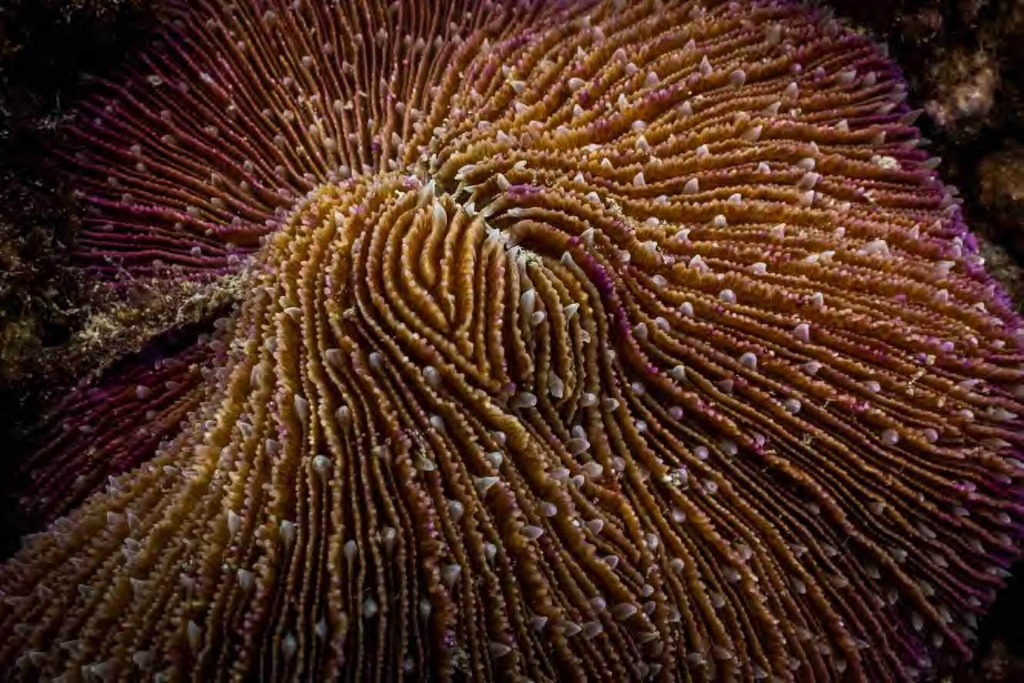
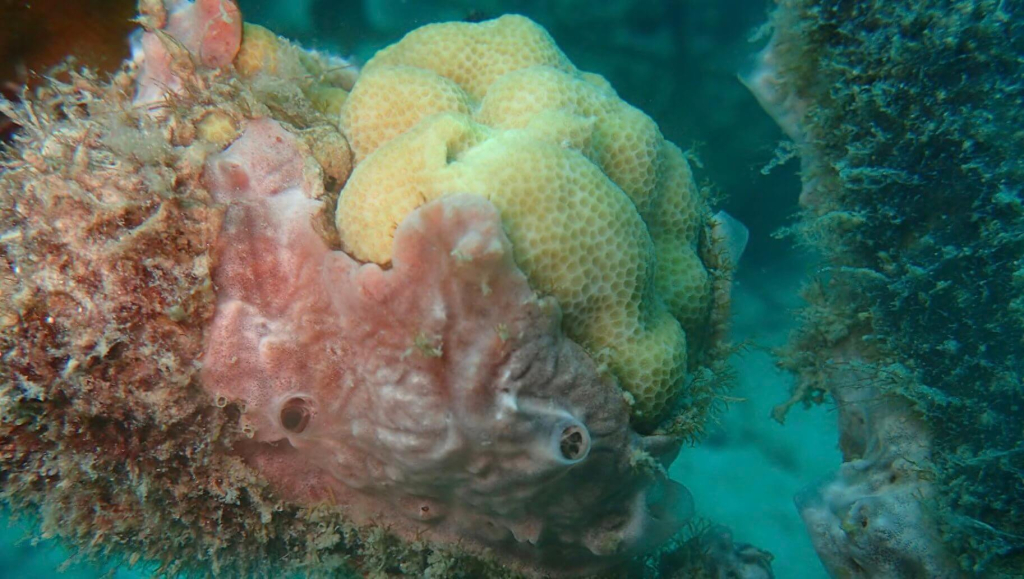
Stylocoeniella colonies are typically encrusting and produce flat, uniform sheets that cover hard substrate without the upright projections or branches of larger reef-building genera. The colony surface bears very small corallites separated by tiny spike-like coenosteum elements, giving the surface a finely textured appearance that resembles dense sandpaper.

On Koh Tao, Stylocoeniella is encountered occasionally on slope habitats, particularly in moderately shaded zones where its low growth form and limited light requirements suit its preferred environmental envelope. Its modest visual presence makes it easy to overlook, but accurate identification contributes meaningfully to comprehensive reef biodiversity inventories.

Global and Local Importance

Globally, Stylocoeniella guentheri occurs across the tropical Indo-Pacific from East Africa and the Red Sea through Southeast Asia and out to the Pacific Islands. The genus is widespread but rarely abundant at any single site, reflecting its preference for moderately shaded habitats and its slow encrusting growth pattern.

On Koh Tao, Stylocoeniella contributes to slope-zone biodiversity as a low-density indicator taxon. Tracking sightings of the genus contributes to broader assessments of reef coral diversity and to the documentation of less common but persistent components of the reef community.

Reef-Building Contribution and Habitat Provision

Stylocoeniella colonies, although individually small and inconspicuous, contribute to reef cover through their encrusting growth pattern. The genus typically covers small patches of hard substrate that might otherwise remain unoccupied, contributing to overall reef cover and providing microhabitat for very small cryptobenthic invertebrates.

The fine spike-textured surface of Stylocoeniella also creates microscale topographic complexity that supports a range of small reef-associated organisms, complementing the larger-scale architecture provided by dominant massive and branching reef-builders.

Growth Forms and Colony Variation

Stylocoeniella guentheri produces encrusting colonies that are typically flat or only modestly raised above the substrate, with colour morphs ranging from earthy browns and greens to vivid fluorescent reds, oranges, and yellows. The fluorescent colour morphs are particularly striking under good light conditions, although they can be missed by divers focused on larger reef structures.

Other species in the genus, such as Stylocoeniella armata, also produce encrusting colonies but with subtle differences in coenosteum architecture and corallite spacing. Species-level identification within Stylocoeniella requires careful examination of skeletal features and is generally beyond the scope of routine reef survey work.

Evolutionary and Taxonomic Notes

Stylocoeniella is one of the few extant genera of the family Astrocoeniidae, an ancient family with a fossil record extending back to the Jurassic period. The genus’s morphological conservatism over deep evolutionary time reflects its successful adaptation to a particular ecological niche of low-profile encrusting growth on shaded reef substrate, which has remained consistent across the genus’s evolutionary history.
Morphology

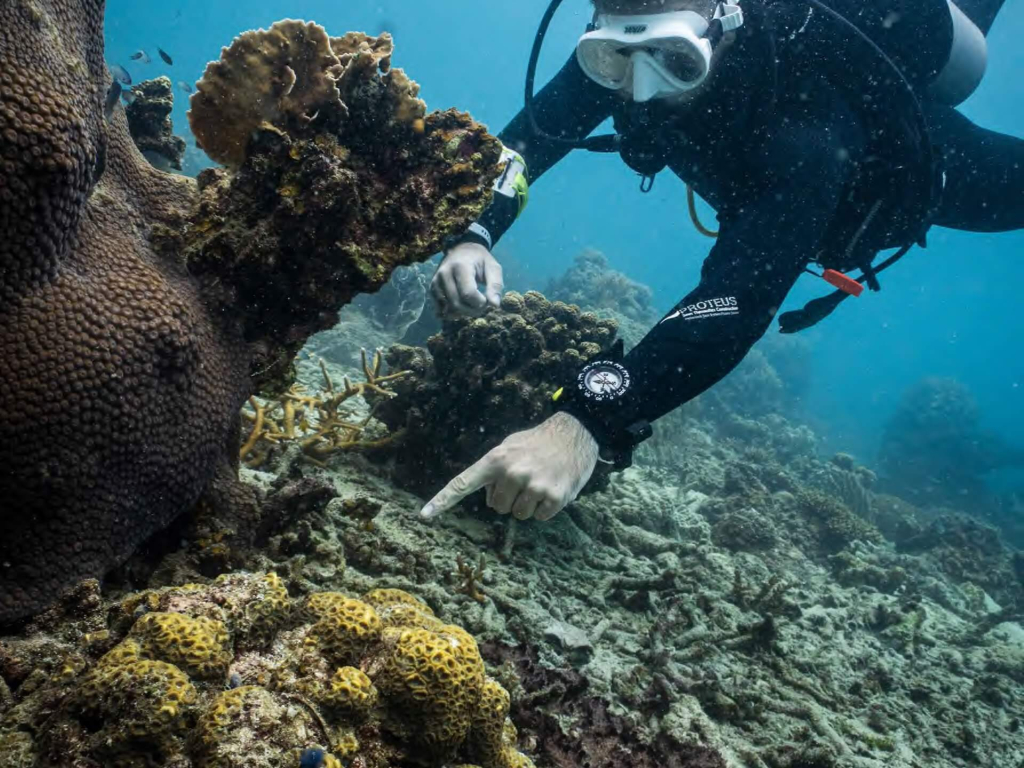
Student identifying coral species underwater during the Coral Taxonomy & Identification course with Black Turtle Conservation in Koh Tao, Thailand.
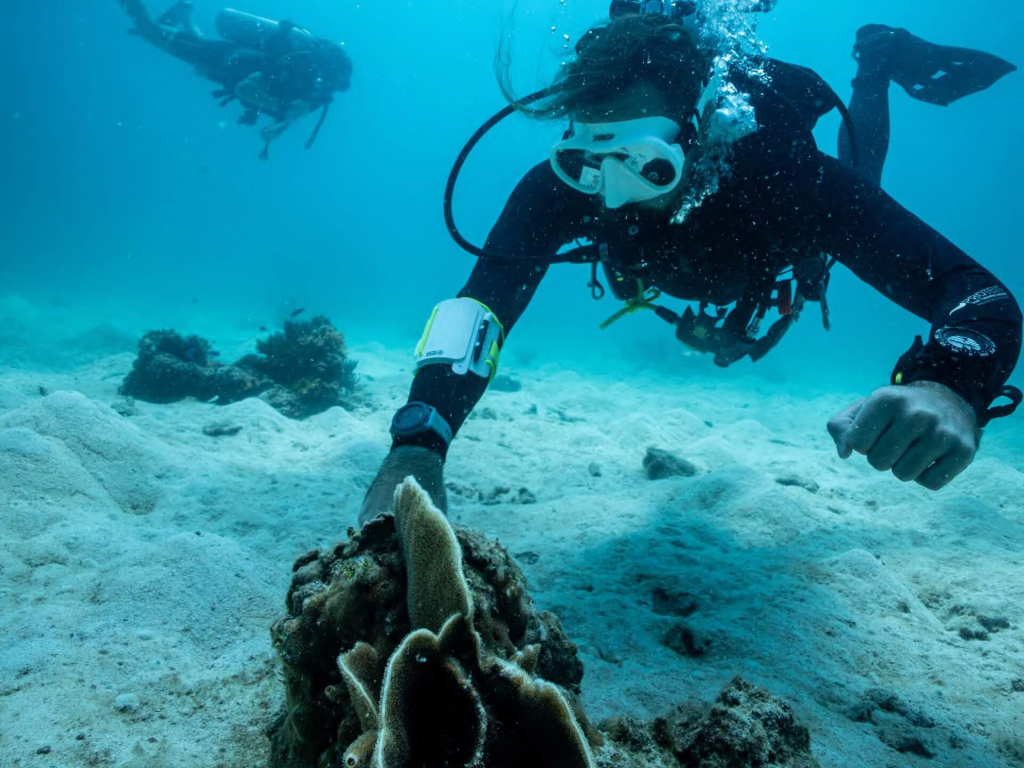
Marine researcher documenting coral species variations during the Advanced Coral Taxonomy course at Black Turtle Conservation, Koh Tao, Thailand.

Colony Structure and Skeletal Features

Stylocoeniella colonies are encrusting, producing flat or modestly raised sheets that cover hard substrate. The colony surface bears very small corallites (typically 1 mm or less in diameter) scattered across the colony at moderate density.

The diagnostic feature of the genus is the coenosteum architecture between corallites, which bears tiny spike-like elements called styliform processes. These small skeletal spikes give the colony surface a finely textured, almost dense sandpaper-like appearance that is unique among Indo-Pacific reef-builders.

Polyps and Tissue Characteristics

Stylocoeniella polyps are very small, with short tentacles that retract into the corallites during the day and extend at night for feeding. The thin tissue layer holds zooxanthellae of the family Symbiodiniaceae, supporting the genus’s photosynthetic energy budget across the encrusting colony surface.

The polyps are often most clearly visible at night when fully extended. During the day, the colony appears as a finely textured patch on the substrate, with the polyps barely visible within the small corallite cups.

Skeletal Microstructure and Calcification

Stylocoeniella skeletons are aragonitic and moderately dense, with the diagnostic styliform processes contributing to the surface texture without significantly increasing skeletal mass. The encrusting growth pattern produces colonies that are well-anchored to substrate but rarely raise more than a few millimetres above the underlying surface.

Calcification rates are slow, with the genus relying on persistent low-rate skeletal addition rather than rapid extension. Like all reef-builders, Stylocoeniella is sensitive to reductions in seawater carbonate saturation under ocean acidification scenarios.

Size, Growth, and Defensive Adaptations

On Koh Tao, mature Stylocoeniella colonies typically cover patches of 10–40 cm across, with rare larger examples occasionally exceeding 50 cm in extended encrusting cover. Growth is slow but persistent, allowing colonies to expand gradually across favourable substrate over multi-year timescales.

Defensive adaptations include nematocyst-armed tentacles, mucus production, and the small corallite cups that protect retracted polyps from predators. The diagnostic styliform processes also contribute to surface texture that may discourage some types of physical disturbance.

Dual-Feeding Strategy: How Stylocoeniella Feeds and Thrives

Stylocoeniella is a zooxanthellate mixotroph that combines photosynthesis carried out by symbiotic dinoflagellates with active heterotrophic capture of zooplankton. The genus’s encrusting colony form supports both feeding pathways effectively despite the small size of individual polyps.

1. Autotrophy: Photosynthate from Symbionts

Symbiotic dinoflagellates of the family Symbiodiniaceae living within the gastrodermis carry out photosynthesis and translocate organic compounds to the coral host. The flat encrusting colony surface allows efficient light interception across the entire colony footprint, supporting reasonable photosynthetic productivity despite the small polyp size.

This pathway typically supplies a substantial fraction of the colony’s daily carbon budget under favourable conditions, contributing to the slow but persistent calcification that produces the genus’s encrusting growth pattern.

Stylocoeniella polyps extend at night to capture zooplankton drifting past on currents. The high density of small polyps across the colony surface allows substantial overall heterotrophic capture, complementing the photosynthetic carbon supply.

Heterotrophic input supplies essential nitrogen, phosphorus, and trace elements, supporting the persistent calcification that defines the genus’s slow but steady growth pattern across hard reef substrate.

The combination of photosynthesis and heterotrophy supports Stylocoeniella’s persistence across a range of slope-zone conditions on Koh Tao. The encrusting growth form is generally less affected by physical disturbance than upright or branching colonies, contributing to the genus’s resilience despite its overall low abundance.

Where to Find Stylocoeniella Around Koh Tao and at Which Dive Sites

Healthy coral reef ecosystem with diverse fish species recorded during coral disease and reef health monitoring in Koh Tao, Thailand.
Marine biology student identifying coral genera as part of the Coral Taxonomy and Identification course at Black Turtle Conservation, Koh Tao, Thailand.

Stylocoeniella is uncommon but consistent on Koh Tao slope habitats. Its small encrusting colonies are easily overlooked but provide useful reference points for understanding the diversity of low-profile encrusting reef-builders.

Sheltered Slope Sites

Sites such as Aow Leuk, Hin Wong Bay, Tanote Bay, and Mango Bay host occasional Stylocoeniella colonies on shallow to mid-depth slopes. The most commonly encountered form at these sites is encrusting Stylocoeniella guentheri, often appearing as small finely textured patches on rocky substrate.

Pinnacle and Rubble Habitats

Stylocoeniella also occurs on rubble zones and at the bases of granite pinnacles at sites such as Twins, White Rock, and Chumphon Pinnacle. The genus tolerates moderately shaded conditions and rubble substrate effectively, allowing it to occupy habitats less suitable for many light-demanding reef-builders.

Mid-Depth Reef Slopes

Stylocoeniella is most commonly encountered at intermediate depths on stable slope habitats. The genus’s tolerance for moderately shaded conditions allows it to extend deeper than many faster-growing reef-builders, although colonies remain small and inconspicuous throughout the depth range.

Depth Distribution and Site Variation

Stylocoeniella is most commonly encountered between 5 and 20 m on Koh Tao, with isolated colonies extending to greater depths on shaded slopes. Colony size varies little with depth, although deeper colonies may grow somewhat more slowly than shallow ones in better-lit conditions.

Environmental Thresholds: Conditions for Optimal Growth

Stylocoeniella occupies a moderately shaded environmental envelope and tolerates conditions slightly more challenging than those preferred by light-demanding branching genera, making it a useful low-profile component of slope-zone reef communities.

Optimal Parameters

  • Light Intensity: moderate to low; tolerates shaded conditions on slope and rubble habitats.
  • Water Movement: tolerates a range of flow conditions; performs well in moderate to low flow.
  • Temperature Range: 24–30°C, with stress responses triggered by prolonged exposure above 30–31°C.
  • Salinity: stable marine conditions of 33–35 ppt; vulnerable to freshwater pulses during heavy monsoon runoff.
  • Substrate: stable hard substrate including rocky reef, granite pinnacle bases, and rubble zones.

Stress Responses on Koh Tao

Stylocoeniella can bleach during severe marine heatwaves, with symbionts expelled from the thin tissue and colonies appearing pale or white. The encrusting growth form provides some buffering against physical disturbance but limited buffering against thermal stress, and severe events can cause meaningful mortality across affected populations.

Sedimentation, freshwater runoff, and reduced light penetration following heavy monsoon rains compound thermal stress. Colonies in nearshore settings show clearer stress responses than those at offshore pinnacle sites, although the encrusting growth form gives some protection against direct mechanical disturbance.

Vulnerability Profile

Marine conservation diver monitoring coral growth and fish populations on an artificial reef at Black Turtle Conservation, Koh Tao.
Student identifying coral species underwater during the Coral Taxonomy & Identification course with Black Turtle Conservation in Koh Tao, Thailand.

Stylocoeniella guentheri is currently listed as Least Concern on the IUCN Red List, although the genus more broadly faces the same range of climate and anthropogenic pressures as other reef-building corals. The genus is also covered under CITES Appendix II, which has regulated international trade in scleractinian corals since 1990.

Major Threats

  • Coral Bleaching: bleaching during severe marine heatwaves with limited tissue buffering.
  • Ocean Acidification: progressive reduction in calcification rates as aragonite saturation state declines.
  • Wild Collection: minor harvesting for the ornamental coral trade in some parts of the genus’s range, particularly for fluorescent colour morphs.
  • Local Anthropogenic Impacts: anchoring, fin damage, and ghost fishing gear in zones where colonies are accessible.
  • Habitat Loss: cumulative habitat decline from coastal development and reef degradation.

On Koh Tao, Stylocoeniella is monitored as part of broader reef community surveys and is treated as a low-density indicator taxon for slope-zone biodiversity. Tracking its presence contributes to comprehensive assessments of encrusting reef-builder diversity.

Black Turtle Conservation includes Stylocoeniella in slope-zone surveys and uses sightings to refine site-level biodiversity inventories around the island.

How to Identify Stylocoeniella Coral

The defining features of Stylocoeniella in the field are the small encrusting colony form, the very small corallites scattered across the colony surface, and the diagnostic tiny spike-like styliform processes that give the colony surface its characteristic finely textured appearance.

Diver recording fine-scale coral identification data during the Advanced Coral Taxonomy and Marine Conservation course at Black Turtle Conservation, Koh Tao, Thailand.
Healthy coral reef ecosystem with diverse fish species recorded during coral disease and reef health monitoring in Koh Tao, Thailand.
Marine conservation diver monitoring coral growth and fish populations on an artificial reef at Black Turtle Conservation, Koh Tao.

Key Identification Features

  • Colony Form: encrusting, flat or modestly raised sheets on hard substrate.
  • Corallites: very small (1 mm or less), scattered across the colony surface at moderate density.
  • Styliform Processes: tiny skeletal spikes between corallites (the diagnostic feature).
  • Surface Texture: finely textured, dense sandpaper-like appearance.
  • Coloration: brown, green, red, orange, yellow; fluorescent colour morphs are particularly striking.

Distinguishing from Similar Genera

Montipora has very small corallites and a sandpaper-like texture but its monticules are larger bumps rather than the tiny spikes (styliform processes) of Stylocoeniella. Stylocoeniella is also typically smaller and less abundant than Montipora, occurring as scattered small patches rather than extensive plates or sheets.

Psammocora produces a granular honeycomb texture rather than the spike-textured surface of Stylocoeniella. The very small overall colony size and the diagnostic spike-textured surface make Stylocoeniella immediately distinguishable from related encrusting genera once trainees know what to look for.

Mastering Stylocoeniella Identification with Black Turtle Conservation

Marine researcher documenting coral species variations during the Advanced Coral Taxonomy course at Black Turtle Conservation, Koh Tao, Thailand.

At Black Turtle Conservation we treat reliable Stylocoeniella identification as a useful exercise in fine-detail observation. Because the genus is small, inconspicuous, and easily overlooked, learning to recognise it forces students to slow down their dive pace and pay close attention to substrate-level detail, which improves their broader reef survey skills considerably.

Our Training Approach: From Theory to Survey

Diver recording fine-scale coral identification data during the Advanced Coral Taxonomy and Marine Conservation course at Black Turtle Conservation, Koh Tao, Thailand.

Our Coral Taxonomy and Identification training addresses Stylocoeniella through a structured, progressive sequence designed to build observation skills in trainees alongside genus-level recognition.

  • Classroom Theory: students learn astrocoeniid morphology, the diagnostic styliform processes, and the contrast with Montipora and Psammocora.
  • In-Water Practice: guided dives at Aow Leuk, Hin Wong Bay, and similar slope sites where Stylocoeniella colonies are reliably encountered with careful searching.
  • Applied Monitoring: participation in slope-zone surveys, where Stylocoeniella presence is recorded as priority sightings for comprehensive biodiversity inventories.
  • Comparative Identification: side-by-side comparison with Montipora and Psammocora to consolidate small-corallite encrusting coral recognition skills.

Graduates leave with the practical ability to identify Stylocoeniella at genus level under field conditions and to record its presence reliably as part of long-term reef monitoring around Koh Tao.

Frequently Asked Questions

What are styliform processes?

Styliform processes are tiny skeletal spikes that occur in the coenosteum (the skeletal surface between corallites) of Stylocoeniella colonies. They give the colony surface a finely textured, almost dense sandpaper-like appearance that is unique among Indo-Pacific reef-building corals and serves as the diagnostic feature for the genus.

How is Stylocoeniella different from Montipora?

Both genera produce small encrusting colonies with sandpaper-textured surfaces, but the texture itself differs at the microstructural level. Montipora has small bumps called monticules between its corallites, while Stylocoeniella has tiny skeletal spikes called styliform processes. Stylocoeniella is also typically smaller and less abundant, occurring as scattered small patches rather than extensive plates.

Is Stylocoeniella common on Koh Tao?

Stylocoeniella is uncommon but consistent on Koh Tao slope habitats. The genus typically occurs as small encrusting colonies that are easy to overlook but that contribute meaningfully to comprehensive reef biodiversity inventories. Sites such as Aow Leuk, Hin Wong Bay, and the bases of granite pinnacles host occasional Stylocoeniella colonies.

Why is Stylocoeniella in the family Astrocoeniidae?

Stylocoeniella is one of the few extant genera of the family Astrocoeniidae, an ancient coral family with a fossil record extending back to the Jurassic period. The genus’s morphological conservatism over deep evolutionary time reflects successful adaptation to the particular ecological niche of low-profile encrusting growth on shaded reef substrate.

Are Stylocoeniella colonies brightly coloured?

Stylocoeniella colour morphs range from earthy browns and greens to vivid fluorescent reds, oranges, and yellows. The fluorescent morphs are particularly striking under good light conditions, although they are easily missed by divers focused on larger reef structures. The colours result from host-produced fluorescent proteins and contribute to the genus’s interest as a small but visually distinctive component of slope-zone reefs.

External Link Citations and References

Veron, J.E.N. (2000). Corals of the World. Australian Institute of Marine Science.

World Register of Marine Species (WoRMS): Stylocoeniella Yabe & Sugiyama, 1935.

IUCN Red List of Threatened Species: Stylocoeniella guentheri (Least Concern).

Department of Marine and Coastal Resources (DMCR), Thailand: Reef monitoring reports.

Black Turtle Conservation: Coral conservation, monitoring and restoration on Koh Tao.