Overview of the Genus
Pavona is one of the most prominent reef-building genera of the family Agariciidae and is renowned for its morphological flexibility. Different species produce massive, encrusting, foliose, columnar, or bi-facial laminar growth forms, and the same species can express different forms depending on local light, flow, and substrate conditions.
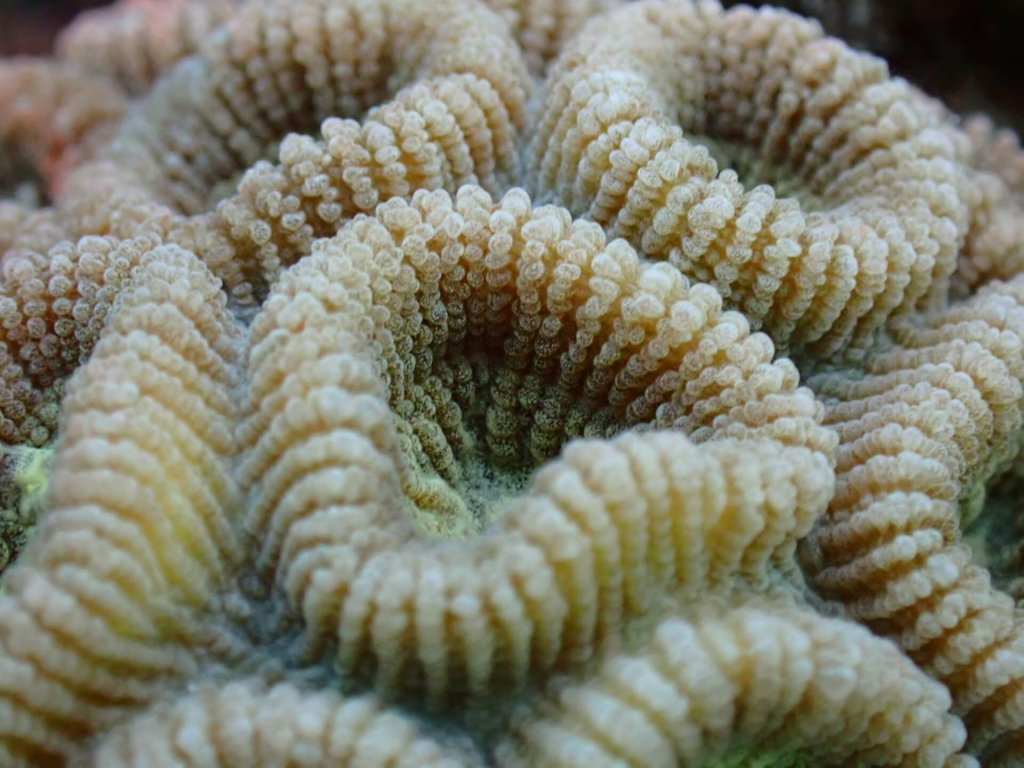
The genus is also notable for the thamnasteroid arrangement of its corallites, which lack discrete walls and merge into a continuous skeletal surface punctuated only by the corallite mouths. This skeletal architecture distinguishes Pavona from most other reef-builders and is one of the genus’s most reliable field identification cues.
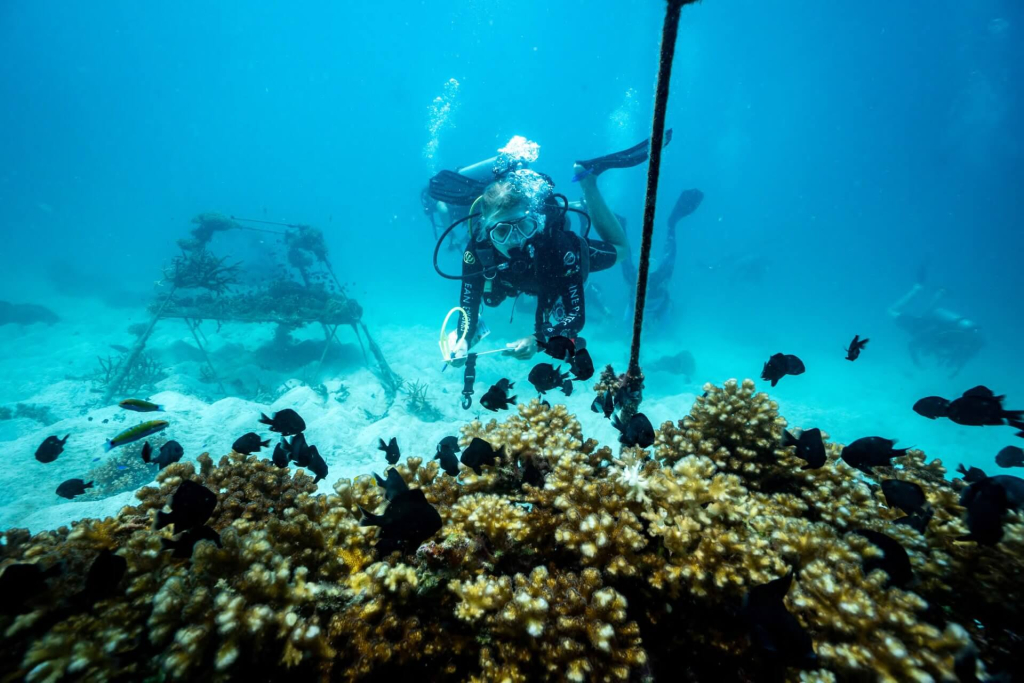
On Koh Tao, Pavona has emerged as one of the most resilient and structurally important coral genera. Its tolerance for moderately reduced light, sediment, and thermal stress underpins its expanding role on Koh Tao reefs in the era of repeated marine heatwaves.
Global and Local Importance
Globally, Pavona is widespread across the tropical Indo-Pacific from the Red Sea and East Africa through Southeast Asia and out to the East Pacific. The genus contributes meaningfully to reef-building across its range and is particularly important in marginal habitats where conditions are too variable for more sensitive genera.
On Koh Tao, Pavona has increased in relative abundance over the past two decades alongside Porites and Fungiidae. This pattern positions Pavona as a key reference taxon for tracking the community-level shift toward stress-tolerant taxa documented in regional surveys.
Reef-Building Contribution and Habitat Provision
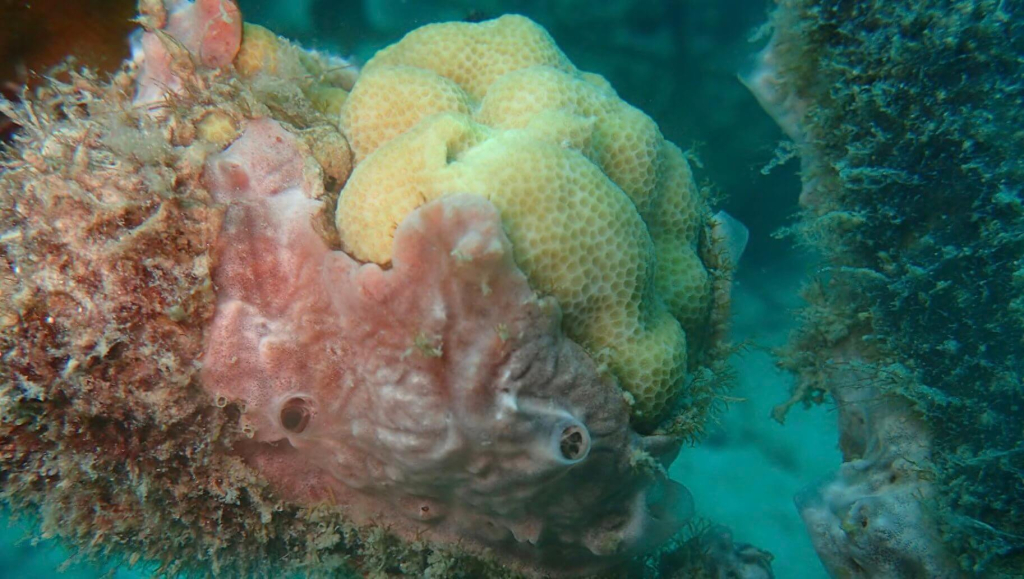
Pavona contributes substantially to reef framework through its diverse growth forms. Foliose and bi-facial colonies provide vertical reef structure and shaded microhabitat, while encrusting and massive forms create stable substrate for cryptobenthic communities and microscale topographic complexity.
The thamnasteroid surface of Pavona is also actively grazed by reef fish, with parrotfish bioerosion producing the fine sediment that feeds back into reef carbonate cycling around Koh Tao.
Growth Forms and Colony Variation
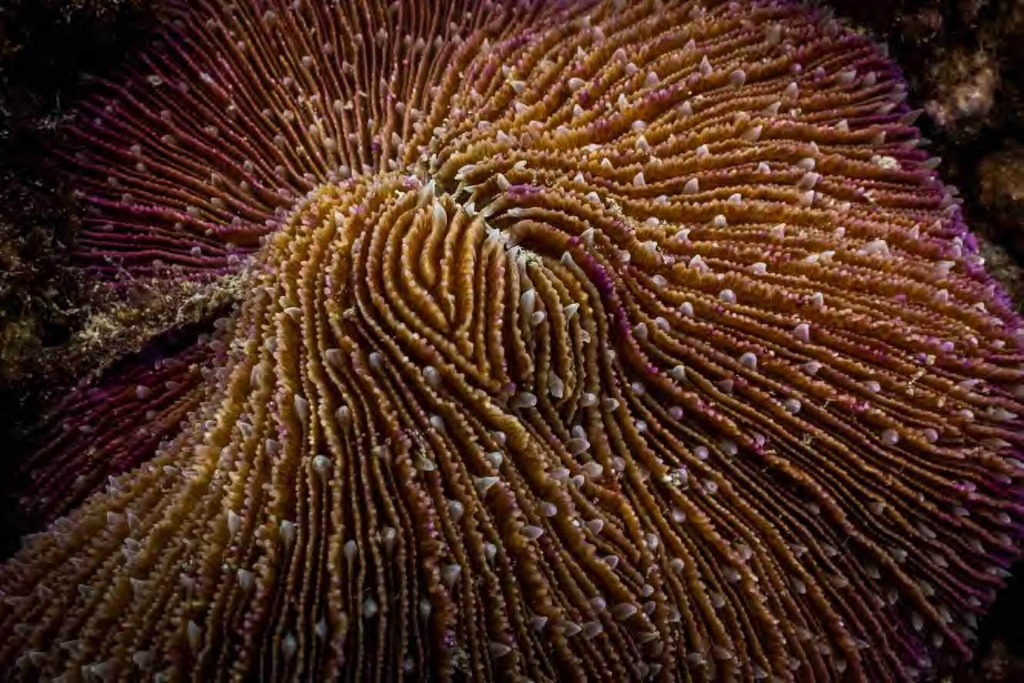
Pavona shows extreme growth-form plasticity. Pavona cactus produces foliose, often bi-facial laminar colonies with thin, leaf-like plates. Pavona varians produces encrusting and massive colonies with characteristic ridge patterns. Pavona clavus produces massive columnar colonies, while Pavona explanulata produces broad encrusting plates.
On Koh Tao, the most commonly encountered forms are encrusting and foliose, although massive columnar Pavona clavus is also seen at some sites. Colour ranges from cream and brown through olive to bright green, often with contrasting darker corallite centres.
Evolutionary and Taxonomic Notes
Pavona is one of several scleractinian genera shown to be polyphyletic in recent molecular phylogenies, meaning the taxonomic boundaries of the genus do not reflect strict evolutionary relationships. A new species, Pavona giannii, was described in 2025, and a formal revision of the genus is currently in progress with phylogenomic analyses ongoing. Species-level identification within Pavona should therefore be approached with caution.