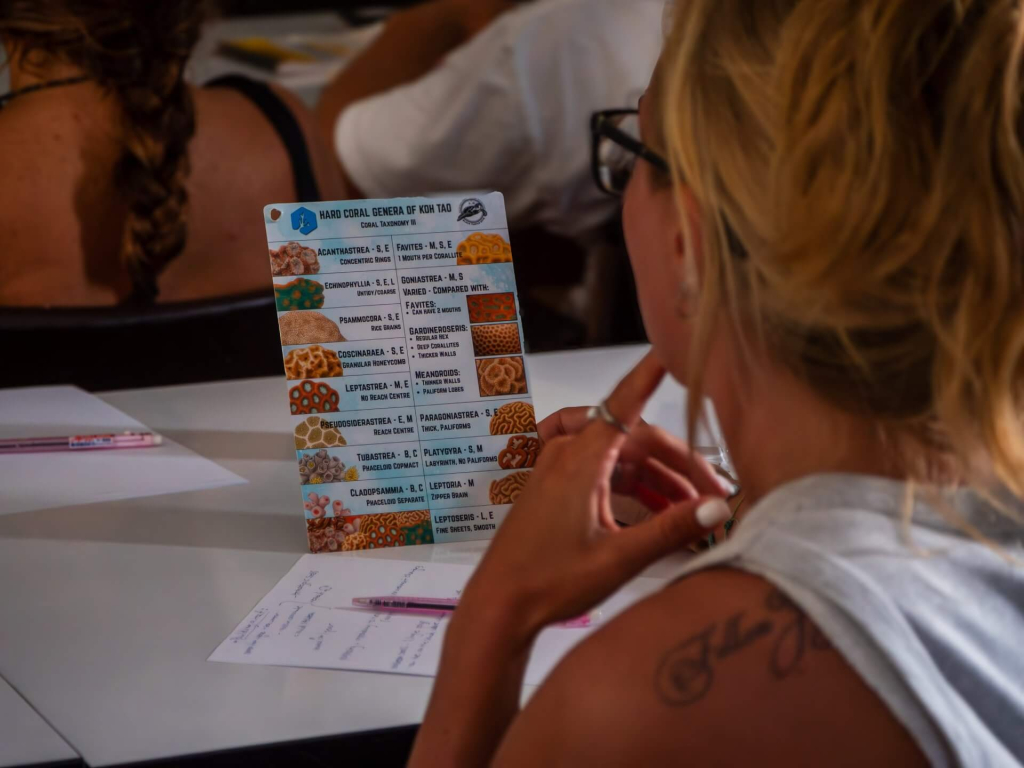
Join our conservation team for a hands-on day dedicated to protecting and maintaining our artificial reefs. To ensure these purpose-built habitats remain healthy and effective over the long term, we split the day between scientific monitoring and active care. You will assist our conservation team in assessing coral health, identify growth forms, and measure coral fragments. Then, you will help us delicately clean the reef structures—removing settled algae and competing marine overgrowth to create fresh space for new coral recruits to attach and thrive.

½ Day

2 Scuba Dives

2200 THB

Join us for a day dedicated to advancing Koh Tao’s marine conservation efforts through active coral restoration.

Across two fully supported dives, you will gain practical field experience alongside fellow ocean enthusiasts, directly contributing to vital reef recovery projects.

While many travellers visit our island purely for recreational scuba diving, this initiative empowers a community of eco-conscious divers to go further—transforming their time underwater into a tangible impact on local coral reef ecosystems.
Key Learning Takeaways:

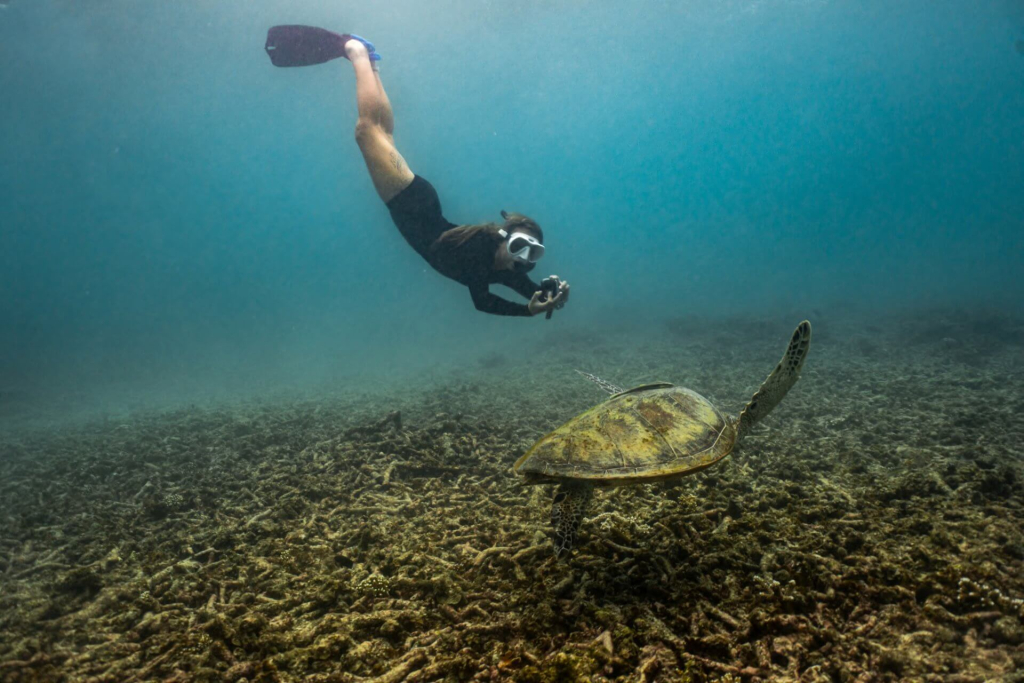
Scientific research coral restoration monitoring project in Koh Tao, combining reef rehabilitation techniques and long-term coral health data collection.
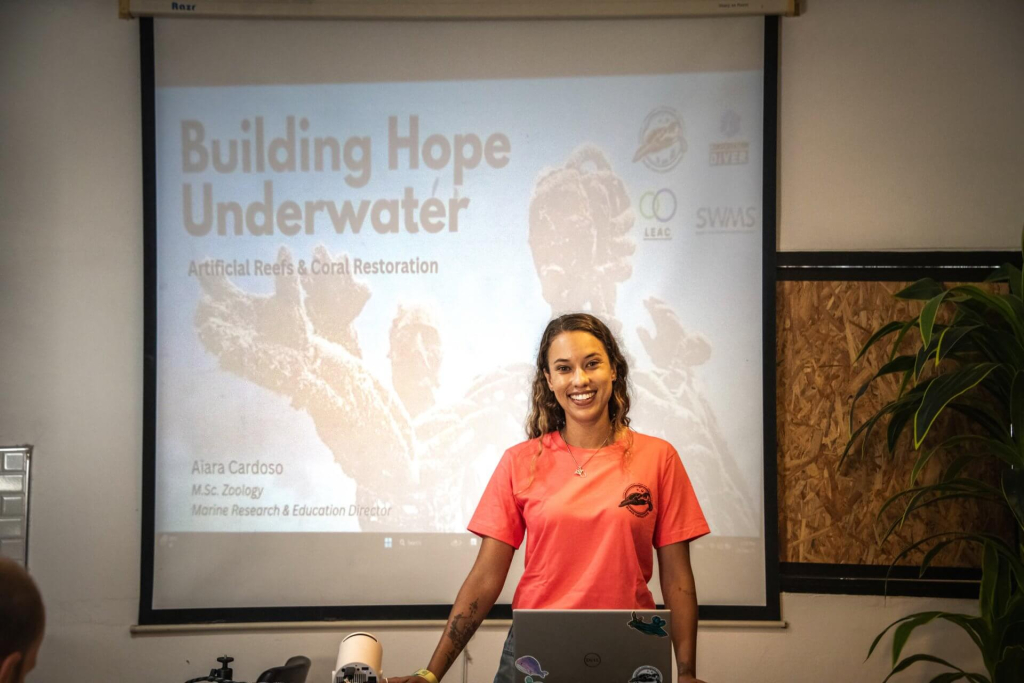
Reef Specialist students exploring artificial reef structures and monitoring marine life colonization as part of a 4-week conservation course in Koh Tao.
  • Artificial Reef Design & Engineering: Explore the materials and structural designs that provide ideal surfaces for marine life to colonise.
  • Ecological Succession & Habitat Dynamics: Understand how a bare structure transforms into a thriving ecosystem, tracking the timeline from pioneer algae species to complex coral and fish communities.
  • Reef Degradation & Pressure Relief: Examine the global and local threats facing natural reefs, and learn how artificial structures act as critical “pressure-relief valves” to divert heavy tourism away from vulnerable areas.
  • Standardised Monitoring Techniques: Use visual assessment skills needed to evaluate colony health, measure coral fragment growth, and track the successful settlement of new baby corals.
  • Targeted Maintenance & Conservation Impact: Learn the hands-on protocols for maintaining purpose-built habitats. Practice delicately removing invasive bio-fouling and competitive algae, directly clearing vital substrate to promote coral settlement.

Who Should Join:

Reef Specialist students exploring artificial reef structures and monitoring marine life colonization as part of a 4-week conservation course in Koh Tao.
  • Ocean Advocates: Anyone passionate about active marine restoration and supporting localised conservation efforts on Koh Tao.
  • Citizen Scientists: Divers looking to elevate their time in the water by contributing to authentic, hands-on reef management.
  • Eco-Conscious Explorers: Families, beginners, and environmentally minded travellers seeking a meaningful, impact-driven ocean experience.

Why This Survey Matters

Reef Specialist trainees visiting artificial reef installations and learning how restoration and reef design support marine ecosystems in Koh Tao.
Scientific research coral restoration monitoring project in Koh Tao, combining reef rehabilitation techniques and long-term coral health data collection.

An artificial reef is not a finished object the day it is deployed. It is a bare structure at the start of a long ecological succession, and whether it becomes a functioning habitat or stalls as a sheet of algae depends on what happens to it in the years that follow. Pioneer algae and bio-fouling organisms colonise new substrate first and quickly, and left alone they occupy the very surfaces that coral recruits need in order to settle.

Monitoring and maintenance answer two different questions, which is why the day covers both. Measuring fragment growth, assessing colony health and tracking the settlement of new recruits is the only way to know whether a structure is genuinely working—without those records, a reef can be assumed to be recovering for years with no evidence at all. Clearing competing growth is what keeps that recovery physically possible.

Doing both, consistently, is what allows these purpose-built habitats to mature into the pressure-relief valves they were designed to be, drawing diving activity away from vulnerable natural reefs instead of becoming structures nobody can account for.

Your Survey, Step by Step

Before You Enter the Water

Your Conservation Survey Leader begins with a comprehensive ecological briefing covering the materials and structural design of the reefs you will work on, and the succession that turns a bare surface into a coral and fish community. You then cover both halves of the day's method: the standardised assessment protocols used to evaluate colony health, measure coral fragments and recognise newly settled recruits, and the maintenance protocols that follow—how to tell competitive algae and bio-fouling from the encrusting growth that belongs there, and how to work close to living tissue without damaging it.

In the Water

The two dives hold two distinct activities, and they are kept in that order deliberately: you assess the reef before you alter it. Assessment comes first, moving structure by structure to score colony health, identify growth forms, measure fragments and count new recruits, so the condition of the reef is on record exactly as you found it.

Maintenance follows. This half of the session is slow, close, deliberate work rather than scrubbing—competitive algae and settled bio-fouling are removed immediately around living coral, so every movement is made with the tissue beside it in mind. You clear the substrate a hand's width at a time, leaving the bare surface open for new recruits and the colonies themselves untouched. It is more patience than effort, and restraint is the skill.

Back at the Centre

You return to the centre to log the day's findings. Health assessments, fragment measurements and recruitment counts are entered into our long-term conservation database, the maintenance carried out on each structure is recorded alongside them, and the team reviews what the figures show against previous surveys of the same reefs.

Session Time Activity
Briefing Before departure Ecology briefing and survey methodology
Field survey Morning or afternoon boat Two dives: coral health assessment and fragment measurement, then delicate reef maintenance
Debrief On return Data logging, photo review and discussion

Please note that this schedule is indicative. Both dives run from a single boat trip, either the morning or the afternoon departure. Exact times will be confirmed before your survey begins.

What Your Data Contributes To

Reef Specialist students exploring artificial reef structures and monitoring marine life colonization as part of a 4-week conservation course in Koh Tao.
Reef Specialist trainees visiting artificial reef installations and learning how restoration and reef design support marine ecosystems in Koh Tao.

Every measurement you record extends the ecological baseline for our artificial reefs—a continuous growth and recruitment history for individual structures, against which any later change can be judged. A fragment measured once is a number; the same fragment measured month after month is a growth rate.

That record also drives action directly. Because assessment and maintenance happen in the same session, a structure found to be losing substrate to algae is cleared that day rather than added to a list, and signs of stress identified during assessment tell the conservation team which reefs need attention first. This is the rarer kind of monitoring—a dataset whose findings are acted on in the water by the people who collected them.

In a ten-month period, our weekly monitoring and maintenance surveys monitored 4,000 coral fragments. This consistent tracking allowed us to identify successful attachment methods, observe resilience of specific coral genera, and compare their overall health and growth rates. And this is just the beginning!

Prerequisites:

Advanced Open Water Diver (or equivalent)

Price Includes
2,200 ฿
  • 1 ecology briefing
  • 2 guided survey dives
  • Diving equipment & dive computer
  • Dive insurance
  • Refreshments & fruit on the boat
BOOK NOW

Timetable

Wednesday · indicative plan

  1. 10:30Artificial reef monitoring and maintenance briefing
  2. 11:30–12:00Pack gear and lunch
  3. 12:00Dive 1 — monitoring survey
  4. 14:00Dive 2 — reef maintenance
  5. 17:00Data review and input

Both dives run on one boat trip, either a morning or afternoon departure. These times are indicative; confirm the departure before the survey.