Porites is one of the most abundant and widely distributed reef-building coral genera in the tropical Indo-Pacific, characterised by very small polyps set into a smooth, skin-like skeletal surface and most commonly by massive or submassive growth forms. The genus encompasses massive, submassive, encrusting, and branching species, with massive Porites colonies in particular known for slow but consistent growth and remarkable longevity.

Around Koh Tao, Porites has emerged as one of the most resilient and structurally important coral genera. Long-term Ecological Monitoring Program surveys have documented increases in Porites abundance through the 2006–2014 period, alongside corresponding declines in more thermally sensitive genera such as Acropora and Montipora, indicating a community-level shift toward stress-tolerant taxa.

This guide explores the morphology, dual-feeding strategy, distribution around Koh Tao, environmental requirements, vulnerability profile, field identification, and conservation training opportunities offered by Black Turtle Conservation. It is intended as a foundational reference for conservation interns, advanced reef surveyors, and citizen scientists contributing to coral monitoring and restoration on Koh Tao.

Common Names: Hump Coral, Boulder Coral, Mountain Coral, Finger Coral

Family: Poritidae

Order: Scleractinia (Stony Corals)

Subclass: Hexacorallia | Class: Anthozoa | Phylum: Cnidaria

Learn About Porites Coral Genus

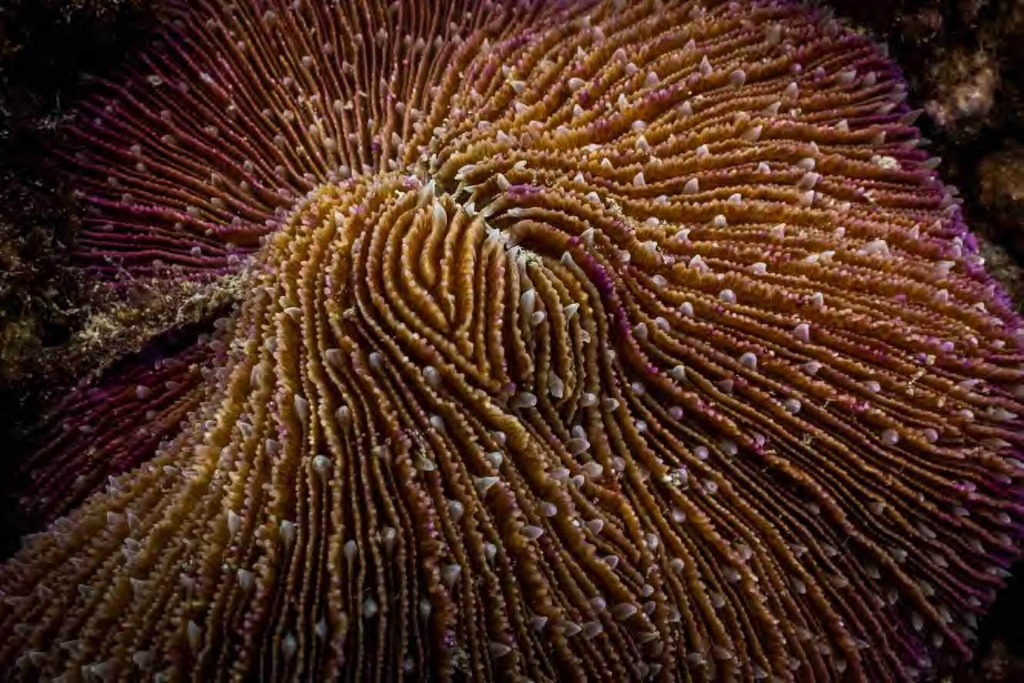
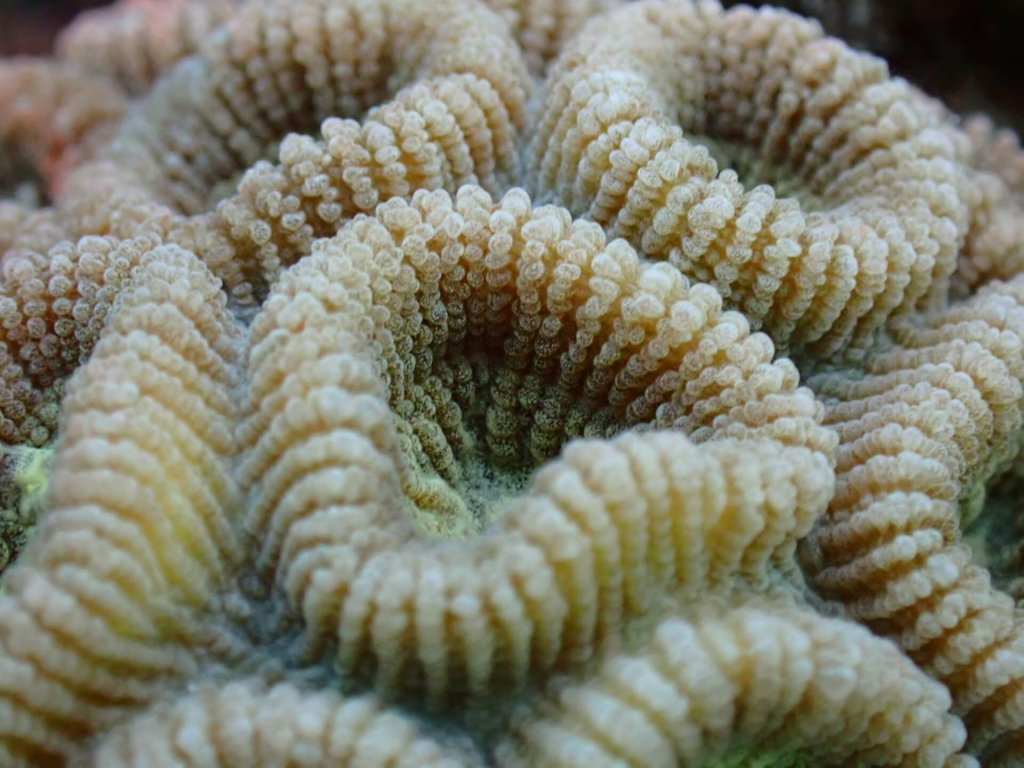
Close-up of a healthy brain coral colony photographed during the Ecological Monitoring Program (EMP) with Black Turtle Conservation in Koh Tao, Thailand.
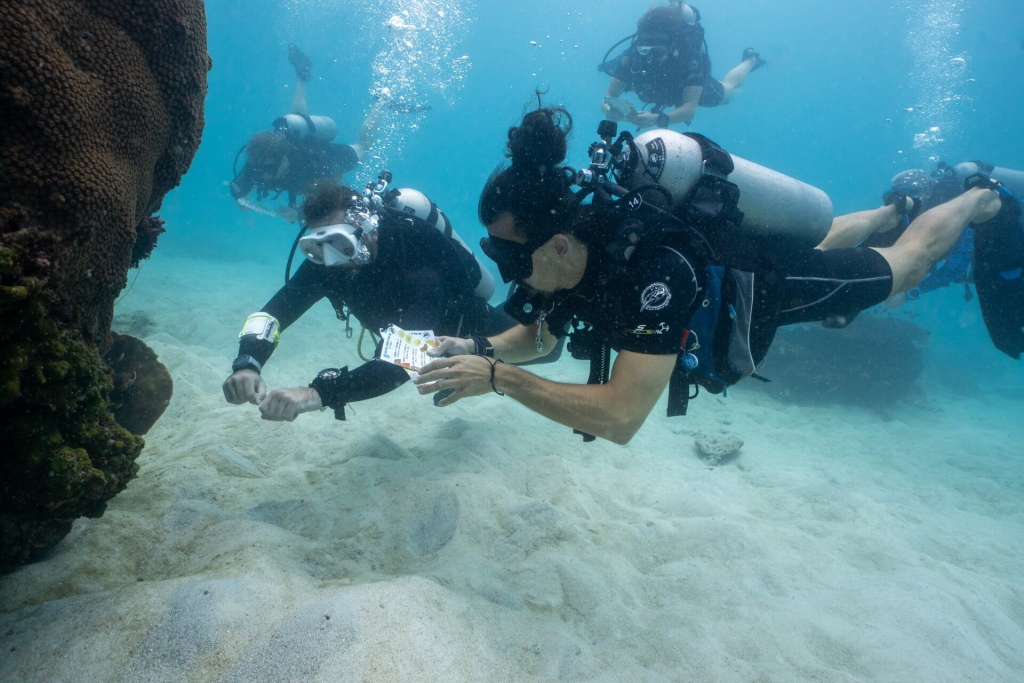
Marine conservation diver collecting data on coral species during the Coral Taxonomy and Ecological Monitoring course at Black Turtle Conservation, Koh Tao, Thailand.
Diver recording fine-scale coral identification data during the Advanced Coral Taxonomy and Marine Conservation course at Black Turtle Conservation, Koh Tao, Thailand.

Overview of the Genus

Porites is one of the most prominent reef-building genera throughout the Indo-Pacific. Massive Porites colonies dominate back reefs, lagoonal areas, and protected slopes, while branching and encrusting species occupy a wider range of microhabitats.

The genus is well known for its stress-tolerant life history strategy. Thick tissue layers, slow skeletal growth, high investment in energy reserves, and effective cellular repair mechanisms together produce colonies that persist for centuries under conditions that prove fatal to many other coral genera.

On Koh Tao, Porites is one of the most consistently abundant genera and has been recorded as the dominant coral on much of the near-shore reef. This dominance has been attributed to its tolerance of both sedimentation and thermal bleaching events common in the Gulf of Thailand.

Global and Local Importance

Globally, massive Porites colonies form some of the largest single coral structures on Earth, with individual colonies sometimes exceeding 8 m in height and several hundred years in age. Their slow growth bands are widely used in palaeoclimatology to reconstruct historical sea-surface temperature and precipitation records.

On Koh Tao, Porites provides ongoing reef framework even as faster-growing competitors decline under repeated bleaching events. This makes the genus a cornerstone of long-term reef persistence and an essential reference taxon for monitoring programmes.

Reef-Building Contribution and Habitat Provision

Massive Porites mounds provide enduring three-dimensional structure that resists storm damage, bioerosion, and acute thermal events better than many other hard coral genera. These mounds shelter cryptobenthic species and serve as substrate for boring bivalves, sponges, and Christmas tree worms (Spirobranchus giganteus).

Branching Porites species, where present, contribute additional habitat complexity in sheltered settings, although they are less common around Koh Tao than the dominant massive forms.

Growth Forms and Colony Variation

Porites displays a wide range of growth forms, including massive (boulder-like), submassive, encrusting, and finger-like branching. The ‘Porites lobata species complex’ alone contains as many as seven nominal species spanning massive to branching morphology, often with overlapping characteristics that complicate species-level identification.

Around Koh Tao, the dominant forms are massive and submassive colonies, with the smooth, skin-like skeletal surface and very small corallites that make Porites instantly recognisable at the genus level.

Evolutionary Success and Diversity

Porites’ evolutionary success rests on a combination of slow but durable growth, broad environmental tolerance, and flexible symbiosis. Massive Porites can shuffle Symbiodiniaceae communities in response to thermal stress, which contributes to the resilience that distinguishes the genus from more thermally sensitive taxa.
Morphology

Close-up of a healthy brain coral colony photographed during the Ecological Monitoring Program (EMP) with Black Turtle Conservation in Koh Tao, Thailand.
Marine conservation diver collecting data on coral species during the Coral Taxonomy and Ecological Monitoring course at Black Turtle Conservation, Koh Tao, Thailand.
Diver recording fine-scale coral identification data during the Advanced Coral Taxonomy and Marine Conservation course at Black Turtle Conservation, Koh Tao, Thailand.

Colony Structure and Skeletal Features

Porites colonies are most commonly massive or submassive, forming smooth, rounded mounds or boulder-like structures with a characteristically skin-like surface texture. Branching and encrusting forms exist but are less dominant on Koh Tao reefs.

Corallites are very small, typically around 1–2 mm in diameter, with widely spaced calices, well-developed wall reticulum, and bilateral symmetry. The closely set, almost flush corallites give Porites its signature smooth appearance, which is one of the most reliable genus-level identification cues underwater.

Polyps and Tissue Characteristics

Porites polyps are tiny but numerous and emerge for both daytime and nocturnal feeding under appropriate conditions. The tissue layer is notably thick relative to many other reef-building corals, contributing to the genus’s well-documented tolerance of physical and thermal stress.

Tissue thickness also supports significant lipid and energy reserves, helping colonies endure periods of reduced photosynthesis during bleaching events without immediate mortality.

Skeletal Microstructure and Calcification

Porites skeletons are aragonitic and notably dense compared with the porous skeletons of fast-growing branching genera. Linear extension is typically slow, often around 1–2 cm per year for massive forms, but the dense skeletal microstructure produces highly resistant, long-lived colonies.

These growth bands are clearly visible in cross-section and have been widely used in palaeoclimatology to reconstruct sea-surface temperature, salinity, and rainfall histories spanning multiple centuries.

Size, Growth Rates, and Defensive Adaptations

On Koh Tao, mature massive Porites colonies commonly reach 1–3 m in diameter, with the largest mounds at sheltered sites occasionally exceeding 4 m. Although growth is slow, persistent calcification over decades and centuries produces some of the most prominent biogenic structures on the island’s reefs.

Defensive adaptations include thicker tissue layers that buffer against thermal and mechanical stress, robust mucus production, and effective wound-healing capacity that allows colonies to recover from partial mortality far more reliably than many faster-growing genera.

Dual-Feeding Strategy: How Porites Feeds and Thrives

Porites is a zooxanthellate mixotroph that combines photosynthesis carried out by symbiotic dinoflagellates with active heterotrophic feeding on plankton and dissolved organic matter. The unusual stress tolerance of the genus is closely tied to the way it allocates and stores the energy obtained through both pathways.

1. Autotrophy: Photosynthate from Flexible Symbionts

Symbiotic dinoflagellates of the family Symbiodiniaceae living within the gastrodermis carry out photosynthesis and translocate organic compounds to the coral host. Massive Porites in particular often hosts Cladocopium C15 lineage symbionts, which appear to contribute meaningfully to the genus’s heat tolerance.

Recent research has shown that massive Porites can shuffle its Symbiodiniaceae community composition in response to thermal stress, with some symbiont taxa becoming more prevalent following bleaching-level events. This flexibility appears to underpin much of the genus’s resilience on Koh Tao.

Despite its photosynthetic primary nutrition, Porites is also an effective heterotrophic feeder, capturing zooplankton, suspended particulate matter, and dissolved organic compounds. Polyps may extend during both day and night under appropriate conditions, broadening the genus’s feeding window relative to strictly nocturnal feeders.

Heterotrophic input supplies essential nitrogen, phosphorus, and trace elements, and is thought to contribute substantially to the energy reserves that support Porites through bleaching and other stress periods.

The combination of robust autotrophy, flexible symbiont communities, active heterotrophy, and high tissue energy reserves underpins Porites’ well-documented climate resilience. While not immune to bleaching, Porites recovers more reliably than most coral genera on Koh Tao and accordingly increased in relative abundance over the 2006–2014 monitoring period.

Where to Find Porites Around Koh Tao and at Which Dive Sites

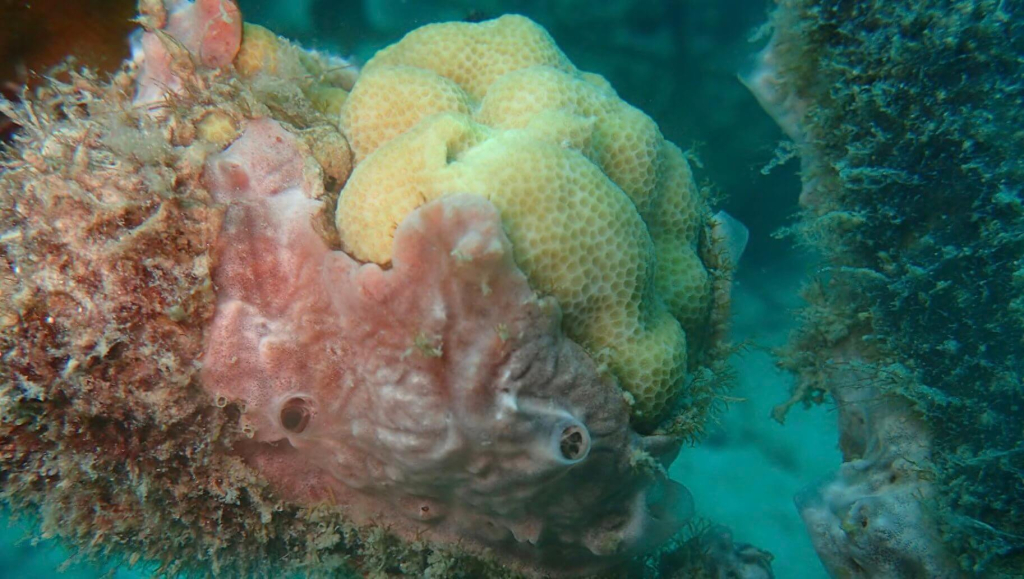
Healthy coral reef ecosystem with diverse fish species recorded during coral disease and reef health monitoring in Koh Tao, Thailand.
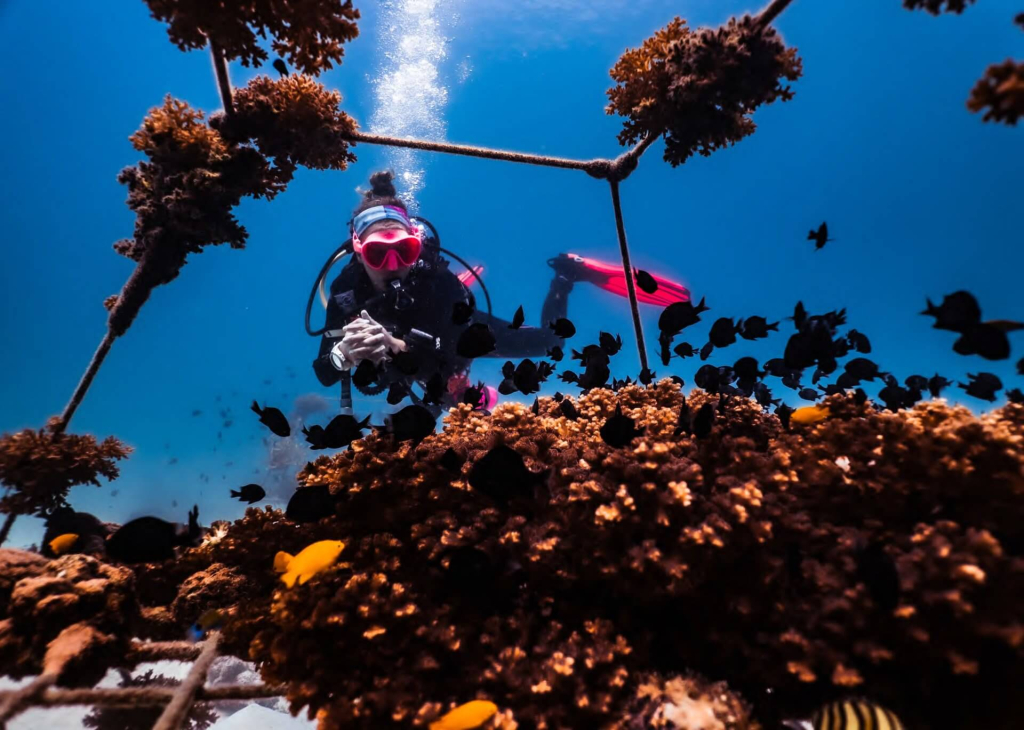
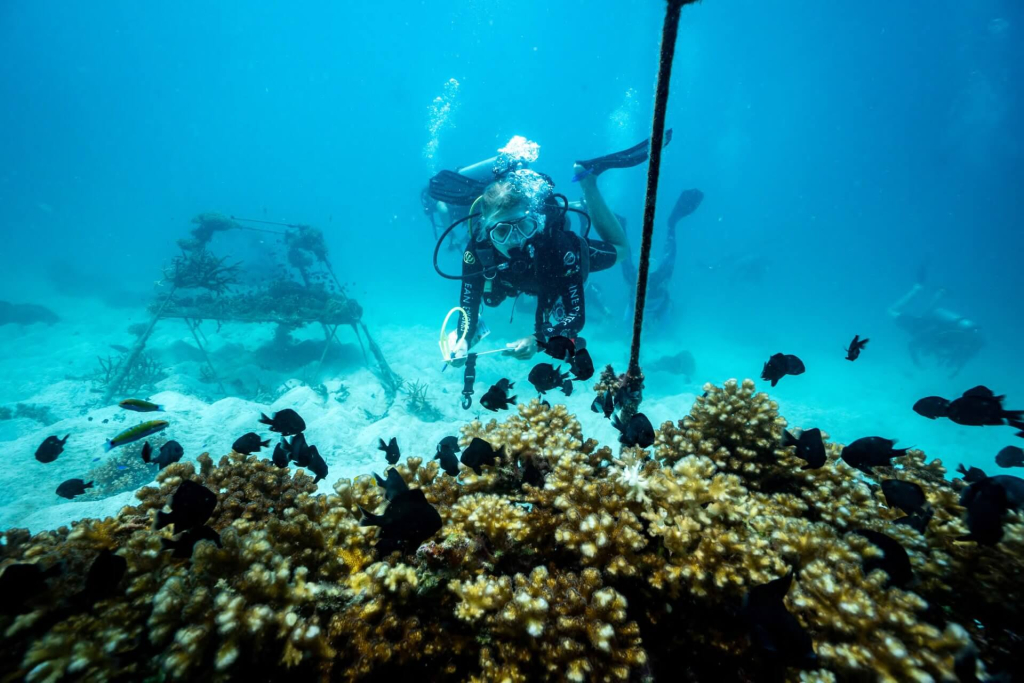
Marine conservation diver monitoring coral growth and fish populations on an artificial reef at Black Turtle Conservation, Koh Tao.
Close-up of a healthy brain coral colony photographed during the Ecological Monitoring Program (EMP) with Black Turtle Conservation in Koh Tao, Thailand.

Porites is one of the most ubiquitous coral genera on Koh Tao and can be found at almost every dive site with hard substrate, often as the dominant coral on near-shore reefs and sheltered bays.

Sheltered Bays and Near-Shore Reefs

Sites such as Aow Leuk, Mango Bay, Hin Wong Bay, and Tanote Bay support extensive massive Porites populations on shallow slopes, where the genus often dominates the coral community. Some of the largest Porites mounds on the island are located at these sheltered sites.

Pinnacles and Offshore Sites

At White Rock, Twins, Chumphon Pinnacle, and Southwest Pinnacle, massive and submassive Porites colonies occupy depths of 8–20 m on the shoulders and bases of pinnacles. These deeper, current-swept colonies tend to be smaller than those of sheltered bays but remain highly persistent.

Restoration and Artificial Reef Sites

Porites fragments-of-opportunity are sometimes attached to artificial substrates at restoration sites such as Junkyard Reef and Black Turtle Reef using epoxy resin and concrete blocks. Although growth rates are slow, the resulting colonies provide highly durable framework over the long term.

Depth Distribution and Site Variation

Porites occurs from very shallow water down to around 25–30 m, with peak abundance generally between 4 and 18 m. Colony size and morphology shift with depth and water motion, with the largest mounds typically forming in sheltered settings and smaller, more compact colonies dominating exposed pinnacle bases.

Environmental Thresholds: Conditions for Optimal Growth

Porites occupies a notably broad environmental envelope compared with most reef-building corals, which is one of the main reasons for its dominance on stressed near-shore reefs around Koh Tao.

Optimal Parameters

  • Light Intensity: tolerates a wide range, from high-light shallow conditions down to moderately turbid near-shore environments.
  • Water Movement: highly tolerant, performing well from sheltered bays to current-swept pinnacles.
  • Temperature Range: 24–30°C, with greater tolerance for elevated temperatures than most reef-building corals.
  • Salinity: stable marine conditions of 33–35 ppt; moderately tolerant of short-term reductions during heavy monsoon runoff.
  • Sediment Tolerance: notable for above-average tolerance of sedimentation, an important advantage on Koh Tao’s near-shore reefs.

Stress Responses on Koh Tao

Porites can still bleach during severe marine heatwaves, but post-bleaching mortality has historically been lower than for fast-growing branching genera, and recovery has been more reliable. This pattern was clearly visible after the 2010 mass bleaching event that reduced Koh Tao’s island-average coral cover from approximately 41% to 27%, with Porites among the genera that recovered most successfully.

Sustained sedimentation, freshwater pulses from monsoon runoff, and reduced light penetration following coastal development still impact Porites colonies, but the genus is consistently among the last to show stress signs and the first to resume growth once conditions stabilise.

Vulnerability Profile

Student identifying coral species underwater during the Coral Taxonomy & Identification course with Black Turtle Conservation in Koh Tao, Thailand.
Close-up of a healthy brain coral colony photographed during the Ecological Monitoring Program (EMP) with Black Turtle Conservation in Koh Tao, Thailand.
Marine conservation diver collecting data on coral species during the Coral Taxonomy and Ecological Monitoring course at Black Turtle Conservation, Koh Tao, Thailand.

While Porites is one of the most resilient reef-building genera, it is not invulnerable. Several Porites species are listed in IUCN threatened categories at the global level, and the genus is included under CITES Appendix II, which has regulated international trade in scleractinian corals since 1990.

Major Threats

  • Coral Bleaching: more tolerant than most genera but still affected by severe marine heatwaves, especially in shallower colonies.
  • Ocean Acidification: progressive reduction in calcification rates as aragonite saturation state declines.
  • Bioerosion: massive Porites colonies are heavily targeted by boring bivalves, sponges, and worms over decades and centuries.
  • Disease Susceptibility: a range of coral diseases, including Porites Trematodiasis (so-called ‘pink-line syndrome’), have been recorded in regional surveys.
  • Local Anthropogenic Impacts: anchoring, fin damage, ghost fishing gear, and chronic sedimentation from coastal development.

On Koh Tao, Porites is treated as a stress-tolerant reference taxon. Surveys covering 2006–2014 documented declines in Acropora, Montipora, and Diploastrea, with corresponding increases in Porites, Pavona, and Fungiidae, indicating a community-level shift toward bleaching-resistant taxa.

Black Turtle Conservation contributes to this dataset through ongoing monitoring of Porites condition, growth, and disease prevalence as part of broader reef health assessments around the island.

How to Identify Porites Coral

The defining feature of Porites in the field is its smooth, skin-like skeletal surface punctuated by very small, closely set corallites, combined most often with a massive or submassive growth form.

Healthy coral reef ecosystem with diverse fish species recorded during coral disease and reef health monitoring in Koh Tao, Thailand.
Marine conservation diver monitoring coral growth and fish populations on an artificial reef at Black Turtle Conservation, Koh Tao.
Student identifying coral species underwater during the Coral Taxonomy & Identification course with Black Turtle Conservation in Koh Tao, Thailand.

Key Identification Features

  • Surface Texture: smooth and skin-like, sometimes described as resembling fine-grained leather underwater.
  • Corallites: very small (around 1–2 mm), closely set, with widely spaced calices and well-developed wall reticulum.
  • Growth Forms: most often massive or submassive boulder-like mounds, with branching and encrusting forms in some habitats.
  • Coloration: typically yellow, cream, brown, blue, or pink, sometimes with darker mottling.
  • Associated Fauna: Christmas tree worms (Spirobranchus giganteus) commonly bore into massive Porites colonies and provide a reliable secondary identification cue.

Distinguishing from Similar Genera

Acropora differs by its branching habit and the presence of a single large axial polyp at every branch tip, neither of which occurs in Porites. Pocillopora is also branching and is covered with prominent verrucae.

Montipora can be confused with encrusting Porites at first glance, but Montipora has a distinctly sandpaper-like or ridged coenosteum and frequently bears small skeletal projections (monticules), while Porites consistently presents as smooth and skin-like. Goniopora superficially resembles Porites in some encrusting forms but is readily distinguished by its long, fully extended polyps with twenty-four tentacles.

Mastering Porites Identification with Black Turtle Conservation

Marine conservation diver collecting data on coral species during the Coral Taxonomy and Ecological Monitoring course at Black Turtle Conservation, Koh Tao, Thailand.

At Black Turtle Conservation we treat reliable Porites identification as essential for any reef surveyor on Koh Tao. Because the genus has become increasingly dominant on Koh Tao reefs and serves as a key reference taxon for stress tolerance and reef persistence, accurate field recognition is critical for monitoring long-term community shifts and tracking the success of restoration efforts in the Gulf of Thailand.

Our Training Approach: From Theory to Survey

Diver recording fine-scale coral identification data during the Advanced Coral Taxonomy and Marine Conservation course at Black Turtle Conservation, Koh Tao, Thailand.
Healthy coral reef ecosystem with diverse fish species recorded during coral disease and reef health monitoring in Koh Tao, Thailand.

Our Coral Taxonomy and Identification training addresses Porites through a structured, progressive sequence designed to build confident in-water surveyors capable of contributing meaningful long-term data.

  • Classroom Theory: students learn poritid morphology, including corallite size, surface texture, and the contrast with smooth-textured genera such as Goniopora and Montipora.
  • In-Water Practice: guided dives at Aow Leuk, Mango Bay and Twins, where massive and submassive Porites colonies of varying size and condition are compared in situ.
  • Applied Monitoring: participation in Ecological Monitoring Program surveys, where Porites abundance, colony size class, bleaching status, and disease signs are recorded as priority data.
  • Restoration Skills: hands-on incorporation of Porites fragments-of-opportunity into nursery and out-planting programmes at Junkyard Reef and Black Turtle Reef using epoxy and concrete substrates.

Graduates leave with the practical ability to identify Porites at genus level under field conditions and to record its condition reliably as part of long-term reef monitoring around Koh Tao.

External Link Citations and References

Veron, J.E.N. (2000). Corals of the World. Australian Institute of Marine Science.

World Register of Marine Species (WoRMS): Porites Link, 1807.

IUCN Red List of Threatened Species: Porites entries.

Department of Marine and Coastal Resources (DMCR), Thailand: Reef monitoring reports.

Black Turtle Conservation: Coral conservation, monitoring and restoration on Koh Tao.