Koh Tao’s world-famous coral reefs have survived multiple bleaching events, coastal development, dive pressure and many other stressors. As a result, they are changing rapidly in ecological timelines, and genus-level hard coral identification is one way that we measure that change in benthic composition. This guide covers the hard corals (Scleractinia) taught across Black Turtle Conservation’s Coral Taxonomy I, II and III courses.
Introduction
Koh Tao in context
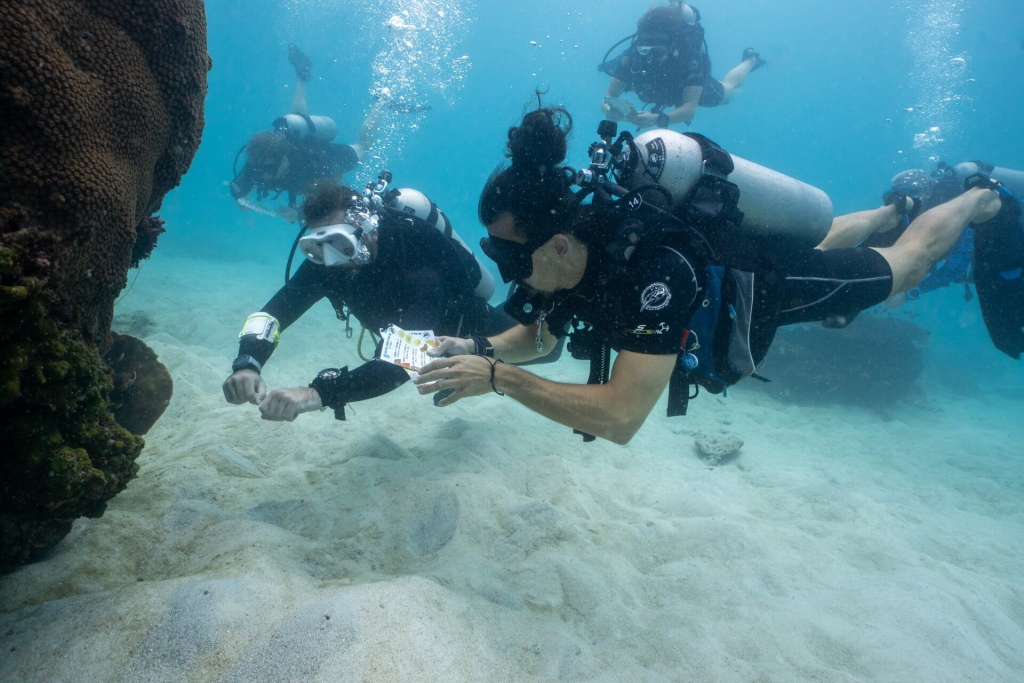
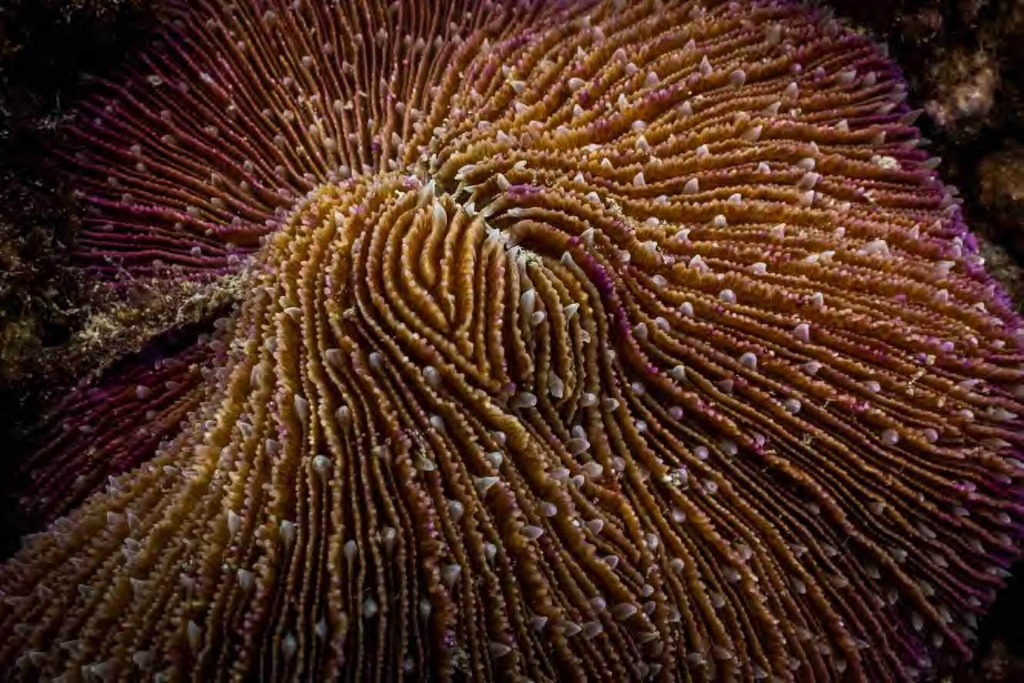
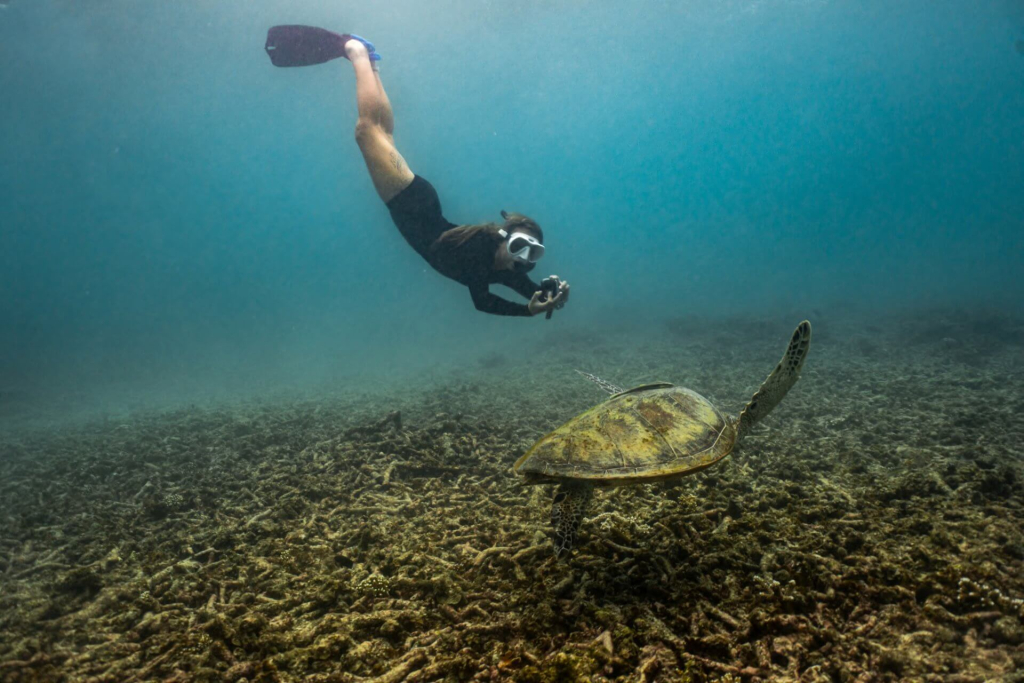
Koh Tao is a 19 km² island in the western Gulf of Thailand. It is ringed by dense fringing reefs and submerged granite pinnacles, with some of the highest coral cover and biodiversity in the Gulf (Scott et al., 2017). It is also one of the busiest dive-training destinations in the world, with 80+ dive centres and up to 800,000 visitors a year.
That popularity has a cost. The share of the island altered by people rose from 3.2% in 1975 to 42.8% in 2005 (Weterings, 2011). Sediment, untreated wastewater and diver contact all reach the reef and affect coral resilience to bleaching events, ocean acidification and other major stressors (Scott et al., 2017).
| Year | Event | Source |
|---|---|---|
| 2024 | Global bleaching event; about 50% of Gulf of Thailand reefs bleached, Koh Tao among affected sites | Nation Thailand (2024) |
| 2022–2024 | National baseline finds Thai reefs dominated by boulder-forming Porites, with branching Acropora recorded less often than in earlier surveys | Monchanin et al. (2025) |
| 2014 | Mass bleaching; 24 genera recorded on island transects, with Pavona, Porites, Acropora and Fungia over 65% of coral cover | Scott et al. (2017) |
| 2012 | Strategic Plan: Integrated Coastal Management for Koh Tao published | Scott et al. (2017) |
| 2010–2013 | After the 2010 bleaching, Drupella snail predation cuts shallow coral cover in Chalok Ban Kao from 60.3% to 26.5% | Scott et al. (2017); Hoeksema, Scott and True (2013) |
| 2010 | Mass bleaching; island-wide coral cover falls to its lowest point (27.1%) in 2011–2012 | Scott et al. (2017) |
| 2008 | Marine branch of the Save Koh Tao community group formed; moorings, artificial reefs and coral nurseries follow | Scott et al. (2017) |
| 2006 | Ecological Monitoring Program begins; average hard coral cover 36.2% | Scott et al. (2017) |
| 1998 | Global mass bleaching; around 17% loss of coral cover over five years | Yeemin, Sutthacheep and Pettongma (2006) |
| 1988–1998 | Ao Tien Og (Shark Bay) falls from nearly 100% Acropora cover to 5% after Typhoon Gay (1989) and the 1998 bleaching | Scott et al. (2017) |
Total coral cover on Koh Tao was similar in 2006 and 2014. But what lived on the reef changed sharply. In 2010, stress-vulnerable genera such as Acropora and Montipora outnumbered resistant genera such as Porites and Pavona. By 2014 the resistant group made up 53.6% of coral cover against 27.7% for the vulnerable group (Scott et al., 2017). Percentage cover alone would have missed this shift. Genus-level identification revealed it.
During our Ecological Monitoring Programme substrate dives, we monitor benthic cover. Despite many stressors on the reef, we are consistently encouraged by the resilience of coral reefs and the speed they are able to recover from compromised health events, when given the chance to. This is in no small part a testament to the importance of biodiversity and the many factors this affects: redundancy and structural complexity included.
Why genus-level identification matters
For coral reef practitioners and scientific divers, “hard coral” is rarely precise enough. Knowing the genus is what turns a dive into usable data:
- Benthic composition monitoring: Point-intercept and photo-quadrat surveys record hard coral by genus, growth form and health (Scott et al., 2017). This is what detects shifts from complex, branching reefs to simpler, boulder-dominated ones.
- Coral disease: Diseases often target particular genera. Koh Tao’s outbreaks of brown band and skeletal eroding band disease hit branching and tabular Acropora (Scott et al., 2017). Disease prevalence was also higher at heavily–dived sites (Lamb et al., 2014). You cannot report a host-specific disease without naming the host.
- Predation and bleaching response: Drupella snails and crown-of-thorns starfish prefer certain genera, and genera differ in how readily they bleach (Hoeksema, Scott and True, 2013). Recording the genus lets you separate a predator outbreak from a heat event.
- Coral fragments and recruits: Juvenile colonies and broken fragments lack the full colony shape that makes adults easy. Identifying them depends on corallite and polyp features, which is exactly what these courses train.
- Artificial reefs and coral restoration. Nursery stock, out-planting and artificial-reef monitoring all need to track which genera survive, grow and recruit. Planting only fast-growing Acropora risks building a reef that bleaches all at once.
A living classification
Coral taxonomy is not fixed. For most of the last two centuries, corals were classified by skeleton shape alone. DNA sequencing has since shown that many similar-looking corals are not closely related, and that some unlike-looking ones are (Fukami et al., 2004; Kitahara et al., 2016). Names change as a result, and they keep changing as new genetic data arrive.
You can see this on Koh Tao. The 2014 genus list in Scott et al. (2017) includes Favia, Symphyllia and Euphyllia. Since then, Indo-Pacific Favia species have moved to Dipsastraea. Symphyllia has been merged into Lobophyllia (Huang et al., 2016). Part of Euphyllia is now Fimbriaphyllia (Luzon et al., 2017). As such, treat every genus name in this guide as current at the date above, and double check the World Register of Marine Species (WoRMS) before using this to inform future research & data.
This helps to understand some diagnostic features and overlaps when learning how to visually identify hard coral genera. Sometimes one genus can look a lot like another, and understanding the taxonomic history can help to see why. It is good practice to always confirm with WoRMS when designing genus-specific research or publishing data – this is the most up-to-date resource available. Having correct terminology can root your research into a certain timeframe – and shows that up-to-date research has been considered in your approach.
Why coral biodiversity matters
A reef with many coral genera is better able to absorb a disturbance and recover from it. Different genera respond differently to the same stress. When heat or disease removes one group, others survive to hold the structure together and reseed the reef.
- Response diversity: Genera vary in heat tolerance, growth rate and reproduction. On Koh Tao, Porites, Pavona, Pocillopora and Fungia came through repeated stress better than Acropora, Montipora, Diploastrea, Turbinaria and Astreopora (Scott et al., 2017).
- Functional redundancy: Several genera can do the same job, such as building three-dimensional habitat or covering open rock. If one fails, another can fill the gap. Where coral diversity is low, important functions can rest on only a few species (McWilliam et al., 2018).
- Productivity: In experiments, mixed coral assemblages had 53% higher primary productivity than single-species plots (McWilliam, 2018).
- Habitat for everything else: Branching and tabular corals shelter juvenile fish and invertebrates. A reef that shifts to boulder corals keeps its cover but loses much of that shelter (Scott et al., 2017).
Biodiversity can still erode quietly. After the 2016 heatwave on the Great Barrier Reef, fast-growing branching and tabular corals died in large numbers, changing the make-up of 29% of 3,863 reefs surveyed (Hughes et al., 2018). Recovering reefs worldwide tend to come back with fewer, simpler, smaller coral types (McWilliam, 2018). Thailand shows the same pattern: a 2022–2024 national survey found reefs dominated by massive Porites and losing structural complexity from a lack of other genera with different growth forms (Monchanin et al., 2025).
This is why a monitoring team that records only “% hard coral” can report a stable reef while its diversity drains away. Recording genera keeps that loss visible.
Considering biodiversity shifts within conservation efforts (such as Artificial Reef transplanting) can help to restore marine ecosystems to a previous level of health. If all the Pavona contracted a disease, it might be helpful to focus the effort on restoring the Pavona population, restoring the balance that was once there.
Coral morphology
Hard corals are identified by analysing different diagnostic factors, from the whole colony down to a single corallite. Start wide, then move in close. No single feature is enough on its own.
Where hard corals sit
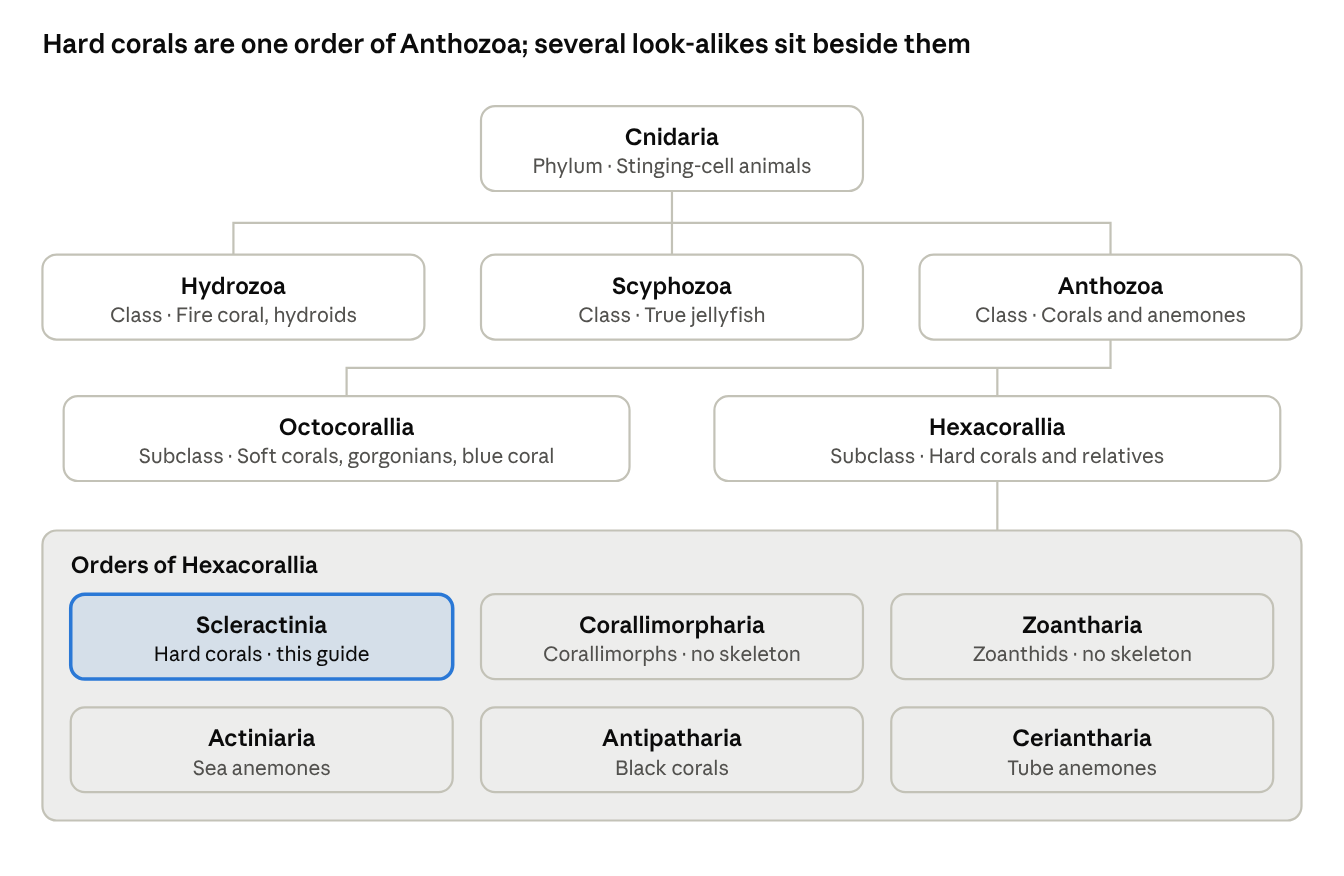
Hard corals belong to the order Scleractinia: about 31 families, hundreds of genera and over 1,300 species. Several animals look like scleractinians but are not. Corallimorphs and zoanthids have no true skeleton. Blue coral (Heliopora) is an octocoral, and black corals belong to their own order. Fire coral (Millepora) is a hydrozoan, not an anthozoan at all.
Polyp anatomy
Each coral colony is made of many polyps, each a simple sac with one opening.
- Mouth and oral disc: A single opening for feeding and waste, surrounded by a ring of tentacles.
- Tentacles: Armed with stinging cells (nematocysts) for catching plankton. Some genera, such as Goniopora, Galaxea and Plerogyra, extend them by day, which can hide the skeleton.
- Tissue and zooxanthellae: Symbiotic algae in the tissue supply most of the coral’s energy and much of its colour. Losing them is what we see as bleaching.
- Coenosarc: The living sheet of tissue that links neighbouring polyps across the colony.
Skeletal anatomy
The polyp sits in a stony cup called a corallite. Most genus-level features are found here.
| Term | What it is | Field tip |
|---|---|---|
| Corallite | The skeletal cup of one polyp | Observe its diameter; <1 mm (Psammocora) to over 30 cm (Danafungia) |
| Septa | Radiating vertical plates inside the corallite | Note whether they are even, toothed, saw-like or granular |
| Costae | The continuation of septa down the outside wall | Present or absent separates Turbinaria-type smooth tubes from ridged cups |
| Columnella | The central structure at the base of the corallite | Size and shape help separate Goniastrea from Paragoniastrea |
| Paliform lobes | Small upright lobes on the inner ends of septa, forming a crown | Present in Goniastrea and Favites, absent in Platygyra |
| Theca (wall) | The wall enclosing the corallite | Shared walls or separate walls define the colony formation |
| Coenosteum | Skeleton between corallites | Smooth, spiny or granular; wide in Turbinaria and Echinopora |
| Fossa | The central pit holding the mouth | Long axial fossa in Ctenactis and Herpolitha |
Asexual budding
Colonies grow by budding new polyps. In intratentacular budding, a polyp divides inside its own corallite, often most obviously observed in Dipsastrea. In extratentacular budding, a new polyp forms outside the corallite, from the tissue between polyps, seen in Caulastraea. Though not fully diagnostic, this is one helpful way to distinguish between DIPS and CAUL.
Colony formations
How corallites are arranged on a colony’s surface is one reliable genus-level clue, though cannot be used in isolation to identify most genera.
| Formation | Arrangement | Examples |
|---|---|---|
| Phaceloid | Separate tubes, each with its own wall, joined only at the base | Caulastraea, Tubastraea |
| Plocoid | Separate corallites with their own walls, set in coenosteum | Diploastrea, Cyphastrea, Galaxea |
| Cerioid | Corallites share walls, like a honeycomb | Favites, Goniastrea |
| Meandroid | Polyps in continuous valleys separated by ridges | Platygyra, Leptoria |
| Flabellate / flabello-meandroid | Long valleys with separate walls, often fanning out | Lobophyllia, Fimbriaphyllia, Plerogyra |
| Thamnasteroid | No walls; septa run continuously from one polyp to the next | Pavona, Leptoseris, Podabacia |
| Hydnophoroid | Polyps arranged around conical bumps (hydnophores) | Hydnophora |
Growth forms
Growth form describes the overall shape of the colony. It is the first thing you see, and a basic trait to identify by.
| Growth form | Description | Koh Tao examples |
|---|---|---|
| Branching | Branches longer than they are wide | Acropora, Porites (some) |
| Corymbose | Short, upright branches forming a bush | Pocillopora, Acropora |
| Digitate | Short, finger-like branches | Acropora |
| Tabulate | Horizontal plates on a central stalk | Acropora |
| Massive | Solid, similar size in all directions | Porites, Diploastrea, Platygyra |
| Submassive | Knobs, columns or lumps on a massive base | Goniopora, Hydnophora |
| Encrusting | A thin layer following the rock | Montipora, Leptastrea |
| Laminar | Flat, horizontal plates | Pachyseris, Leptoseris, Merulina |
| Foliose | Upright, leaf-like plates | Pavona, Pectinia, Turbinaria |
| Free-living / solitary | Unattached, often a single large polyp | Fungia, Danafungia, Cycloseris |
The same species can grow in very different shapes depending on species, light, wave energy and sediment (Todd, 2008). Pavona changes plate angle with depth to catch more or less light. A Porites on a sheltered reef flat may look nothing like one on an exposed pinnacle. This plasticity, and the convergence of unrelated corals on similar shapes, is a major reason why skeleton-based classifications have been overturned by genetic analysis (Luzon et al., 2017).
As an instructor of Coral Taxonomy, I encourage students to have a checklist of features: Growth Form (what does the colony look like) -> Colony Formation (how are the corallites arranged) -> Septa (what to the septa look like) -> Distinguishing Features (what clues are there). Students will get used to grouping the genera into similar results of these steps, and use the defining features to distinguish, for example the axial polyp is a distinguishing feature between Acropora and branching Porites.
Which conditions favour which corals
- Clear, shallow water with steady flow favours fast-growing branching and tabular corals such as Acropora and Pocillopora. They grow quickly but are among the first to bleach and the favourite prey of Drupella (Scott et al., 2017).
- Turbid water and heavy sediment favour massive Porites, Pavona and Goniopora. Sediment cuts light and smothers tissue, so corals that tolerate low light or shed sediment do best (Fabricius, 2005).
- Sand and rubble slopes suit free-living mushroom corals. They can right themselves and move off sediment, and Cycloseris favours the lower reef slope.
- Low light at depth favours flat, laminar or foliose plates that spread out to catch light, such as Pachyseris, Leptoseris, Pavona, Merulina and Echinophyllia.
- Shaded overhangs and caves host azooxanthellate corals such as Tubastraea and Cladopsammia. They feed on plankton rather than relying on algae, so they do not need light.
- Warm, repeatedly stressed shallows shift toward resistant genera such as Porites, Pavona and Fungia (Scott et al., 2017).
After completing this training, this becomes evident when diving around Koh Tao. Divers will notice changes in population composition and how different features of certain sites affect that. It is one of the many great side effects of expanding your knowledge of the marine world… no dive will be boring again!
Coral Taxonomy I: the core genera
Coral Taxonomy I covers 18 genera that make up most of the hard coral on Koh Tao’s survey transects. It introduces coral anatomy, colony formation, look-alikes and the health parameters corals require, before a detailed genus-level identification section:
| Genus | Key field features |
|---|---|
| Acropora | Axial polyp at each branch tip surrounded by radial polyps; fast-growing |
| Diploastrea | Monospecific (D. heliopora); low cones 8–10 mm with radiating septa, volcano coral |
| Duncanopsammia | Smooth corallites widely spaced in coenosteum |
| Fimbriaphyllia | Flabello-meandroid; tentacles out by day with horseshoe or cashew-shaped tips |
| Galaxea | Protruding corallites; blade-like, saw-edged septa; tentacles out by day, white tips |
| Gardineroseris | Monospecific (G. planulata); sharp ridges forming angular pits, honeycomb structure |
| Goniopora | Long polyps out by day; 24 tentacles; not soft coral |
| Hydnophora | Polyps around conical bumps (hydnophores) |
| Lobophyllia | Large flabellate corallites or long valleys; thick, fleshy tissue; spiky septal teeth; fatty brain |
| Merulina | Short valleys fan out to the margin; ridges like uneven zippers |
| Montipora | Small polyps among skeletal bumps (monticules); rougher texture than Porites |
| Pachyseris | No corallite walls; concentric ridges run parallel to the colony edge |
| Pavona | Thamnasteroid; polyps on both sides of plates (bifacial); plate angle changes with depth |
| Pectinia | Comb-like; tall, thin, widely spaced walls; mouths face the colony edge |
| Plerogyra | Bubble-like vesicles out by day; flabellate |
| Pocillopora | Blunt branches covered in bumps (verrucae); small corallites between them |
| Porites | Tiny corallites (1–2 mm), smooth pore-like surface; may turn pink or purple when stressed |
| Stylocoeniella | Small, widely spaced corallites with prominent spines between them; easily overlooked |
Growth forms and features summarised from the BTC Coral Taxonomy I course slides.
Names in motion: Several Level I genera show how fast classification moves. Fimbriaphyllia was a subgenus of Euphyllia until DNA showed it was a separate lineage (Luzon et al., 2017). Lobophyllia now includes the former Symphyllia (Huang et al., 2016). The pagoda coral Duncanopsammia, D. peltata, was long known as Turbinaria peltata (WoRMS, 2026).
Coral Taxonomy I is one of the overall favourite courses for our instructors to teach. Watching students develop from an overwhelming sense of information overload to confident genus-level identification within one day will never stop bringing us joy.
Coral Taxonomy II: Mushroom corals and rarer genera
Coral Taxonomy II adds rarer genera relevant to advanced surveys and the mushroom corals (family Fungiidae). Mushroom corals matter on Koh Tao: Fungia alone made up 13.7% of hard coral cover on island transects in 2014 (Scott et al., 2017). The course also covers survey safety and how data enter the monitoring database.
Rarer genera
| Genus | Key field features |
|---|---|
| Astreopora | Pebbled surface; dome-shaped corallites covered in spinules; bleaches readily |
| Caulastraea | Separate corallites 10–15 mm; uneven septa visible through tissue, prone to extratentacular budding |
| Cyphastrea | Small star-like corallites (2–3 mm); spiny coenosteum |
| Dipsastraea | Plocoid; round, doughnut-shaped corallites with obvious septa; each with its own wall, prone to intratentacular budding |
| Echinopora | Irregular corallites 3–7 mm, widely spaced; fine spinules on coenosteum |
| Oxypora | Ragged margins; fewer corallites (3–6 mm) than Echinopora, skeletal bumps and lack of structural regularity in the centre of the colony |
| Plesiastrea | Corallites 2–3 mm, less star-like than Cyphastrea; uncommon |
| Turbinaria | Wide, smooth coenosteum between domed corallites |
Mushroom corals (Fungiidae)
Most fungiidae live unattached as adults. Many are a single large polyp. Look at the overall shape, the central fossa, the septal teeth and whether there are one or many mouths.
| Genus | Key field features |
|---|---|
| Ctenactis | Long axial fossa, sometimes several mouths; large saw-like septal teeth |
| Cycloseris | Very diverse; free-living forms prefer the lower reef slope |
| Danafungia | Thick disc with central arch; irregular, saw-like septal teeth |
| Fungia | Monospecific (F. fungites); sharp, tightly packed septa; smaller costal spines than Danafungia |
| Herpolitha | Monospecific (H. limax); many mouths along the central fossa; can branch into Y, T or X shapes |
| Lithophyllon | Fine, regular septal teeth; pale mouths in encrusting colonies |
| Pleuractis | Parallel sides; granular septal teeth; wavy septal pattern |
| Podabacia | Thamnasteroid; corallites 3–5 mm inclined toward margin |
| Polyphyllia | Many evenly spaced mouths; tentacles out by day |
| Sandalolitha | Heavy skeleton; polyps inclined toward edge; ragged margin |
Features summarised from the BTC Coral Taxonomy II course slides
Names in motion: Mushroom corals were reorganised after a DNA-based study showed the old genus Fungia was not one natural group. Many former Fungia species now sit in Danafungia, Lithophyllon, Pleuractis and Cycloseris, leaving Fungia with a single species (Gittenberger, Reijnen and Hoeksema, 2011). Older Koh Tao datasets that record “Fungia” may mean “mushroom coral” in the broad, pre-2011 sense.
Mushroom corals are marvelous creatures. From being able to pulsate their tentacles to right themselves if overturned, to being documented consuming prey as large as sacoglossan sea slugs, they continue to test the limits of hard coral ecology. Many divers, even experienced ones, don’t know they are corals – Polyphillia is consistently confused with a Sea Cucumber, until they learn otherwise.
Coral Taxonomy III: Difficult and look-alike genera
Coral Taxonomy III focuses on genera that are hard to tell apart underwater. Most belong to groups with shared walls or meandering valleys, where the difference lies in septal teeth, paliform lobes and columella. This is the level where a genus-level identification as a skill becomes mastered.
| Genus | Key field features |
|---|---|
| Acanthastrea | Shared, sub-angular walls; tall septal teeth tenting through thick tissue; may show concentric rings, cerioid (shared corallite walls) |
| Cladopsammia / Rhizopsammia | No zooxanthellae; pink or orange; septa more clearly defined than Tubastraea |
| Coscinaraea | Coarser than Psammocora; short valleys with small groups of corallites; granular septa |
| Echinophyllia | Untidy, coarse look; corallites 5–10 mm; toothed septo-costae, plocoid (separate corallites) |
| Favites | Cerioid (shared walls); angular corallites with one mouth each; fine to medium septal teeth |
| Goniastrea | Common genus with very varied morphology: meandroid, honeycomb, faviid. Enter the genus guide to learn more. |
| Leptastrea | Uneven corallites 3–6 mm with shared walls; primary septa larger and bolder; blunt look between corallites |
| Leptoseris | Thamnasteroid; corallites 5–10 mm in uneven rows; fewer corallites than Pavona |
| Leptoria | Narrower valleys than Platygyra; equal, evenly spaced, zip-like paired septa |
| Paragoniastrea | Meandroid with paliform lobes; wider, angular walls and well-developed columella; walls and valleys may contrast in colour |
| Platygyra | Meandroid maze of short walls; no paliform lobes; valleys and walls often contrasting colours |
| Psammocora | Very small corallites (<1 mm); granular, petal-like surface |
| Pseudosiderastrea | Shared walls; corallites 3–6 mm with evenly spaced septa; smooth look |
| Tubastraea | No zooxanthellae; yellow, orange or dark green; large tentacles out by day |
Features summarised from the BTC Coral Taxonomy III course slides.
Names in motion: Paragoniastrea was only described in 2014, split from Goniastrea on combined genetic and skeletal evidence (Huang et al., 2014). Acanthastrea has been redefined too: some former Acanthastrea species moved to other genera, while one former Lobophyllia species moved in (Huang et al., 2016). Even the best-studied genera can still change. That study notes that some relationships remain unresolved because current skeletal features are not enough to separate them (Huang et al., 2016).
This is where the limits of visual identification are tested. For these genera, having a camera to zoom and analyse the photos on a large screen after the dives can be an excellent way to confirm identification. There are still plenty of diagnostic features, but many overlap.
Learn more with Black Turtle Conservation
This guide is a companion to Black Turtle Conservation’s three-level Coral Taxonomist progression. Each level combines classroom sessions, photo quizzes and in-water identification dives on Koh Tao’s reefs.
| Course | What you learn | Genera covered |
|---|---|---|
| Coral Taxonomy I | Coral anatomy, colony formation, growth forms, look-alikes and coral health parameters | 18 core genera |
| Coral Taxonomy II | Mushroom corals and rarer genera; survey safety and data entry | 8 rarer genera and 10 mushroom coral genera |
| Coral Taxonomy III | Difficult look-alike genera for advanced surveys | 14 genera |
By the end of Level III, you will be able to record hard corals to genus level with confidence on benthic surveys. That skill carries straight into reef monitoring, coral disease surveys, restoration and artificial-reef work.
Coral Taxonomy levels are each 1-day courses, and the combination of Lecture, Quiz, Safari, Identification Test, Analysis and Debrief creates a fantastic pathway to develop the skill of coral identification.
My favourite part of teaching this course is the reaction of students when they start off knowing little to nothing of the course content, and finish with a great score of correctly identified coral genera. Seeing how just this knowledge changes the way they dive, the gradual shift from recreational to scientific diving, brings me great hope in the interconnectedness of education and conservation.
References
Black Turtle Conservation (n.d.) Coral Taxonomy I, II and III [course slides]. Koh Tao: Black Turtle Conservation.
Budd, A.F., Fukami, H., Smith, N.D. and Knowlton, N. (2012) ‘Taxonomic classification of the reef coral family Mussidae (Cnidaria: Anthozoa: Scleractinia)’, Zoological Journal of the Linnean Society, 166(3), pp. 465–529. doi:10.1111/j.1096-3642.2012.00855.x.
Fabricius, K.E. (2005) ‘Effects of terrestrial runoff on the ecology of corals and coral reefs: review and synthesis’, Marine Pollution Bulletin, 50(2), pp. 125–146. doi:10.1016/j.marpolbul.2004.11.028.
Fukami, H., Budd, A.F., Paulay, G., Solé-Cava, A., Chen, C.A., Iwao, K. and Knowlton, N. (2004) ‘Conventional taxonomy obscures deep divergence between Pacific and Atlantic corals’, Nature, 427, pp. 832–835. doi:10.1038/nature02339.
Gittenberger, A., Reijnen, B.T. and Hoeksema, B.W. (2011) ‘A molecularly based phylogeny reconstruction of mushroom corals (Scleractinia: Fungiidae) with taxonomic consequences and evolutionary implications for life history traits’, Contributions to Zoology, 80(2), pp. 107–132. Available at: https://repository.naturalis.nl/pub/376596/.
Hoeksema, B.W. (1989) ‘Taxonomy, phylogeny and biogeography of mushroom corals (Scleractinia: Fungiidae)’, Zoologische Verhandelingen, 254, pp. 1–295.
Hoeksema, B.W., Matthews, J.L. and Yeemin, T. (2012) ‘The 2010 coral bleaching event and its impact on the mushroom coral fauna of Koh Tao, western Gulf of Thailand’, Phuket Marine Biological Center Research Bulletin, 71, pp. 71–81.
Hoeksema, B.W., Scott, C. and True, J.D. (2013) ‘Dietary shift in corallivorous Drupella snails following a major bleaching event at Koh Tao, Gulf of Thailand’, Coral Reefs, 32(2), pp. 423–428. doi:10.1007/s00338-012-1005-x. Available at: https://repository.naturalis.nl/pub/801554/.
Huang, D., Benzoni, F., Arrigoni, R., Baird, A.H., Berumen, M.L., Bouwmeester, J., Chou, L.M., Fukami, H., Licuanan, W.Y., Lovell, E.R., Meier, R., Todd, P.A. and Budd, A.F. (2014) ‘Towards a phylogenetic classification of reef corals: the Indo-Pacific genera Merulina, Goniastrea and Scapophyllia (Scleractinia, Merulinidae)’, Zoologica Scripta, 43(5), pp. 531–548. doi:10.1111/zsc.12061. Available at: https://coralreef.nus.edu.sg/publications/Huang2014Zool._Scr.pdf.
Huang, D., Arrigoni, R., Benzoni, F., Fukami, H., Knowlton, N., Smith, N.D., Stolarski, J., Chou, L.M. and Budd, A.F. (2016) ‘Taxonomic classification of the reef coral family Lobophylliidae (Cnidaria: Anthozoa: Scleractinia)’, Zoological Journal of the Linnean Society, 178(3), pp. 436–481. doi:10.1111/zoj.12391. Available at: https://coralreef.nus.edu.sg/publications/Huang2016Zool._J._Linn._Soc.pdf.
Hughes, T.P., Kerry, J.T., Baird, A.H., Connolly, S.R., Dietzel, A., Eakin, C.M. et al. (2018) ‘Global warming transforms coral reef assemblages’, Nature, 556, pp. 492–496. doi:10.1038/s41586-018-0041-2.
Kitahara, M.V., Fukami, H., Benzoni, F. and Huang, D. (2016) ‘The new systematics of Scleractinia: integrating molecular and morphological evidence’, in Goffredo, S. and Dubinsky, Z. (eds) The Cnidaria, Past, Present and Future. Cham: Springer, pp. 41–59.
Lamb, J.B., True, J.D., Piromvaragorn, S. and Willis, B.L. (2014) ‘Scuba diving damage and intensity of tourist activities increases coral disease prevalence’, Biological Conservation, 178, pp. 88–96.
Luzon, K.S., Lin, M.-F., Ablan Lagman, M.C.A., Licuanan, W.R.Y. and Chen, C.A. (2017) ‘Resurrecting a subgenus to genus: molecular phylogeny of Euphyllia and Fimbriaphyllia (order Scleractinia; family Euphylliidae; clade V)’, PeerJ, 5, e4074. doi:10.7717/peerj.4074. Available at: https://peerj.com/articles/4074.
McWilliam, M. (2018) The functional diversity and redundancy of corals. PhD thesis. James Cook University. doi:10.25903/5c6382c9cb5cb. Available at: https://researchonline.jcu.edu.au/57108/.
McWilliam, M., Hoogenboom, M.O., Baird, A.H., Kuo, C.-Y., Madin, J.S. and Hughes, T.P. (2018) ‘Biogeographical disparity in the functional diversity and redundancy of corals’, Proceedings of the National Academy of Sciences, 115(12), pp. 3084–3089.
Monchanin, C., Desmolles, M., Chankong, A., Nilkerd, N., Sangsawang, L. and Mehrotra, R. (2025) ‘Establishing a baseline for coral reef community structure across Thailand with a review of earlier assessments’, Regional Studies in Marine Science, 91, 104577. doi:10.1016/j.rsma.2025.104577. Summarised at: Mongabay.
Nation Thailand (2024) ‘Thailand shuts 12 national marine parks amid coral bleaching crisis’, The Nation, 10 May. Available at: https://www.nationthailand.com/news/general/40037914 (Accessed: 23 October 2026).
Scott, C.M., Mehrotra, R., Cabral, M. and Arunrugstichai, S. (2017) ‘Changes in hard coral abundance and composition on Koh Tao, Thailand, 2006–2014’, Coastal Ecosystems, 4, pp. 26–38.
Todd, P.A. (2008) ‘Morphological plasticity in scleractinian corals’, Biological Reviews, 83(3), pp. 315–337. doi:10.1111/j.1469-185X.2008.00045.x.
Weterings, R. (2011) ‘A GIS-based assessment of threats to the natural environment on Koh Tao, Thailand’, Kasetsart Journal (Natural Science), 45, pp. 743–755.
Wongthong, P. and Harvey, N. (2014) ‘Integrated coastal management and sustainable tourism: a case study of the reef-based SCUBA dive industry from Thailand’, Ocean & Coastal Management, 95, pp. 138–146.
WoRMS Editorial Board (2026) World Register of Marine Species. Available at: https://www.marinespecies.org (Accessed: 23 October 2026).
Yeemin, T., Sutthacheep, M. and Pettongma, R. (2006) ‘Coral reef restoration projects in Thailand’, Ocean & Coastal Management, 49(9–10), pp. 562–575.