Acropora is the undisputed architect of tropical coral reefs and the largest genus of scleractinian (stony) corals, with around 160 currently accepted species recognised by the World Register of Marine Species. Renowned for their rapid linear extension rates of 10–20 cm per year under optimal natural conditions, and for their complex branching, table, digitate, and corymbose growth forms, Acropora colonies contribute to the three-dimensional, complex framework that helps to support the vast biodiversity of Indo-Pacific reef ecosystems.

Around Koh Tao, Acropora has historically been a pioneer genus dominating shallow coral gardens, although long-term Ecological Monitoring Program data document a notable decline in Acropora abundance between 2006 and 2014, alongside increases in more bleaching-resistant genera such as Porites and Pavona.

As mixotrophs, Acropora colonies combine autotrophy via symbiotic algae (Symbiodiniaceae dinoflagellates) with active heterotrophic feeding on plankton and dissolved organic matter. This dual strategy allows them to thrive in the relatively nutrient-poor waters of the Gulf of Thailand while remaining acutely sensitive to thermal stress, sedimentation, ocean acidification and changes in water quality.

This comprehensive guide explores the morphology, dual-feeding strategy, distribution around Koh Tao, environmental requirements, vulnerability profile, field identification, and conservation training opportunities offered by Black Turtle Conservation. It is intended as a foundational reference for conservation interns, advanced reef surveyors, and citizen scientists contributing to coral monitoring and restoration efforts in the Gulf of Thailand.

Common Names: Staghorn Coral, Table Coral, Branching Coral, Bushy Coral

Family: Acroporidae

Order: Scleractinia (Stony Corals)

Subclass: Hexacorallia | Class: Anthozoa | Phylum: Cnidaria
Learn About Acropora Coral Genus

General coral and reef imagery from our existing library.

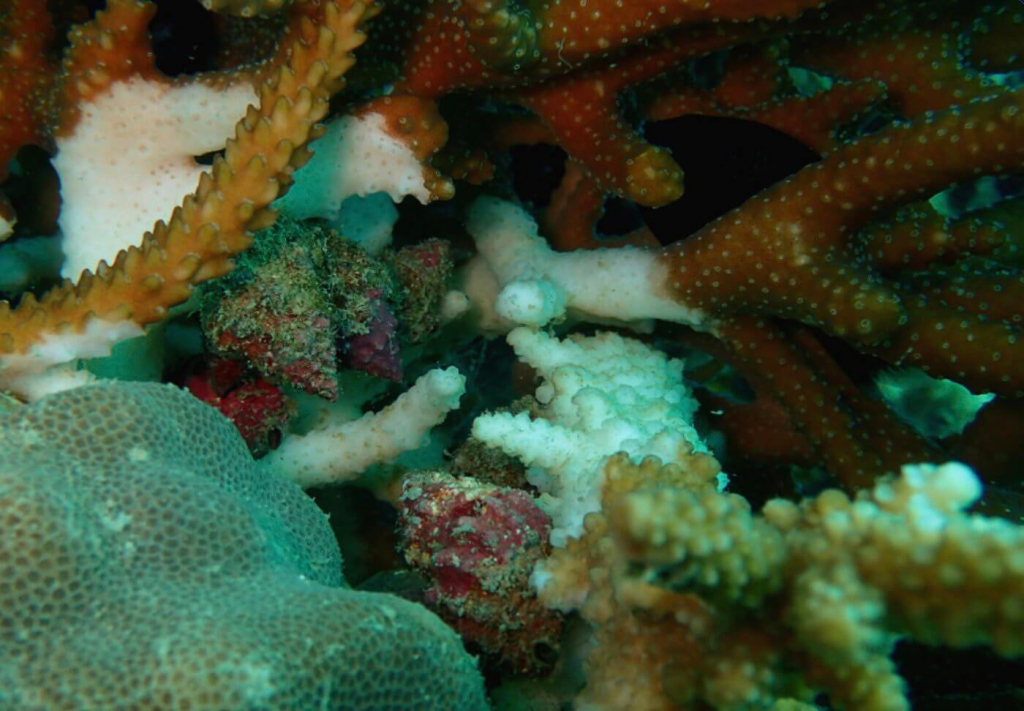
Coral colony showing fresh tissue loss and bleaching caused by corallivorous predators, documented during coral health monitoring in Koh Tao.
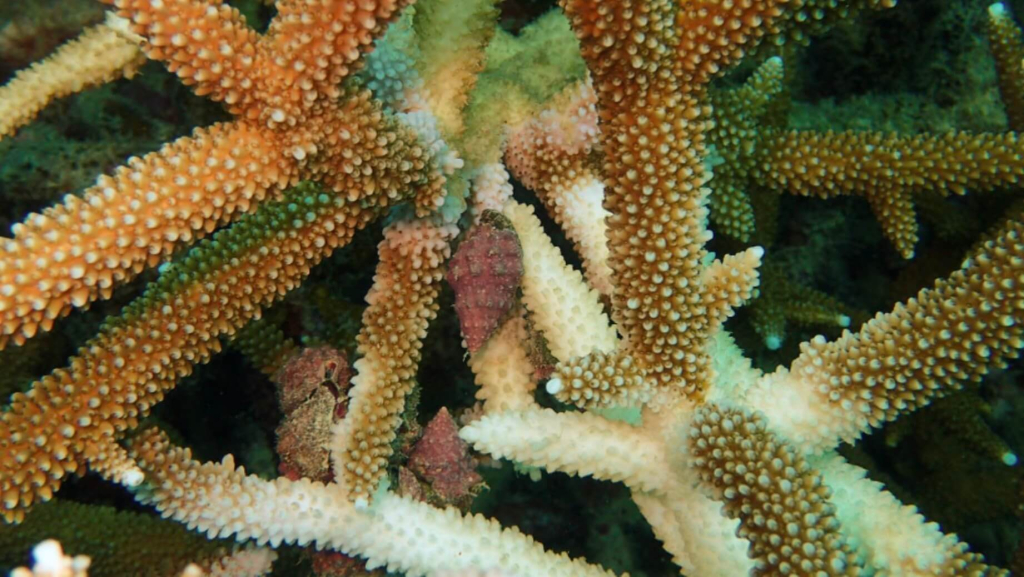
Close-up of Drupella snails feeding on Acropora coral branches, showing characteristic tissue loss observed during the Coral Predators course.
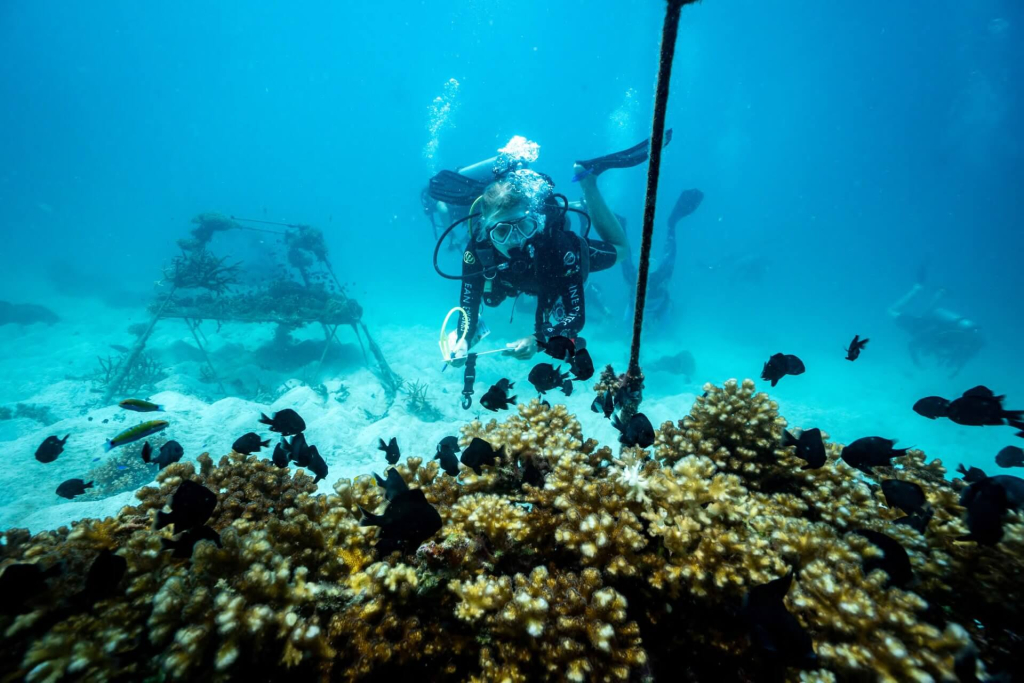
Marine conservation diver collecting data on coral species during the Coral Taxonomy and Ecological Monitoring course at Black Turtle Conservation, Koh Tao, Thailand.

Overview of the Genus

Acropora is the most diverse genus of reef-building corals on Earth and the dominant structural genus across most tropical Indo-Pacific reefs. The genus is split into two recognised subgenera, Acropora and Isopora, with the latter elevated to genus level by some authorities.

Globally, Acropora species form the structural backbone of shallow reef crests, fore-reefs, and lagoonal coral gardens. They provide complex three-dimensional habitat that supports thousands of associated reef-fish, invertebrate, and microbial species, and they contribute disproportionately to net carbonate accretion.

Around Koh Tao, Acropora colonies have long been one of the most visible and abundant hard corals across shallow reef habitats. They are also a primary focus of local restoration programmes, including the work conducted at Junkyard Reef and Black Turtle Reef in partnership with the Department of Marine and Coastal Resources.

Global and Local Importance

Globally, Acropora corals function as ecosystem engineers and primary calcifiers. Their rapid skeletal growth and high recruitment rates make them keystone contributors to reef framework construction, wave attenuation, and biogenic carbonate production.

In Koh Tao specifically, Acropora is treated as a sentinel taxon. Its presence and condition serve as an early-warning indicator of reef stress, and its decline relative to more thermally tolerant taxa has been documented in peer-reviewed surveys of the island’s reefs over multiple decades.

Reef-Building Contribution and Habitat Provision

Few coral genera contribute as much to vertical reef accretion as Acropora. Their open, branching skeletons rapidly fill space and generate habitat complexity that is correlated with higher fish biomass and invertebrate diversity, underpinning fisheries productivity in shallow seas.

On healthy Koh Tao reefs, mature Acropora thickets provide refuge for small reef fish and cryptobenthic invertebrates, while table-form colonies in particular are well known for sheltering squirrelfish and groupers in their shaded undersides. Branching colonies are also actively grazed by parrotfish, whose bioerosion contributes to natural coral turnover and sediment generation.

Growth Forms and Colony Variation

Acropora exhibits extraordinary morphological plasticity. Recognised growth forms include branching (staghorn), corymbose (low, bushy), digitate (finger-like), and tabulate (flat-topped table). The same species can occasionally express different growth forms in response to depth, light, and water motion.

This plasticity allows Acropora to occupy a wide range of microhabitats on a single Koh Tao reef, from high-energy reef crests where compact corymbose colonies dominate, to deeper, calmer slopes where broad table forms maximise light interception.

Evolutionary Success and Diversity

Acropora’s evolutionary success is underpinned by rapid asexual fragmentation, broadcast spawning, hybridisation, and genome-level adaptability. The Caribbean houses only three Acropora species, while the Indo-Pacific hosts well over a hundred, reflecting the genus’s extensive radiation in this region and explaining its central role in coral restoration globally.

Morphology

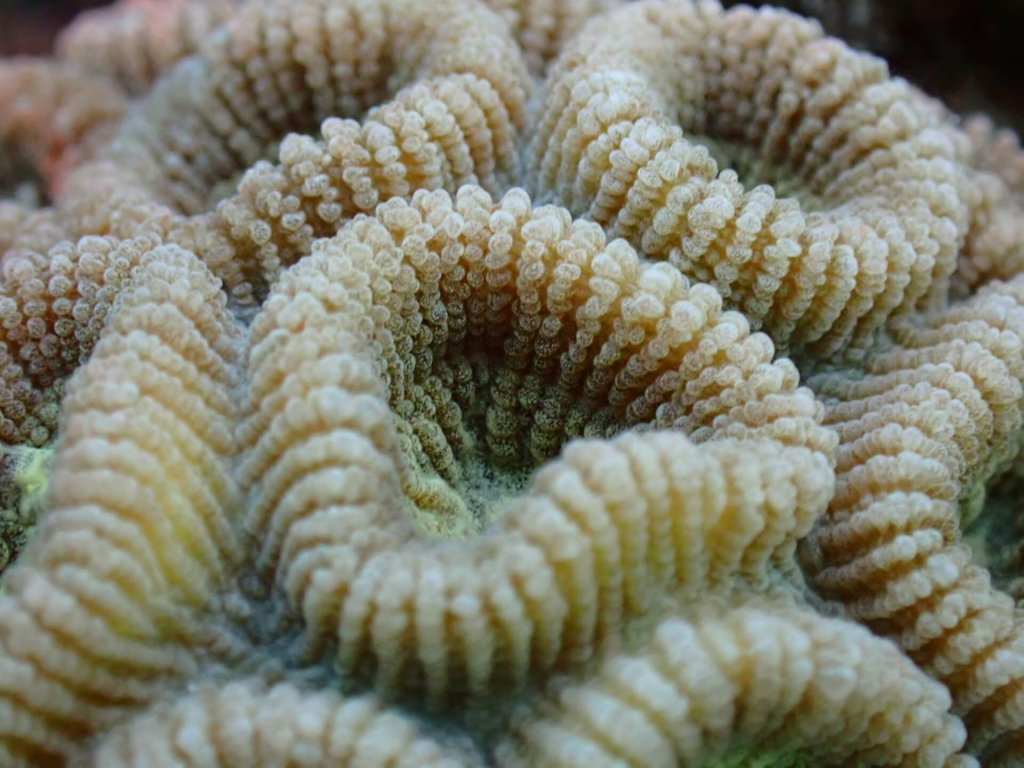
Close-up of a healthy brain coral colony photographed during the Ecological Monitoring Program (EMP) with Black Turtle Conservation in Koh Tao, Thailand.
Coral colony showing fresh tissue loss and bleaching caused by corallivorous predators, documented during coral health monitoring in Koh Tao.
Close-up of Drupella snails feeding on Acropora coral branches, showing characteristic tissue loss observed during the Coral Predators course.

Colony Structure and Skeletal Features

Acropora colonies are defined by a single diagnostic feature: each branch terminates in a prominent axial polyp, which is the primary site of skeletal extension, surrounded by smaller radial polyps along the branch shaft. This dimorphic corallite arrangement is unique to the family Acroporidae and forms the basis for genus-level identification.

The coenosteum, or skeleton between corallites, is typically spinulose, costate, or reticulate, depending on species. Branch shape varies from cylindrical staghorn forms to flattened tabular forms with peripheral growth, while corallite size is generally small and tubular relative to other reef-building genera.

Polyps and Tissue Characteristics

Individual polyps are small (commonly around 2 mm across) and bear short tentacles that retract rapidly when disturbed. The thin tissue layer holds dense populations of symbiotic zooxanthellae, which are responsible for the brown–green colouration commonly observed across Koh Tao colonies.

The interconnected gastrovascular system allows polyps to share photosynthate, nutrients, and chemical signals across the colony, supporting rapid colony-wide responses to predation, sediment, and bleaching stress.

Skeletal Microstructure and Calcification

Acropora skeletons are constructed primarily of aragonite, a metastable form of calcium carbonate. The microstructure is relatively porous compared to massive genera such as Porites, which enables rapid linear extension but also explains the genus’s comparatively high vulnerability to mechanical breakage and bioerosion.

Calcification is driven by the symbiosis with zooxanthellae and is highly sensitive to seawater carbonate chemistry. Reductions in aragonite saturation state, driven by ocean acidification, are projected to disproportionately affect fast-calcifying genera like Acropora.

Size, Growth Rates, and Defensive Adaptations

Individual Koh Tao colonies typically reach 0.5–2 m in diameter, although healthy table-form colonies can exceed 3 m where conditions allow. Linear extension rates of 10–20 cm per year are routine in shallow, well-lit, current-swept settings, making Acropora one of the fastest-growing reef builders documented.

Defensive adaptations include nematocyst-armed tentacles, mucus sheets that shed sediment and microbial fouling, and chemical defences against predators. The relatively porous skeleton, while permitting fast growth, leaves colonies more susceptible to mechanical breakage than the denser skeletons of massive coral genera.

Dual-Feeding Strategy: How Acropora Feeds and Thrives

Acropora is a highly efficient mixotroph, drawing energy from two complementary pathways. This dual strategy fuels the rapid calcification and growth that define the genus, while also creating specific vulnerabilities when either pathway is disrupted.

1. Autotrophy: The Solar Engine

The dominant energy source is photosynthesis carried out by symbiotic dinoflagellates of the family Symbiodiniaceae living within the coral’s gastrodermal cells. Under optimal conditions, these symbionts can provide up to 90% of the coral’s daily carbon requirements as translocated photosynthate, mostly in the form of glucose, glycerol, and amino acids.

This solar-powered carbon supply funds the energetically expensive process of building calcium carbonate skeletons, and explains why Acropora reaches its highest abundance and growth rates in the upper 0–15 m of the water column on Koh Tao reefs.

Photosynthate alone is carbon-rich but nitrogen and phosphorus poor. To meet these needs, Acropora polyps actively capture zooplankton, suspended particulate organic matter, and dissolved organic compounds using extended tentacles and mucus nets, especially during night and crepuscular periods when zooplankton densities rise in the water column.

This heterotrophic feeding supplies essential nitrogen, phosphorus, and trace elements that are otherwise limiting in the oligotrophic Gulf of Thailand. It also provides a partial nutritional buffer when symbiosis is impaired, although heterotrophy alone is generally insufficient to sustain Acropora through prolonged bleaching.

The combination of autotrophy and heterotrophy allows Acropora to dominate shallow, light-intense habitats around Koh Tao while retaining some flexibility during periods of reduced light or plankton availability. However, this dependence on symbiosis is the genus’s greatest vulnerability: when sea-surface temperatures exceed local thermal thresholds, the coral expels its zooxanthellae, severing the autotrophic pathway and leaving the colony heavily reliant on heterotrophy that cannot keep pace with metabolic demand.

Where to Find Acropora Around Koh Tao and at Which Dive Sites

Marine conservation diver collecting data on coral species during the Coral Taxonomy and Ecological Monitoring course at Black Turtle Conservation, Koh Tao, Thailand.
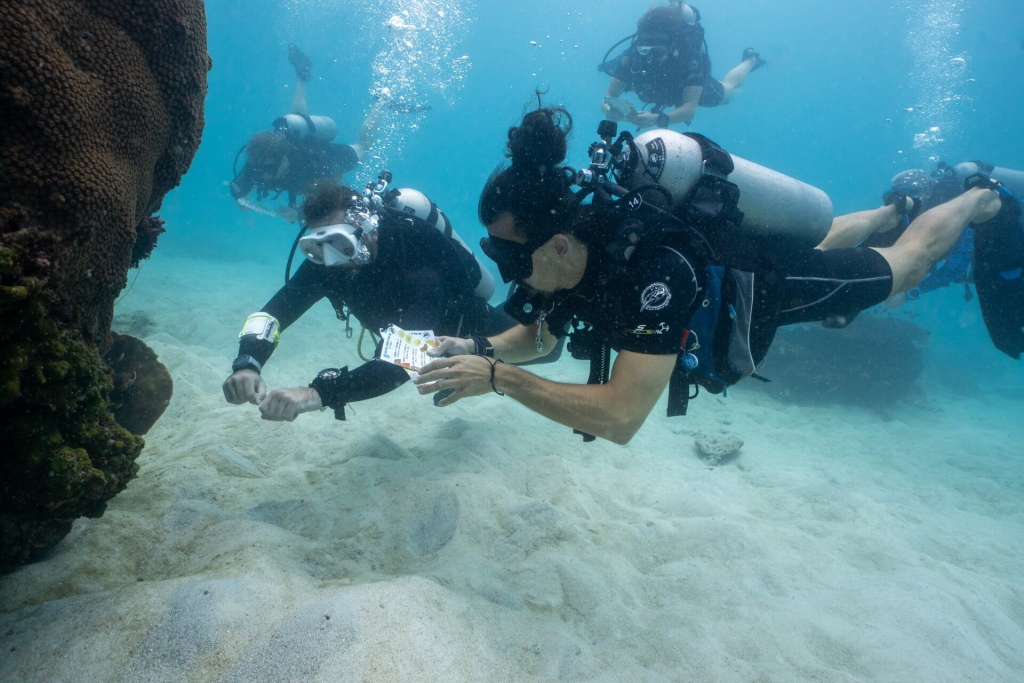
Student identifying coral species underwater during the Coral Taxonomy & Identification course with Black Turtle Conservation in Koh Tao, Thailand.

Acropora is one of the most widely distributed coral genera around Koh Tao and can be found at virtually every dive site with hard substrate in suitable depth and light conditions. The genus shows clear depth zonation, with growth-form composition shifting from compact branching colonies in shallows to plating and tabular forms on deeper, calmer slopes.

Shallow Coral Gardens

Sites such as Aow Leuk, Mango Bay, Hin Wong Bay, and Japanese Gardens host historically significant fields of staghorn and bushy Acropora at depths between 4 and 12 metres. These shallow gardens act as critical nursery habitat for juvenile reef fish and as the frontline for coastal wave attenuation.

The Pinnacles and Offshore Sites

At White Rock, Twins, Chumphon Pinnacle, and Southwest Pinnacle, larger table Acropora (notably species in the A. hyacinthus complex) form prominent reef features at depths of around 10–18 m, and their shaded undersides are reliable spots to find resident squirrelfish and groupers. Branching forms cluster on shoulder zones, while tabular morphologies dominate horizontal shelves where light and current conditions favour their broad, plate-like growth.

Restoration and Artificial Reef Sites

Nursery-grown Acropora nubbins and out-planted colonies are visible at active restoration sites including Junkyard Reef and Black Turtle Reef. These sites are central to the ongoing partnership between Black Turtle Dive, Eco Koh Tao, and the Thai Department of Marine and Coastal Resources, and demonstrate the use of steel frames, concrete reef balls, and embedded glass bottles as artificial substrates for coral propagation.

Depth Distribution and Site Variation

Acropora is most abundant in the upper 15 m of the water column, with healthy colonies extending to roughly 25–30 m on well-lit slopes such as those at Sail Rock and Chumphon Pinnacle. Growth-form composition shifts predictably along this depth gradient, providing a useful in-water teaching tool for trainees learning to read reef habitat structure.

Environmental Thresholds: Conditions for Optimal Growth

Acropora is a high-energy genus that thrives within a relatively narrow set of physical and chemical conditions. Operating outside this envelope, particularly in temperature and light, produces rapid stress responses that are visible to trained reef surveyors.

Optimal Parameters

  • Light Intensity: high light, with peak performance in the upper photic zone (0–15 m).
  • Water Movement: moderate to strong currents that deliver oxygen and plankton while preventing sediment accumulation.
  • Temperature Range: 24–29°C, with marked stress above prolonged 30–31°C exposure.
  • Salinity: stable marine conditions of 33–35 ppt; vulnerable to freshwater pulses from heavy monsoon runoff.
  • Chemical Stability: stable calcium (around 400 mg/L), alkalinity (8–9 dKH), and pH for efficient calcification.

Stress Responses on Koh Tao

Prolonged elevated sea-surface temperatures cause oxidative stress within zooxanthellae, leading to symbiont expulsion and bleaching. The 2010 mass bleaching event reduced Koh Tao’s island-average coral coverage from approximately 41% to 27%, disproportionately affecting Acropora colonies.

Ocean acidification reduces aragonite saturation state and slows skeletal formation, while sedimentation, freshwater runoff, and reduced light penetration following heavy rains compound these stresses. Acropora colonies near coastal development sites show some of the clearest stress signals on the island.

Vulnerability Profile

Close-up of a healthy brain coral colony photographed during the Ecological Monitoring Program (EMP) with Black Turtle Conservation in Koh Tao, Thailand.

Acropora is among the most climate-vulnerable coral genera worldwide, owing to its high metabolic rate, narrow thermal envelope, and reliance on intact symbiosis. This vulnerability has been formally recognised in the IUCN Red List, where many Indo-Pacific Acropora species are listed in threatened categories, and in CITES Appendix II, which has regulated international trade in scleractinian corals since 1990.

Major Threats

  • Coral Bleaching: low thermal tolerance leads to rapid bleaching and post-bleaching mortality during marine heatwaves.
  • Ocean Acidification: reduced calcification rates produce weaker, more brittle skeletons and slower recovery from physical damage.
  • Disease Susceptibility: increased exposure to White Syndrome and other coral diseases under thermal stress, including those documented in regional surveys.
  • Predation Pressure: outbreak densities of crown-of-thorns starfish (Acanthaster planci) and corallivorous Drupella snails preferentially target Acropora.
  • Local Anthropogenic Impacts: anchoring, fin damage, ghost fishing gear, and sediment runoff from coastal development.

On Koh Tao, Acropora functions as a key indicator species for early detection of reef stress. Surveys covering 2006–2014 documented declines in Acropora, Montipora, and Diploastrea, with corresponding increases in Porites, Pavona, and Fungiidae, indicating a community-level shift toward bleaching-resistant taxa. Black Turtle Conservation contributes to this continuing dataset through ongoing reef monitoring and active restoration.

How to Identify Acropora Coral

The definitive field characteristic of Acropora is the presence of an axial polyp at the tip of every branch, surrounded by smaller radial polyps along the branch shaft. This dimorphic corallite arrangement is unique to the genus and is reliably visible in good-light, close-range observation.

Marine conservation diver collecting data on coral species during the Coral Taxonomy and Ecological Monitoring course at Black Turtle Conservation, Koh Tao, Thailand.

Key Identification Features

  • Axial vs Radial Polyps: a single, larger axial polyp at every branch tip, with smaller radial polyps along the shaft.
  • Coenosteum Texture: usually spinulose or costate between corallites, varying with species.
  • Growth Forms: branching (staghorn), tabular, corymbose, digitate, or rarely encrusting.
  • Coloration: highly variable across species and depth: typically brown, cream, green, blue, or pink, sometimes with contrasting branch tips.

Distinguishing from Similar Genera

Pocillopora differs in lacking axial polyps, instead bearing characteristic verrucae (rounded skeletal bumps) along its branches. Porites is far more compact, with very small corallites set into a smooth, skin-like surface, and lacks branch-tip dimorphism. Montipora generally forms encrusting, foliose, or laminar colonies with a sandpaper-like coenosteum and very small corallites, again with no axial polyp.

During Black Turtle Conservation workshops, students practise this side-by-side comparison on multiple dive sites until axial-polyp recognition becomes reflexive. Confident genus-level identification is a platform for all subsequent coral monitoring work.

Mastering Acropora Identification with Black Turtle Conservation

Close-up of Drupella snails feeding on Acropora coral branches, showing characteristic tissue loss observed during the Coral Predators course.

At Black Turtle Conservation we treat mastery of Acropora identification as essential for any serious reef surveyor or scientific diver operating on Koh Tao. Because this genus is both the most diverse and one of the most vulnerable on the island, accurate field recognition is critical for monitoring reef health, tracking the success of restoration outplants, and detecting early signs of bleaching, disease, and predation.

Our Training Approach: From Theory to Survey

Marine conservation diver collecting data on coral species during the Coral Taxonomy and Ecological Monitoring course at Black Turtle Conservation, Koh Tao, Thailand.

Our Coral Taxonomy and Identification training follows a proven progressive pathway designed to take students from classroom theory to confident in-water surveyors capable of contributing real data.

  • Classroom Theory: students learn axial polyp structure, growth-form recognition, and environmental indicators using underwater slates, dichotomous keys, and reference photo libraries.
  • In-Water Practice: guided dives at key sites such as Twins, Aow Leuk, Mango Bay, and Chumphon Pinnacle, where students identify multiple growth forms and species in situ under instructor supervision.
  • Applied Monitoring: participation in weekly Ecological Monitoring Program surveys, where Acropora abundance, bleaching prevalence, disease signs, and predator presence are recorded as priority data.
  • Restoration Skills: hands-on nursery work including fragmentation, attachment of nubbins to artificial substrates, and out-planting of healthy colonies onto degraded reef areas.

Students leave with the practical skills to contribute meaningful data to local and global coral monitoring efforts, and many continue as long-term contributors to Koh Tao’s coral conservation programmes.

External Link Citations and References

Veron, J.E.N. (2000). Corals of the World. Australian Institute of Marine Science.

World Register of Marine Species (WoRMS): Acropora Oken, 1815.

IUCN Red List of Threatened Species: Acropora entries.

Department of Marine and Coastal Resources (DMCR), Thailand: Reef monitoring reports.

Black Turtle Conservation: Coral conservation, monitoring and restoration on Koh Tao.