This citizen science initiative engages Koh Tao residents and visitors in the long-term monitoring of local sea turtle populations. Prior to conducting field surveys, participants complete a comprehensive briefing that explores sea turtle anatomy, ecology, and the specific anthropogenic threats impacting these species. Under the guidance of a Conservation Survey Leader, volunteers are introduced to standardised observational methodologies to support ongoing conservation strategies and population assessments across Koh Tao.

½ Day

1 snorkel session

600 THB

Join us for an afternoon dedicated to supporting Koh Tao’s ongoing marine conservation efforts.

Through a guided snorkel survey, you will gain hands-on field experience alongside fellow turtle enthusiasts, directly contributing to active ecological monitoring projects.

While many visitors come to our bays merely to observe sea turtles, this programme empowers a community of conservation-minded individuals to actively collect vital population data that helps protect these species.
Key Learning Takeaways:

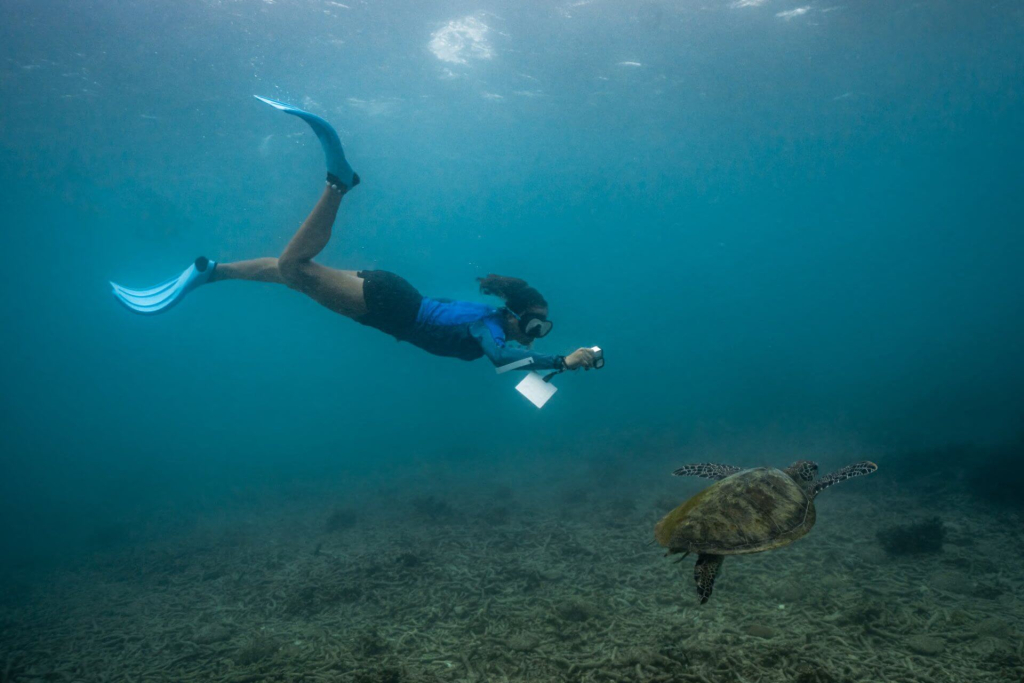
Community participants conducting a weekly sea turtle survey in Koh Tao, recording sightings and behavior as part of ongoing marine conservation and citizen science efforts.
  • Anatomy & Evolutionary Adaptations: Explore the specialised physiology that allows sea turtles to thrive in marine environments.
  • Ecological Importance & Habitat Dynamics: Understand the critical role of Koh Tao’s two primary species—the Green (Chelonia mydas) and Hawksbill (Eretmochelys imbricata) sea turtles—as keystone species.
  • Anthropogenic Threats & Endangerment: Examine the global and localised human-driven pressures impacting sea turtle survival.
  • Non-Invasive Identification Techniques: Master the ethical observational skills required to document sea turtles in the water without crowding them or altering their natural behaviour.
  • Data Collection & Conservation Impact: Learn the standardised field survey protocols used during our snorkel surveys. Generate the evidence needed to map high-use hotspots and advocate for seasonal boat-traffic protection zones around Koh Tao.

This Course is Perfect for:

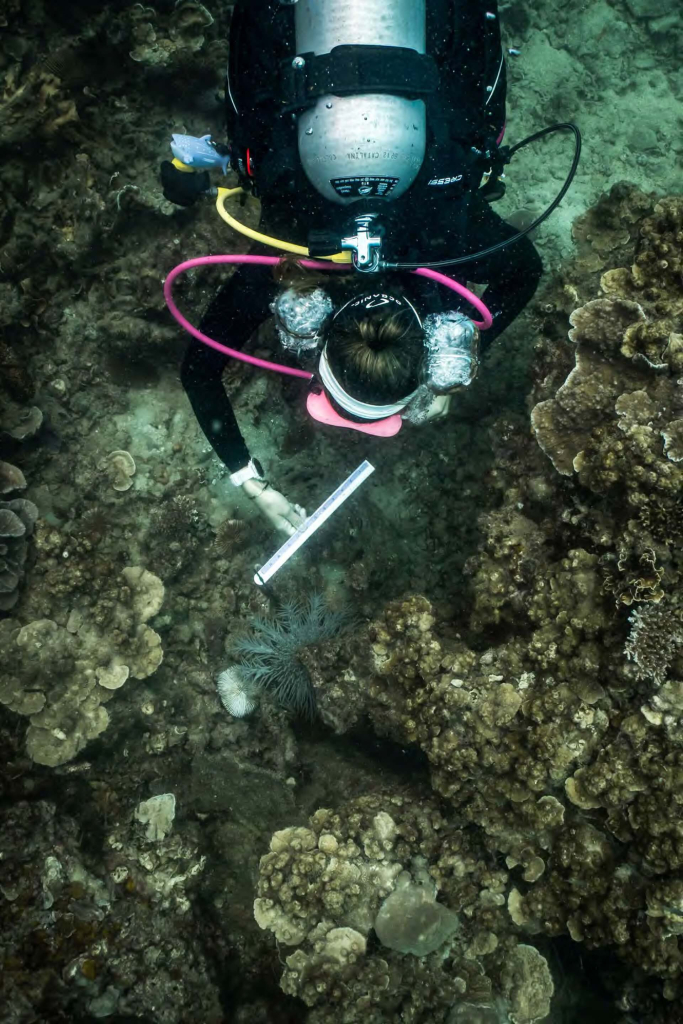
Sea turtle monitoring research project in Koh Tao, collecting field observations and population data as part of marine conservation research.
  • Ocean Advocates: Anyone passionate about protecting marine life and supporting localised conservation efforts.
  • Citizen Scientists: Snorkellers and divers looking to elevate their time in the water by contributing to authentic, data-driven research.
  • Eco-Conscious Explorers: Families, beginners, and environmentally minded travellers seeking a meaningful, impact-driven ocean experience.

Why This Survey Matters

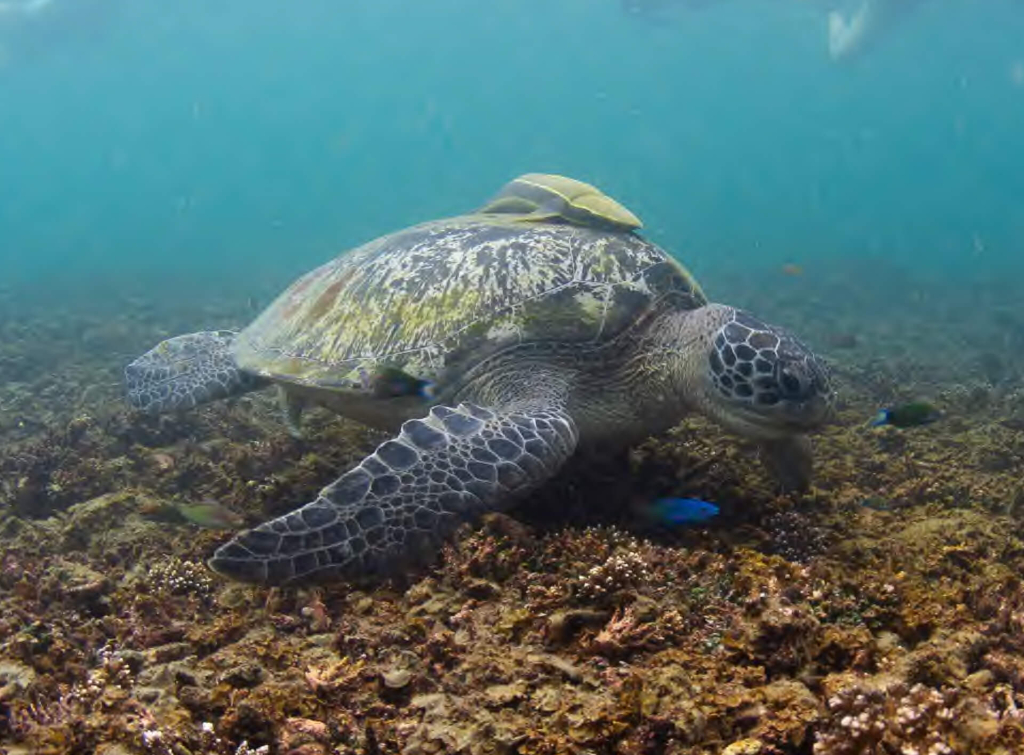
Green sea turtle resting on a coral reef while snorkelers observe from the surface during the Sea Turtle Ecology and Identification course at Black Turtle Conservation, Koh Tao, Thailand.

Sea turtles are among the most watched animals in Koh Tao's bays, and that attention generates a great many sightings and almost no usable information. A holiday photograph establishes that a turtle was present on one afternoon. It cannot tell you whether the same individual has been feeding in that bay for several seasons, or whether the number of turtles relying on it is holding steady or falling away. Population assessment needs a record built the same way every time.

Consistent observation is what turns sightings into that record. When the same areas are surveyed to a standardised protocol week after week, the pattern that emerges separates genuine change from the ordinary variation of a single session—and it shows where turtle use is heaviest, and which stretches of water carry the greatest overlap between feeding turtles and human activity. That overlap is precisely where the global and localised pressures covered in your briefing are expressed at a scale that can be managed. It is also the evidence required to map high-use hotspots and to make the case for seasonal boat-traffic protection zones rather than merely assert them.

Your Survey, Step by Step

Before You Enter the Water

Your Conservation Survey Leader opens with a comprehensive ecological briefing. You will work through sea turtle anatomy and the evolutionary adaptations behind it, the keystone role the Green (Chelonia mydas) and Hawksbill (Eretmochelys imbricata) play in the systems they feed in, and the human-driven pressures shaping their survival both globally and here on Koh Tao. The briefing then turns to method: how to separate the two species confidently in the water, which features distinguish one individual animal from another, and what a standardised observation record asks you to note. You will also be shown where the non-invasive limits sit, so that you enter the water knowing not only what you are recording but how close is too close.

The survey runs as a snorkel session in one of Koh Tao’s shallow bays, which may include Aow Leuk, Sai Nuan, June Juea, Tao Thong, Mae Haad and Mango Bay. The site is never fixed in advance and no particular bay can be promised: which one your session covers is decided on the day according to the prevailing wind and sea conditions, because a standardised observation record depends on water calm enough and clear enough to search consistently. Your Conservation Survey Leader will confirm the site before you set out.

In the Water

You enter the water as a small survey team rather than as a group of snorkellers hoping to come across something. Observation effort is kept consistent, because a session is only comparable with the last if the searching was done the same way. Each encounter is worked through in the same order: species, the identifying features that mark the individual, what the animal was doing when you found it, and what human activity was present nearby. What you do not do matters just as much—no pursuit, no closing the distance for a better view, nothing that stands between a turtle and its route to the surface. A record gathered by crowding an animal documents your presence rather than its natural behaviour, which is why the ethical protocol and the scientific value of the data are the same thing here.

Back at the Centre

Back at the centre your session becomes data. Observations are transferred onto the standardised log, any photographs are reviewed, and your Conservation Survey Leader helps you check identifications against the record already held for those areas. The debrief closes the loop: what this afternoon added, where the dataset is still thin, and how your sheet sits alongside the weeks either side of it.

Session Time Activity
Briefing Before departure Ecology briefing and survey methodology
Field survey Afternoon Guided snorkel survey recording sea turtle sightings, identifying features and behaviour
Debrief On return Data logging, photo review and discussion

Please note that this schedule is indicative. Exact times will be confirmed before your survey begins.

What Your Data Contributes To

Sea turtle monitoring research project in Koh Tao, collecting field observations and population data as part of marine conservation research.

This is a population dataset, and it serves our conservation programme in two closely linked ways. First, it establishes an ecological baseline: a standardised account of which species are using which areas of Koh Tao, how consistently, and in what numbers, against which any future change can actually be measured. Second, it pinpoints the high-use areas where turtles and people share the same shallow water—the overlap that determines real risk to the animals, and the one piece of evidence that a case for seasonal boat-traffic protection zones cannot be made without.

Turtles are not moved, handled or managed, so this survey does not drive rapid intervention in the field. Its contribution is slower and considerably harder to argue with: a weekly, non-invasive record that accumulates into the kind of evidence island policy can be built on.

Over a 12-month period, Black Turtle Conservation welcomed 71 participants to our weekly sea turtle monitoring surveys. Thanks to the dedication of these citizen scientists, we successfully recorded 198 sea turtle sightings. This collaborative effort provides the crucial data needed to track local populations around Koh Tao and directly supports our ongoing marine research. As a special highlight this year, our team even had the opportunity to identify and name a newly sighted sea turtle, ‘Samosa’!

Prerequisites:

Comfortable swimming in Open Water

Price Includes
600 ฿
  • 1 ecology briefing
  • 1 guided snorkel survey
  • Snorkel equipment & dive computer
  • Dive insurance
BOOK NOW

Timetable

Monday · indicative plan

  1. 15:00Introduction to sea turtle ecology and survey briefing
  2. 16:00Snorkel monitoring survey
  3. 17:00Data review and input

This schedule is indicative. Exact times are confirmed before the survey.