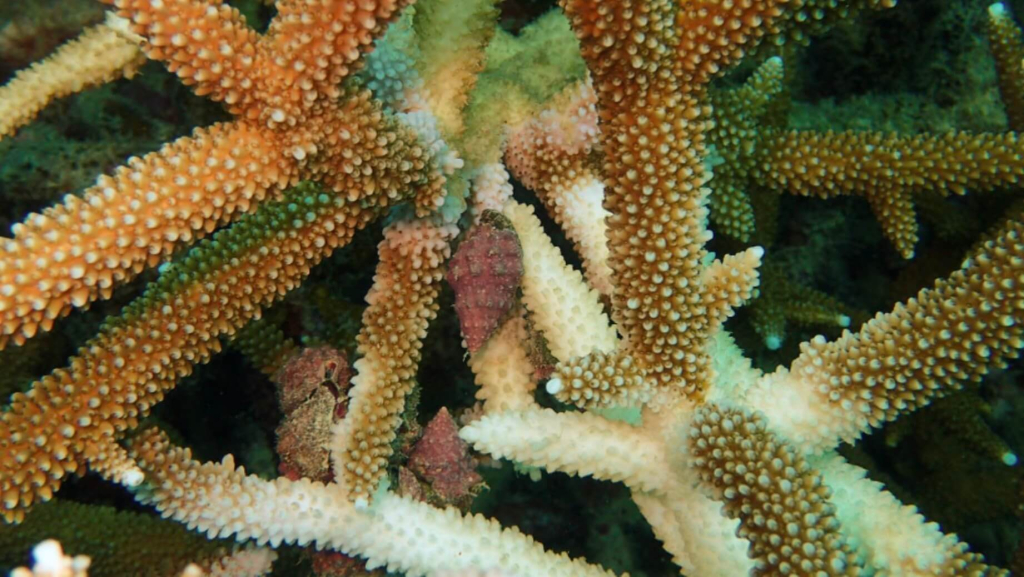
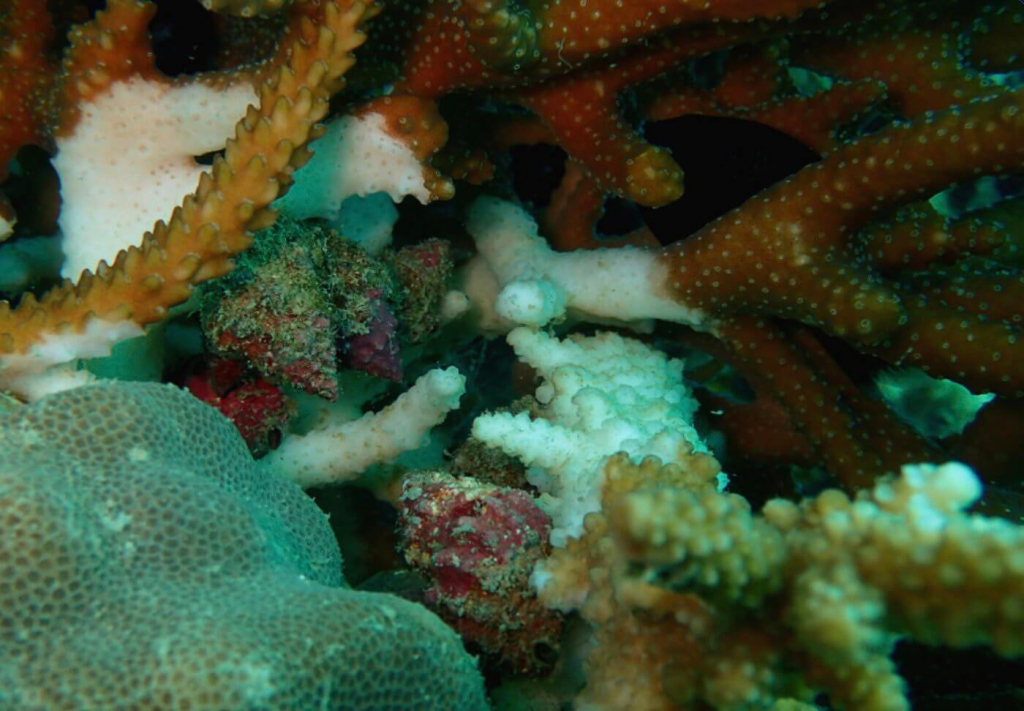
Acropora is the undisputed architect of tropical coral reefs and the largest genus of scleractinian (stony) corals, with around 160 currently accepted species recognised by the World Register of Marine Species. Renowned for their rapid linear extension rates of 10–20 cm per year under optimal natural conditions, and for their complex branching, table, digitate, and corymbose growth forms, Acropora colonies contribute to the three-dimensional, complex framework that helps to support the vast biodiversity of Indo-Pacific reef ecosystems.
Around Koh Tao, Acropora has historically been a pioneer genus dominating shallow coral gardens, although long-term Ecological Monitoring Program data document a notable decline in Acropora abundance between 2006 and 2014, alongside increases in more bleaching-resistant genera such as Porites and Pavona.
As mixotrophs, Acropora colonies combine autotrophy via symbiotic algae (Symbiodiniaceae dinoflagellates) with active heterotrophic feeding on plankton and dissolved organic matter. This dual strategy allows them to thrive in the relatively nutrient-poor waters of the Gulf of Thailand while remaining acutely sensitive to thermal stress, sedimentation, ocean acidification and changes in water quality.
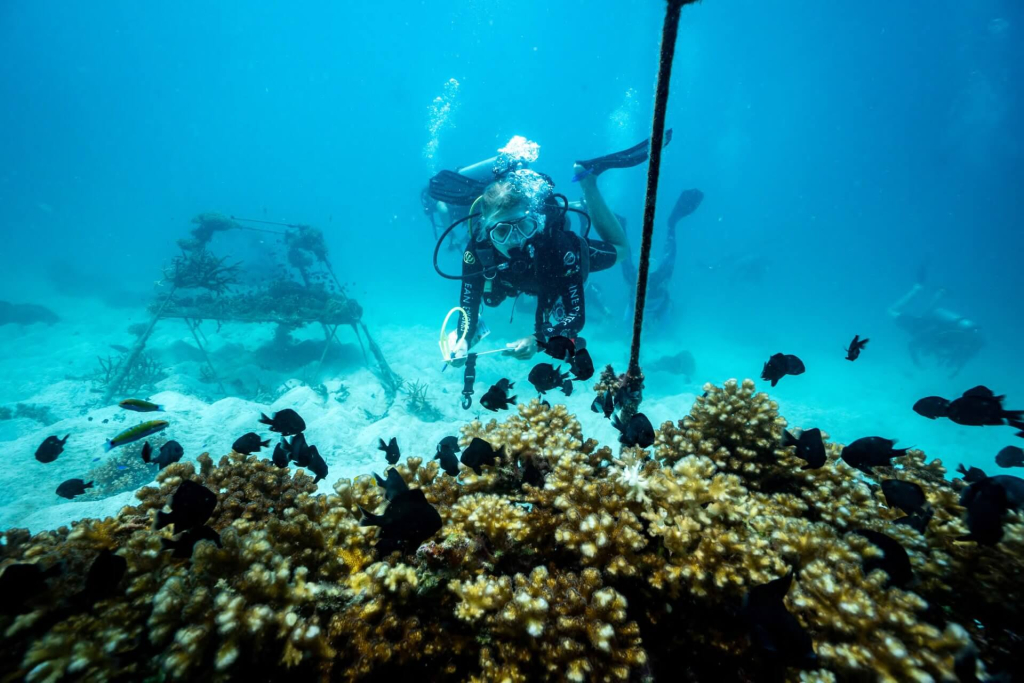
This comprehensive guide explores the morphology, dual-feeding strategy, distribution around Koh Tao, environmental requirements, vulnerability profile, field identification, and conservation training opportunities offered by Black Turtle Conservation. It is intended as a foundational reference for conservation interns, advanced reef surveyors, and citizen scientists contributing to coral monitoring and restoration efforts in the Gulf of Thailand.
Common Names: Staghorn Coral, Table Coral, Branching Coral, Bushy Coral
Family: Acroporidae
Order: Scleractinia (Stony Corals)
Subclass: Hexacorallia | Class: Anthozoa | Phylum: Cnidaria