Merulina is a genus of stony corals in the family Merulinidae and is the type genus of the family. The genus was described by Ehrenberg in 1834 and contains five currently accepted species across the tropical Indo-Pacific, with Merulina ampliata as the most widespread and recognisable form. Merulina scabricula and Merulina scheeri also occur regionally.

Merulina colonies are foliose to laminar, with characteristic ruffled fan-shaped or columnar projections and short meandroid valleys arranged across the colony surface. The pattern of meandering valleys with paliform-lobed walls gives the genus its common names of Ruffled Coral, Lettuce Coral, and Cabbage Coral, although the upright fluting is usually less pronounced than in the closely related Pectinia.

Around Koh Tao, Merulina is moderately common at sheltered slope sites and is a familiar component of foliose reef habitat. This guide explores the morphology, feeding strategy, distribution, environmental requirements, vulnerability profile, field identification, and conservation training opportunities offered by Black Turtle Conservation.

Common Names: Ruffled Coral, Lettuce Coral, Cabbage Coral, Zipper Coral

Family: Merulinidae

Order: Scleractinia (Stony Corals)

Subclass: Hexacorallia | Class: Anthozoa | Phylum: Cnidaria

Learn About Merulina Coral Genus

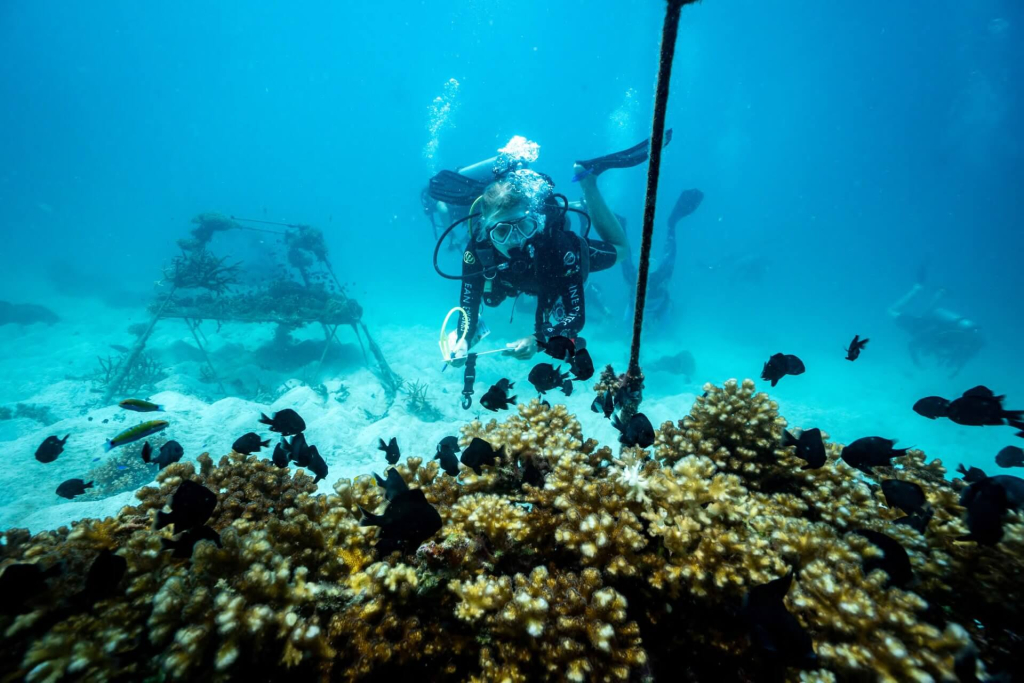
Marine conservation diver collecting data on coral species during the Coral Taxonomy and Ecological Monitoring course at Black Turtle Conservation, Koh Tao, Thailand.
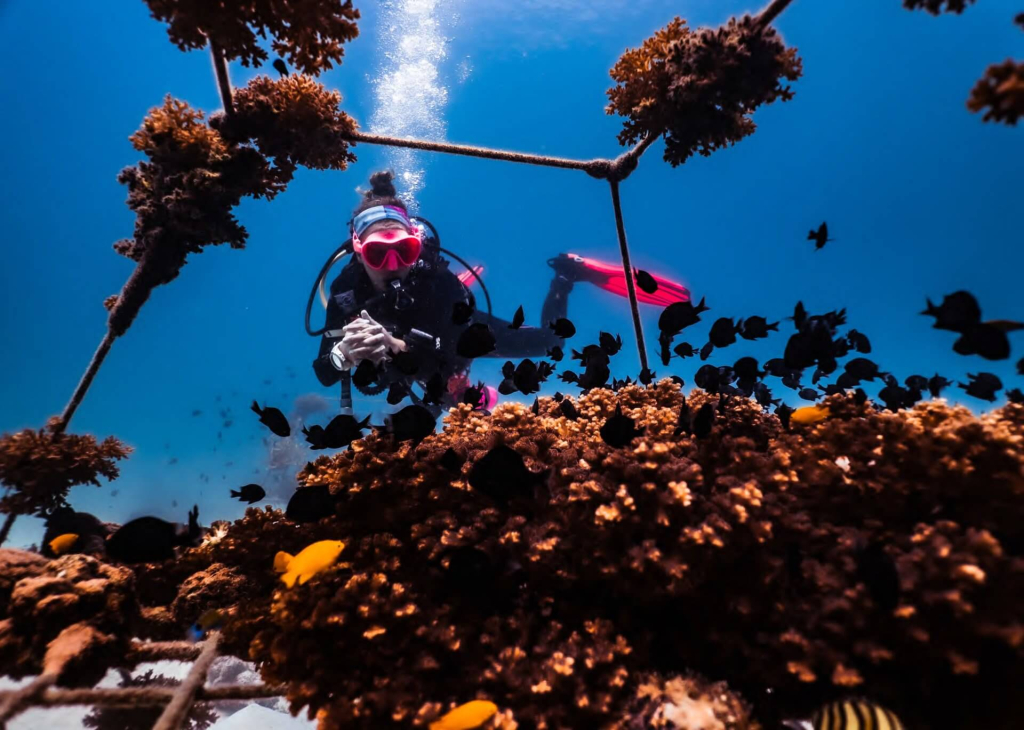
Diver recording fine-scale coral identification data during the Advanced Coral Taxonomy and Marine Conservation course at Black Turtle Conservation, Koh Tao, Thailand.
Healthy coral reef ecosystem with diverse fish species recorded during coral disease and reef health monitoring in Koh Tao, Thailand.

Overview of the Genus

Merulina is the type genus of the family Merulinidae and one of the most morphologically distinctive foliose reef-builders in the Indo-Pacific. Its colonies grow as ruffled fan-shaped plates or columnar projections with characteristic short meandroid valleys, giving mature colonies a lettuce or cabbage-like appearance.

The genus was historically considered a relatively isolated foliose taxon, but molecular phylogenetic work since 2010 has placed Merulina alongside a wide range of other corals in a substantially revised Merulinidae. Hydnophora, Favites, Goniastrea, Platygyra, Leptoria, and Dipsastraea are all now considered members of this expanded family.

On Koh Tao, Merulina is regularly encountered at sheltered slope sites and provides distinctive foliose architecture against the dominant massive and encrusting reef framework. Its “zippered” appearance makes it readily recognisable to trained observers.

Global and Local Importance

Globally, Merulina is widespread across the tropical Indo-Pacific from the Red Sea and East Africa through Southeast Asia and out to Japan and the southern central Pacific. The genus contributes foliose architecture in sheltered reef habitats and supports cryptobenthic invertebrate communities sheltering among colony folds.

On Koh Tao, Merulina contributes to slope-zone biodiversity and is a useful indicator of stable, low-disturbance habitat conditions. Tracking its presence and condition complements monitoring of dominant reef-builders such as Porites and Pavona.

Reef-Building Contribution and Habitat Provision

Merulina colonies, although individually slow-growing, contribute substantial three-dimensional structure relative to their footprint area through their fan-shaped or columnar projections. Mature colonies provide microhabitat for cryptobenthic invertebrates and small reef fish that exploit the protected spaces between folds and ruffles.

The ruffled laminar architecture of Merulina also creates microscale topographic complexity that contributes to reef habitat diversity, complementing the more uniform surfaces of dominant massive reef-builders on Koh Tao slopes.

Growth Forms and Colony Variation

Merulina ampliata, the most common species in the genus and around Koh Tao, produces foliose, fan-shaped, or columnar colonies with characteristic short meandroid valleys arranged across the surface. Growth forms vary depending on habitat, with sheltered colonies often producing more upright columnar or ascendant projections, and more exposed colonies producing flatter fan-shaped plates.

Colour is typically green, olive, cream, or brown, sometimes with pink fringes along the colony edges. The combination of ruffled architecture and meandroid valley patterns gives Merulina a distinctive and recognisable visual identity in the field.

Evolutionary and Taxonomic Notes

As the type genus of Merulinidae, Merulina anchors a family that has expanded substantially since 2010 to incorporate genera previously placed in Faviidae, Pectiniidae, and other revised groupings. Although the genus itself has remained relatively stable taxonomically, its central role in the family means that ongoing phylogenetic work continues to refine its known relationships.

Morphology

Marine conservation diver collecting data on coral species during the Coral Taxonomy and Ecological Monitoring course at Black Turtle Conservation, Koh Tao, Thailand.
Diver recording fine-scale coral identification data during the Advanced Coral Taxonomy and Marine Conservation course at Black Turtle Conservation, Koh Tao, Thailand.

Colony Structure and Skeletal Features

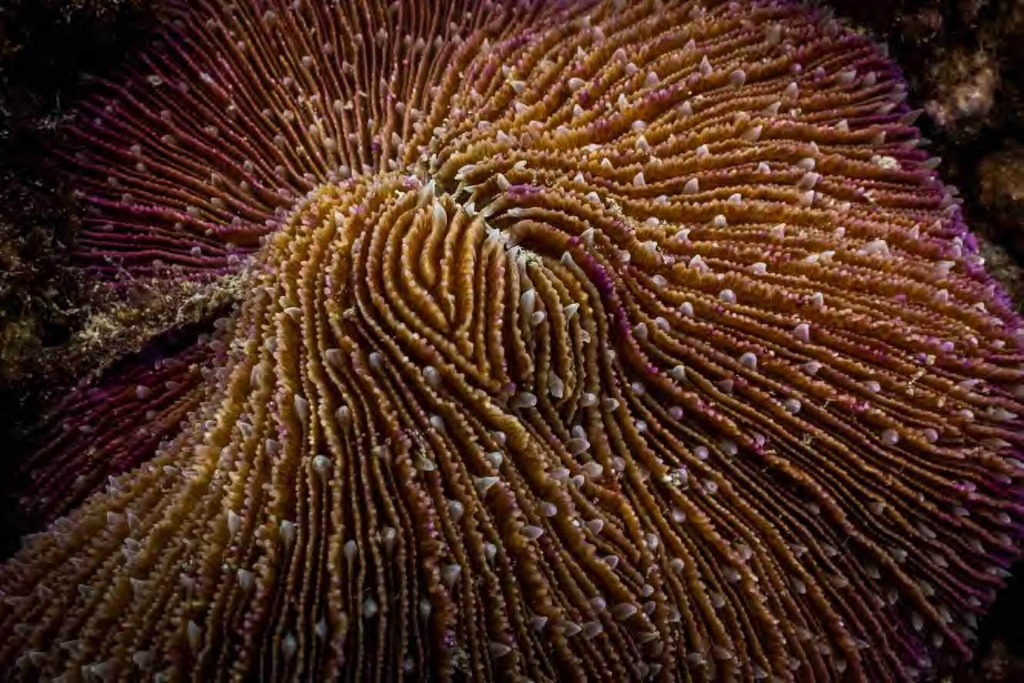
Merulina colonies are commonly foliose, or thin laminar plates that may be fan-shaped, columnar, or ruffled depending on species and habitat. The plates typically extend outward from a central attachment point, growing as horizontally oriented fans or vertically as ascendant columnar projections.

The colony surface bears characteristic short meandroid valleys arranged in radiating or branching patterns. Walls between valleys are relatively thin compared with massive faviid-type corals, and small paliform lobes are sometimes visible at the bases of septa within the valleys.

Polyps and Tissue Characteristics

Merulina polyps are small to moderate in size, with relatively short tentacles that retract during the day and extend at night for feeding. The tissue layer is moderately thick along the valley floors and walls, with adequate zooxanthellae densities for effective photosynthesis across the laminar surfaces.

Merulina is also known to produce sweeper tentacles at colony edges — modified tentacles longer and more heavily armed than normal feeding tentacles — that the colony uses to deter encroachment from competing corals or other sessile organisms. This territorial behaviour is shared with several other meandroid genera in Merulinidae.

Skeletal Microstructure and Calcification

Merulina skeletons are aragonitic with moderately thin laminar walls and septa. The thin laminar architecture is supported by an internal framework that gives the colonies adequate physical stability under normal flow conditions, though they are vulnerable to mechanical damage from direct contact.

Calcification occurs through both colony-margin extension and gradual thickening of the existing laminar skeleton. Like all reef-builders, Merulina is sensitive to reductions in seawater carbonate saturation under ocean acidification scenarios, which would disproportionately weaken the thin laminar walls.

Size, Growth, and Defensive Adaptations

On Koh Tao, mature Merulina colonies typically reach 30–70 cm across, with the largest examples occasionally exceeding 1 m in diameter at sheltered sites. Growth occurs through laminar margin extension and the production of new ruffles and folds, producing the characteristic ruffled architecture over multi-year timescales.

Defensive adaptations include nematocyst-armed tentacles, sweeper tentacles for inter-colony chemical warfare, and mucus production. The ruffled colony architecture also limits direct predator access to many parts of the colony, although the thin laminar skeletons remain vulnerable to mechanical damage.

Dual-Feeding Strategy: How Merulina Feeds and Thrives

Merulina is a zooxanthellate mixotroph that combines photosynthesis carried out by symbiotic dinoflagellates with active heterotrophic capture of zooplankton. The ruffled laminar architecture supports both feeding pathways through enhanced light interception and turbulent flow over the polyps.

1. Autotrophy: Laminar Photosynthesis

Symbiotic dinoflagellates of the family Symbiodiniaceae living within the gastrodermis carry out photosynthesis and translocate organic compounds to the coral host. The thin laminar architecture of Merulina ensures that essentially all tissue is positioned within the photic depth of the laminae, maximising photosynthetic productivity per unit of tissue volume.

Fan-shaped and ruffled colonies achieve very efficient light interception through their multi-faceted laminar surfaces, allowing the genus to thrive in moderately shaded slope habitats where less flexible genera may struggle.

Merulina polyps extend at night to capture zooplankton drifting past on currents. The ruffled colony architecture creates microturbulent flow patterns that bring food into proximity with the polyps along the valley floors and walls, enhancing capture efficiency relative to flatter colony forms.

Heterotrophic input supplies essential nitrogen, phosphorus, and trace elements, supporting the persistent calcification and the production of new laminar projections that define Merulina’s growth pattern.

The combination of efficient laminar photosynthesis, effective heterotrophic capture, and active territorial defence through sweeper tentacles supports Merulina’s success in sheltered slope habitats. However, the thin laminae and moderate thermal tolerance make the genus more vulnerable to severe bleaching events than thick-tissued massive corals.

Where to Find Merulina Around Koh Tao and at Which Dive Sites

Marine conservation diver monitoring coral growth and fish populations on an artificial reef at Black Turtle Conservation, Koh Tao.
Marine conservation diver collecting data on coral species during the Coral Taxonomy and Ecological Monitoring course at Black Turtle Conservation, Koh Tao, Thailand.

Merulina is moderately common on Koh Tao reefs and is most reliably encountered on sheltered slope sites with stable hard substrate and moderate flow. Its distinctive ruffled laminar form makes colonies recognisable against the surrounding reef framework.

Sheltered Bays and Slope Sites

Sites such as Aow Leuk, Hin Wong Bay, Tanote Bay, and Mango Bay host Merulina colonies on shallow to mid-depth slopes. The sheltered conditions and moderate flow at these sites suit the genus’s preference for protected environments away from strong wave action.

Pinnacle Slope Habitats

At Twins, White Rock, Chumphon Pinnacle, and Southwest Pinnacle, occasional Merulina colonies occupy sheltered ledges and slope zones at depths of 8–20 m. Pinnacle Merulina tend to be smaller than those of sheltered bays but persistent in stable habitat conditions.

Mid-Depth Foliose Habitats

Merulina is particularly common at intermediate depths between 8 and 18 m on stable slope habitats with moderate light and flow. The genus tolerates moderately reduced light effectively, allowing it to extend deeper than many fast-growing reef-builders while remaining shallower than the deepest plating and encrusting forms.

Depth Distribution and Site Variation

Merulina is most commonly encountered between 5 and 18 m on Koh Tao, with isolated colonies extending to 25 m on well-lit slopes. Colony size and morphology vary with depth and flow, with more ascendant columnar forms favouring sheltered conditions and flatter fan-shaped forms appearing in moderately exposed mid-depth habitats.

Environmental Thresholds: Conditions for Optimal Growth

Merulina occupies a moderate environmental envelope and tolerates conditions slightly more challenging than those preferred by light-demanding branching genera, making it a useful indicator of sheltered slope-zone stability.

Optimal Parameters

  • Light Intensity: moderate, performing well at 5–18 m on Koh Tao slopes; tolerates moderately turbid conditions.
  • Water Movement: moderate flow that delivers food without subjecting fragile laminae to mechanical damage.
  • Temperature Range: 24–30°C, with stress responses triggered by prolonged exposure above 30–31°C.
  • Salinity: stable marine conditions of 33–35 ppt; vulnerable to freshwater pulses during heavy monsoon runoff.
  • Substrate: stable hard substrate, particularly in protected slope and mid-depth foliose habitats.

Stress Responses on Koh Tao

Merulina can bleach during severe marine heatwaves, with the thin laminae particularly vulnerable to symbiosis breakdown given their high surface-area-to-tissue-volume ratio. Recovery is moderate, with colonies regaining colour and tissue integrity over weeks to months if conditions stabilise.

Sedimentation, freshwater runoff, and reduced light penetration following heavy monsoon rains compound thermal stress. Colonies in nearshore settings are particularly affected by these stressors, while offshore pinnacle colonies typically remain in more stable condition.

Vulnerability Profile

Diver recording fine-scale coral identification data during the Advanced Coral Taxonomy and Marine Conservation course at Black Turtle Conservation, Koh Tao, Thailand.
Healthy coral reef ecosystem with diverse fish species recorded during coral disease and reef health monitoring in Koh Tao, Thailand.

Merulina ampliata is currently listed as Least Concern on the IUCN Red List, although the genus more broadly faces the same range of climate and anthropogenic pressures as other reef-building corals. The genus is also covered under CITES Appendix II, which has regulated international trade in scleractinian corals since 1990.

Major Threats

  • Coral Bleaching: thin laminae are particularly vulnerable to symbiosis breakdown under thermal stress.
  • Mechanical Damage: fragile laminar projections are easily damaged by diver contact, anchoring, and storm action.
  • Wild Collection: moderate harvesting for the ornamental coral trade in some parts of the genus’s range.
  • Ocean Acidification: thin laminar skeletons are particularly vulnerable to weakening under acidified conditions.
  • Local Anthropogenic Impacts: anchoring, fin damage, and ghost fishing gear in zones where colonies are accessible.

On Koh Tao, Merulina is monitored as part of broader reef community surveys and serves as a useful indicator of sheltered slope-zone stability. Tracking its presence and condition contributes to assessments of slope habitat health.

Black Turtle Conservation includes Merulina in slope-zone surveys and uses sightings to refine site-level biodiversity inventories around the island.

How to Identify Merulina Coral

The defining features of Merulina in the field are the foliose, fan-shaped, or columnar colony form with characteristic short meandroid valleys arranged across the surface, the often ruffled or rippled appearance, and the green to olive colouration that is typical of the genus.

Marine conservation diver monitoring coral growth and fish populations on an artificial reef at Black Turtle Conservation, Koh Tao.
Marine conservation diver collecting data on coral species during the Coral Taxonomy and Ecological Monitoring course at Black Turtle Conservation, Koh Tao, Thailand.

Key Identification Features

  • Colony Form: foliose, fan-shaped, columnar, or ascendant; often appearing ruffled or cabbage-like.
  • Surface Pattern: short meandroid valleys with thin walls, sometimes with paliform lobes at septal bases.
  • Coloration: typically green, olive, cream, or brown, sometimes with pink fringes along edges.
  • Architecture: laminar plates extending outward from central attachment, often with multiple folds.
  • Polyp Behaviour: small polyps with short tentacles, retracted during day and extended at night.

Distinguishing from Similar Genera

Pectinia produces taller, more strongly upright fluted spires or extended valleys (P. lactuca), distinguishing it from the shorter and more ruffled architecture of Merulina. Hydnophora is distinguished by its diagnostic hydnophore mounds, a feature Merulina lacks entirely.

Other meandroid Merulinidae such as Goniastrea, Platygyra, and Leptoria all produce massive or encrusting colonies rather than foliose or fan-shaped colonies, distinguishing them from the laminar architecture of Merulina.

Mastering Merulina Identification with Black Turtle Conservation

Marine conservation diver monitoring coral growth and fish populations on an artificial reef at Black Turtle Conservation, Koh Tao.

At Black Turtle Conservation we treat reliable Merulina identification as essential for understanding the diverse foliose architecture of Indo-Pacific reefs. As the type genus of Merulinidae, Merulina anchors a family that has been substantially expanded by recent molecular phylogenetic work, making accurate field recognition of the genus a foundational skill for trainees building their broader scleractinian taxonomy.

Our Training Approach: From Theory to Survey

Marine conservation diver collecting data on coral species during the Coral Taxonomy and Ecological Monitoring course at Black Turtle Conservation, Koh Tao, Thailand.

Our Coral Taxonomy and Identification training addresses Merulina through a structured, progressive sequence designed to build confident in-water surveyors capable of distinguishing it from related foliose Merulinidae.

  • Classroom Theory: students learn merulinid morphology, the role of Merulina as the type genus, and the contrast with Pectinia, Hydnophora, and other family members.
  • In-Water Practice: guided dives at Aow Leuk, Hin Wong Bay, Tanote Bay, and similar sheltered slope sites where Merulina colonies are reliably encountered.
  • Applied Monitoring: participation in slope-zone surveys, where Merulina presence, colony condition, and disturbance signs are recorded as part of broader assessments.
  • Comparative Identification: side-by-side comparison with Pectinia, Hydnophora, and other Merulinidae genera to consolidate recognition skills.

Graduates leave with the practical ability to identify Merulina at genus level under field conditions and to record its presence and condition reliably as part of long-term reef monitoring around Koh Tao.

Frequently Asked Questions

What does it mean that Merulina is the type genus of Merulinidae?

Merulina is the genus that anchors the family Merulinidae taxonomically: the family was named after this genus, and its diagnostic features were originally drawn from Merulina specimens. As the type genus, Merulina remains the reference point for the family even as molecular phylogenetic work has substantially expanded what Merulinidae now includes.

How do you distinguish Merulina from Pectinia?

Merulina produces more horizontally oriented ruffled or fan-shaped laminar plates with short meandroid valleys, while Pectinia produces taller, more strongly upright fluted spires or extended valleys. Merulina colonies appear cabbage-like with shorter rounded folds, whereas Pectinia colonies appear comb-like with vertical projections. Both genera occur on sheltered Koh Tao slope habitats.

What growth forms does Merulina produce?

Merulina ampliata, the most common species, produces foliose, fan-shaped, or columnar colonies with characteristic short meandroid valleys. Growth forms vary depending on habitat, with sheltered colonies often producing more upright columnar or ascendant projections, and more exposed colonies producing flatter fan-shaped plates. Colour ranges from green and olive to cream and brown, sometimes with pink fringes along the edges.

Does Merulina produce sweeper tentacles?

Yes. Merulina is known to produce sweeper tentacles at colony edges. These modified tentacles are longer and more heavily armed than normal feeding tentacles, and the colony uses them to deter encroachment from competing corals or other sessile organisms. Territorial behaviour through sweeper tentacles is shared with several other meandroid genera in Merulinidae.

Where on Koh Tao is Merulina commonly seen?

Merulina is moderately common on Koh Tao reefs and is most reliably encountered on sheltered slope sites with stable hard substrate and moderate flow. Sites such as Aow Leuk, Hin Wong Bay, Tanote Bay, and Mango Bay host the largest and most colourful colonies. Pinnacle sites such as Twins, Chumphon Pinnacle, and Southwest Pinnacle also host smaller persistent colonies.

External Link Citations and References

Veron, J.E.N. (2000). Corals of the World. Australian Institute of Marine Science.

World Register of Marine Species (WoRMS): Merulina Ehrenberg, 1834.

IUCN Red List of Threatened Species: Merulina ampliata (Least Concern).

Department of Marine and Coastal Resources (DMCR), Thailand: Reef monitoring reports.

Black Turtle Conservation: Coral conservation, monitoring and restoration on Koh Tao.