Overview of the Genus
Porites is one of the most prominent reef-building genera throughout the Indo-Pacific. Massive Porites colonies dominate back reefs, lagoonal areas, and protected slopes, while branching and encrusting species occupy a wider range of microhabitats.
The genus is well known for its stress-tolerant life history strategy. Thick tissue layers, slow skeletal growth, high investment in energy reserves, and effective cellular repair mechanisms together produce colonies that persist for centuries under conditions that prove fatal to many other coral genera.
On Koh Tao, Porites is one of the most consistently abundant genera and has been recorded as the dominant coral on much of the near-shore reef. This dominance has been attributed to its tolerance of both sedimentation and thermal bleaching events common in the Gulf of Thailand.
Global and Local Importance
Globally, massive Porites colonies form some of the largest single coral structures on Earth, with individual colonies sometimes exceeding 8 m in height and several hundred years in age. Their slow growth bands are widely used in palaeoclimatology to reconstruct historical sea-surface temperature and precipitation records.
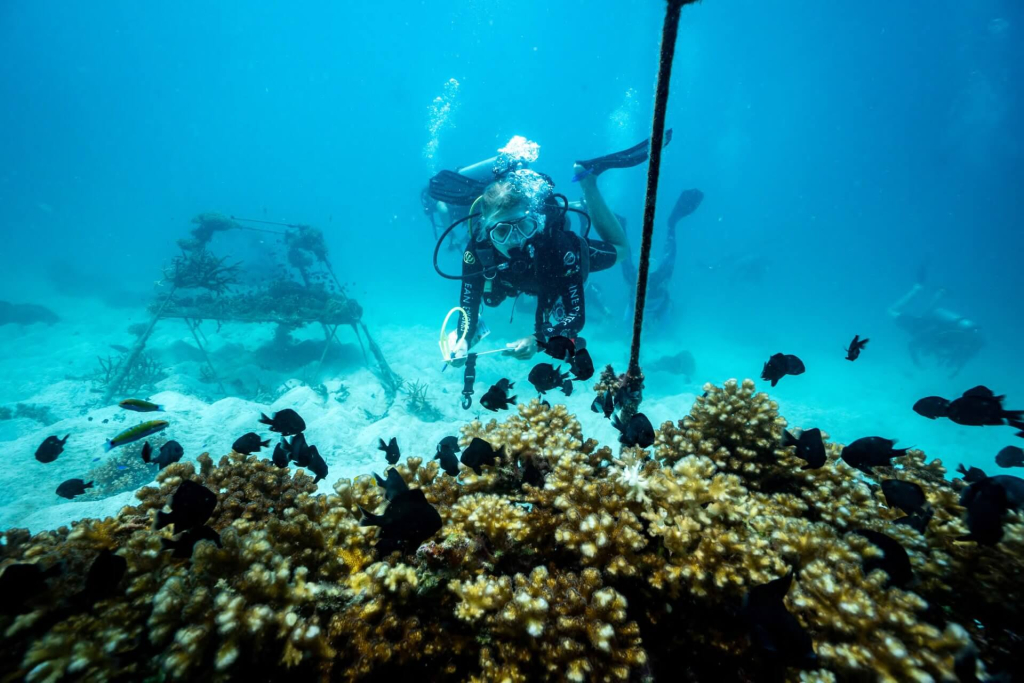
On Koh Tao, Porites provides ongoing reef framework even as faster-growing competitors decline under repeated bleaching events. This makes the genus a cornerstone of long-term reef persistence and an essential reference taxon for monitoring programmes.
Reef-Building Contribution and Habitat Provision
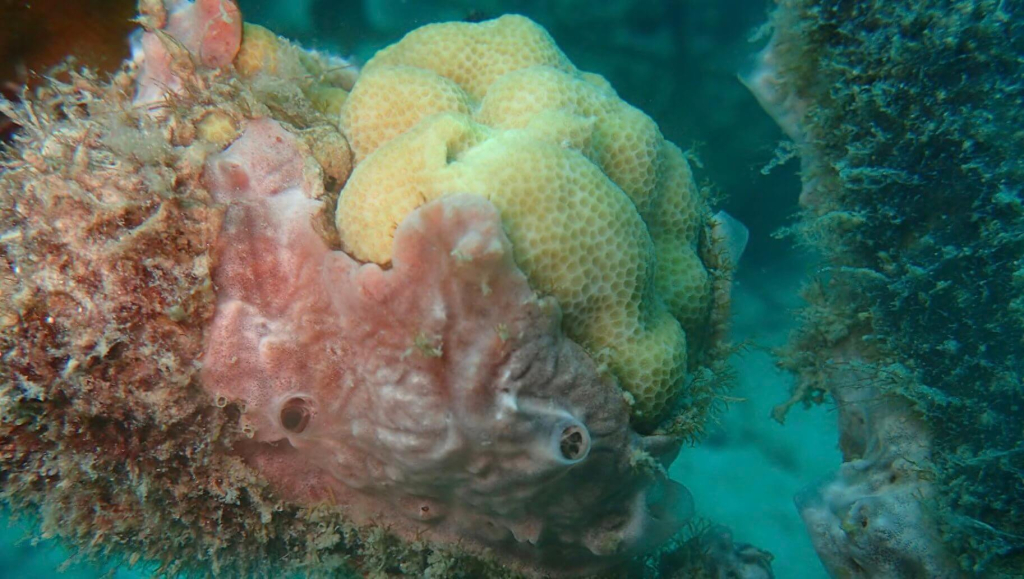
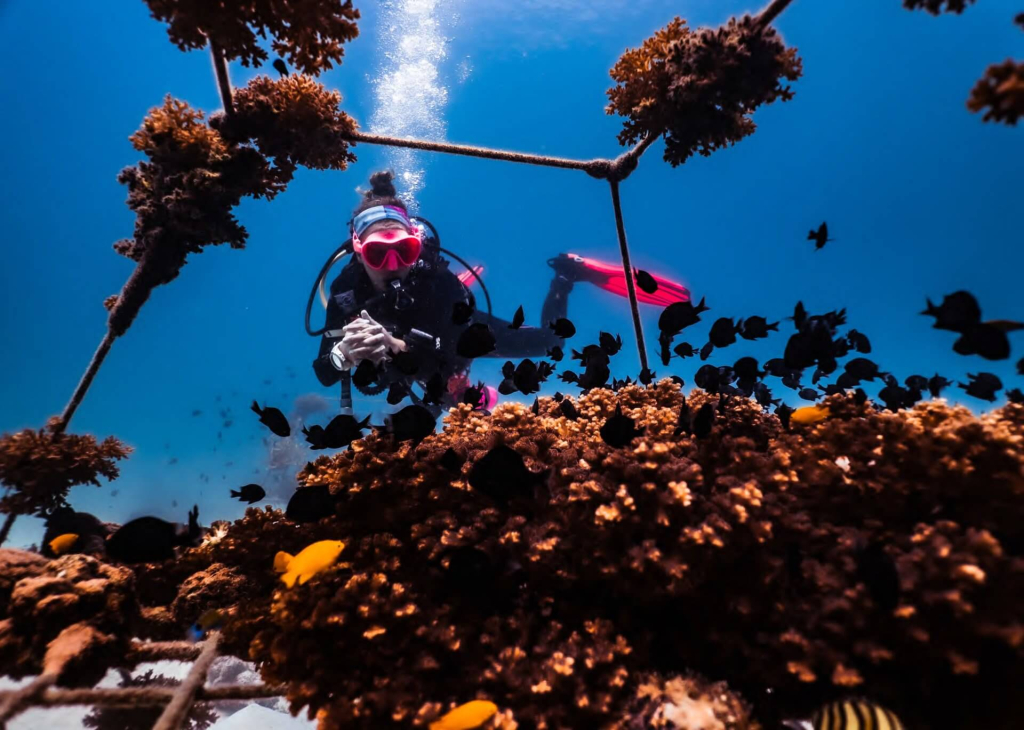
Massive Porites mounds provide enduring three-dimensional structure that resists storm damage, bioerosion, and acute thermal events better than many other hard coral genera. These mounds shelter cryptobenthic species and serve as substrate for boring bivalves, sponges, and Christmas tree worms (Spirobranchus giganteus).
Branching Porites species, where present, contribute additional habitat complexity in sheltered settings, although they are less common around Koh Tao than the dominant massive forms.
Growth Forms and Colony Variation
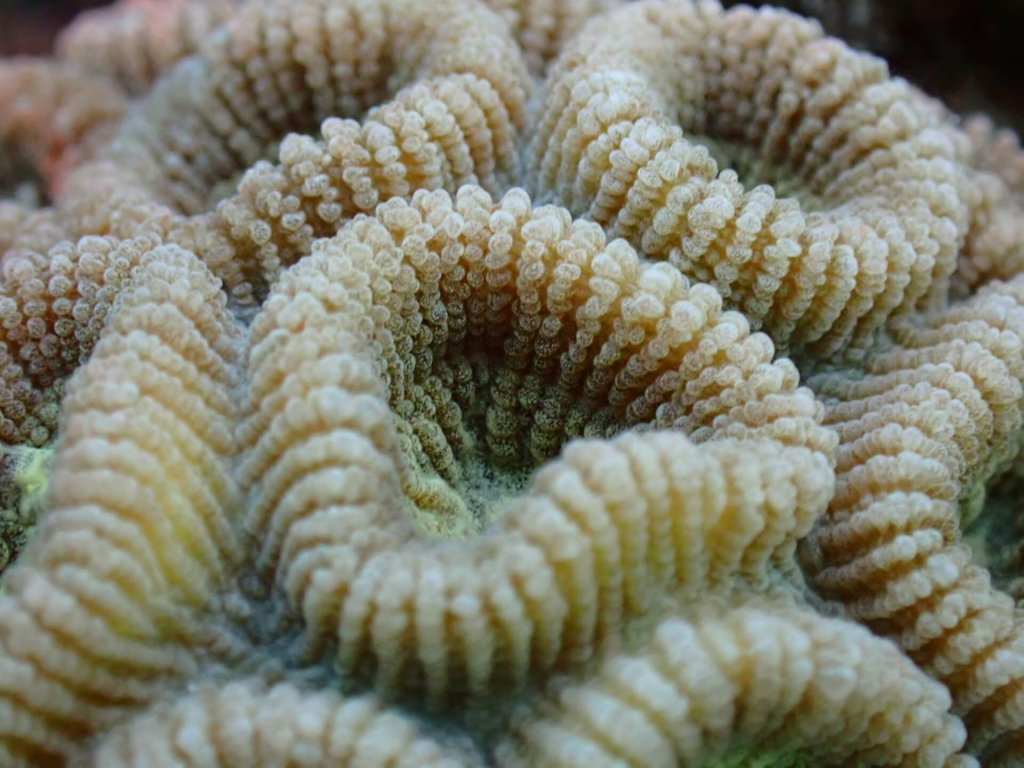
Porites displays a wide range of growth forms, including massive (boulder-like), submassive, encrusting, and finger-like branching. The ‘Porites lobata species complex’ alone contains as many as seven nominal species spanning massive to branching morphology, often with overlapping characteristics that complicate species-level identification.
Around Koh Tao, the dominant forms are massive and submassive colonies, with the smooth, skin-like skeletal surface and very small corallites that make Porites instantly recognisable at the genus level.
Evolutionary Success and Diversity
Porites’ evolutionary success rests on a combination of slow but durable growth, broad environmental tolerance, and flexible symbiosis. Massive Porites can shuffle Symbiodiniaceae communities in response to thermal stress, which contributes to the resilience that distinguishes the genus from more thermally sensitive taxa.