Montipora is the second largest genus of stony corals after Acropora, with around 80 currently accepted species across the tropical Indo-Pacific. It belongs to the family Acroporidae alongside Acropora, Astreopora, and Anacropora, and does not produce axial corallites at the tips of its branches. The genus was described by de Blainville in 1830 and includes a wide range of growth forms.

Montipora is characterised by very small, immersed corallites and a coenosteum (the skeletal surface between corallites) that often bears small bumps or papillae called monticules, which give the genus its name and its distinctive sandpaper texture. The genus exhibits substantial growth-form plasticity, with species producing encrusting, foliose, plating, columnar, or branching colonies depending on species and habitat.

Around Koh Tao, Montipora is one of the more abundant and important reef-building genera, although long-term Ecological Monitoring Program data have documented declines in Montipora abundance over the 2006–2014 period alongside corresponding declines in Acropora and Diploastrea. This guide explores the morphology, feeding strategy, distribution, environmental requirements, vulnerability profile, field identification, and conservation training opportunities offered by Black Turtle Conservation.

Common Names: Velvet Coral, Sandpaper Coral, Plate Coral, Sandpaper Coral

Family: Acroporidae

Order: Scleractinia (Stony Corals)

Subclass: Hexacorallia | Class: Anthozoa | Phylum: Cnidaria

Learn About Montipora Coral Genus

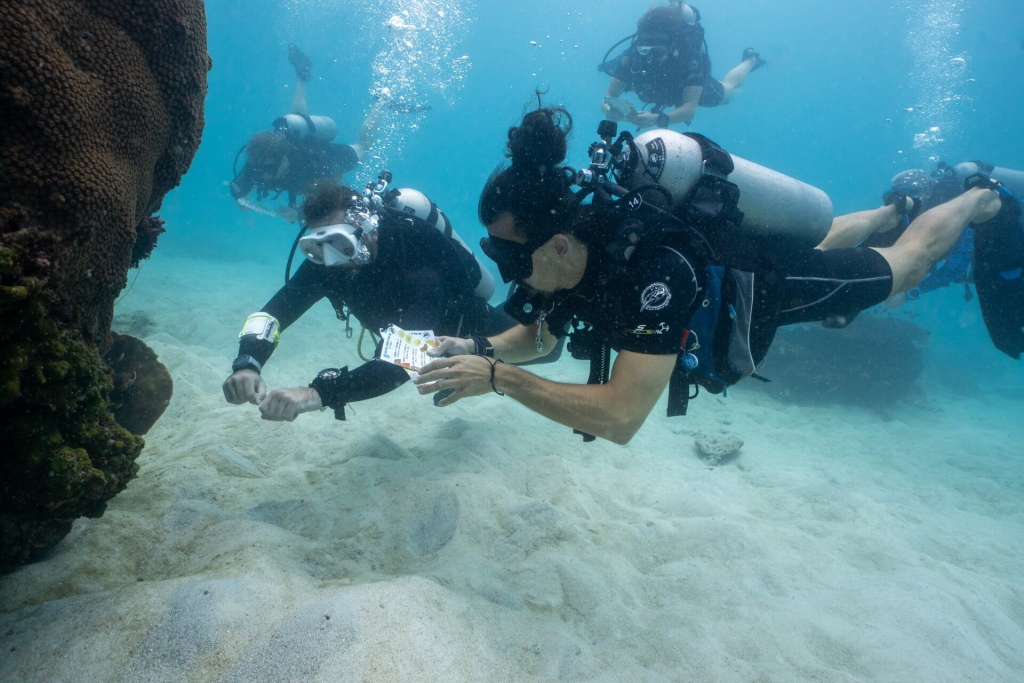
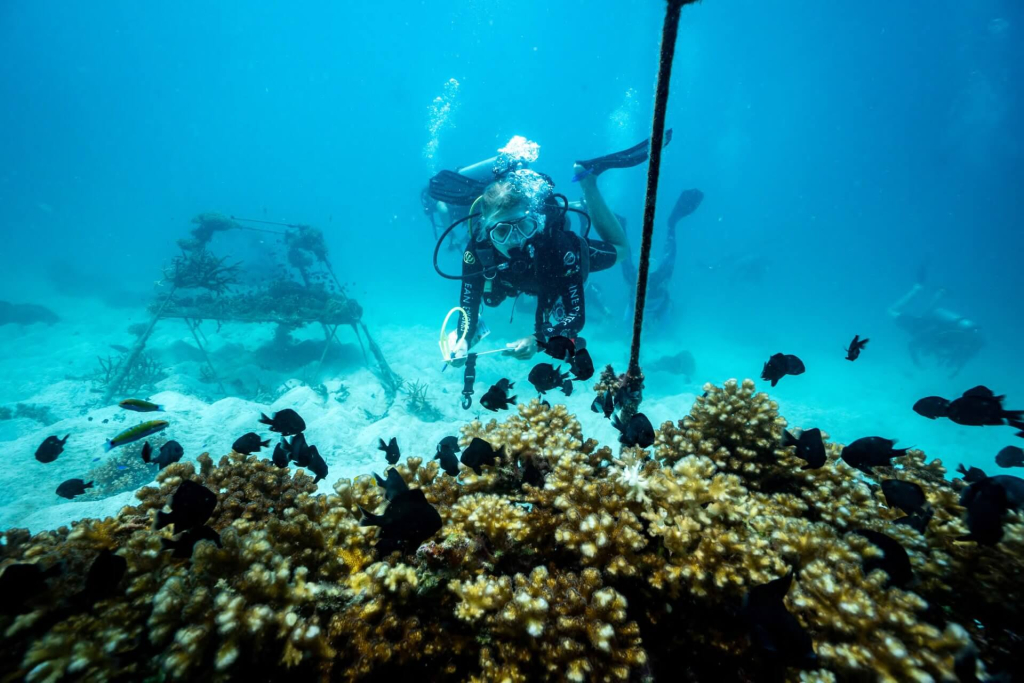
Marine conservation diver collecting data on coral species during the Coral Taxonomy and Ecological Monitoring course at Black Turtle Conservation, Koh Tao, Thailand.
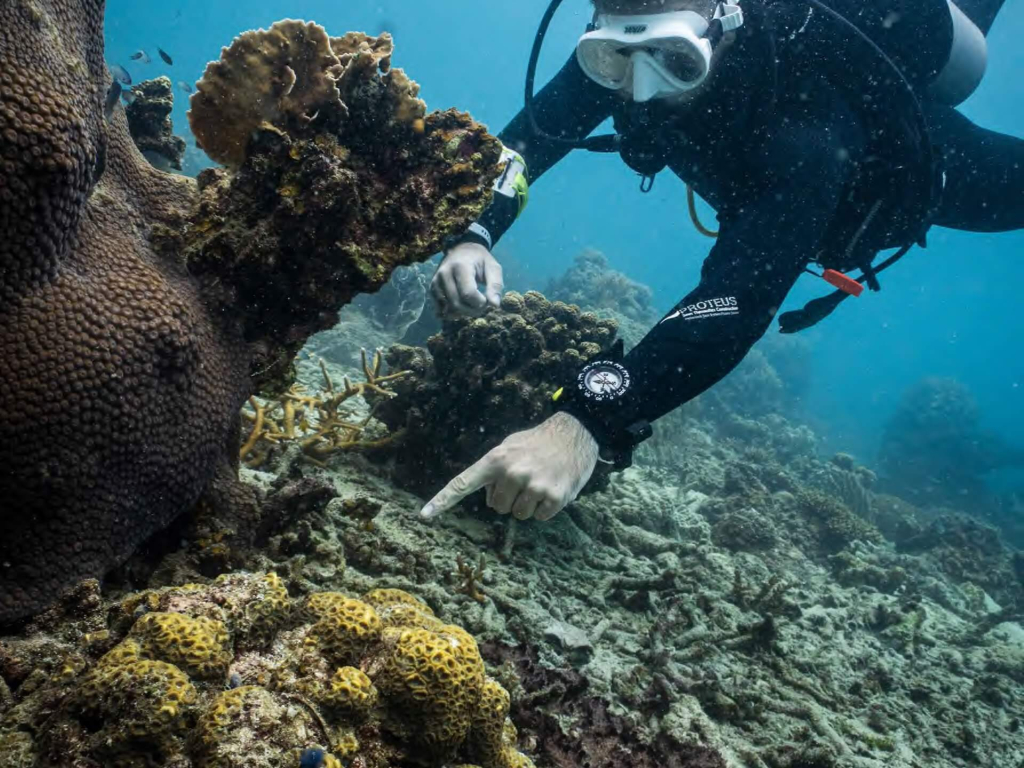
Diver recording fine-scale coral identification data during the Advanced Coral Taxonomy and Marine Conservation course at Black Turtle Conservation, Koh Tao, Thailand.
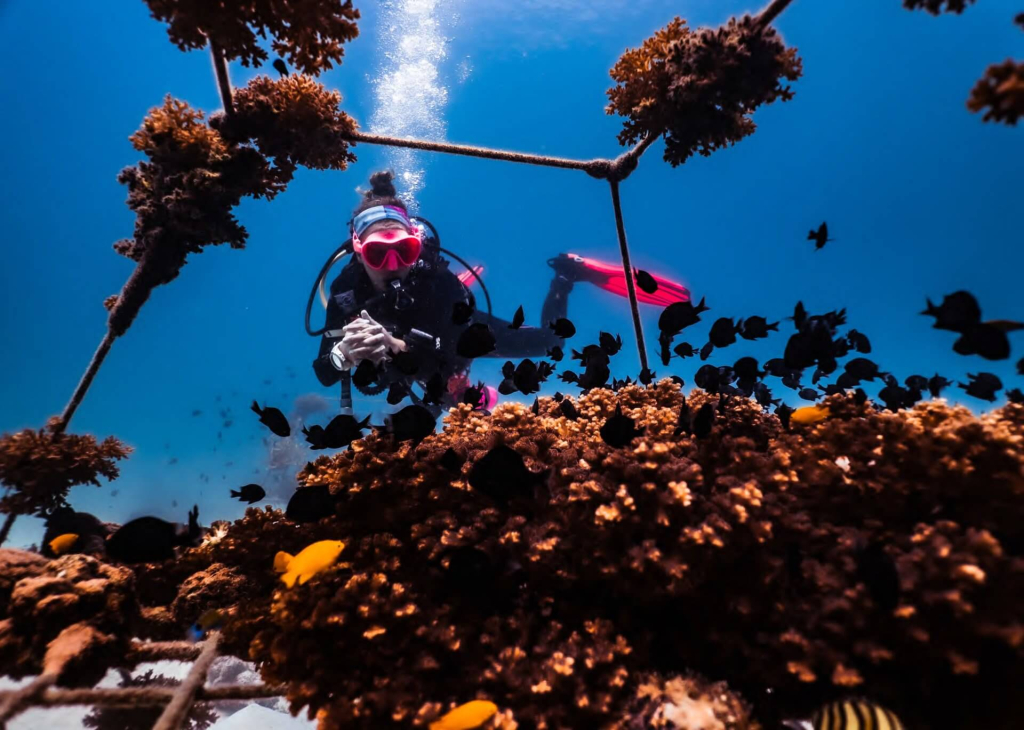
Healthy coral reef ecosystem with diverse fish species recorded during coral disease and reef health monitoring in Koh Tao, Thailand.

Overview of the Genus

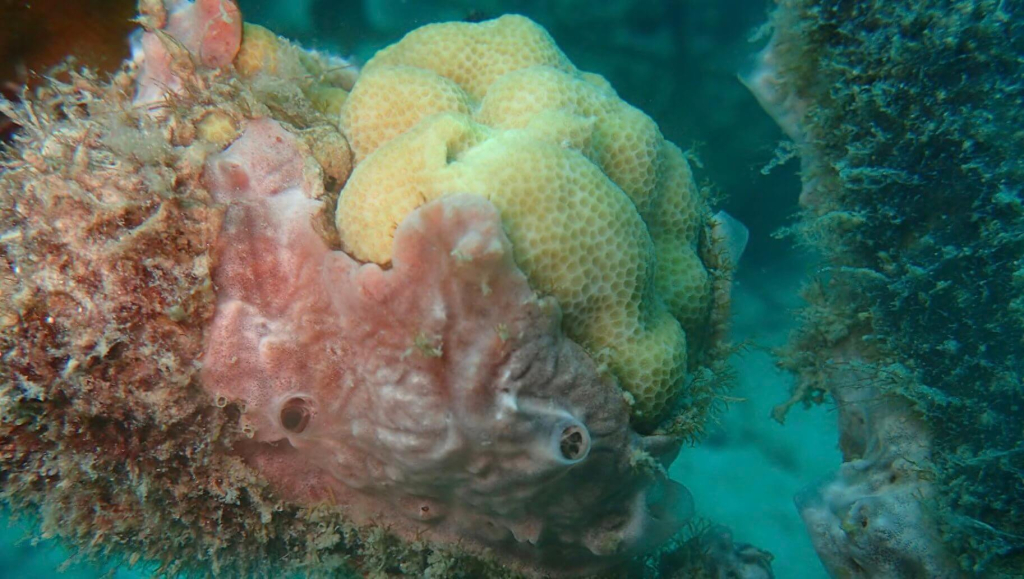
Montipora is one of the most important reef-building genera in the Indo-Pacific, second only to Acropora in species richness within the family Acroporidae. The genus is characterised by very small, immersed corallites and a coenosteum that often bears small bumps or papillae called monticules, giving the colony surface its distinctive sandpaper-like texture.

Montipora differs from its closely-related genus Acropora by lacking axial corallites at the branch tips. This means that branching Montipora species do not have a single dominant lead corallite at the tip of each branch but instead grow more diffusely, and the absence of axial corallites is the most reliable way to distinguish branching Montipora from branching Acropora.

On Koh Tao, Montipora has historically been one of the dominant reef-building genera, although it has experienced significant declines in recent decades alongside Acropora. Its presence and condition therefore serve as an important reference point for tracking community-level changes in stress-sensitive coral assemblages.

Global and Local Importance

Globally, Montipora is widespread across the tropical Indo-Pacific from the Red Sea and East Africa through Southeast Asia and out to the Pacific Islands. The genus is one of the most important contributors to reef framework across this range and supports extensive cryptobenthic invertebrate and small reef fish communities.

On Koh Tao, Montipora has historically been a major reef-building component but has declined significantly between 2006 and 2014 according to peer-reviewed survey data. This pattern places Montipora alongside Acropora and Diploastrea as a ‘loser’ genus under repeated thermal stress, in contrast to expanding ‘winner’ genera such as Porites, Pavona, and Fungiidae.

Reef-Building Contribution and Habitat Provision

Montipora colonies are major contributors to reef framework in shallow to mid-depth habitats. Plating Montipora species produce broad horizontal sheets that contribute substantial three-dimensional structure, while encrusting and columnar forms cover hard substrate and add habitat complexity at smaller scales.

The diverse growth forms of Montipora support a wide range of reef-associated species, with cryptobenthic invertebrates and small reef fish exploiting the spaces between plating colonies and the protected microhabitats created by the monticule-covered surfaces.

Growth Forms and Colony Variation

Montipora exhibits remarkable growth-form plasticity. Encrusting Montipora species produce flat sheets that cover rocky substrate. Plating species produce broad horizontal plates and bowls. Columnar species form upright pillars, while branching Montipora species produce digitate or finger-like branches without axial corallites.

On Koh Tao, the most commonly encountered forms are encrusting and plating Montipora, with branching forms occurring less frequently. Colour is typically uniform brown, cream, green, blue, or purple, with bright colour morphs particularly common in plating species under good light conditions.

Evolutionary and Taxonomic Notes

Montipora related to the genus Acropora, among others, within Acroporidae. Recent phylogenetic work has confirmed the close evolutionary relationship between the two genera while maintaining clear separation between them at the genus level. Montipora is also notable for hosting a substantial cryptic species complex within the so-called M. dilatata group, where morphologically very different species nest within a single genetic lineage.
Morphology

Marine conservation diver collecting data on coral species during the Coral Taxonomy and Ecological Monitoring course at Black Turtle Conservation, Koh Tao, Thailand.
Diver recording fine-scale coral identification data during the Advanced Coral Taxonomy and Marine Conservation course at Black Turtle Conservation, Koh Tao, Thailand.
Healthy coral reef ecosystem with diverse fish species recorded during coral disease and reef health monitoring in Koh Tao, Thailand.

Colony Structure and Skeletal Features

Montipora colonies vary substantially in form: encrusting sheets, plating colonies (horizontal plates and tiered bowls), columnar pillars, and branching digitate or finger-like forms. All species share the diagnostic absence of axial corallites at the branch tips, distinguishing Montipora from its sister genus Acropora.

Corallites are very small (typically 1–2 mm across), immersed (sunken into the skeleton), and scattered across a coenosteum that often bears small bumps or papillae called monticules. The monticules give the colony surface its characteristic sandpaper-like texture and are an important diagnostic feature of the genus.

Polyps and Tissue Characteristics

Montipora polyps are very small with short tentacles that retract into the immersed corallites during the day and extend at night for feeding. The thin tissue layer holds zooxanthellae of the family Symbiodiniaceae, supporting the genus’s photosynthetic energy budget.

The thin tissue makes Montipora more vulnerable to bleaching and thermal stress than thick-tissued massive genera, contributing to the documented declines in Montipora abundance on Koh Tao under repeated thermal events. Recovery is slowed by the loss of energy reserves that thicker-tissued genera retain through stress periods.

Skeletal Microstructure and Calcification

Montipora skeletons are aragonitic and notably porous, contributing to the relatively rapid growth rates of the genus. Linear extension rates of plating species can reach several centimetres per year under favourable conditions, supporting the substantial reef-building contribution of the genus.

The porous skeleton makes Montipora more susceptible to bioerosion than denser massive corals, and large plating colonies can fragment when their lower portions are weakened by boring organisms. Like all reef-builders, Montipora is sensitive to reductions in seawater carbonate saturation under ocean acidification scenarios.

Size, Growth, and Defensive Adaptations

On Koh Tao, mature Montipora colonies vary widely in size depending on growth form. Encrusting colonies typically cover 30–80 cm of substrate, while plating colonies can produce horizontal plates exceeding 1 m across at favourable sites. Columnar and branching species typically reach 30–60 cm in their longest dimension.

Defensive adaptations include nematocyst-armed tentacles, mucus production, and the small, deeply immersed corallite cups that protect retracted polyps from predators. The fast growth rates of the genus also help colonies overgrow competitors and recover from minor damage.

Dual-Feeding Strategy: How Montipora Feeds and Thrives

Montipora is a zooxanthellate mixotroph that combines photosynthesis carried out by symbiotic dinoflagellates with active heterotrophic capture of zooplankton. The genus’s combination of broad colony surface area and rapid growth supports both feeding pathways effectively.

1. Autotrophy: Photosynthate from Symbionts

Symbiotic dinoflagellates of the family Symbiodiniaceae living within the gastrodermis carry out photosynthesis and translocate organic compounds to the coral host. The broad surface area of plating Montipora species allows efficient light interception, supporting the high photosynthetic productivity needed for the genus’s rapid growth.

This pathway typically supplies a substantial fraction of the colony’s daily carbon budget under good conditions, with the photosynthetic productivity of plating colonies being among the highest in any coral genus.

Montipora polyps extend at night to capture zooplankton drifting past on currents. The high density of small polyps across the colony surface allows substantial overall heterotrophic capture, complementing the photosynthetic carbon supply.

Heterotrophic input supplies essential nitrogen, phosphorus, and trace elements, supporting the rapid calcification and growth that characterise the genus and its central role in reef-building.

The combination of efficient photosynthesis and effective heterotrophy supports Montipora’s role as a major reef-builder, but the genus’s thin tissue and rapid metabolism make it vulnerable to thermal stress. Severe bleaching events on Koh Tao have caused significant Montipora mortality, contributing to the documented decline in the genus’s abundance over recent decades.

Where to Find Montipora Around Koh Tao and at Which Dive Sites

Marine conservation diver monitoring coral growth and fish populations on an artificial reef at Black Turtle Conservation, Koh Tao.
Student identifying coral species underwater during the Coral Taxonomy & Identification course with Black Turtle Conservation in Koh Tao, Thailand.
Marine conservation diver collecting data on coral species during the Coral Taxonomy and Ecological Monitoring course at Black Turtle Conservation, Koh Tao, Thailand.

Montipora is widespread on Koh Tao reefs and is most commonly encountered as plating and encrusting colonies on slope habitats. Its diverse growth forms make it a familiar component of the local coral community despite recent declines in overall abundance.

Sheltered Bays and Shallow Reefs

Sites such as Aow Leuk, Mango Bay, Hin Wong Bay, and Tanote Bay host abundant Montipora colonies on shallow to mid-depth slopes. The most commonly encountered forms at these sites are encrusting and plating Montipora, often forming colourful patches on rocky substrate.

Pinnacle and Offshore Sites

At Twins, White Rock, Chumphon Pinnacle, and Southwest Pinnacle, Montipora occupies depths of 5–20 m on shoulders and slopes of granite pinnacles. Plating colonies are particularly visible at these sites, where their broad horizontal surfaces stand out against the more vertical pinnacle architecture.

Restoration and Artificial Reef Sites

Montipora is a common component of restoration projects at Koh Tao, with encrusting and plating species used in coral nursery and transplantation programmes. Artificial reef sites such as Junkyard Reef and Black Turtle Reef include Montipora among their target restoration species.

Depth Distribution and Site Variation

Montipora is most commonly encountered between 3 and 18 m on Koh Tao, with isolated colonies extending to 25 m on well-lit slopes. Growth-form composition shifts with depth, with encrusting and plating forms common across the depth range and branching forms favouring shallower, well-lit sites.

Environmental Thresholds: Conditions for Optimal Growth

Montipora occupies a moderately broad environmental envelope but is more sensitive to thermal stress than the more conservative massive reef-builders. The genus’s recent declines on Koh Tao reflect this thermal sensitivity under repeated marine heatwaves.

Optimal Parameters

  • Light Intensity: high, performing best at 3–18 m on well-lit slopes; supports high photosynthetic productivity.
  • Water Movement: moderate to strong flow that delivers oxygen and zooplankton without subjecting fragile plates to excessive mechanical stress.
  • Temperature Range: 24–30°C, with stress responses triggered at the lower end of the typical bleaching range.
  • Salinity: stable marine conditions of 33–35 ppt; vulnerable to freshwater pulses during heavy monsoon runoff.
  • Substrate: stable hard substrate, particularly on shallow to mid-depth slope habitats.

Stress Responses on Koh Tao

Montipora is highly susceptible to bleaching during severe marine heatwaves, with colonies often among the first to show paling and tissue loss. Recovery is slow given the genus’s thin tissue and limited energy reserves, and severe events can cause widespread mortality across affected populations.

Sedimentation, freshwater runoff, and reduced light penetration following heavy monsoon rains compound thermal stress. The cumulative impact of these stressors has driven the documented Montipora declines on Koh Tao over the 2006–2014 monitoring period.

Vulnerability Profile

Marine researcher documenting coral species variations during the Advanced Coral Taxonomy course at Black Turtle Conservation, Koh Tao, Thailand.
Marine conservation diver collecting data on coral species during the Coral Taxonomy and Ecological Monitoring course at Black Turtle Conservation, Koh Tao, Thailand.
Diver recording fine-scale coral identification data during the Advanced Coral Taxonomy and Marine Conservation course at Black Turtle Conservation, Koh Tao, Thailand.

Many Montipora species are listed in IUCN threatened categories, reflecting concerns about climate-driven habitat decline across the genus’s range. The genus is also covered under CITES Appendix II, which has regulated international trade in scleractinian corals since 1990. Wild collection for the ornamental coral trade also adds local pressure in some parts of the genus’s range.

Major Threats

  • Coral Bleaching: high susceptibility to bleaching during severe marine heatwaves, with potentially rapid mortality.
  • Wild Collection: harvesting for the ornamental coral trade adds local pressure in some parts of the genus’s range, particularly for colourful plating species.
  • Ocean Acidification: porous skeleton becomes increasingly susceptible to bioerosion under acidified conditions.
  • Disease Susceptibility: a range of coral diseases including white syndrome and Montipora white syndrome have been recorded under thermal stress.
  • Local Anthropogenic Impacts: anchoring, fin damage, ghost fishing gear, and chronic sedimentation from coastal development.

On Koh Tao, Montipora is treated as a key ‘loser’ reference taxon for tracking the impact of thermal stress on sensitive coral assemblages. Surveys covering 2006–2014 documented declines in Montipora alongside Acropora and Diploastrea, providing strong evidence of community-level shifts under repeated bleaching events.

Black Turtle Conservation includes Montipora in ongoing reef monitoring and uses the genus as part of broader assessments of stress-sensitive coral diversity around the island.

How to Identify Montipora Coral

The defining features of Montipora in the field are the very small, immersed corallites, the coenosteum often bearing small bumps or papillae (monticules) that give the surface a sandpaper-like texture, and the absence of axial corallites at the tips of branching species.

Marine conservation diver monitoring coral growth and fish populations on an artificial reef at Black Turtle Conservation, Koh Tao.
Student identifying coral species underwater during the Coral Taxonomy & Identification course with Black Turtle Conservation in Koh Tao, Thailand.

Key Identification Features

  • Corallites: very small (1–2 mm), immersed (sunken into the skeleton), and scattered across the colony surface.
  • Coenosteum: often covered with small bumps or papillae (monticules) giving a sandpaper-like texture.
  • Growth Forms: encrusting, plating, columnar, or branching (no axial corallites at branch tips).
  • Coloration: typically uniform brown, cream, green, blue, or purple; bright colour morphs are common.
  • Surface Texture: sandpaper-like or velvet-like, particularly on encrusting and plating colonies.

Distinguishing from Similar Genera

Acropora is the most easily confused genus, but is distinguished by the presence of axial corallites at the tips of every branch — a feature Montipora always lacks. This single difference is the most reliable distinction between branching Montipora and branching Acropora.

Astreopora has larger corallites with raised walls and lacks the small immersed corallites and monticules of Montipora. Stylocoeniella produces tiny spiky corallites distributed across encrusting colonies, distinct from the smoother sandpaper texture of Montipora.

Mastering Montipora Identification with Black Turtle Conservation

Diver recording fine-scale coral identification data during the Advanced Coral Taxonomy and Marine Conservation course at Black Turtle Conservation, Koh Tao, Thailand.

At Black Turtle Conservation we treat reliable Montipora identification as essential for tracking stress-sensitive coral assemblages on Koh Tao. Because Montipora has declined alongside Acropora as a major ‘loser’ under repeated thermal events, accurate field recognition is critical for documenting community-level changes in stress-sensitive reef-builders and for designing restoration programmes that target the most affected genera.

Our Training Approach: From Theory to Survey

Healthy coral reef ecosystem with diverse fish species recorded during coral disease and reef health monitoring in Koh Tao, Thailand.
Marine conservation diver collecting data on coral species during the Coral Taxonomy and Ecological Monitoring course at Black Turtle Conservation, Koh Tao, Thailand.

Our Coral Taxonomy and Identification training addresses Montipora through a structured, progressive sequence designed to build confident in-water surveyors capable of distinguishing it from related Acroporidae genera.

  • Classroom Theory: students learn acroporid morphology, the diagnostic absence of axial corallites, and the contrast with Acropora, Astreopora, and Anacropora.
  • In-Water Practice: guided dives at Aow Leuk, Mango Bay, Twins, and Chumphon Pinnacle, where Montipora colonies of varying form and size are compared in situ.
  • Applied Monitoring: participation in Ecological Monitoring Program surveys, where Montipora presence, colony condition, and bleaching status are recorded as priority data.
  • Comparative Identification: side-by-side comparison with Acropora and other Acroporidae to consolidate family-level recognition skills.

Graduates leave with the practical ability to identify Montipora at genus level under field conditions and to record its presence and condition reliably as part of long-term reef monitoring around Koh Tao.

Frequently Asked Questions

How do you tell Montipora apart from Acropora?

The single most reliable distinction is the axial corallite. Acropora has a single larger corallite at the tip of every branch, while Montipora always lacks axial corallites. Branching Montipora species therefore have rounded or diffuse branch tips without any single dominant lead corallite, even though the overall branching architecture can superficially resemble Acropora.

What are monticules?

Monticules are small bumps or papillae distributed across the coenosteum (the skeletal surface between corallites) of Montipora colonies. They give the genus its name and contribute to the distinctive sandpaper-like surface texture. Monticules are typically larger and more rounded than the styliform processes of the related genus Stylocoeniella.

Why is Montipora declining on Koh Tao?

Montipora has been documented as a loser under repeated thermal stress events on Koh Tao. Long-term Ecological Monitoring Program data covering 2006 to 2014 showed Montipora declines alongside Acropora and Diploastrea, while stress-tolerant taxa such as Porites and Pavona increased. The genus’s thin tissue and rapid metabolism make it vulnerable to bleaching, and its porous skeleton is susceptible to bioerosion under acidified conditions.

What growth forms does Montipora display?

Montipora exhibits remarkable growth-form plasticity. Encrusting Montipora produces flat sheets covering rocky substrate. Plating species produce broad horizontal plates and tiered bowls. Columnar species form upright pillars, while branching species produce digitate or finger-like branches without axial corallites. Multiple growth forms can coexist at a single Koh Tao site.

Where is Montipora most abundant on Koh Tao?

Montipora is widespread across Koh Tao reefs and is particularly common at sites such as Aow Leuk, Mango Bay, Hin Wong Bay, and Tanote Bay, where encrusting and plating colonies form colourful patches on rocky substrate. Pinnacle sites such as White Rock, Twins, Chumphon Pinnacle, and Southwest Pinnacle also host substantial Montipora populations on shoulders and slopes.

External Link Citations and References

Veron, J.E.N. (2000). Corals of the World. Australian Institute of Marine Science.

World Register of Marine Species (WoRMS): Montipora de Blainville, 1830.

IUCN Red List of Threatened Species: Montipora entries.

Department of Marine and Coastal Resources (DMCR), Thailand: Reef monitoring reports.

Black Turtle Conservation: Coral conservation, monitoring and restoration on Koh Tao.