Diploastrea is a monotypic genus of stony corals in the family Diploastreidae, represented by a single extant species, Diploastrea heliopora (Lamarck, 1816), commonly known as Volcano Coral, Moon Coral, or Diploastrea Boulder Coral. The genus and family are unique in scleractinian taxonomy because of a long history of taxonomic relocation, having been placed in Agathiphylliidae, Faviidae, and more recently reclassified to its own monotypic family on the basis of molecular phylogenies and genetic analysis.

Diploastrea heliopora is one of the most easily recognised and least morphologically variable of all massive Indo-Pacific corals. Its dome-shaped colonies can exceed 5 m across and 2 m high, persisting for centuries and laying down annual skeletal growth bands of remarkable consistency. This longevity has made the genus one of the most valuable taxa in palaeoclimatology, with growth bands used to reconstruct sea-surface temperature, salinity, and rainfall histories over multiple centuries.

Around Koh Tao, Diploastrea is a recognisable and common component of the reef community. Long-term Ecological Monitoring Program data have documented declines in Diploastrea abundance since 2006, alongside corresponding declines in Acropora and Montipora. This guide explores the morphology, feeding strategy, distribution, environmental requirements, vulnerability profile, field identification, and conservation training opportunities offered by Black Turtle Conservation.

Common Names: Volcano Coral, Moon Coral, Double Star Coral, Diploastrea Boulder Coral

Family: Diploastreidae

Order: Scleractinia (Hermatypic Stony Corals)

Subclass: Hexacorallia | Class: Anthozoa | Phylum: Cnidaria
Learn About Diploastrea Coral Genus

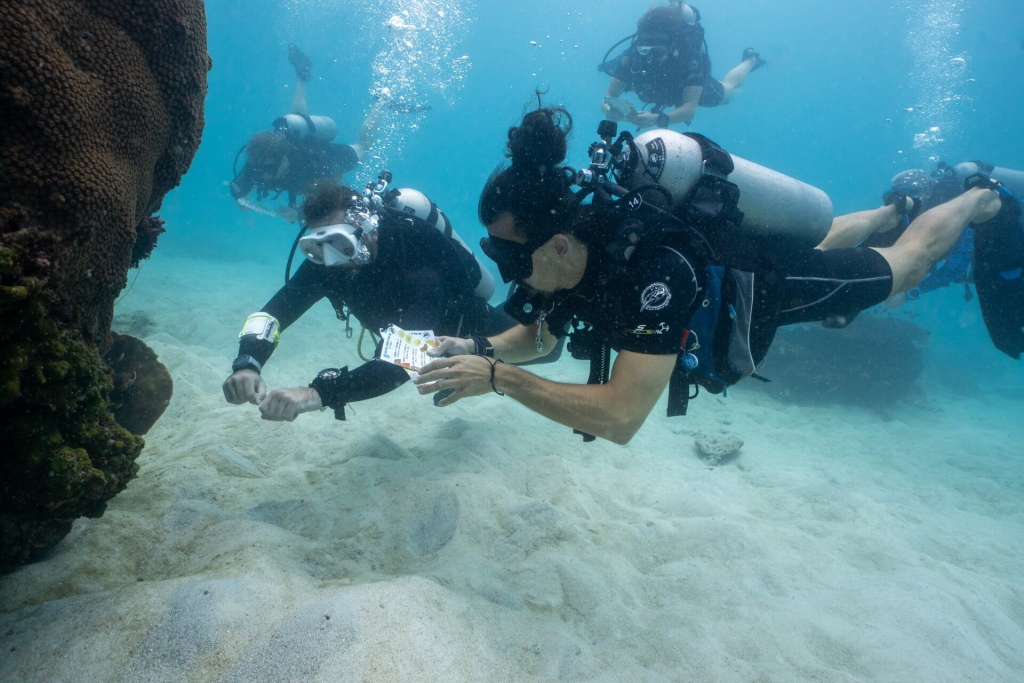
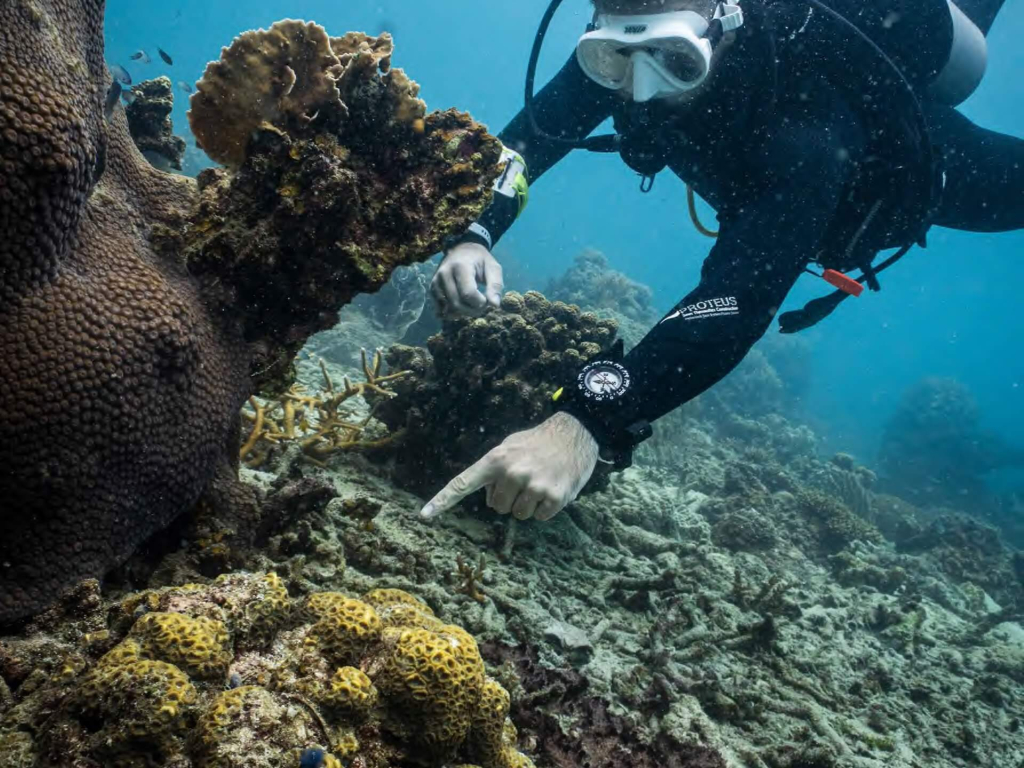
Marine conservation diver collecting data on coral species during the Coral Taxonomy and Ecological Monitoring course at Black Turtle Conservation, Koh Tao, Thailand.
Diver recording fine-scale coral identification data during the Advanced Coral Taxonomy and Marine Conservation course at Black Turtle Conservation, Koh Tao, Thailand.
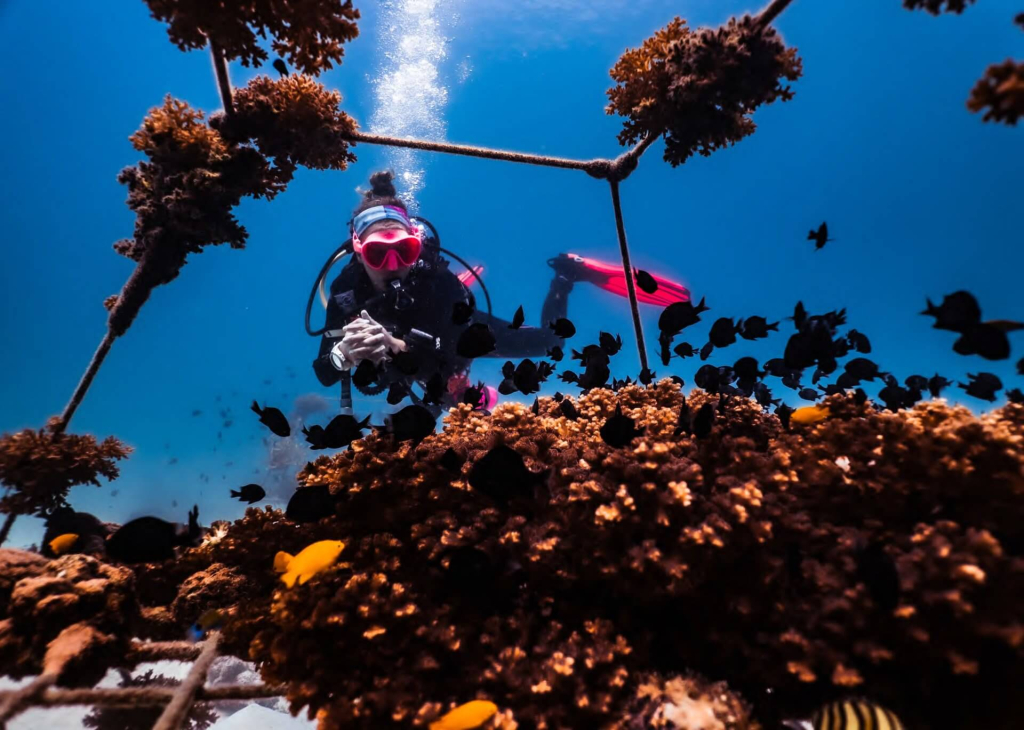
Healthy coral reef ecosystem with diverse fish species recorded during coral disease and reef health monitoring in Koh Tao, Thailand.

Overview of the Genus

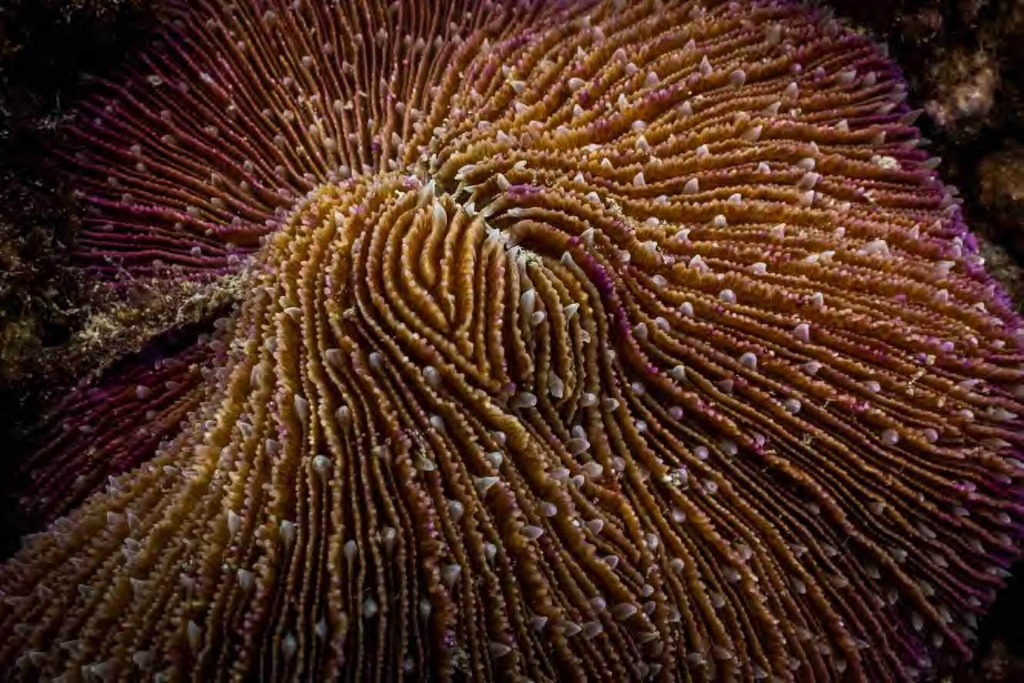
Diploastrea is one of the most distinctive and unmistakable massive coral genera in the Indo-Pacific. Its single extant species produces dome-shaped colonies of remarkable uniformity, characterised by closely packed plocoid corallites with well-defined septa and relatively large polyp size.

The genus has a long taxonomic history. It was originally described as Astrea heliopora by Lamarck in 1816, transferred to the genus Diploastrea by Matthai in 1914, placed in the family Agathiphylliidae by Vaughan and Wells in 1943, and moved to Faviidae by Wells in 1956. Recent molecular work has placed Diploastrea in its own resurrected family Diploastreidae, reflecting its phylogenetic distinctness from other faviid-type corals.

On Koh Tao, Diploastrea forms striking dome colonies that are easily recognisable and serve as long-term reef anchors. Their slow growth and significant longevity place them among the genera most likely to provide multi-century environmental archives in this region.

Global and Local Importance

Globally, Diploastrea heliopora is widely distributed across the Indo-Pacific, the Red Sea and East Africa through the Indian Ocean, Southeast Asia, and out to the Marshall Islands and northern Australia. Where present, it often forms some of the largest and oldest colonies on a reef.

On Koh Tao, Diploastrea provides long-term reef framework and palaeoclimate value. Surveys covering 2006 onwards documented Diploastrea among the genera that declined alongside Acropora and Montipora, indicating that even this notably long-lived, resilient taxon is vulnerable to repeated stress events.

Reef-Building Contribution and Habitat Provision

Massive Diploastrea colonies provide enduring three-dimensional structure that resists storm damage and physical disturbance better than most other reef-building genera. Their dense skeletons and very thick corallite walls produce some of the most physically resistant coral structures on Indo-Pacific reefs.

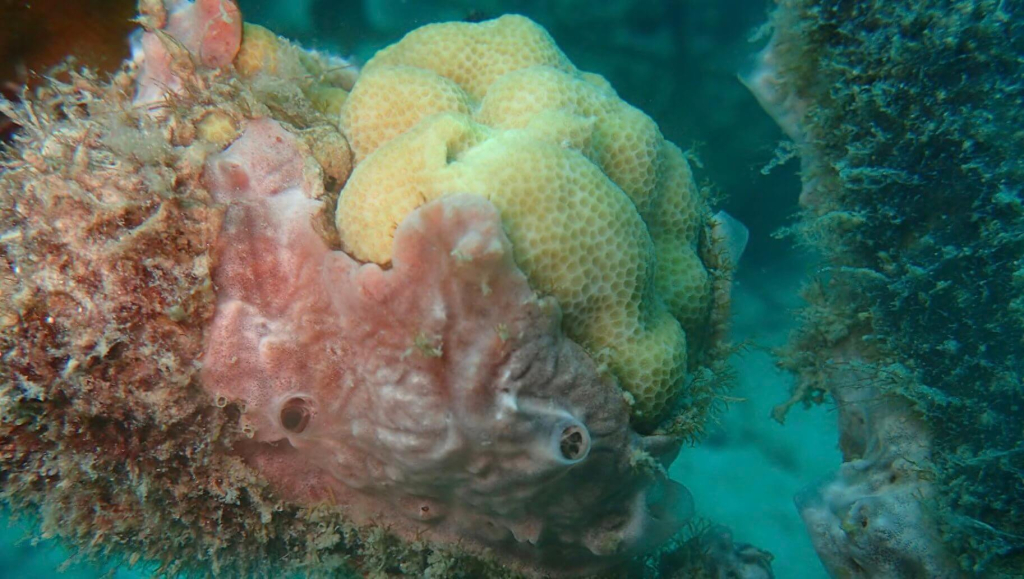
On Koh Tao, mature Diploastrea colonies provide microhabitat for cryptobenthic invertebrates and serve as long-term substrate for boring bivalves, sponges, and other reef-associated fauna whose communities can persist on a single Diploastrea colony for decades.

Growth Form and Colony Variation

Diploastrea forms dome-shaped to massive hemispherical colonies of unusually consistent morphology. There is virtually no growth-form variation between individuals, which is why Diploastrea is sometimes described as the most easily recognised of all massive corals.

Colour is similarly conservative: typically uniform cream, pale grey, or olive-brown, occasionally with a faint greenish tinge from zooxanthellae, though sometimes a bright blue or red can be observed, depending on the species of zooxanthellate symbiont. The closely packed, low-conical corallites with their distinctive septa give the surface a characteristic volcano-like texture that is the immediate field cue for the genus.

Evolutionary and Palaeoclimate Significance

Because individual Diploastrea colonies can persist for several centuries while laying down clear annual growth bands, the genus has become a key tool in palaeoclimate research. Skeletal cores from large Diploastrea colonies have been used to reconstruct multi-century records of sea-surface temperature, salinity, and rainfall variability across the Indo-Pacific.

Morphology

Marine conservation diver collecting data on coral species during the Coral Taxonomy and Ecological Monitoring course at Black Turtle Conservation, Koh Tao, Thailand.
Diver recording fine-scale coral identification data during the Advanced Coral Taxonomy and Marine Conservation course at Black Turtle Conservation, Koh Tao, Thailand.
Healthy coral reef ecosystem with diverse fish species recorded during coral disease and reef health monitoring in Koh Tao, Thailand.

Colony Structure and Skeletal Features

Diploastrea colonies are massive, dome-shaped to hemispherical, and may exceed 5m in diameter and 2m in height. The skeleton is notably dense, contributing to the genus’s exceptional resistance to physical disturbance and bioerosion.

Corallites are plocoid (each surrounded by its own wall, not shared with neighbours), 8–10 mm in diameter, closely packed, and form low cones with very thick walls and small openings. The corallite wall structure is the most characteristic diagnostic feature: walls are not solid but formed from the enlarged outer ends of the septa, which are not connected to each other.

Polyps and Tissue Characteristics

Diploastrea polyps are small relative to the corallite size, retracting deep into the cup during the day and extending only at night for feeding. The thick tissue layer holds zooxanthellae of the family Symbiodiniaceae, contributing to the colony’s photosynthetic energy budget.

Tentacles are short and modestly armed compared with large-polyp genera such as Lobophyllia, reflecting the relatively low importance of heterotrophy in this genus’s energy balance. The thick tissue does, however, provide considerable protective insulation during thermal stress events.

Skeletal Microstructure and Calcification

Diploastrea skeletons are aragonitic and notably dense, with thick septothecal corallite walls that distinguish the genus microstructurally from other massive faviid-type corals. This dense skeletal architecture is what makes the genus so suitable for palaeoclimate reconstruction.

Linear extension is slow, typically 5–8 mm per year, but persistent calcification over centuries produces some of the most enduring biogenic structures on Indo-Pacific reefs. Annual density bands are clearly visible in cross-section and provide a high-resolution archive of past environmental conditions.

Size, Growth, and Defensive Adaptations

On Koh Tao, mature Diploastrea colonies typically reach 0.5–2 m across, with the largest examples occasionally exceeding 3 m at sheltered sites. Although growth is slow, these colonies persist for decades to centuries, providing enduring reef structure and ecosystem services through long timescales.

Defensive adaptations include thick tissue layers that buffer against thermal and mechanical stress, the very small corallite openings that limit predator access to polyps, and the dense skeletal microstructure that resists mechanical breakage and biological erosion, and aggressive use of nematocysts and mucus layers.

Dual-Feeding Strategy: How Diploastrea Feeds and Thrives

Diploastrea is a zooxanthellate mixotroph that derives most of its energy from photosynthesis carried out by symbiotic dinoflagellates, supplemented by nocturnal zooplankton capture. The slow, steady metabolism of the genus reflects its strategic emphasis on persistence over fast growth.

1. Autotrophy: Photosynthate from Symbionts

Symbiotic dinoflagellates of the family Symbiodiniaceae living within the gastrodermis carry out photosynthesis and translocate organic compounds to the coral host. Under normal conditions, this pathway supplies the majority of the colony’s daily carbon requirements.

Diploastrea’s slow growth allows it to maintain a positive energy balance even with relatively modest photosynthetic productivity per polyp, contributing to the genus’s tolerance of moderately deeper or shaded conditions where faster-growing genera struggle.

Diploastrea polyps extend at night to capture zooplankton drifting past on currents. The relatively small polyp size limits the genus to small zooplankton items, but the high density of polyps across a large colony surface area still allows meaningful heterotrophic capture.

Heterotrophic input supplies essential nitrogen, phosphorus, and trace elements, supporting the slow but steady calcification that defines the genus. This dietary contribution is particularly important during periods of reduced photosynthetic productivity.

The combination of robust photosynthesis, modest but reliable heterotrophy, thick tissue with high energy reserves, and a dense protective skeleton has historically given Diploastrea reasonable resilience to environmental disturbance. However, recent Koh Tao monitoring data document declines despite these advantages, indicating that even this stress-tolerant genus is being challenged by repeated thermal events.

Where to Find Diploastrea Around Koh Tao and at Which Dive Sites

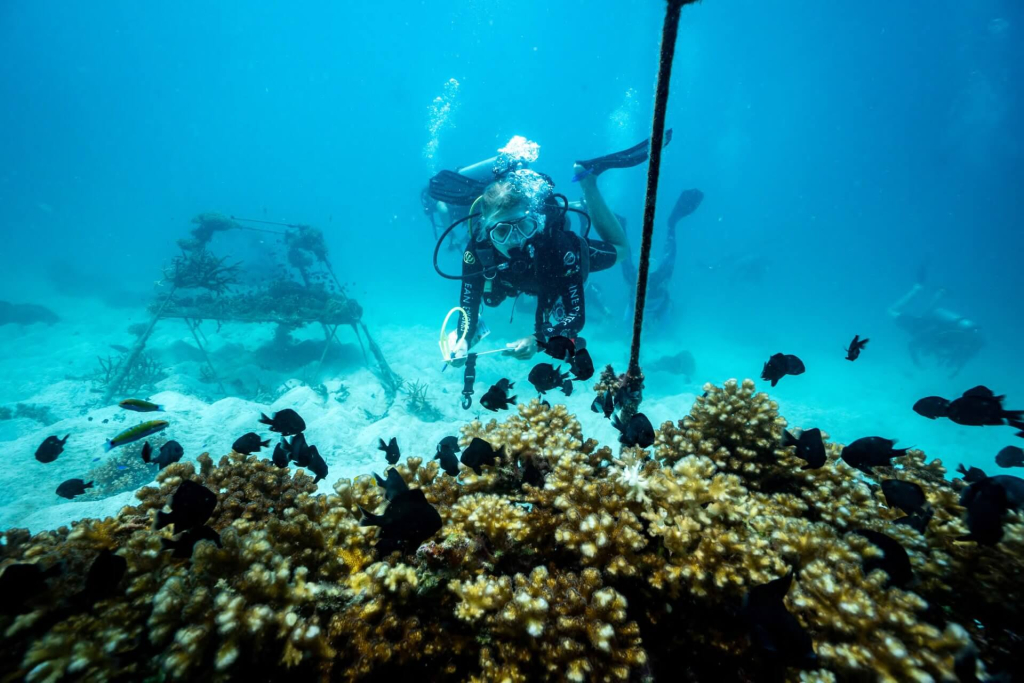
Marine conservation diver monitoring coral growth and fish populations on an artificial reef at Black Turtle Conservation, Koh Tao.
Student identifying coral species underwater during the Coral Taxonomy & Identification course with Black Turtle Conservation in Koh Tao, Thailand.
Marine conservation diver collecting data on coral species during the Coral Taxonomy and Ecological Monitoring course at Black Turtle Conservation, Koh Tao, Thailand.

Diploastrea is common and distinctive on Koh Tao reefs. Its dome-shaped colonies, when present, are immediately conspicuous and serve as memorable visual features at the dive sites where they occur.

Sheltered Bays and Mid-Depth Reefs

Sites such as Aow Leuk, Mango Bay, Hin Wong Bay, and Tanote Bay occasionally host Diploastrea colonies on shallow to mid-depth slopes. The largest individual colonies on Koh Tao are typically located at sheltered sites where stable conditions favour the slow but persistent growth of the genus.

Pinnacle and Offshore Sites

At White Rock, Twins, Chumphon Pinnacle, and Southwest Pinnacle, Diploastrea colonies occupy depths of 8–20 m on shoulders and bases of rock pinnacles. Pinnacle Diploastrea tend to be smaller than those of sheltered bays but remain highly persistent in well-flushed conditions.

Restoration and Artificial Reef Sites

Diploastrea is rarely incorporated into restoration projects given its very slow growth, but occasional colonies become established on and around the stable substrate of older artificial substrate at sites such as Junkyard Reef and Mango Bay. When present, they provide a highly durable framework over the long term.

Depth Distribution and Site Variation

Diploastrea is most commonly encountered between 5 and 20 m at Koh Tao, with isolated colonies occasionally observed deeper on well-lit slopes. Colony size and morphology vary little with depth, although shaded colonies may be smaller and slower-growing than those in well-lit conditions.

Environmental Thresholds: Conditions for Optimal Growth

Diploastrea occupies a stable, mid-range environmental envelope and is generally regarded as a moderately tolerant taxon, although recent monitoring data indicate it is more vulnerable to repeated thermal stress than its longevity might suggest.

Optimal Parameters

  • Light Intensity: moderate to high, with peak performance at 4–18 m on well-lit slopes.
  • Water Movement: tolerates a range of flow conditions, from sheltered bays to current-swept pinnacles.
  • Temperature Range: 24–30°C, with stress responses triggered by prolonged exposure above 30–31°C.
  • Salinity: stable marine conditions of 33–35 ppt; vulnerable to freshwater pulses from heavy monsoon runoff.
  • Substrate: hard substrate with stable attachment, particularly on horizontal or gently sloping surfaces.

Stress Responses on Koh Tao

Diploastrea can bleach during severe marine heatwaves, although its thick tissue and dense skeleton provide some buffering. Recovery is generally slow given the genus’s slow baseline growth, and repeated bleaching events appear to have driven the documented declines in Koh Tao Diploastrea abundance over the 2006–2014 period.

Sedimentation, freshwater runoff, and reduced light penetration following heavy rainfall events compound thermal stress. The genus is also vulnerable to bioerosion over decadal timescales, even though its skeleton resists short-term physical disturbance.

Vulnerability Profile

Marine researcher documenting coral species variations during the Advanced Coral Taxonomy course at Black Turtle Conservation, Koh Tao, Thailand.
Marine conservation diver collecting data on coral species during the Coral Taxonomy and Ecological Monitoring course at Black Turtle Conservation, Koh Tao, Thailand.
Diver recording fine-scale coral identification data during the Advanced Coral Taxonomy and Marine Conservation course at Black Turtle Conservation, Koh Tao, Thailand.

Diploastrea heliopora is currently listed as Near Threatened on the IUCN Red List, reflecting concerns about climate-driven habitat decline despite the genus’s individual longevity. The genus is also covered under CITES Appendix II, which has regulated international trade in scleractinian corals since 1990.

Major Threats

  • Coral Bleaching: bleaching during severe marine heatwaves, with slow recovery given the genus’s slow growth rate.
  • Repeated Stress Events: cumulative damage from multiple thermal events even where individual events are not lethal.
  • Ocean Acidification: progressive reduction in calcification rates as aragonite saturation state declines.
  • Bioerosion: long-lived colonies are heavily targeted by boring bivalves, sponges, and worms over decades and centuries.
  • Local Anthropogenic Impacts: anchoring, fin damage, and chronic sedimentation from coastal development.

On Koh Tao, Diploastrea is treated as a long-lived reference taxon. Surveys covering 2006–2014 documented declines in Diploastrea, Acropora, and Montipora, with corresponding increases in Porites, Pavona, and Fungiidae, indicating that even traditionally stress-tolerant taxa are being affected by repeated thermal events.

Black Turtle Conservation includes Diploastrea in long-term reef monitoring and uses sightings to track the persistence and condition of these multi-decade reef anchors around the island.

How to Identify Diploastrea Coral

The defining features of Diploastrea in the field are the smooth dome-shaped colony form, the closely packed low-conical corallites with their distinctive very thick walls, and the unusually consistent morphology that makes the genus one of the most easily recognised on Indo-Pacific reefs.

Marine conservation diver monitoring coral growth and fish populations on an artificial reef at Black Turtle Conservation, Koh Tao.
Student identifying coral species underwater during the Coral Taxonomy & Identification course with Black Turtle Conservation in Koh Tao, Thailand.
Marine researcher documenting coral species variations during the Advanced Coral Taxonomy course at Black Turtle Conservation, Koh Tao, Thailand.

Key Identification Features

  • Colony Form: massive, dome-shaped to hemispherical, often exceeding 1 m across at maturity.
  • Corallites: plocoid (each with its own wall), 8–10 mm in diameter, closely packed, low conical with very thick walls.
  • Surface Texture: distinctive volcano-like appearance from the regularly–spaced domed corallites.
  • Coloration: typically uniform pale grey, olive-brown, sometimes with green, blue, or purple tinge.
  • Polyp Behaviour: polyps are small and retract deeply during the day, extending only at night.

Distinguishing from Similar Genera

Dipsastraea (formerly Favia) has thinner corallite walls, larger and more variable corallite shapes, and a more variable colony surface than the highly uniform Diploastrea. Favites differs by having shared corallite walls (cerioid arrangement) rather than the plocoid arrangement of Diploastrea.

Cyphastrea has much smaller corallites set into a coarser-textured coenosteum, while Goniastrea and related meandroid genera have valley-like corallite arrangements rather than discrete circular corallites. The combination of dome shape, thick-walled corallites, and uniform morphology makes Diploastrea immediately recognisable to trained reef surveyors.

Mastering Diploastrea Identification with Black Turtle Conservation

Diver recording fine-scale coral identification data during the Advanced Coral Taxonomy and Marine Conservation course at Black Turtle Conservation, Koh Tao, Thailand.

At Black Turtle Conservation we treat reliable Diploastrea identification as essential for long-term reef monitoring on Koh Tao. Because individual colonies persist for centuries and provide multi-decade palaeoclimate records, accurate field recognition is critical for tracking the persistence and condition of these reef anchors over the timescales that matter most for conservation planning.

Our Training Approach: From Theory to Survey

Healthy coral reef ecosystem with diverse fish species recorded during coral disease and reef health monitoring in Koh Tao, Thailand.
Marine conservation diver monitoring coral growth and fish populations on an artificial reef at Black Turtle Conservation, Koh Tao.

Our Coral Taxonomy and Identification training addresses Diploastrea through a structured, progressive sequence designed to build confident in-water surveyors capable of contributing to long-term colony tracking.

  • Classroom Theory: students learn massive coral diagnostics, the distinctive thick-walled plocoid corallite arrangement, and the contrast with Dipsastraea, Favites, and Cyphastrea.
  • In-Water Practice: guided dives at Aow Leuk, Mango Bay, Twins, and Chumphon Pinnacle, where Diploastrea colonies of varying size and condition are compared in situ.
  • Applied Monitoring: participation in Ecological Monitoring Program surveys, where Diploastrea presence, colony size, condition, and bleaching status are recorded as part of long-term datasets.
  • Long-Term Tracking: hands-on training in mapping and photographing individual Diploastrea colonies for repeat-survey monitoring across multiple years.

Graduates leave with the practical ability to identify Diploastrea at genus level under field conditions and to record its presence and condition reliably as part of long-term reef monitoring around Koh Tao.

Frequently Asked Questions

Why is Diploastrea important for palaeoclimate research?

Diploastrea heliopora colonies can persist for several centuries while laying down clear annual skeletal density bands. Cores extracted from large colonies have been used to reconstruct multi-century records of sea-surface temperature, salinity, and rainfall variability across the Indo-Pacific. The genus's longevity, unusually consistent morphology, and dense skeleton make it one of the most valuable taxa in coral-based climate reconstruction.

How do you tell Diploastrea apart from Dipsastraea or Favites?

Diploastrea has unusually thick corallite walls, very small corallite openings, and a distinctively uniform dome-shaped colony surface. Dipsastraea (formerly Favia) has thinner walls and more variable corallite shapes. Favites differs by having shared corallite walls (cerioid) rather than the plocoid arrangement of Diploastrea. The combination of dome shape, thick walls, and uniform surface texture makes Diploastrea immediately recognisable.

Is Diploastrea declining on Koh Tao?

Yes. Long-term Ecological Monitoring Program surveys covering 2006 to 2014 documented declines in Diploastrea on Koh Tao reefs alongside Acropora and Montipora. This is significant because Diploastrea is one of the longest-lived and most physically robust reef-building genera, and its decline indicates that even traditionally stress-tolerant taxa are being affected by repeated thermal events.

How old can a Diploastrea colony become?

Individual Diploastrea heliopora colonies can persist for several centuries, with the largest examples growing to 5 m across and 2 m high. Linear extension is slow, typically 5 to 8 mm per year, but persistent calcification over very long timescales produces some of the most enduring biogenic structures on Indo-Pacific reefs.

Why is Diploastrea now in its own family Diploastreidae?

Diploastrea was historically placed in Faviidae, but recent molecular phylogenetic work demonstrated that the genus is genetically distinct from other faviid-type corals. The family Diploastreidae was reinstated to reflect this evolutionary distinctness. The current taxonomy treats Diploastrea heliopora as the only extant species in its own monotypic family.

External Link Citations and References

Veron, J.E.N. (2000). Corals of the World. Australian Institute of Marine Science.

World Register of Marine Species (WoRMS): Diploastrea Matthai, 1914.

IUCN Red List of Threatened Species: Diploastrea heliopora (Near Threatened).

Department of Marine and Coastal Resources (DMCR), Thailand: Reef monitoring reports.

Black Turtle Conservation: Coral conservation, monitoring and restoration on Koh Tao.