Overview of the Genus
Lobophyllia is one of the most prominent large-polyp stony (LPS) coral genera on Indo-Pacific reefs. It belongs to the family Lobophylliidae, which was established by Dai and Horng in 2009 to accommodate the Indo-Pacific corals previously placed in Mussidae, alongside several genera transferred from the abolished family Pectiniidae.
The genus has been considerably broadened by recent molecular phylogenetic work. Arrigoni et al. 2016 demonstrated that the formerly separate genera Symphyllia, Australomussa, and Parascolymia all nest within Lobophyllia, leading to their formal synonymisation. As currently recognised, Lobophyllia therefore contains a wide range of growth forms, from massive flabello-meandroid colonies to formerly Symphyllia-like meandroid colonies.
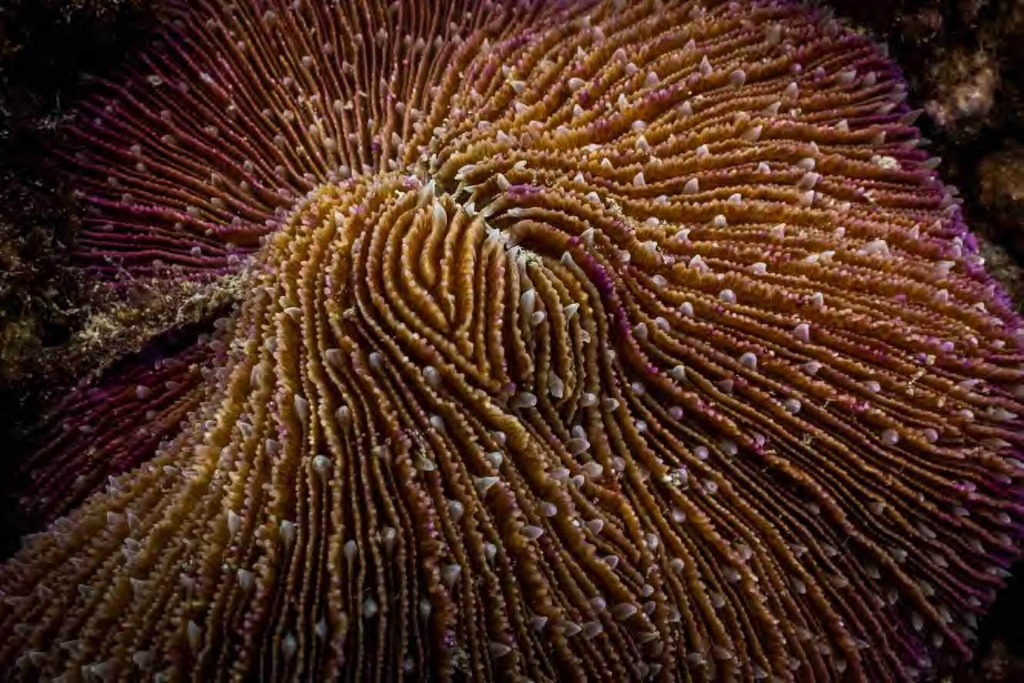
On Koh Tao, Lobophyllia adds substantial colour and structural variety to the reef. Its large, fleshy polyps and bright pigmentation make it one of the most photographed coral genera in the area.
Global and Local Importance
Globally, Lobophyllia is widespread across the tropical Indo-Pacific from the Red Sea and East Africa through Southeast Asia and out to Polynesia. The genus is important both ecologically, as a slow but persistent reef-builder, and aesthetically, as one of the most visually distinctive elements of Indo-Pacific reef communities.
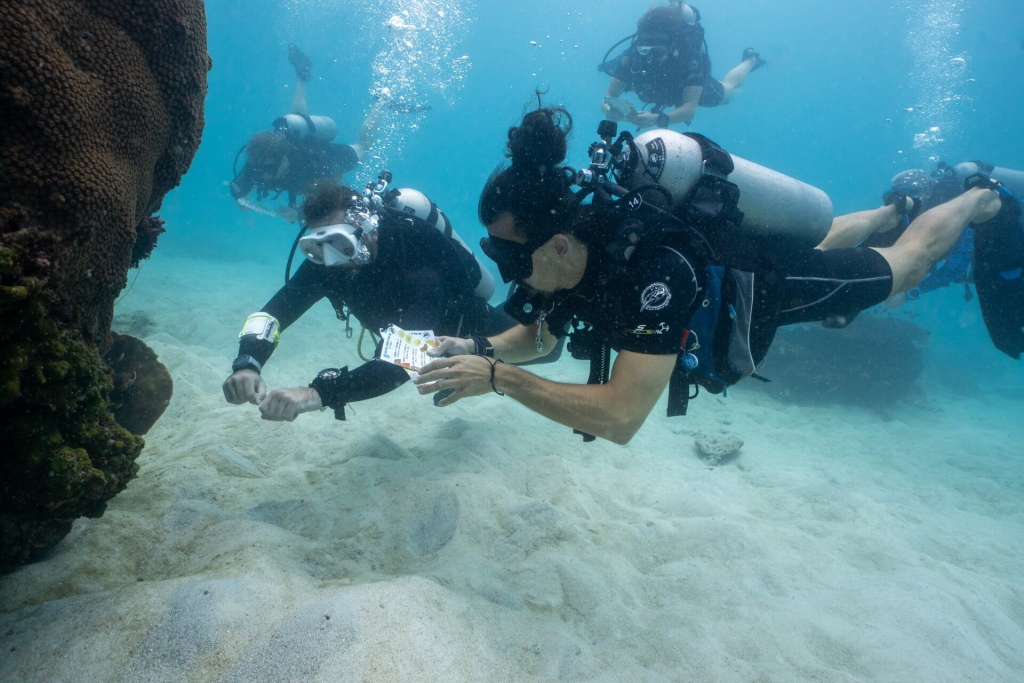
On Koh Tao, Lobophyllia colonies serve as long-term reef anchors, with large colonies persisting for many decades. The genus is regularly recorded in Ecological Monitoring Program surveys and contributes meaningfully to overall reef structural complexity.
Reef-Building Contribution and Habitat Provision
Lobophyllia colonies, although individually slower-growing than branching genera, contribute substantially to the heavy-tissue, large-polyp end of the coral assemblage. Mature colonies create three-dimensional structure with valley topography that supports a range of cryptobenthic invertebrates and small reef fish.
The thick fleshy tissue of Lobophyllia is also actively grazed by some reef fish, providing a nutritional resource that links the genus into broader reef food webs while not significantly damaging colony integrity.
Growth Forms and Colony Variation
Following the Arrigoni et al. 2016 revision, Lobophyllia exhibits substantial growth-form diversity. Traditional Lobophyllia species form massive, dome-shaped colonies with discrete fleshy lobes (uniserial flabello-meandroid corallites), while species formerly placed in Symphyllia form meandroid colonies with elongate valleys and shared walls.
On Koh Tao, the most commonly encountered forms are the classic dome-shaped Lobophyllia hemprichii and the meandroid valley forms of species formerly placed in Symphyllia. Colour variation is extreme, ranging from cream and brown to vivid green, blue, red, and orange.
Evolutionary and Taxonomic Notes
Lobophyllia is the type genus of the family Lobophylliidae and one of the most actively revised LPS genera in scleractinian taxonomy. The merging of Symphyllia and other related genera into Lobophyllia, combined with ongoing molecular work, means that field identification at species level remains difficult and is best handled through careful skeletal microstructure examination.