Hydnophora is a distinctive genus of stony corals in the family Merulinidae, characterised by a unique skeletal feature called hydnophores: small conical mounds or hillocks formed by the fusion of multiple corallite walls. This unmistakable mountain-range surface texture has earned the genus the common names Horn Coral, Mound Coral, and Velvet Horn Coral.

The genus was described by Fischer von Waldheim in 1807 and contains seven currently accepted species across the Indo-Pacific, including Hydnophora exesa (the most widely distributed massive form), H. rigida (the branching form), H. microconos, and H. pilosa. Recent molecular phylogenies place Hydnophora as monophyletic but in an unusual phylogenetic position relative to other Merulinidae, with closer affinities to Favites and Dipsastraea than to Merulina.

Around Koh Tao, Hydnophora is moderately common at sheltered slope and pinnacle sites, where its distinctive monticule-covered surface makes it one of the most easily identified coral genera once trainees learn the diagnostic feature. This guide explores the morphology, feeding strategy, distribution, environmental requirements, vulnerability profile, field identification, and conservation training opportunities offered by Black Turtle Conservation.

Common Names: Horn Coral, Mound Coral, Velvet Horn Coral, Mountain Range Coral

Family: Merulinidae

Order: Scleractinia (Stony Corals)

Subclass: Hexacorallia | Class: Anthozoa | Phylum: Cnidaria

Learn About Hydnophora Coral Genus

General coral and reef imagery from our existing library.

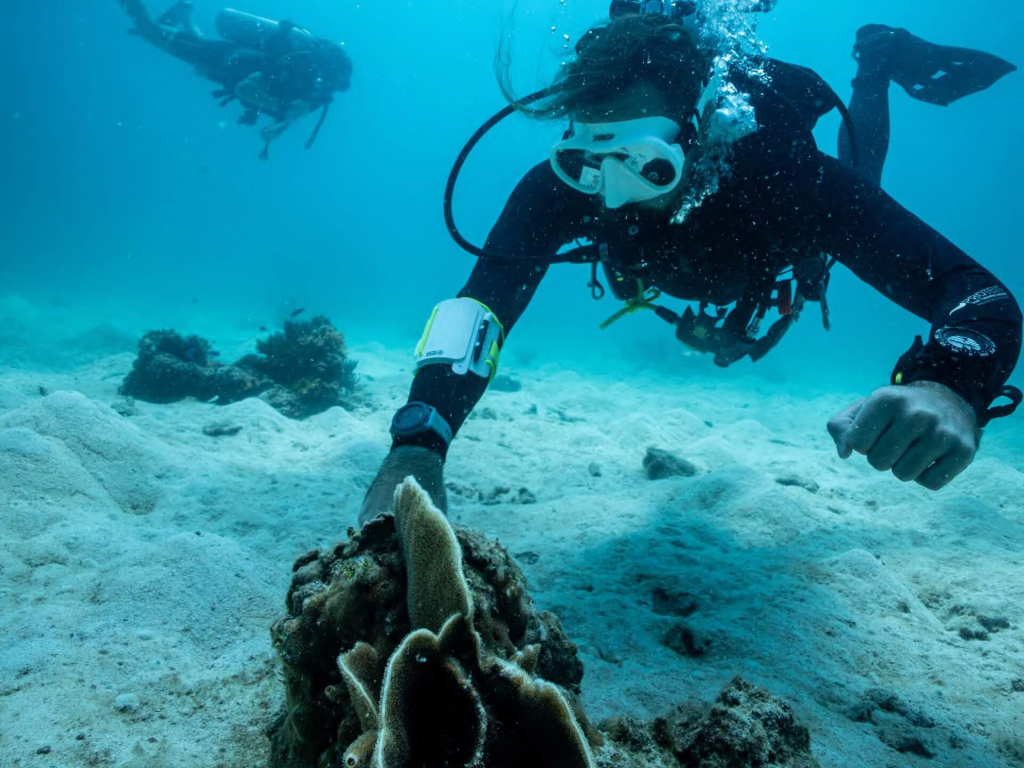
Healthy coral reef ecosystem with diverse fish species recorded during coral disease and reef health monitoring in Koh Tao, Thailand.
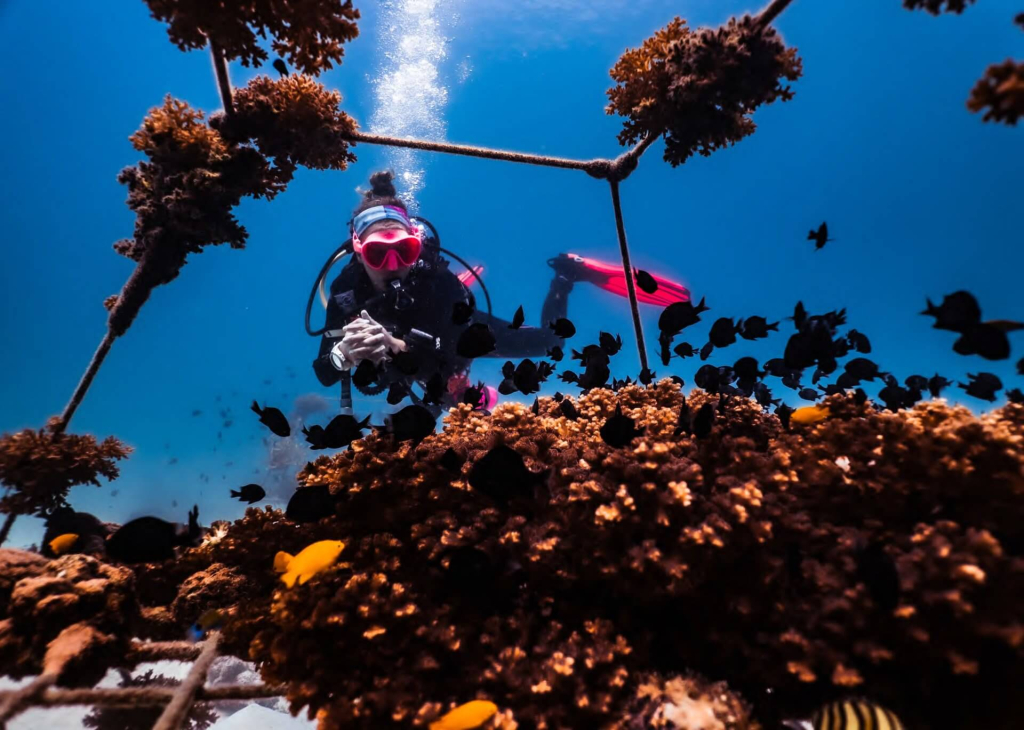
Marine conservation diver monitoring coral growth and fish populations on an artificial reef at Black Turtle Conservation, Koh Tao.
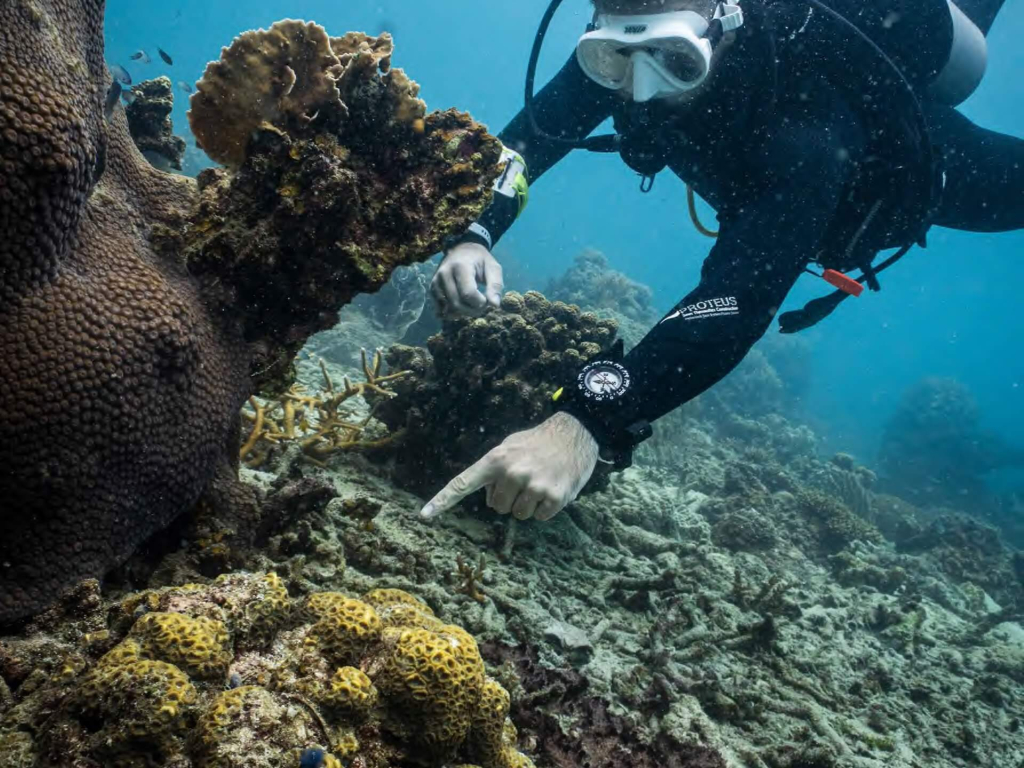
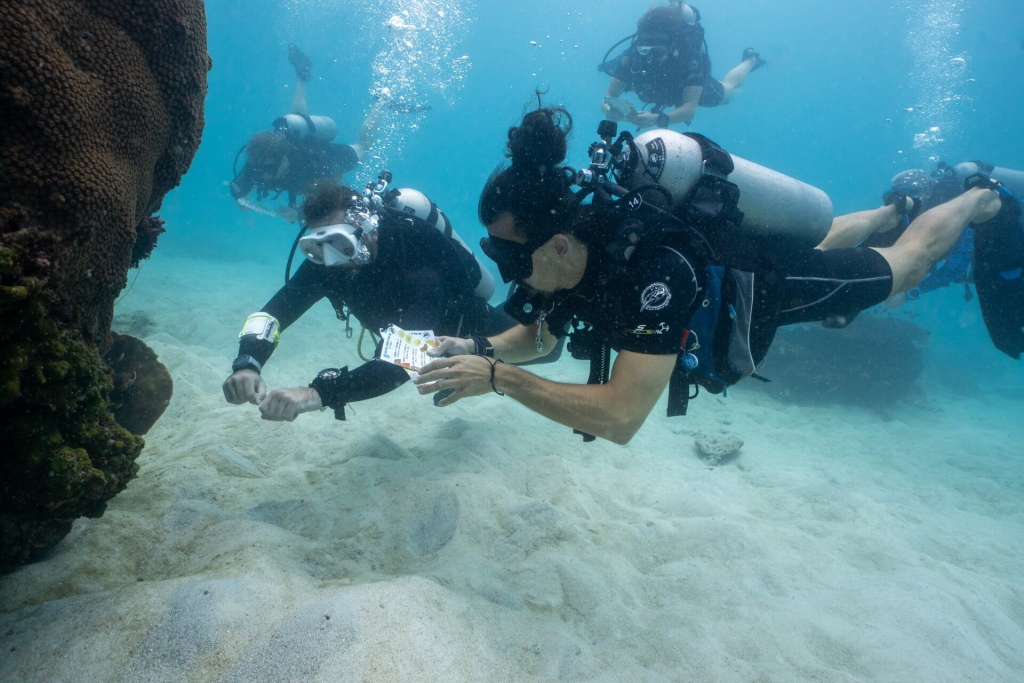
Student identifying coral species underwater during the Coral Taxonomy & Identification course with Black Turtle Conservation in Koh Tao, Thailand.

Overview of the Genus

Hydnophora is one of the most morphologically distinctive genera within the family Merulinidae. Its diagnostic hydnophores, formed where multiple corallite walls fuse into raised conical mounds, give colonies a unique mountain-range or mound-covered appearance unlike any other reef-building genus.

The genus shows considerable growth-form variation across its species, with Hydnophora exesa producing massive to encrusting colonies, while Hydnophora rigida and H. grandis form branching colonies that resemble Acropora at first glance, until the diagnostic hydnophores are recognised on the branch surfaces.

On Koh Tao, Hydnophora is regularly encountered as an abundant hard coral in the region. Its texture, often described as resembling a green velvet covering of small mounds or mountains, is highly recognisable to trained observers.

Global and Local Importance

Globally, Hydnophora occurs across the tropical Indo-Pacific from the Red Sea and East Africa through Southeast Asia and out to the Pacific Islands. The genus is moderately common in many reef systems and contributes to local biodiversity through its unusual morphology and aggressive territorial behaviour.

On Koh Tao, Hydnophora plays a recognisable role in slope and back-reef habitat. Its capacity to extend long sweeper polyps for territorial competition makes it a useful subject for studying inter-coral chemical warfare and space competition on shallow reefs.

Reef-Building Contribution and Habitat Provision

Massive Hydnophora exesa colonies contribute meaningfully to reef framework in slope and back-reef habitats, while branching forms such as H. rigida add habitat complexity in shallow environments. The hydnophore-covered surface of all forms creates microscale topographic complexity that supports cryptobenthic invertebrates.

Hydnophora colonies also serve as foundation structures around which other reef-associated fauna assemble. The aggressive territorial habits of the genus do, however, mean that Hydnophora maintains relatively clear surrounding zones, limiting direct multi-species interactions on its margins.

Growth Forms and Colony Variation

Hydnophora exhibits substantial growth-form variation. The most common species, Hydnophora exesa, produces massive, encrusting, or laminar colonies, while Hydnophora rigida and H. grandis form branching colonies. Hydnophora microconos forms low, encrusting colonies with very small hydnophores.

On Koh Tao, the most commonly encountered forms are massive and encrusting Hydnophora exesa, with branching Hydnophora rigida occurring less frequently in shallow protected habitats. Colour ranges from cream and brown through olive-green to brilliant fluorescent green, with the green colours particularly conspicuous against the rest of the coral assemblage.

Evolutionary and Taxonomic Notes

Hydnophora is part of the family Merulinidae but molecular phylogenies show that it groups more closely with Favites and Dipsastraea than with the type genus Merulina. This unusual phylogenetic position underscores the broader instability of family-level classifications within the so-called 'Bigmessidae' assemblage that has been the focus of intensive taxonomic revision since 2010.
Morphology

Healthy coral reef ecosystem with diverse fish species recorded during coral disease and reef health monitoring in Koh Tao, Thailand.
Marine conservation diver monitoring coral growth and fish populations on an artificial reef at Black Turtle Conservation, Koh Tao.
Student identifying coral species underwater during the Coral Taxonomy & Identification course with Black Turtle Conservation in Koh Tao, Thailand.

Colony Structure and Skeletal Features

Hydnophora colonies vary from massive and encrusting (most species) to branching (H. rigida, H. grandis). All species share the diagnostic hydnophore feature: small conical mounds or hillocks distributed across the colony surface, formed where the walls of three or more adjacent corallites fuse together to a common raised point.

Each hydnophore therefore contains the partial walls of multiple corallites, with the mouths of these corallites positioned around the base of each cone. This unusual arrangement is unique to Hydnophora among scleractinian corals and is the single most reliable field identification feature for the genus.

Polyps and Tissue Characteristics

Hydnophora polyps are small to moderate in size, with relatively short tentacles that retract during the day and extend at night for feeding. The tissue layer is relatively thin compared with large-polyp genera such as Lobophyllia, but holds adequate zooxanthellae densities for effective photosynthesis.

Hydnophora is particularly notable for its capacity to produce sweeper polyps with extended tentacles that can sting and damage neighbouring corals. This aggressive territorial behaviour gives the genus a notable competitive advantage in space-limited reef environments.

Skeletal Microstructure and Calcification

Hydnophora skeletons are aragonitic with moderately dense corallite walls and septa. The hydnophore architecture creates a highly textured surface that captures light efficiently and provides structural reinforcement against mechanical disturbance.

Calcification rates are moderate, allowing colonies to grow to substantial size over multi-year timescales while not matching the rapid extension of Acropora or Pocillopora. Like all reef-builders, Hydnophora is sensitive to reductions in seawater carbonate saturation under ocean acidification scenarios.

Size, Growth, and Defensive Adaptations

On Koh Tao, mature Hydnophora colonies typically reach 30–70 cm across in massive forms, with the largest examples occasionally exceeding 1 m. Branching Hydnophora rigida colonies remain smaller, typically 15–40 cm in their longest dimension.

Defensive adaptations include nematocyst-armed tentacles, sweeper polyps for inter-colony competition, mucus production, and the textured hydnophore surface itself, which limits direct predator contact with the polyps. The hydnophores also slow algal overgrowth onto colony surfaces.

Dual-Feeding Strategy: How Hydnophora Feeds and Thrives

Hydnophora is a zooxanthellate mixotroph that combines photosynthesis carried out by symbiotic dinoflagellates with active heterotrophic capture of zooplankton. The textured hydnophore surface enhances both light interception and turbulent flow over the polyps, supporting both feeding pathways.

1. Autotrophy: Photosynthate from Symbionts

Symbiotic dinoflagellates of the family Symbiodiniaceae living within the gastrodermis carry out photosynthesis and translocate organic compounds to the coral host. Under good light conditions, this pathway supplies a substantial fraction of the colony's daily carbon budget.

The textured hydnophore surface increases the effective light-capturing surface area per unit colony footprint, contributing to the genus's photosynthetic efficiency. This advantage is particularly notable in encrusting forms where the hydnophores stand out from a relatively flat base.

Hydnophora polyps extend at night to capture zooplankton drifting past on currents. The hydnophore architecture creates microturbulent flow patterns that bring food into proximity with the polyps clustered around each cone, enhancing capture efficiency.

Heterotrophic input supplies essential nitrogen, phosphorus, and trace elements, supporting the persistent calcification that produces the genus's substantial colony sizes. This dietary contribution is particularly important during periods of reduced photosynthetic productivity.

The combination of efficient photosynthesis, effective heterotrophy, and aggressive territorial behaviour through sweeper polyps gives Hydnophora a competitive advantage in space-limited environments on Koh Tao reefs. The genus can hold its own against faster-growing branching corals through chemical defence rather than rapid expansion.

Where to Find Hydnophora Around Koh Tao and at Which Dive Sites

Marine researcher documenting coral species variations during the Advanced Coral Taxonomy course at Black Turtle Conservation, Koh Tao, Thailand.

Hydnophora is moderately common at Koh Tao dive sites with stable hard substrate and adequate water flow. Its distinctive hydnophore-covered surface makes it readily recognisable once divers are familiar with the diagnostic feature.

Sheltered Bays and Mid-Depth Slopes

Sites such as Aow Leuk, Mango Bay, Hin Wong Bay, and Tanote Bay host Hydnophora colonies on shallow to mid-depth slopes. The most commonly encountered forms at these sites are massive and encrusting Hydnophora exesa, often appearing as bright green velvet patches on rocky substrate.

Pinnacle and Offshore Sites

At White Rock, Twins, Chumphon Pinnacle, and Southwest Pinnacle, Hydnophora occupies depths of 8–18 m on shoulders and bases of granite pinnacles. Pinnacle colonies tend to be smaller than those of sheltered bays but are well-lit and often display particularly intense green colouration.

Branching Hydnophora Habitats

Branching Hydnophora rigida, where present, occupies shallow protected habitats similar to those used by branching Acropora and Pocillopora. These shallow habitat preferences, combined with the smaller colony sizes of branching Hydnophora, mean that these forms are less commonly encountered than the dominant massive Hydnophora exesa.

Depth Distribution and Site Variation

Hydnophora is most commonly encountered between 3 and 18 m on Koh Tao, with isolated colonies extending to 25 m on well-lit slopes. Colony size and morphology vary with depth and flow, with massive forms favouring sheltered shallows and well-textured colonies appearing across a wide depth range.

Environmental Thresholds: Conditions for Optimal Growth

Hydnophora occupies a moderately broad environmental envelope and is generally regarded as a hardy reef-builder capable of tolerating a range of conditions on Indo-Pacific reefs.

Optimal Parameters

  • Light Intensity: moderate to high, performing well at 4–18 m on Koh Tao slopes.
  • Water Movement: tolerates a range of flow conditions, from sheltered bays to current-swept pinnacles.
  • Temperature Range: 24–30°C, with stress responses triggered by prolonged exposure above 30–31°C.
  • Salinity: stable marine conditions of 33–35 ppt; vulnerable to freshwater pulses from heavy monsoon runoff.
  • Substrate: stable hard substrate, often on rocky reef or granite pinnacle surfaces.

Stress Responses on Koh Tao

Hydnophora can bleach during severe marine heatwaves, with the green colouration of healthy colonies fading to white as zooxanthellae are expelled. Recovery is generally moderate, with colonies regaining colour over weeks to months if temperatures return to normal range and other conditions remain stable.

Sedimentation, freshwater runoff, and reduced light penetration following heavy monsoon rainfall reduce growth and recruitment. The genus is also vulnerable to bioerosion over multi-year timescales, particularly in nearshore settings where bio-eroding sponges and worms are abundant.

Vulnerability Profile

Marine biology student identifying coral genera as part of the Coral Taxonomy and Identification course at Black Turtle Conservation, Koh Tao, Thailand.
Healthy coral reef ecosystem with diverse fish species recorded during coral disease and reef health monitoring in Koh Tao, Thailand.
Marine conservation diver monitoring coral growth and fish populations on an artificial reef at Black Turtle Conservation, Koh Tao.

Several Hydnophora species are listed in IUCN categories, with Hydnophora exesa is currently assessed as Least Concern. The genus is also covered under CITES Appendix II, which has regulated international trade in scleractinian corals since 1990.

Major Threats

  • Coral Bleaching: bleaching during severe marine heatwaves with paling of the diagnostic green colouration.
  • Wild Collection: moderate harvesting for the ornamental coral trade in some parts of the genus’s range, particularly for green colour morphs.
  • Ocean Acidification: progressive reduction in calcification efficiency as aragonite saturation state declines.
  • Predation Pressure: occasional targeting by Crown-of-thorns starfish (Acanthaster planci) and Drupella snails.
  • Local Anthropogenic Impacts: anchoring, fin damage, and ghost fishing gear in zones where colonies are accessible.

On Koh Tao, Hydnophora is treated as a moderately resilient reference taxon. Its persistence at intermediate depths and tolerance for a range of flow conditions make it a useful indicator for habitat conditions on stable slope reefs.

Black Turtle Conservation includes Hydnophora in ongoing reef monitoring and uses sightings to refine site-level biodiversity inventories around the island.

How to Identify Hydnophora Coral

The defining feature of Hydnophora in the field is the diagnostic hydnophore: small conical mounds or hillocks distributed across the colony surface, formed where the walls of three or more adjacent corallites fuse to a raised central point. No other scleractinian genus shares this skeletal architecture.

Marine biology student identifying coral genera as part of the Coral Taxonomy and Identification course at Black Turtle Conservation, Koh Tao, Thailand.
Healthy coral reef ecosystem with diverse fish species recorded during coral disease and reef health monitoring in Koh Tao, Thailand.
Marine conservation diver monitoring coral growth and fish populations on an artificial reef at Black Turtle Conservation, Koh Tao.

Key Identification Features

  • Hydnophores: the diagnostic feature — small conical mounds covering the colony surface, each formed by fused corallite walls.
  • Surface Texture: distinctive mountain-range or mound-covered appearance, sometimes described as resembling green velvet.
  • Growth Form: massive, encrusting, laminar (H. exesa), or branching (H. rigida, H. grandis).
  • Coloration: typically cream, brown, olive, or vivid fluorescent green; green colour morphs are particularly conspicuous.
  • Polyp Behaviour: polyps small with short tentacles, usually retracted during the day and extended at night.

Distinguishing from Similar Genera

Merulina (the type genus of Merulinidae) differs by lacking hydnophores, instead producing more uniform meandroid valleys with fan-like or laminar growth. Pectinia produces upright spire-like or leaf-like projections rather than the rounded hydnophores of Hydnophora.

Other meandroid Merulinidae such as Goniastrea, Platygyra, and Leptoria all produce valley-like corallite arrangements without the diagnostic hydnophores. The single feature of hydnophore mounds distinguishes Hydnophora immediately from any other coral genus encountered around Koh Tao.

Mastering Hydnophora Identification with Black Turtle Conservation

Marine conservation diver monitoring coral growth and fish populations on an artificial reef at Black Turtle Conservation, Koh Tao.

At Black Turtle Conservation we treat reliable Hydnophora identification as one of the easier wins for trainee taxonomists. The diagnostic hydnophore feature is so distinctive and consistent that even relatively inexperienced divers can confidently identify the genus once they have been shown the feature on a single colony, providing a memorable benchmark for building broader taxonomic confidence.

Our Training Approach: From Theory to Survey

Student identifying coral species underwater during the Coral Taxonomy & Identification course with Black Turtle Conservation in Koh Tao, Thailand.

Our Coral Taxonomy and Identification training addresses Hydnophora through a structured, progressive sequence designed to build confident in-water surveyors familiar with the unique skeletal architecture of the genus.

  • Classroom Theory: students learn the hydnophore skeletal feature, the diversity of growth forms within Hydnophora, and the contrast with other Merulinidae genera.
  • In-Water Practice: guided dives at Aow Leuk, Mango Bay, Twins, and Chumphon Pinnacle, where Hydnophora colonies of varying size, form, and colour are compared in situ.
  • Applied Monitoring: participation in Ecological Monitoring Program surveys, where Hydnophora presence, colony condition, and bleaching status are recorded as part of reef datasets.
  • Comparative Identification: side-by-side comparison with related Merulinidae genera (Merulina, Pectinia, Goniastrea, Platygyra) to consolidate family-level and genus-level recognition skills.

Graduates leave with the practical ability to identify Hydnophora at genus level under field conditions and to record its presence and condition reliably as part of long-term reef monitoring around Koh Tao.

Frequently Asked Questions

What is a hydnophore?

A hydnophore is a small conical mound or hillock formed where the walls of three or more adjacent corallites fuse to a common raised point. This unusual skeletal architecture is unique to the genus Hydnophora among scleractinian corals and is the single most reliable field identification feature. Each hydnophore therefore contains the partial walls of multiple corallites, with the corallite mouths positioned around the base of each cone.

Are there branching Hydnophora species?

Yes. Hydnophora rigida and Hydnophora grandis form branching colonies that resemble Acropora at first glance, until the diagnostic hydnophore mounds are recognised on the branch surfaces. Branching Hydnophora is less common around Koh Tao than the dominant massive and encrusting Hydnophora exesa, but both forms share the same diagnostic surface architecture.

Why are some Hydnophora colonies bright fluorescent green?

The bright fluorescent green colour seen in some Hydnophora colonies results from host-produced fluorescent proteins in the coral tissue. These proteins serve various functions including photoprotection, possibly visual signalling, and modulation of light availability for zooxanthellae. Green colour morphs are particularly common in Hydnophora and contribute to the genus's reputation as one of the more visually distinctive corals on Indo-Pacific reefs.

How does Hydnophora compete with other corals?

Hydnophora produces extended sweeper tentacles that can sting and damage neighbouring corals, giving the genus a competitive edge in space-limited reef environments. This aggressive territorial behaviour means Hydnophora colonies often maintain clear margins against neighbouring corals. The genus can therefore hold its ground against faster-growing branching corals through chemical defence rather than rapid expansion.

Is Hydnophora related to Merulina?

Yes, both genera are in the family Merulinidae. However, molecular phylogenetic work has shown that Hydnophora groups more closely with Favites and Dipsastraea than with the type genus Merulina. This unusual position underscores the broader instability of family-level classifications within the so-called Bigmessidae assemblage that has been the focus of intensive taxonomic revision since 2010.
External Link Citations and References

Veron, J.E.N. (2000). Corals of the World. Australian Institute of Marine Science.

World Register of Marine Species (WoRMS): Hydnophora Fischer von Waldheim, 1807.

IUCN Red List of Threatened Species: Hydnophora entries.

Department of Marine and Coastal Resources (DMCR), Thailand: Reef monitoring reports.

Black Turtle Conservation: Coral conservation, monitoring and restoration on Koh Tao.