Pavona is a widespread genus of stony corals in the family Agariciidae, characterised by thamnasteroid corallites (corallites that lack discrete walls and merge into a continuous skeletal surface) and a remarkable diversity of growth forms ranging from massive and encrusting to foliose, columnar, and bi-facial laminar plates. The genus was described by Lamarck in 1801 and contains around twenty currently accepted species across the tropical Indo-Pacific.

Pavona is one of the most ecologically successful coral genera on Koh Tao reefs. Long-term Ecological Monitoring Program data have documented increases in Pavona abundance over the 2006–2014 period, alongside corresponding declines in more thermally sensitive genera such as Acropora, Montipora, and Diploastrea. This pattern places Pavona alongside Porites and Fungiidae as a ‘winner’ genus in the local context of repeated thermal stress events.

This guide explores the morphology, feeding strategy, distribution around Koh Tao, environmental requirements, vulnerability profile, field identification, and conservation training opportunities offered by Black Turtle Conservation. Note that recent molecular work has shown Pavona to be polyphyletic, with a formal taxonomic revision currently in progress; species-level identification within the genus should therefore be treated cautiously.

Common Names: Cactus Coral, Lettuce Coral, Leaf Coral, Potato Chip Coral

Family: Agariciidae

Order: Scleractinia (Stony Corals)

Subclass: Hexacorallia | Class: Anthozoa | Phylum: Cnidaria

Learn About Pavona Coral Genus

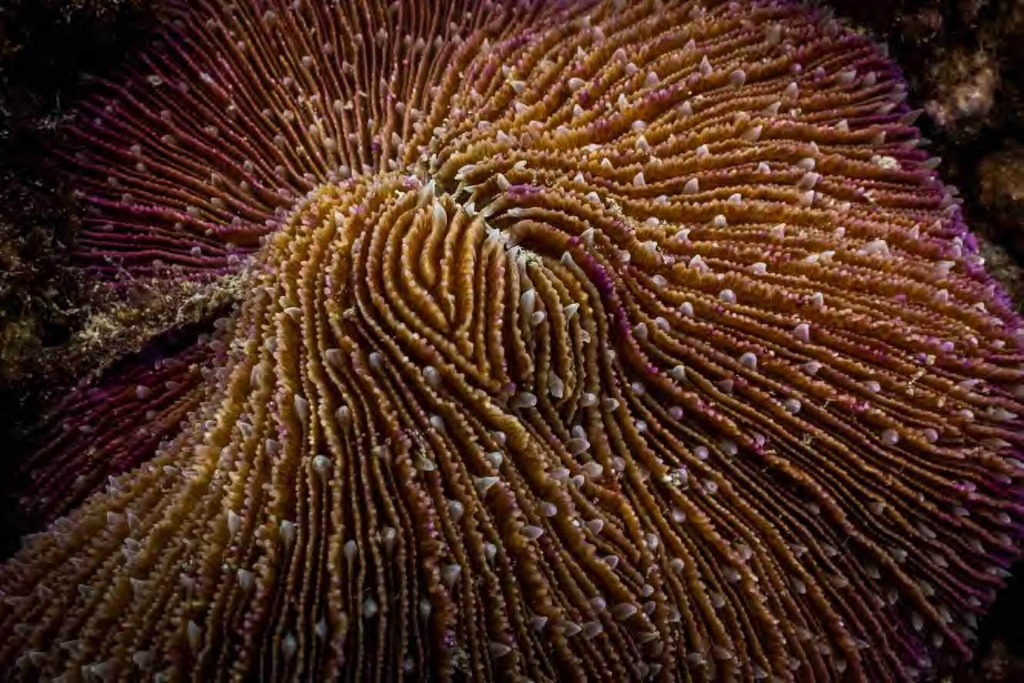
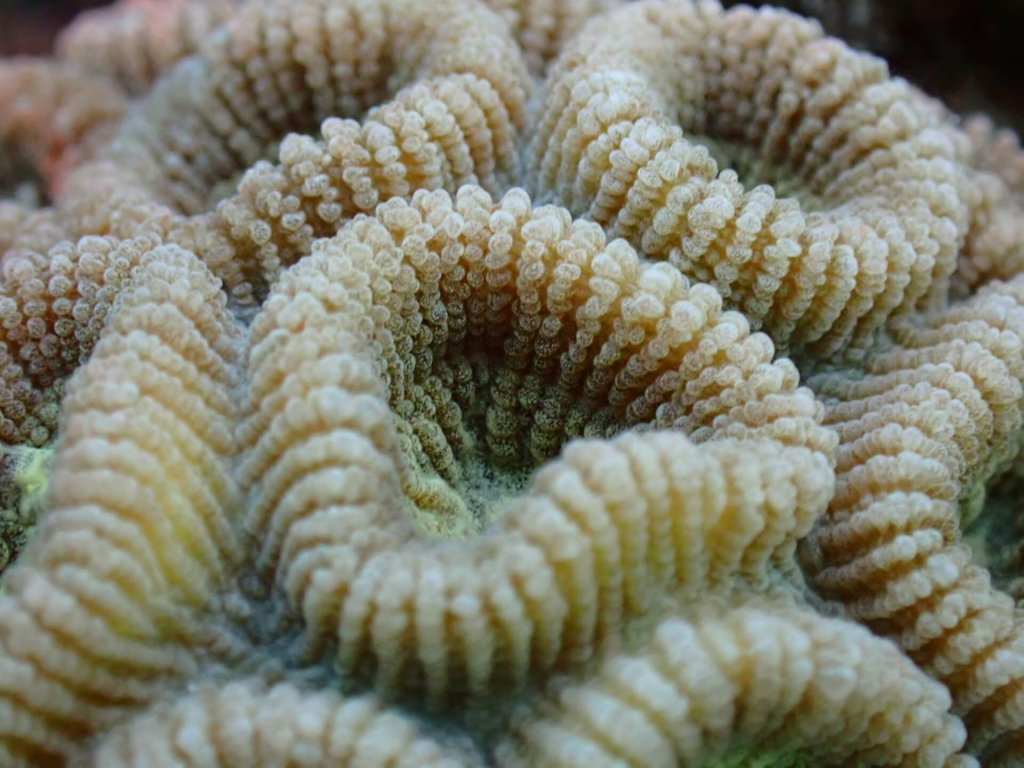
Close-up of a healthy brain coral colony photographed during the Ecological Monitoring Program (EMP) with Black Turtle Conservation in Koh Tao, Thailand.
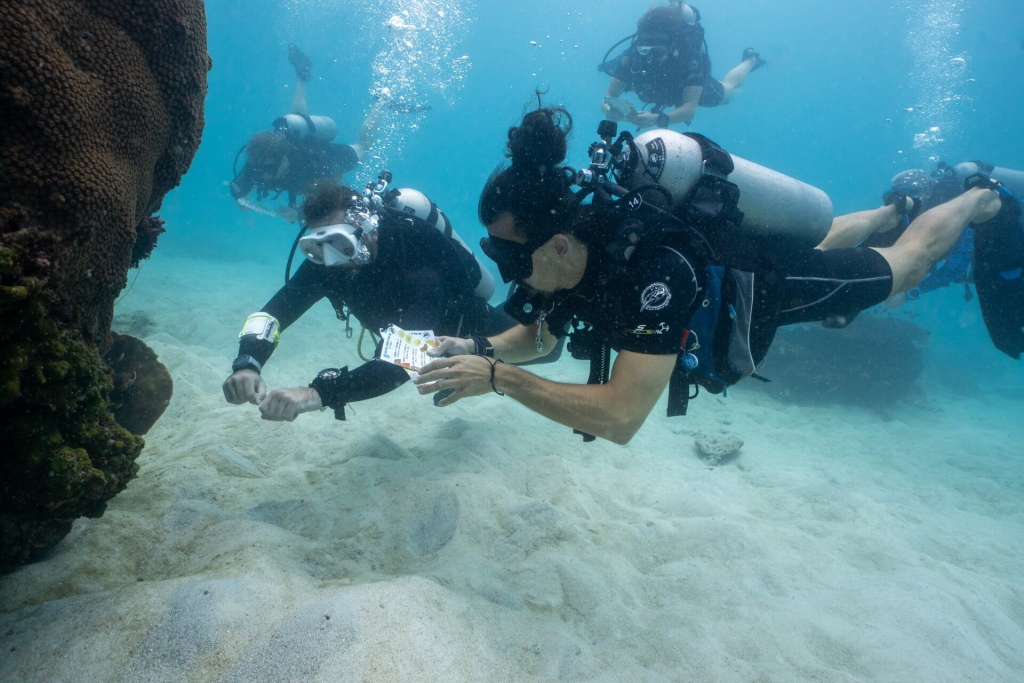
Marine conservation diver collecting data on coral species during the Coral Taxonomy and Ecological Monitoring course at Black Turtle Conservation, Koh Tao, Thailand.
Diver recording fine-scale coral identification data during the Advanced Coral Taxonomy and Marine Conservation course at Black Turtle Conservation, Koh Tao, Thailand.

Overview of the Genus

Pavona is one of the most prominent reef-building genera of the family Agariciidae and is renowned for its morphological flexibility. Different species produce massive, encrusting, foliose, columnar, or bi-facial laminar growth forms, and the same species can express different forms depending on local light, flow, and substrate conditions.

The genus is also notable for the thamnasteroid arrangement of its corallites, which lack discrete walls and merge into a continuous skeletal surface punctuated only by the corallite mouths. This skeletal architecture distinguishes Pavona from most other reef-builders and is one of the genus’s most reliable field identification cues.

On Koh Tao, Pavona has emerged as one of the most resilient and structurally important coral genera. Its tolerance for moderately reduced light, sediment, and thermal stress underpins its expanding role on Koh Tao reefs in the era of repeated marine heatwaves.

Global and Local Importance

Globally, Pavona is widespread across the tropical Indo-Pacific from the Red Sea and East Africa through Southeast Asia and out to the East Pacific. The genus contributes meaningfully to reef-building across its range and is particularly important in marginal habitats where conditions are too variable for more sensitive genera.

On Koh Tao, Pavona has increased in relative abundance over the past two decades alongside Porites and Fungiidae. This pattern positions Pavona as a key reference taxon for tracking the community-level shift toward stress-tolerant taxa documented in regional surveys.

Reef-Building Contribution and Habitat Provision

Pavona contributes substantially to reef framework through its diverse growth forms. Foliose and bi-facial colonies provide vertical reef structure and shaded microhabitat, while encrusting and massive forms create stable substrate for cryptobenthic communities and microscale topographic complexity.

The thamnasteroid surface of Pavona is also actively grazed by reef fish, with parrotfish bioerosion producing the fine sediment that feeds back into reef carbonate cycling around Koh Tao.

Growth Forms and Colony Variation

Pavona shows extreme growth-form plasticity. Pavona cactus produces foliose, often bi-facial laminar colonies with thin, leaf-like plates. Pavona varians produces encrusting and massive colonies with characteristic ridge patterns. Pavona clavus produces massive columnar colonies, while Pavona explanulata produces broad encrusting plates.

On Koh Tao, the most commonly encountered forms are encrusting and foliose, although massive columnar Pavona clavus is also seen at some sites. Colour ranges from cream and brown through olive to bright green, often with contrasting darker corallite centres.

Evolutionary and Taxonomic Notes

Pavona is one of several scleractinian genera shown to be polyphyletic in recent molecular phylogenies, meaning the taxonomic boundaries of the genus do not reflect strict evolutionary relationships. A new species, Pavona giannii, was described in 2025, and a formal revision of the genus is currently in progress with phylogenomic analyses ongoing. Species-level identification within Pavona should therefore be approached with caution.
Morphology

Close-up of a healthy brain coral colony photographed during the Ecological Monitoring Program (EMP) with Black Turtle Conservation in Koh Tao, Thailand.
Marine conservation diver collecting data on coral species during the Coral Taxonomy and Ecological Monitoring course at Black Turtle Conservation, Koh Tao, Thailand.
Diver recording fine-scale coral identification data during the Advanced Coral Taxonomy and Marine Conservation course at Black Turtle Conservation, Koh Tao, Thailand.

Colony Structure and Skeletal Features

Pavona colonies vary widely in form: encrusting sheets, massive mounds, columnar pillars, and foliose laminar plates that can be unifacial (one-sided) or bifacial (corallites on both faces). The bifacial form is particularly distinctive and gives some Pavona species their lettuce or cactus appearance.

Corallites are thamnasteroid, meaning they lack discrete surrounding walls and instead merge into a continuous skeletal surface. The corallite openings appear as small pits scattered across the colony surface, with septa radiating outward and sometimes connecting to adjacent corallites along subtle ridges.

Polyps and Tissue Characteristics

Pavona polyps are small (typically 1–3 mm across) and bear short tentacles that retract during the day and extend at night for feeding. The tissue layer is moderately thin compared with large-polyp genera, but holds adequate zooxanthellae densities for effective photosynthesis across the colony surface.

The thamnasteroid skeletal arrangement allows Pavona tissue to spread continuously across the colony surface without the discrete corallite-by-corallite architecture seen in cerioid or plocoid genera. This continuity supports rapid tissue regeneration following physical disturbance.

Skeletal Microstructure and Calcification

Pavona skeletons are aragonitic and moderately dense. The thamnasteroid surface is supported by a robust internal framework that gives Pavona colonies more physical resistance than the porous skeletons of fast-branching genera, while not matching the extreme density of massive Porites or Diploastrea.

Calcification rates are moderate, with growth occurring through extension of the colony margin and gradual thickening of the existing skeleton. Linear extension is often 1–2 cm per year, modest but sufficient for the genus to expand across available substrate over multi-year timescales.

Size, Growth, and Defensive Adaptations

On Koh Tao, mature Pavona colonies typically reach 30–80 cm across in encrusting or massive forms, with foliose Pavona cactus colonies occasionally producing plates over 1 m across. Columnar Pavona clavus produces stout pillars typically 30–60 cm tall.

Defensive adaptations include nematocyst-armed tentacles, mucus production, and the continuous tissue surface that allows rapid wound-healing and regeneration following partial mortality. The robust thamnasteroid skeleton also resists mechanical breakage better than porous branching skeletons.

Dual-Feeding Strategy: How Pavona Feeds and Thrives

Pavona is a zooxanthellate mixotroph that combines photosynthesis carried out by symbiotic dinoflagellates with active heterotrophic capture of zooplankton. The genus’s robust photosynthetic machinery and tolerance for variable conditions are key to its expanding role on Koh Tao reefs.

1. Autotrophy: Robust Photosynthesis

Symbiotic dinoflagellates of the family Symbiodiniaceae living within the gastrodermis carry out photosynthesis and translocate organic compounds to the coral host. Pavona can adjust its symbiont densities and clades in response to environmental conditions, supporting reliable photosynthate supply across a range of light and temperature regimes.

Foliose Pavona species use their broad laminar plates to maximise light interception, allowing them to thrive in moderately shaded environments where less flexible genera struggle. Bifacial laminar plates effectively double the light-capturing surface area per unit of substrate occupied.

Pavona polyps extend at night to capture zooplankton drifting past on currents. The high density of small polyps across the colony surface allows substantial overall heterotrophic capture even though individual polyps are modest in size and reach.

Heterotrophic input supplies essential nitrogen, phosphorus, and trace elements, supporting the persistent calcification that underpins Pavona’s expanding role on Koh Tao reefs.

The combination of robust photosynthesis, flexible symbiont communities, effective heterotrophy, and growth-form plasticity gives Pavona substantial climate resilience. The genus has consequently increased in relative abundance on Koh Tao reefs over the 2006–2014 monitoring period while more sensitive genera have declined.

Where to Find Pavona Around Koh Tao and at Which Dive Sites

Healthy coral reef ecosystem with diverse fish species recorded during coral disease and reef health monitoring in Koh Tao, Thailand.
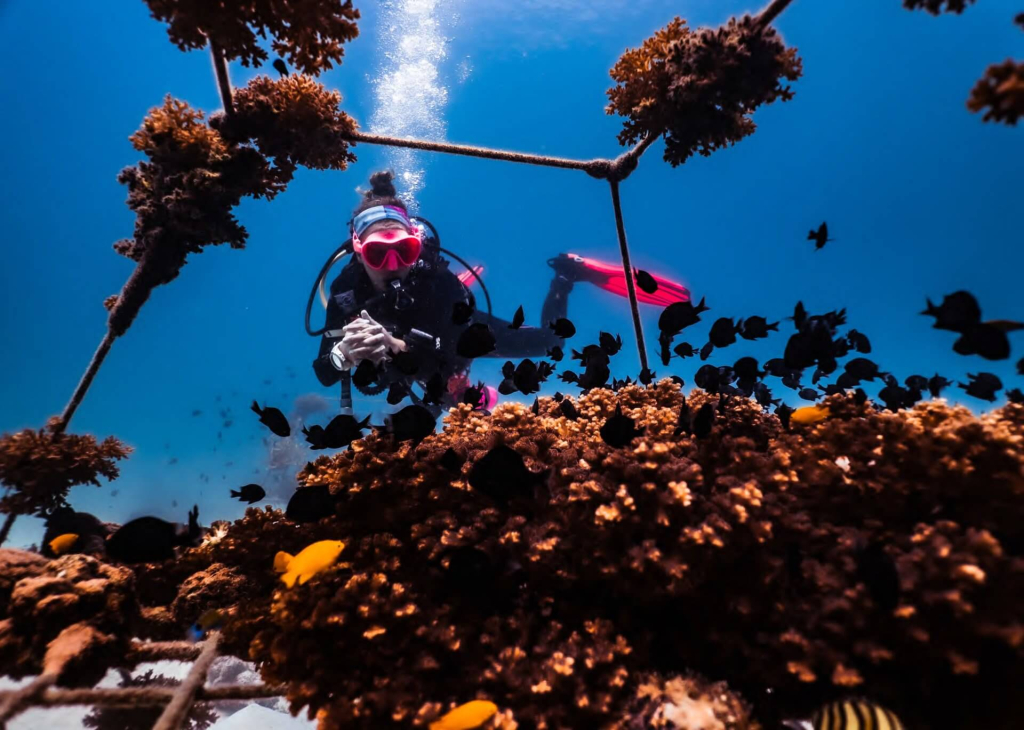
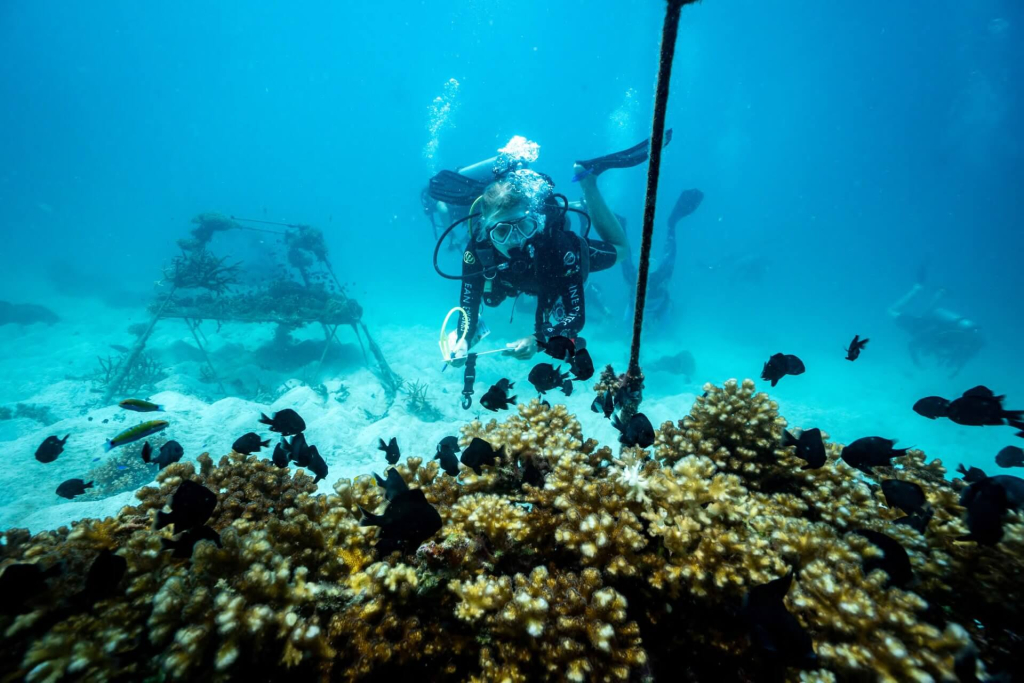
Marine conservation diver monitoring coral growth and fish populations on an artificial reef at Black Turtle Conservation, Koh Tao.
Close-up of a healthy brain coral colony photographed during the Ecological Monitoring Program (EMP) with Black Turtle Conservation in Koh Tao, Thailand.

Pavona is widespread and often abundant on Koh Tao reefs, occupying a wide range of depths and habitats from sheltered bays to current-swept pinnacles.

Sheltered Bays and Shallow Reefs

Sites such as Aow Leuk, Mango Bay, Hin Wong Bay, and Tanote Bay host abundant Pavona colonies on shallow to mid-depth slopes. The most commonly encountered forms at these sites are encrusting Pavona varians and Pavona explanulata, often appearing as coloured patches on rocky substrate.

Pinnacle and Offshore Sites

At White Rock, Twins, Chumphon Pinnacle, and Southwest Pinnacle, Pavona occupies depths of 5–20 m on shoulders and slopes of granite pinnacles. Massive and columnar forms are common at these sites, where moderate flow delivers consistent zooplankton supply.

Deeper Slope and Foliose Habitats

Foliose Pavona cactus forms are particularly common on deeper slope habitats and in moderately shaded environments. The bifacial laminar plates of this species effectively occupy mid-water positions where light is moderate but reliable, complementing the encrusting forms in shallower zones.

Depth Distribution and Site Variation

Pavona is one of the most depth-tolerant reef-builders on Koh Tao, occurring from very shallow waters down to 25–30 m on well-lit slopes. Growth-form composition shifts predictably with depth, with massive and encrusting forms dominating shallower zones and foliose forms becoming relatively more common with increasing depth.

Environmental Thresholds: Conditions for Optimal Growth

Pavona occupies a notably broad environmental envelope and is one of the more environmentally flexible reef-building genera around Koh Tao, contributing to its expanding role under contemporary climate stress.

Optimal Parameters

  • Light Intensity: tolerates a wide range, from high-light shallow conditions to moderately shaded slope habitats.
  • Water Movement: highly tolerant, performing well from sheltered bays to current-swept pinnacles.
  • Temperature Range: 24–30°C, with greater tolerance for elevated temperatures than many reef-building corals.
  • Salinity: stable marine conditions of 33–35 ppt; moderately tolerant of short-term reductions during heavy monsoon runoff.
  • Sediment Tolerance: notable for above-average tolerance of sedimentation and turbid water conditions.

Stress Responses on Koh Tao

Pavona can bleach during severe marine heatwaves, but post-bleaching mortality has been lower than for fast-growing branching genera, and recovery has been more reliable. This pattern was clearly visible after the 2010 mass bleaching event at Koh Tao, with Pavona among the genera that recovered most successfully alongside Porites.

Sustained sedimentation, freshwater pulses from monsoon runoff, and reduced light penetration following coastal development still impact Pavona colonies, but the genus is consistently among the last to show stress signs and the first to resume growth once conditions stabilise.

Vulnerability Profile

Student identifying coral species underwater during the Coral Taxonomy & Identification course with Black Turtle Conservation in Koh Tao, Thailand.
Close-up of a healthy brain coral colony photographed during the Ecological Monitoring Program (EMP) with Black Turtle Conservation in Koh Tao, Thailand.
Marine conservation diver collecting data on coral species during the Coral Taxonomy and Ecological Monitoring course at Black Turtle Conservation, Koh Tao, Thailand.

Although Pavona is generally regarded as a stress-tolerant taxon, several Pavona species are listed in IUCN threatened categories at the global level. The genus is also covered under CITES Appendix II, which has regulated international trade in scleractinian corals since 1990.

Major Threats

  • Coral Bleaching: more tolerant than most genera but still affected by severe marine heatwaves in shallow colonies.
  • Ocean Acidification: progressive reduction in calcification rates as aragonite saturation state declines.
  • Wild Collection: moderate harvesting for the ornamental coral trade in some parts of the genus’s range, particularly for foliose forms.
  • Disease Susceptibility: a range of coral diseases including white syndrome have been recorded under thermal stress.
  • Local Anthropogenic Impacts: anchoring, fin damage, ghost fishing gear, and sediment runoff from coastal development.

On Koh Tao, Pavona is treated alongside Porites as a stress-tolerant reference taxon. Surveys covering 2006–2014 documented declines in Acropora, Montipora, and Diploastrea, with corresponding increases in Porites, Pavona, and Fungiidae, indicating a community-level shift toward bleaching-resistant taxa.

Black Turtle Conservation contributes to this dataset through ongoing reef monitoring of Pavona condition, growth, and recruitment as part of broader reef health assessments around the island.

How to Identify Pavona Coral

The defining features of Pavona in the field are the thamnasteroid corallite arrangement (corallites lacking discrete walls and merging into a continuous skeletal surface) and the substantial growth-form variation, including foliose bifacial plates that distinguish foliose Pavona from most other foliose reef-builders.

Healthy coral reef ecosystem with diverse fish species recorded during coral disease and reef health monitoring in Koh Tao, Thailand.
Marine conservation diver monitoring coral growth and fish populations on an artificial reef at Black Turtle Conservation, Koh Tao.
Student identifying coral species underwater during the Coral Taxonomy & Identification course with Black Turtle Conservation in Koh Tao, Thailand.

Key Identification Features

  • Surface Texture: smooth, continuous skeletal surface with corallite openings appearing as small pits.
  • Corallite Arrangement: thamnasteroid — corallites lack discrete walls; septa radiate outward and merge with adjacent corallites.
  • Growth Forms: massive, encrusting, columnar, foliose (unifacial or bifacial laminar plates).
  • Coloration: cream, brown, olive, or bright green, often with contrasting darker corallite centres.
  • Polyp Behaviour: polyps small with short tentacles, retracted during the day and extended at night.

Distinguishing from Similar Genera

Pachyseris differs by producing distinctly parallel ridges rather than the more variable ridge-and-pit pattern of Pavona. The continuous parallel-line skeletal pattern of Pachyseris is the most reliable field distinction between the two genera.

Gardineroseris produces a regular hexagonal honeycomb pattern with thicker corallite walls, distinguishing it from the smoother thamnasteroid surface of Pavona. Leptoseris and Coscinaraea share the broad family of Agariciidae but have distinct surface architectures and growth-form preferences.

Mastering Pavona Identification with Black Turtle Conservation

Marine conservation diver collecting data on coral species during the Coral Taxonomy and Ecological Monitoring course at Black Turtle Conservation, Koh Tao, Thailand.

At Black Turtle Conservation we treat reliable Pavona identification as essential for monitoring stress-tolerant coral assemblages on Koh Tao. Because Pavona is one of the genera that has expanded in relative abundance under contemporary climate stress, accurate field recognition is critical for tracking community-level shifts and for understanding the long-term trajectory of reef health in the Gulf of Thailand.

Our Training Approach: From Theory to Survey

Diver recording fine-scale coral identification data during the Advanced Coral Taxonomy and Marine Conservation course at Black Turtle Conservation, Koh Tao, Thailand.
Close-up of a healthy brain coral colony photographed during the Ecological Monitoring Program (EMP) with Black Turtle Conservation in Koh Tao, Thailand.

Our Coral Taxonomy and Identification training addresses Pavona through a structured, progressive sequence designed to build confident in-water surveyors capable of recognising the genus across its full morphological range.

  • Classroom Theory: students learn agariciid morphology, the thamnasteroid corallite arrangement, and the contrast with Pachyseris, Gardineroseris, and Leptoseris.
  • In-Water Practice: guided dives at Aow Leuk, Mango Bay, Twins, and Chumphon Pinnacle, where Pavona colonies of varying form and size are compared in situ.
  • Applied Monitoring: participation in Ecological Monitoring Program surveys, where Pavona presence, colony condition, and bleaching status are recorded as priority data.
  • Comparative Identification: side-by-side comparison with related Agariciidae genera to consolidate family-level recognition skills.

Graduates leave with the practical ability to identify Pavona at genus level under field conditions and to record its presence and condition reliably as part of long-term reef monitoring around Koh Tao.

Frequently Asked Questions

Why has Pavona increased on Koh Tao reefs?

Pavona has emerged as a winner under contemporary climate stress because of its growth-form plasticity, robust photosynthesis, flexible symbiont communities, and tolerance for moderately reduced light. Long-term Ecological Monitoring Program data covering 2006 to 2014 documented increases in Pavona alongside Porites and the Fungiidae, while more sensitive genera such as Acropora, Montipora, and Diploastrea declined.

What is thamnasteroid corallite arrangement?

Thamnasteroid means that corallites lack discrete surrounding walls and instead merge into a continuous skeletal surface. The corallite openings appear as small pits scattered across the colony, with septa radiating outward and sometimes connecting to adjacent corallites along subtle ridges. This is the diagnostic surface pattern of Pavona and distinguishes the genus from cerioid or plocoid reef-builders.

Is Pavona one species or many?

Pavona contains around twenty currently accepted species, including Pavona cactus, P. varians, P. clavus, and P. explanulata. A new species, Pavona giannii, was described in 2025. Recent molecular work has shown the genus to be polyphyletic, and a formal revision is currently in progress, so species-level identification within Pavona should be approached cautiously.

What is bifacial growth in Pavona?

Bifacial growth means that corallites are present on both faces of a foliose laminar plate, rather than only on the upper surface. Pavona cactus and similar species produce bifacial laminar plates that effectively double the light-capturing surface area per unit of substrate occupied. This growth strategy allows the species to thrive in moderately shaded slope habitats where less flexible genera may struggle.

How deep does Pavona occur on Koh Tao?

Pavona is one of the most depth-tolerant reef-builders on Koh Tao, occurring from very shallow waters down to 25 to 30 m on well-lit slopes. Growth-form composition shifts predictably with depth, with massive and encrusting forms dominating shallower zones and foliose forms becoming relatively more common with increasing depth where bifacial laminar plates maximise light interception.

External Link Citations and References

Veron, J.E.N. (2000). Corals of the World. Australian Institute of Marine Science.

A new reef-dwelling coral, Pavona giannii sp. nov. (Scleractinia, Agariciidae), with an overview of the skeletal morphology of the type specimens of the genus Pavona

World Register of Marine Species (WoRMS): Pavona Lamarck, 1801.

IUCN Red List of Threatened Species: Pavona entries.

Department of Marine and Coastal Resources (DMCR), Thailand: Reef monitoring reports.

Black Turtle Conservation: Coral conservation, monitoring and restoration on Koh Tao.