At Black Turtle Conservation, scientific research is not a separate side activity—it is the foundation behind everything we do. Every monitoring dive, every snorkel survey, and every coastal initiative we run is built around one core goal: collecting consistent data that drives real marine conservation science across Koh Tao.

While thousands of travellers visit our island every year purely for recreational fun diving, our weekly survey programme offers something more specialised. Instead of passively observing the underwater world as a tourist, you step into the role of an active citizen scientist. By trading a standard sightseeing dive for a structured research session, your time in the water transforms from a fleeting holiday memory into a measurable contribution that protects our reefs.

Recreational Diving vs. Conservation Surveys

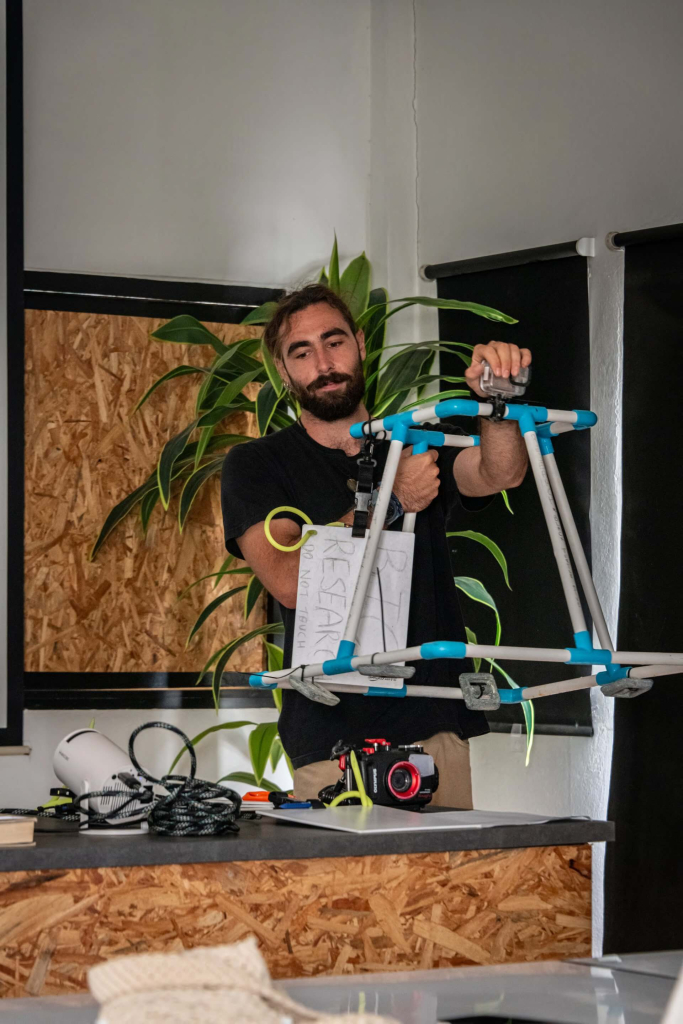
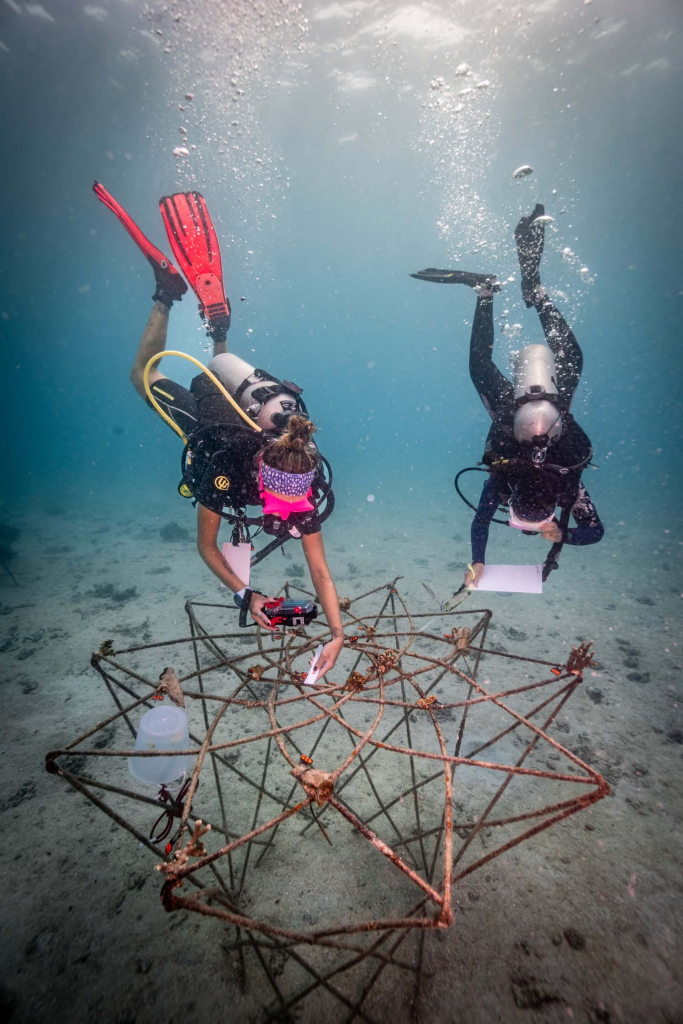
Scientific research coral restoration monitoring project in Koh Tao, combining reef rehabilitation techniques and long-term coral health data collection.
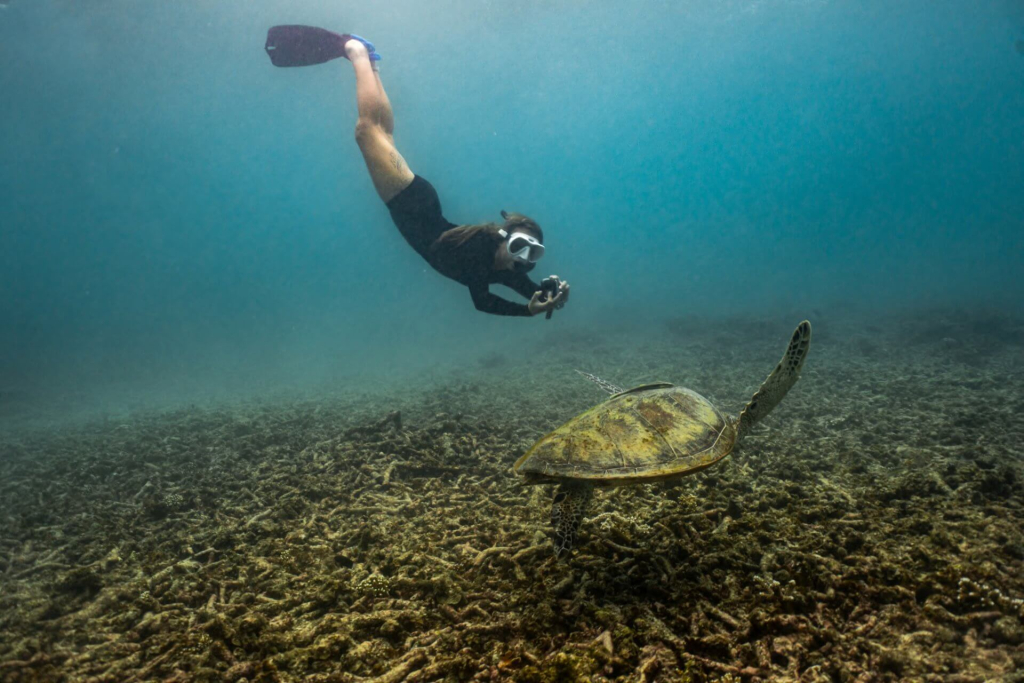
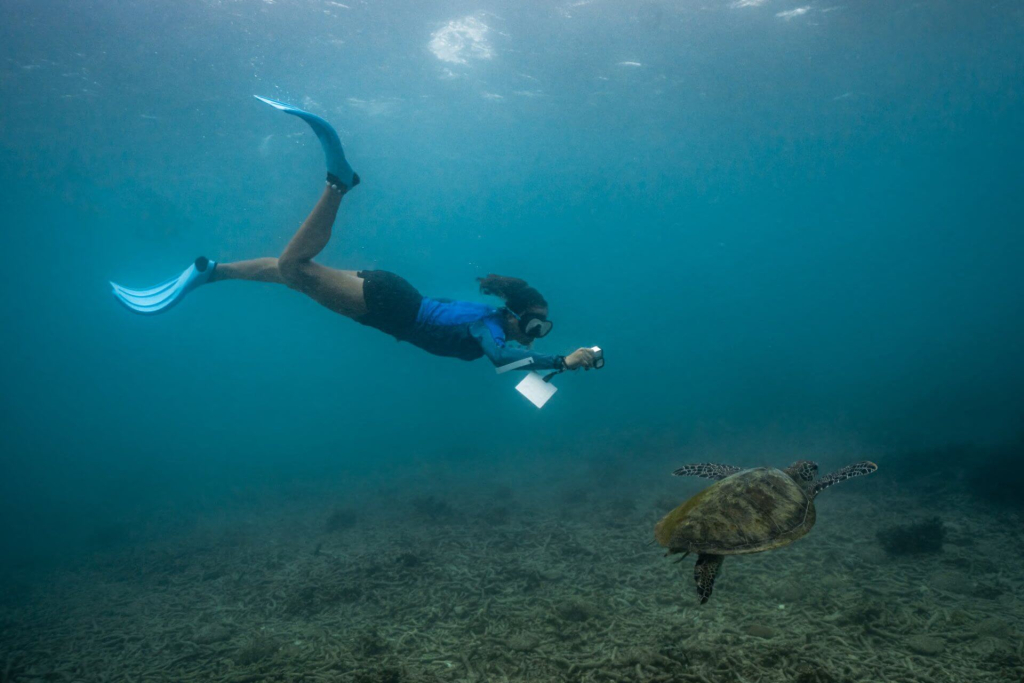
Community participants conducting a weekly sea turtle survey in Koh Tao, recording sightings and behavior as part of ongoing marine conservation and citizen science efforts.

Joining a weekly survey shifts your perspective from looking at the reef to understanding how the ecosystem functions as a whole.

Feature Standard “Fun Diving” Weekly Conservation Surveys
Primary Goal Sightseeing and recreation Data collection and active maintenance
Pre-Dive Briefing Basic dive site map and safety check In-depth ecology, analysis, and survey methodology
In-Water Focus Passively spotting marine life Standardised surveys, photo-ID, and habitat assessments
Equipment Standard scuba or snorkel gear Underwater slates, measuring tools, cameras, and maintenance tools
Long-Term Impact None beyond personal enjoyment Feeds directly into island-wide databases

How Consistent Data Drives Real Change

Community participants conducting a weekly sea turtle survey in Koh Tao, recording sightings and behavior as part of ongoing marine conservation and citizen science efforts.

One-off observations cannot protect an ecosystem, but consistent, weekly monitoring builds an undeniable scientific record. Because we survey the exact same priority sites week after week, the data you help collect allows our conservation team and local island partners to:

  • Establish Ecological Baselines: Track natural seasonal shifts in species abundance and biodiversity across both healthy and degraded reefs.
  • Pinpoint High-Risk Hotspots: Map critical foraging and nursery areas—such as Sea Turtle feeding grounds and Blacktip Reef Shark nurseries—to advocate for seasonal boat-traffic zones and localised marine protections.
  • Execute Rapid Interventions: Identify early warning signs of ecological stress, such as localised coral bleaching or Crown-of-Thorns Starfish (COTS) outbreaks, allowing trained teams to intervene before irreversible damage occurs.
  • Inform Island Policy: Quantify anthropogenic pressures, from coastal plastic accumulation to tourism density, providing the hard evidence needed to drive sustainable management strategies and scientific publications.

Our Weekly Monitoring Initiatives

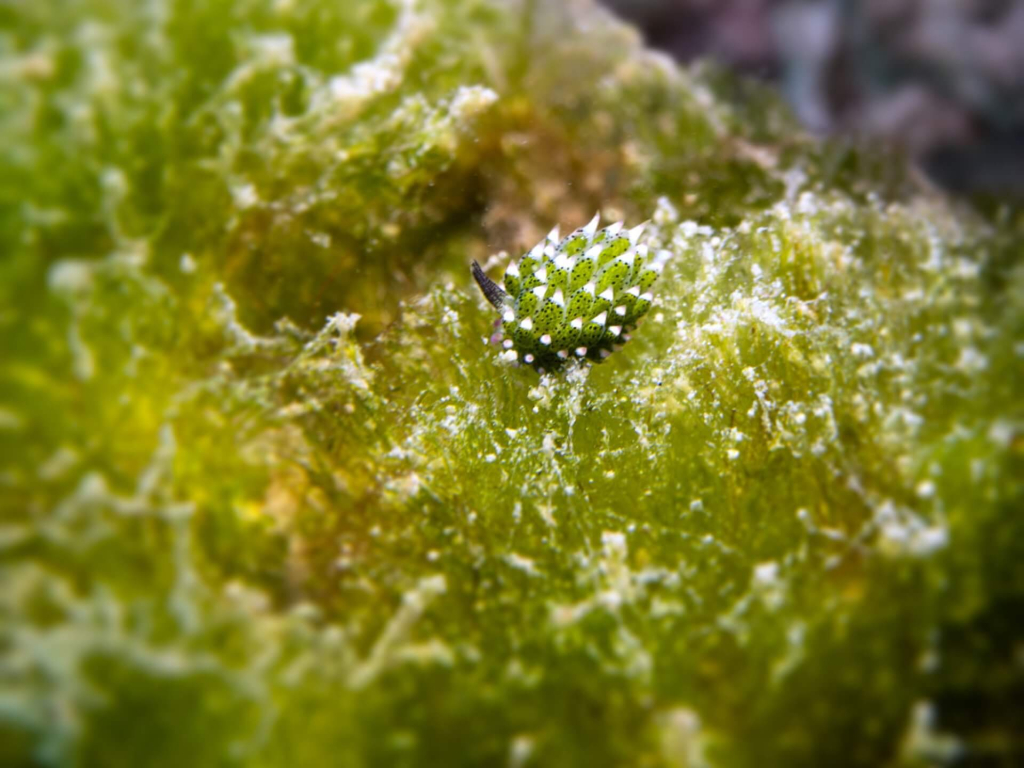
Community sea slug and nudibranch survey dive in Koh Tao, documenting marine biodiversity through citizen science participation.

Each week, our schedule rotates through specialised projects targeting different facets of Koh Tao’s marine and coastal ecosystems. Whether you are a certified diver, a snorkeller, or someone looking to help from the shoreline, there is a dedicated survey you can join:

  • Sea Turtle & Shark Nursery Snorkel Surveys: Utilise non-invasive photo-identification and behavioural tracking in shallow bays to assess how human presence impacts vulnerable megafauna.
  • Artificial Reef Monitoring & Maintenance: Evaluate coral recruitment and fragment growth on purpose-built structures while delicately removing competing algae to give baby corals space to settle.
  • Crown-of-Thorns (COTS) Management: Track predation scars and population densities of corallivorous starfish, pairing spatial monitoring with strict, protocol-driven removals at priority reef sites.
  • Sea Slug Biodiversity Research: Conduct macro-focused dives across reef and muck habitats to document delicate indicator species and assess subtle shifts in benthic health.
  • Coastal Marine Debris Audits: Intercept shoreline waste during sunset beach walks, systematically sorting and weighing litter by material type to tackle pollution at its source.

Choosing Your Survey

Scientific research coral restoration monitoring project in Koh Tao, combining reef rehabilitation techniques and long-term coral health data collection.
Community participants conducting a weekly sea turtle survey in Koh Tao, recording sightings and behavior as part of ongoing marine conservation and citizen science efforts.
Scientific research shark monitoring and population studies in Koh Tao, recording sightings and survey data to assess reef shark nursery areas.

Our surveys are deliberately pitched at different levels, so the right one for you depends on how comfortable you are in the water rather than on how much marine biology you know.

Two run as half-day snorkel sessions in shallow bays and are open to anyone who can swim confidently.

Three run as half-day boat trips with two survey dives and require an Advanced Open Water certification, because the methods demand that you can hold your position, manage your buoyancy and concentrate on a task at depth.

One runs on land in the evening and asks for nothing at all beyond a willingness to walk a beach at sunset.

Day Survey Format In the water Level required Price
Monday Sea Turtle Survey Half day 1 snorkel session Comfortable swimming in open water 600 THB
Tuesday Black Tip Reef Shark Survey Half day 1 snorkel session Comfortable swimming in open water 600 THB
Wednesday Artificial Reefs: Maintenance & Monitoring Half day 2 scuba dives Advanced Open Water Diver (or equivalent) 2,200 THB
Thursday Crown of Thorns Starfish Monitoring Half day 2 scuba dives Advanced Open Water Diver (or equivalent) 2,200 THB
Friday Crown of Thorns Starfish Monitoring Half day 2 scuba dives Advanced Open Water Diver (or equivalent) 2,200 THB
Sunday Beach Clean 1 evening Beach activity None Free

All half-day dive surveys run from a single boat trip, either the morning or the afternoon departure. The two snorkel surveys run in the afternoon, and the beach survey runs around sunset.

The two snorkel surveys take place in Koh Tao’s shallow bays, which may include Aow Leuk, Sai Nuan, June Juea, Tao Thong, Mae Haad and Mango Bay, and the beach surveys are run at any of a number of bays around the island rather than at a single fixed beach. No survey is tied to a particular site: the location is never fixed in advance, and is decided on the day according to the prevailing wind and sea conditions and confirmed before you set out. Conditions, not a fixed itinerary, are what keep a survey comparable with the weeks either side of it.
What to Expect When You Join

Community sea slug and nudibranch survey dive in Koh Tao, documenting marine biodiversity through citizen science participation.

You do not need a background in marine biology to participate—just curiosity, respect for the ocean, and a desire to make your time on Koh Tao count.

  • Comprehensive Ecological Briefing: Before every survey, our Conservation Survey Leaders guide you through the target species’ anatomy, ecological role, localised threats, and the exact scientific protocols we use in the field.
  • Guided Field Research: Enter the water (or hit the beach) in small, focused teams alongside like-minded ocean advocates to execute your survey or maintenance tasks.
  • Data Logging & Debrief: Return to the centre to compile your findings, review photo-identifications, and log your observations directly into our long-term conservation databases.

No Experience Necessary

Scientific research monitoring of Crown-of-Thorns starfish (COTS) in Koh Tao, collecting reef impact data and supporting coral reef protection projects.

The most common reason people hesitate is the assumption that research belongs to researchers. It does not. Every method we use in the field has been deliberately designed so that a first-time participant can apply it correctly after a single briefing, because a protocol that only works in expert hands is of no use to a monitoring programme that depends on volunteers.

What we ask for instead is consistency. A survey is only as good as the discipline behind it, which means recording what you actually observed rather than what you hoped to see, logging an empty transect as carefully as a busy one, and following the method precisely even when it feels slower than simply looking around.

Negative results matter: a site where a species was absent this week is as meaningful to a long-term dataset as a site where it was abundant.

Your Conservation Survey Leader stays with your group throughout, and nothing you record goes into the database unreviewed. If you are uncertain about an identification or a measurement, flagging that uncertainty is the correct response, and it is recorded as such.

Where Your Data Goes

Community participants conducting a weekly sea turtle survey in Koh Tao, recording sightings and behavior as part of ongoing marine conservation and citizen science efforts.
Scientific research shark monitoring and population studies in Koh Tao, recording sightings and survey data to assess reef shark nursery areas.

Every observation logged on a survey is entered into our long-term conservation databases, where it joins the record built by everyone who has surveyed that site before you. That accumulation is the entire point. A single afternoon tells us very little, but the same site surveyed week after week, season after season, by hundreds of different participants following an identical protocol, produces something no individual research trip could: a continuous record of how Koh Tao’s marine environment is actually changing.

That record is what allows us to say with confidence whether a reef is recovering or declining, whether a protection measure worked, and where the next intervention should go. It is also what gives our conservation team and our island partners the evidence to make the case for change to the people who can authorise it.

Over the past six months, the Black Turtle Conservation team and volunteers from around the world have successfully completed 356 environmental surveys. These collaborative efforts covered sea turtle and Blacktip Reef Shark observations, artificial reef monitoring and maintenance, Crown-of-Thorns and sea slug surveys, and shoreline cleanups.

Ready to Join a Survey?

Choose the survey that matches your certification and your interests, or get in touch and we will point you towards the one that best fits your dates and experience. No previous research background is required for any of them—only the willingness to spend a few hours contributing to work that outlasts your trip.